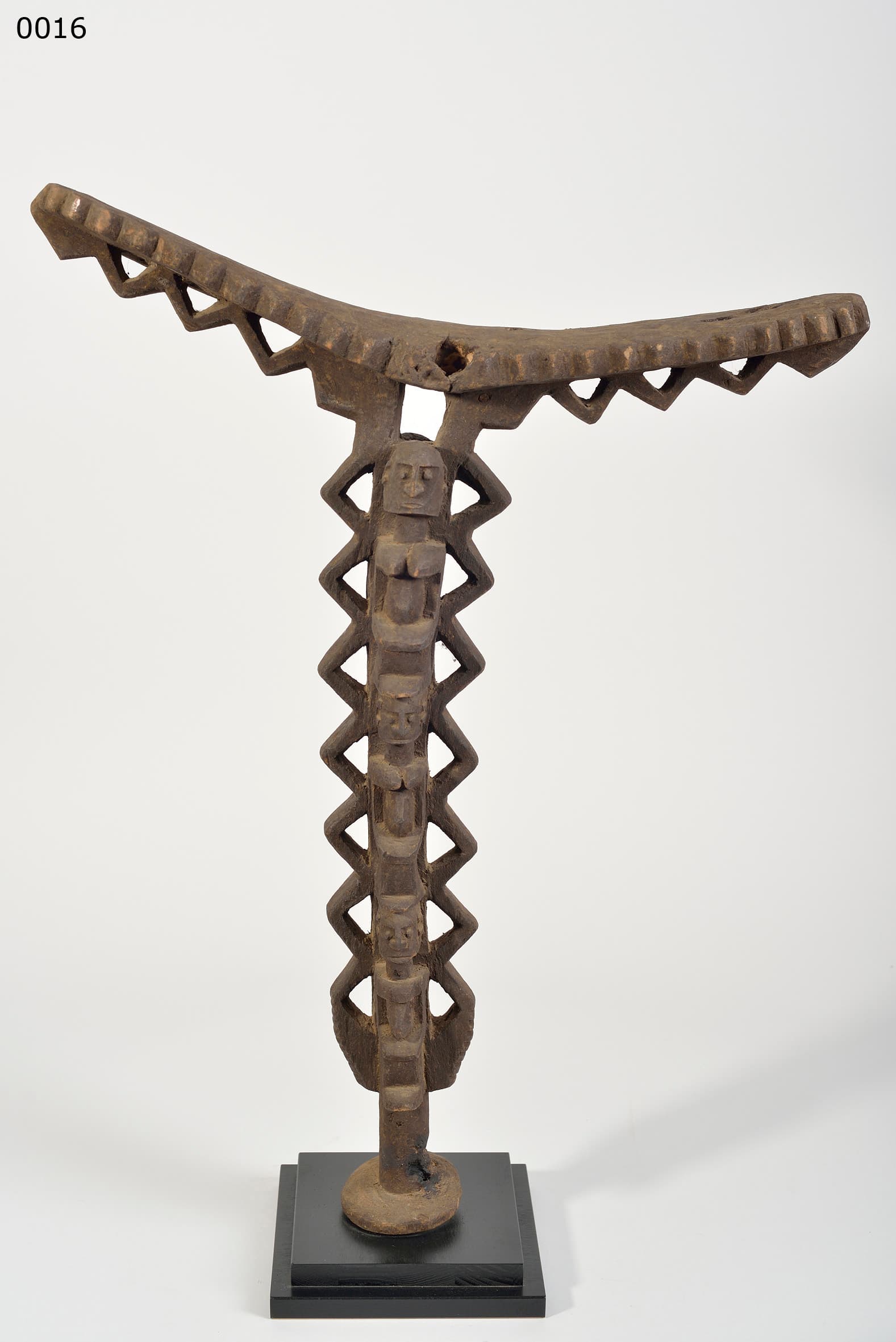
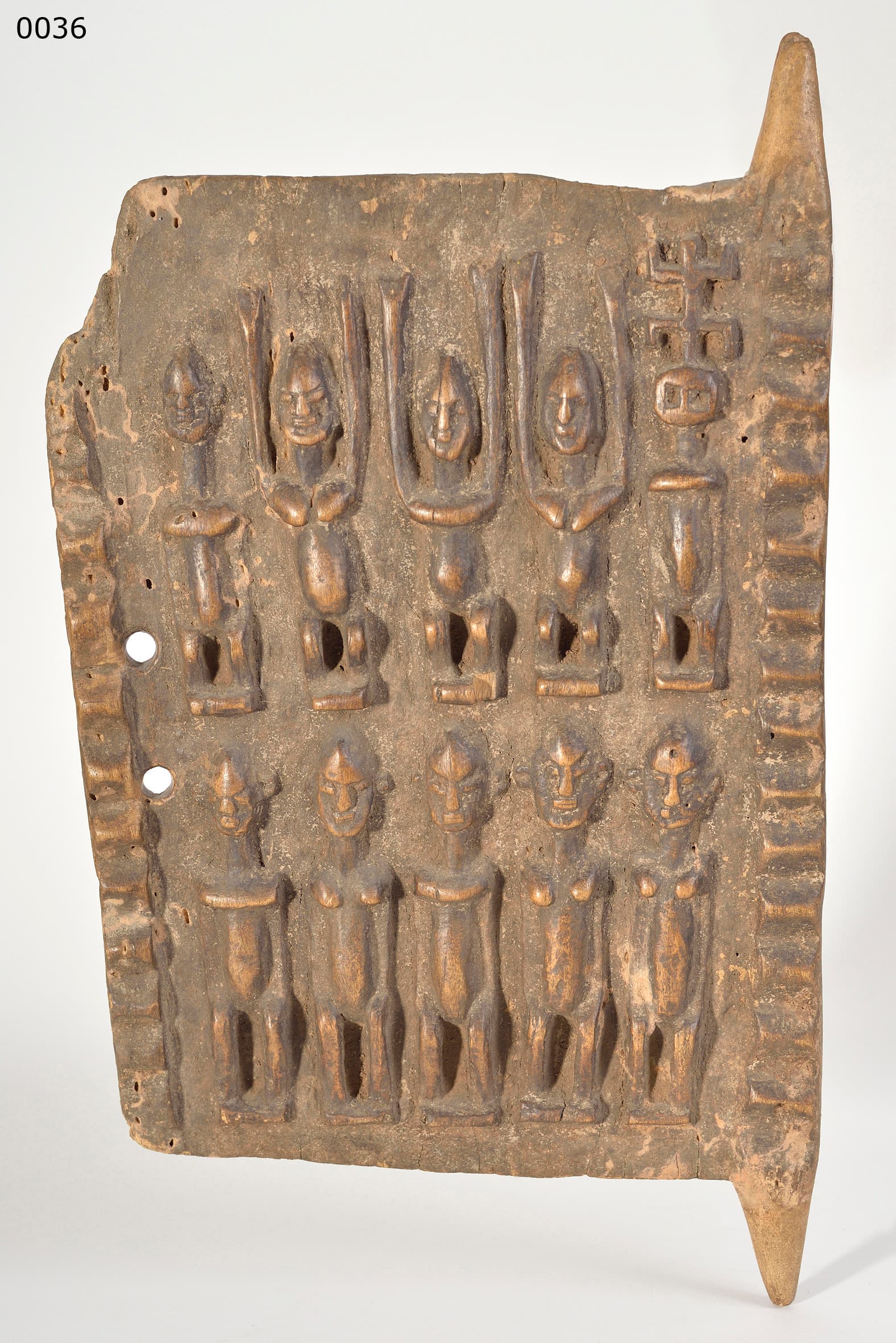
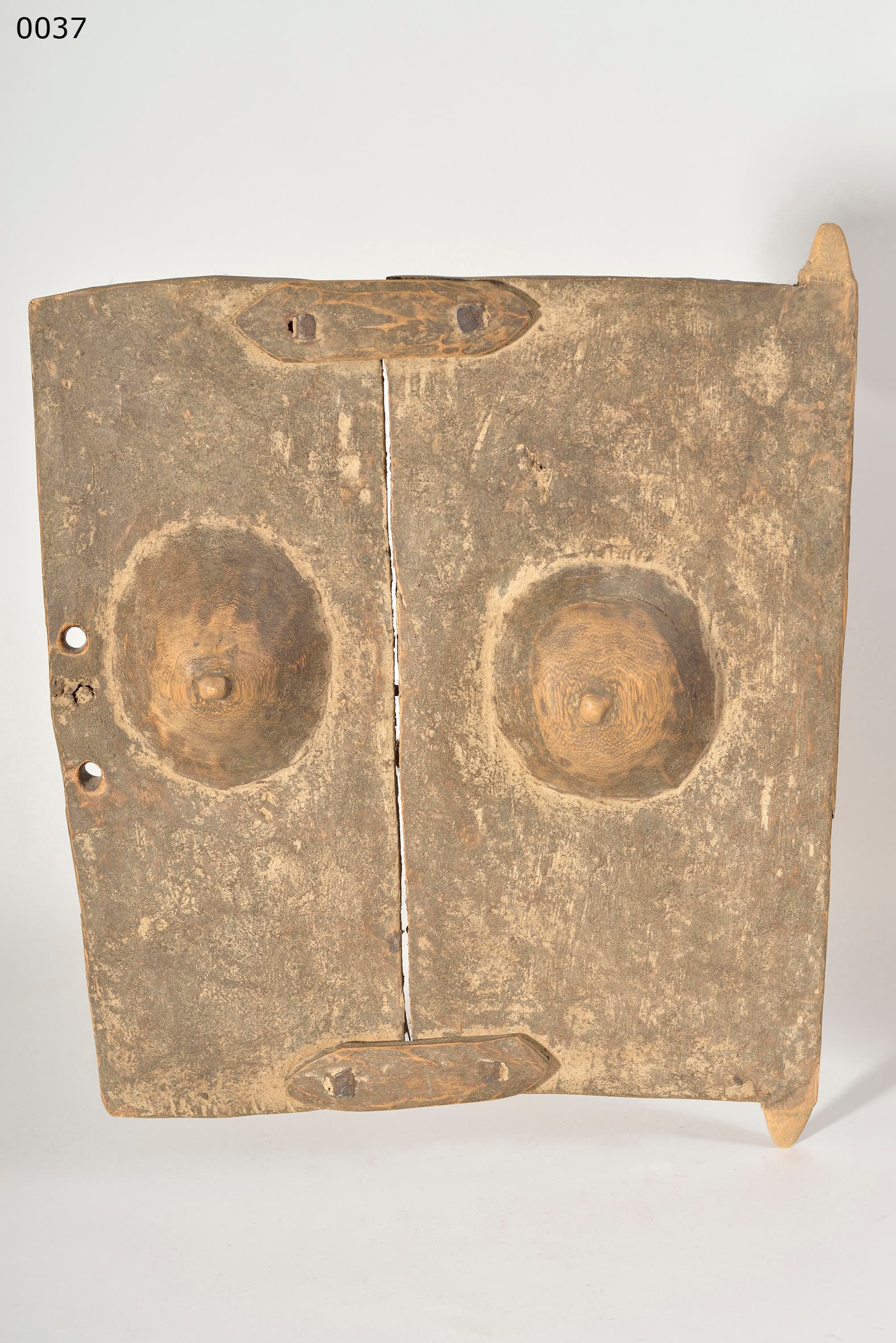
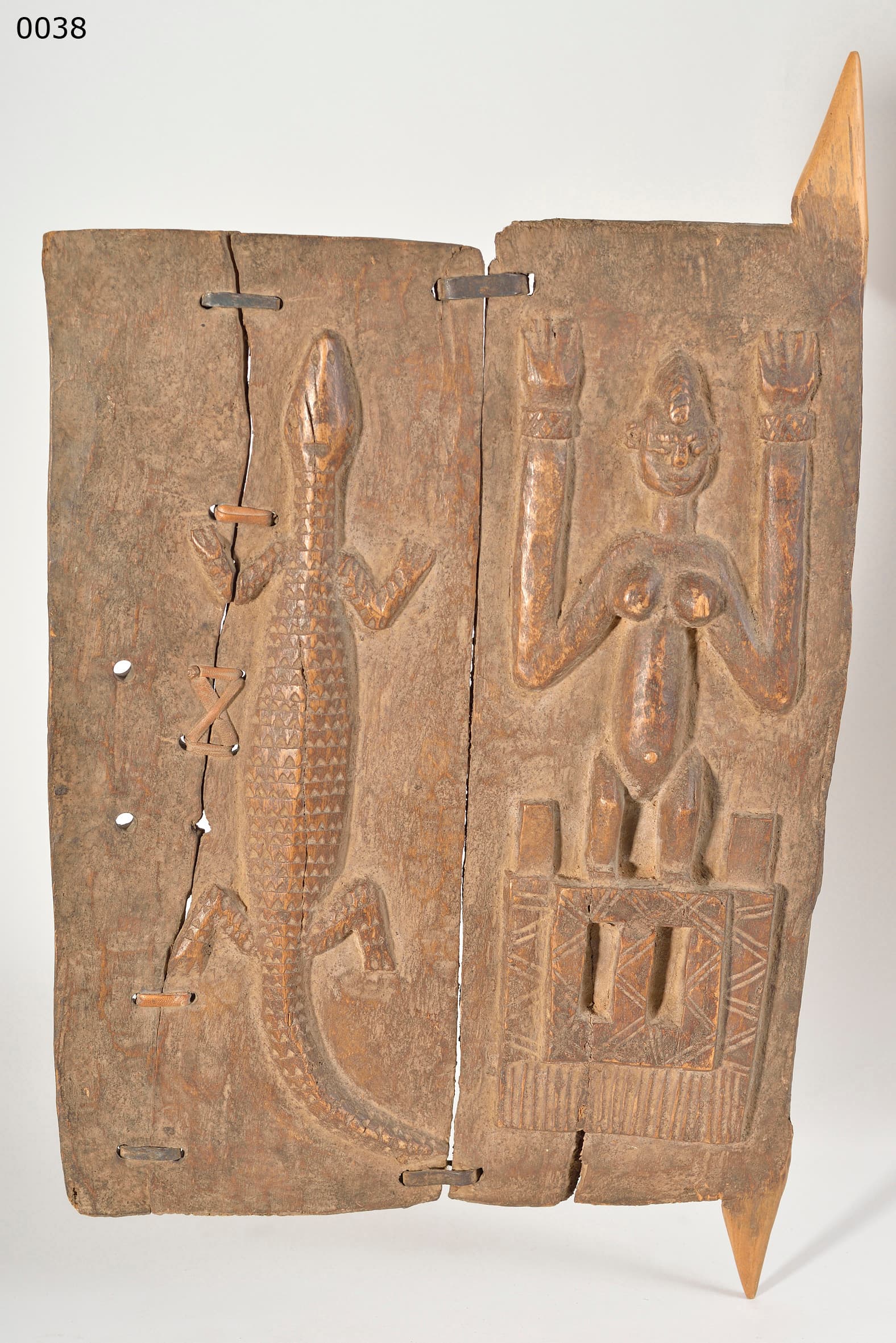
This tall iron staff is characterized by a central section forged into a tight, undulating M-shaped coil, extending upwards into an angled, wedge-like horizontal finial resembling an avian or reptilian head. A thick, stable crust of dark oxidation masks the underlying metal.
1. Aesthetic style and regional traits
This sculpture demonstrates a blacksmith's ability to manipulate the visual weight of iron. The central shaft suddenly erupts into a tight, compressed zigzag or "M" shape before continuing upwards. This visual interruption acts like a coiled spring, imbuing the rigid iron with a sense of pent-up kinetic energy. The sharp, angled finial at the top mimics a striking beak or snout, releasing the visual tension of the coil and directing the object's form forward into space.
2. Ritual function and serpentine rainmaking
In the visual lexicon of the Bandiagara Escarpment, tight, undulating zigzags are almost universally associated with the movement of snakes, the flash of lightning, and the flow of water — all domains of the Nommo (primordial creator spirits). Planted firmly into the earthen mound of a Binu shrine, this altar figure operated as an esoteric lightning rod. The "coiled" midsection was believed to amplify the Hogon's prayers, shooting them skyward through the animalistic head to secure the rains necessary for the village's survival.
3. Physical patina and age indicators
The surface of this 17 cm iron figure displays a stable layer of oxidation consistent with a 19th-century attribution. The dark, earthy brown rust has fused evenly with the iron core, rounding the sharp forging marks without compromising the integrity of the delicate central coil. As with other objects in this Dogon-iron series, its documentation and publication in literature on Dogon art supports its provenance, distinguishing it as a documented example within this tradition.
Summary
Utilizing a tightly coiled zigzag to compress and release kinetic energy, this iron animal figure is a striking manifestation of Dogon rainmaking theology. Its stable, uniform oxidation and published ethnographic status support its attribution as a 19th-century Binu shrine anchor.
Written with AI assistance from the collection appraisal, object photography and our own research; editorially reviewed. Mistakes are possible — corrections are welcome. How we work →