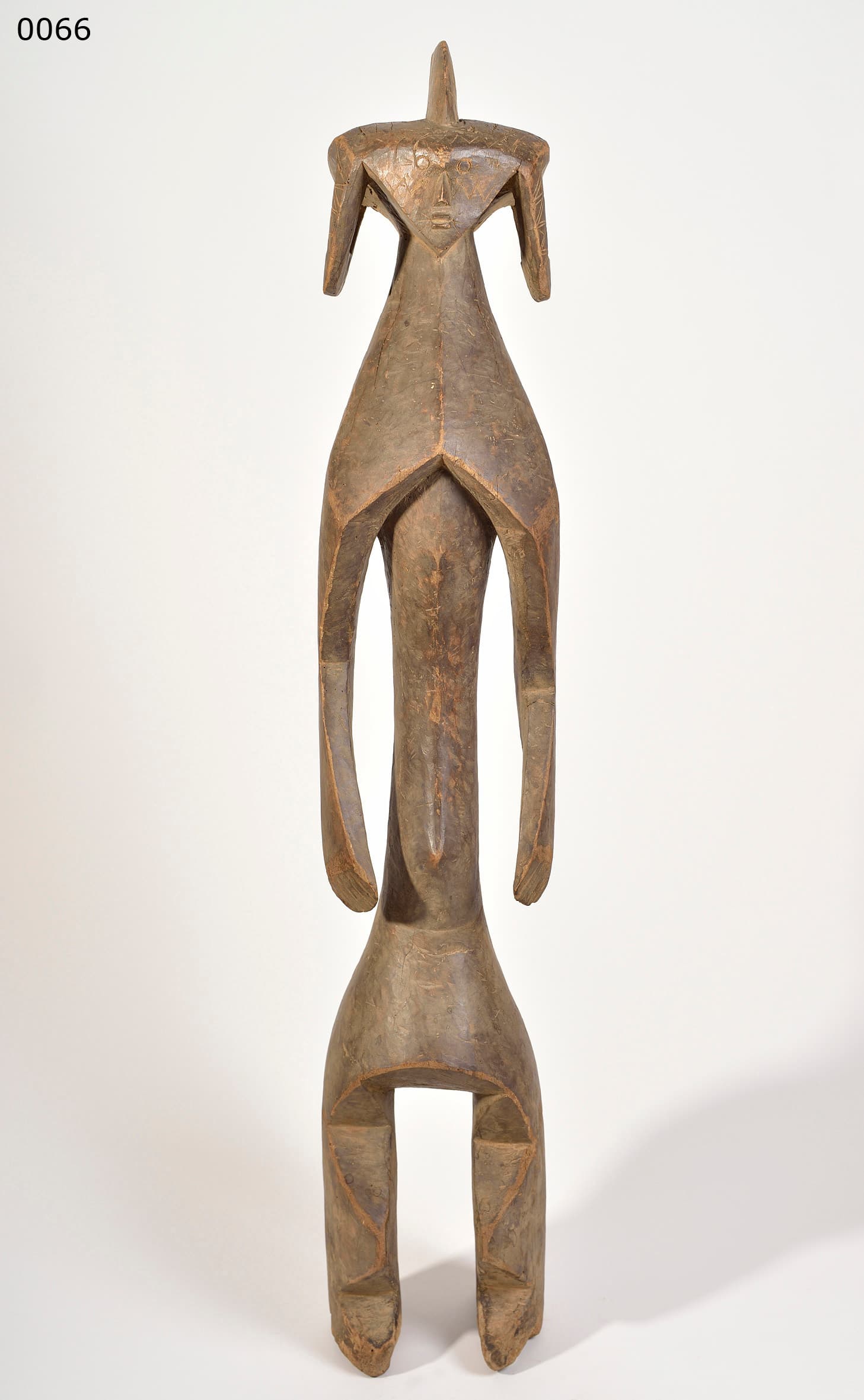
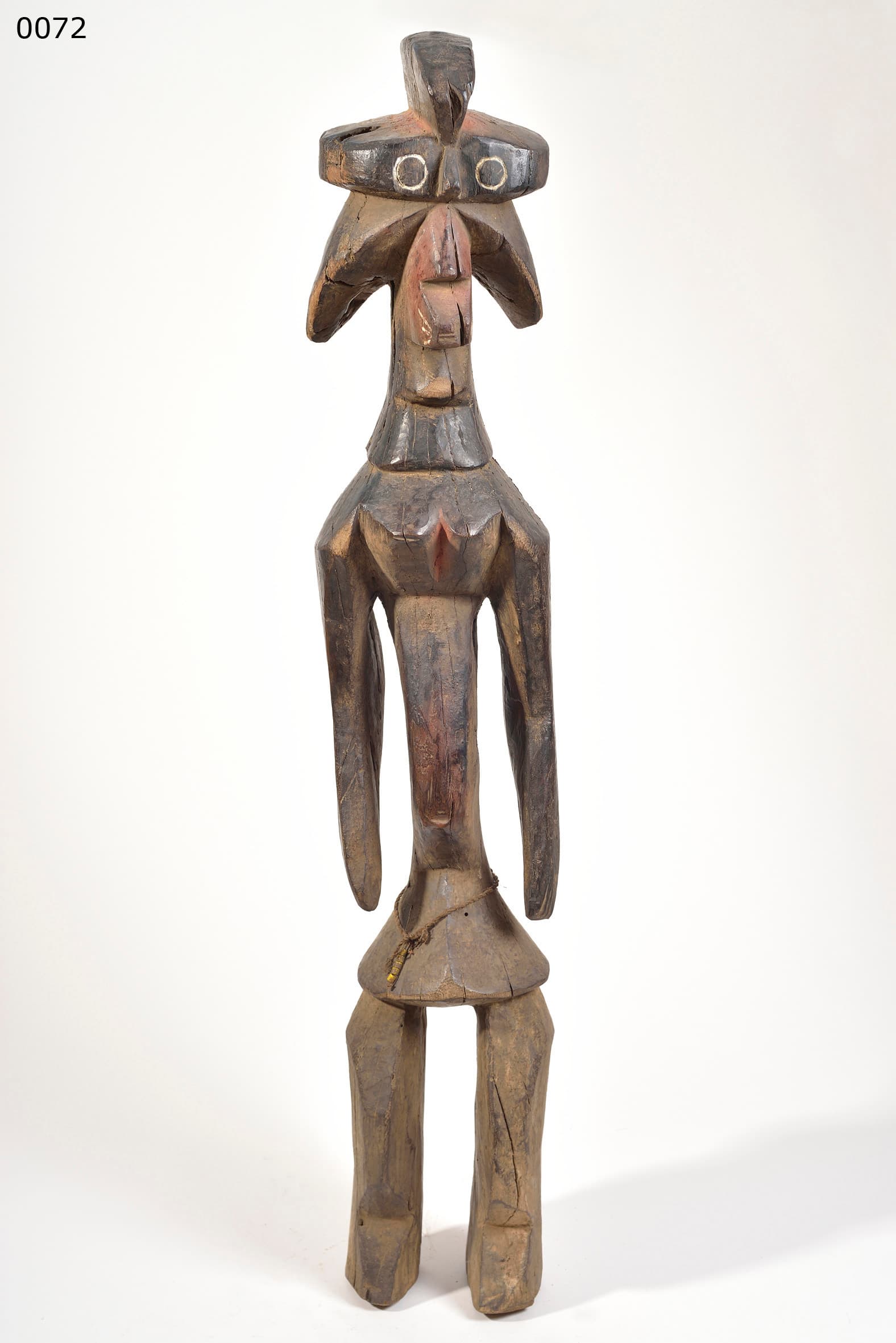
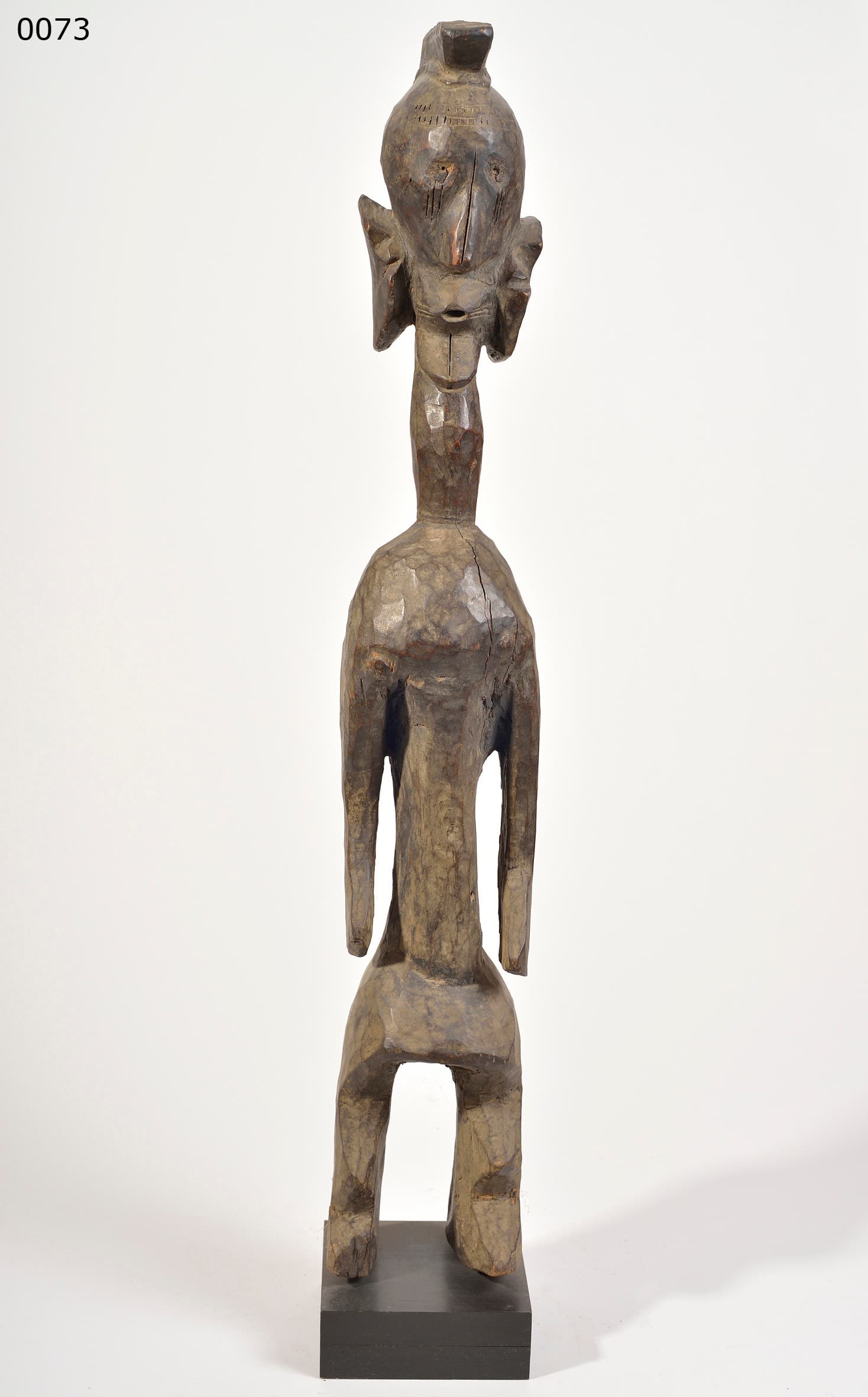
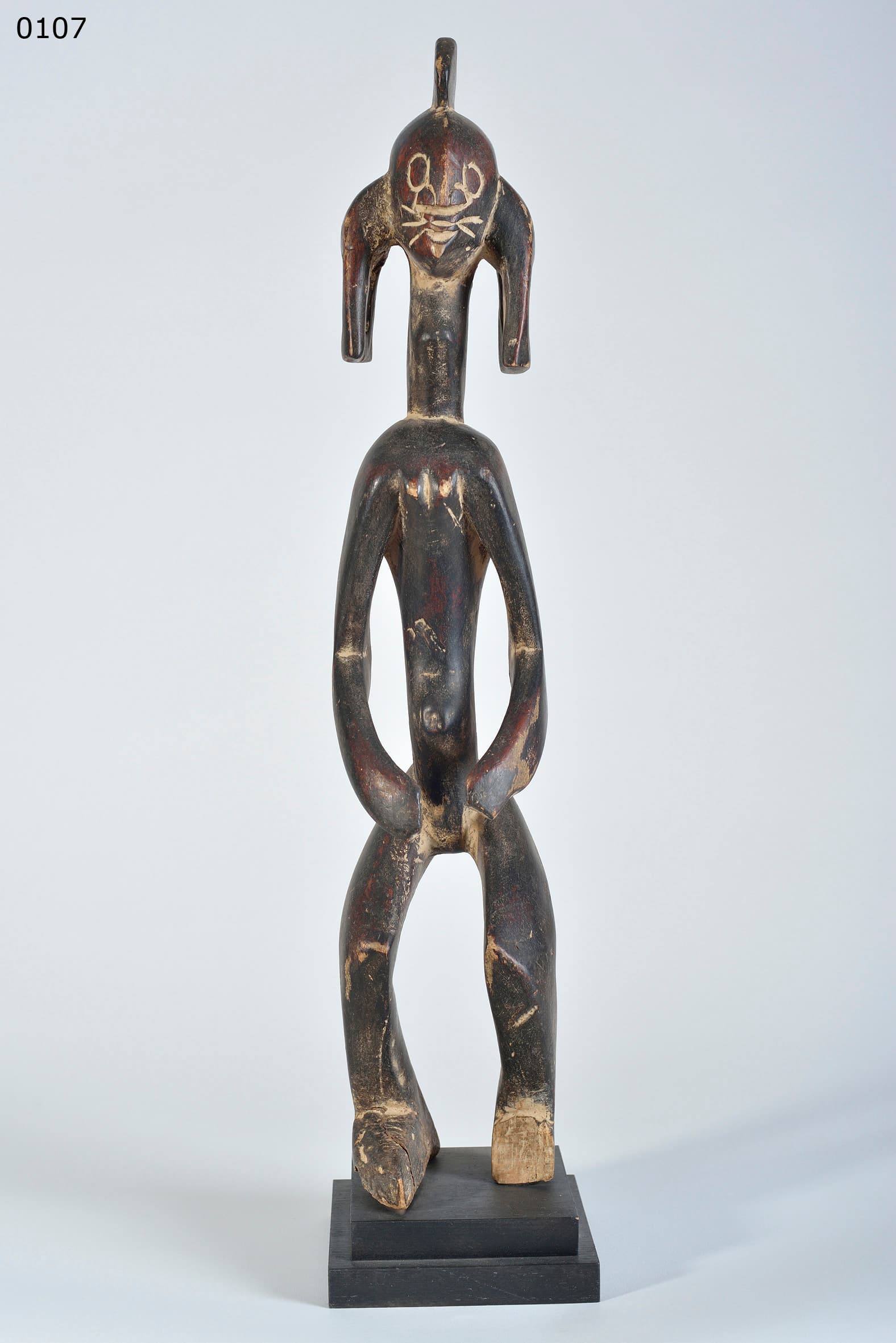
A highly dynamic, slender wooden figure with a long, narrow torso, a head crowned by a crescent crest with two tall slits above a beak-like face, and long, curved arms that loop away from the body. Bands of red, blue and white paint are visible.
1. Aesthetic Style and Dynamic Negative Space
This figure is a notable example of the Mumuye sculptural tradition from northeastern Nigeria. The aesthetic is recognized for its sweeping, modernist fluidity and use of negative space. The carver has departed from rigid frontality; instead, the figure suggests a sense of coiling and vibration. The elongated torso is narrow, and the long, curved arms create open, rhythmic voids around the body. The head, with its crescent crest split by two tall slits and its beak-like face, caps the upward momentum of the carving.
2. Ritual Function and Cosmic Balance
Mumuye ancestral figures (iagalagana) are traditionally regarded as central spiritual anchors of the family compound. They are not worshipped as gods, but are understood to act as vital intercessors. They are kept within the huts to encourage the ancestors to remain favorably disposed toward the living, thereby maintaining the delicate balance between earthly and spiritual destinies. If this balance is broken, misfortune, disease, and disaster are believed to strike the family. The figures receive sacrifices and libations as a tribute to restore harmony, making them significant instruments of daily spiritual life.
3. Patina, Material Weathering, and Surface Wear
The figure exhibits a varied patina. The high-relief areas — the shoulders, the edges of the arms, and the crest — display a smooth, dark handling polish consistent with ritual anointing. The recessed areas of the carving retain a dry, dusty, earth-toned surface, compatible with long-term placement in a traditional, smoky domestic hut. The wood shows stable desiccation lines along the long grain of the torso. Remains of red, blue and white painted bands are visible on the head, chest and legs.
Summary
This Mumuye figure is a distinctive study in kinetic sculpture and negative space, representing one of the highly regarded forms in African art. Its dynamic posture and rich handling patina are consistent with its traditional role as a guardian of family destiny.
Written with AI assistance from the collection appraisal, object photography and our own research; editorially reviewed. Mistakes are possible — corrections are welcome. How we work →