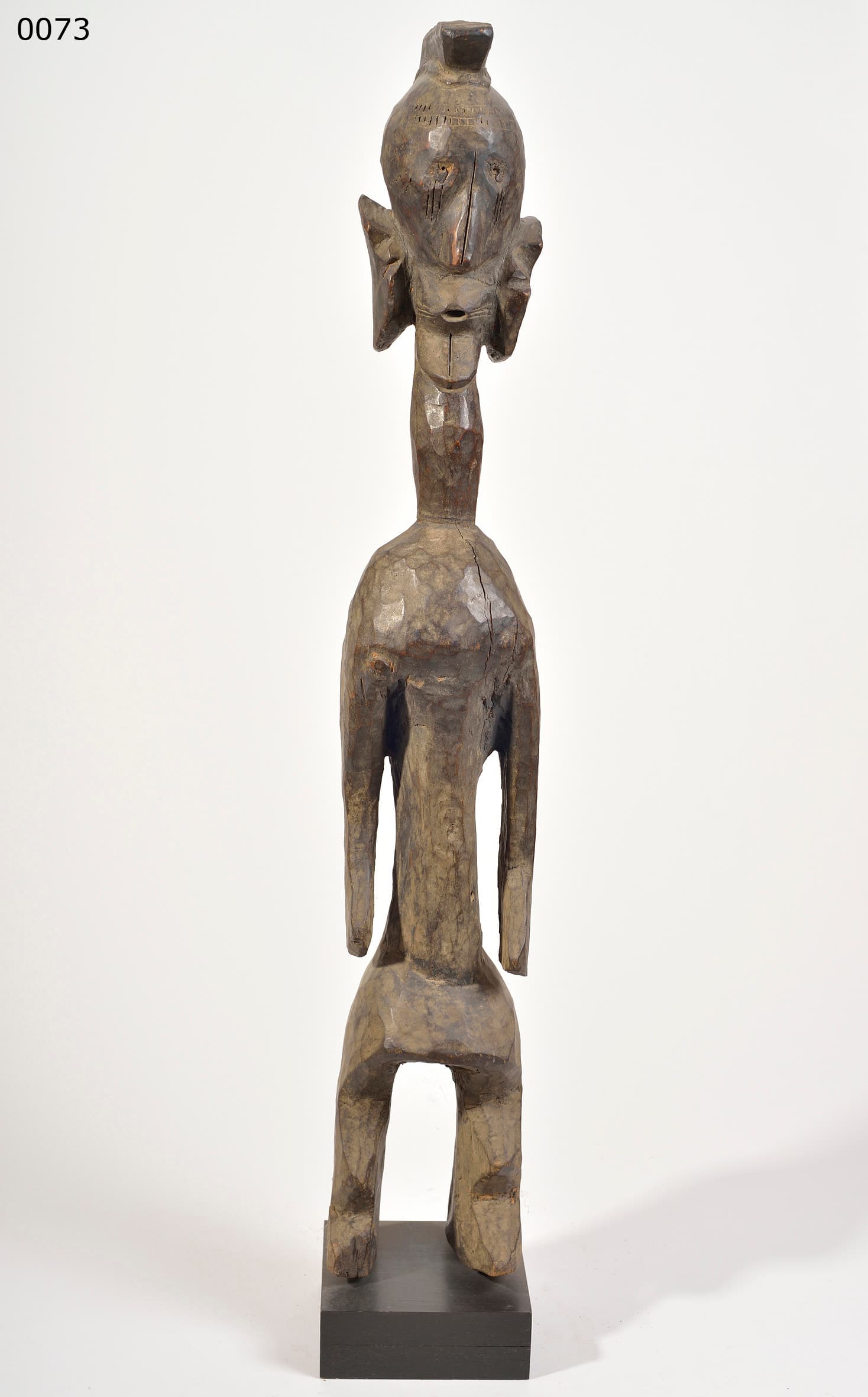
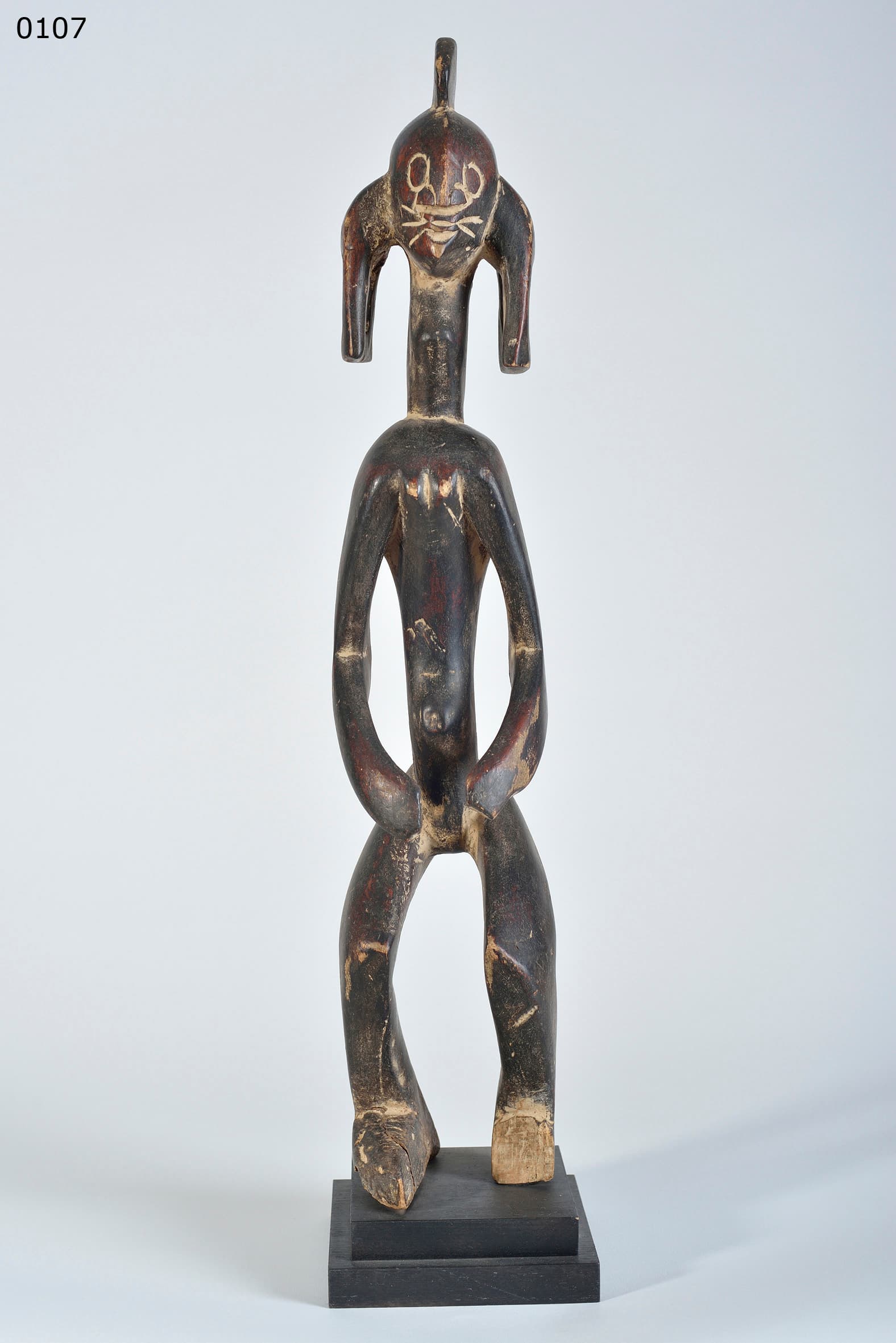
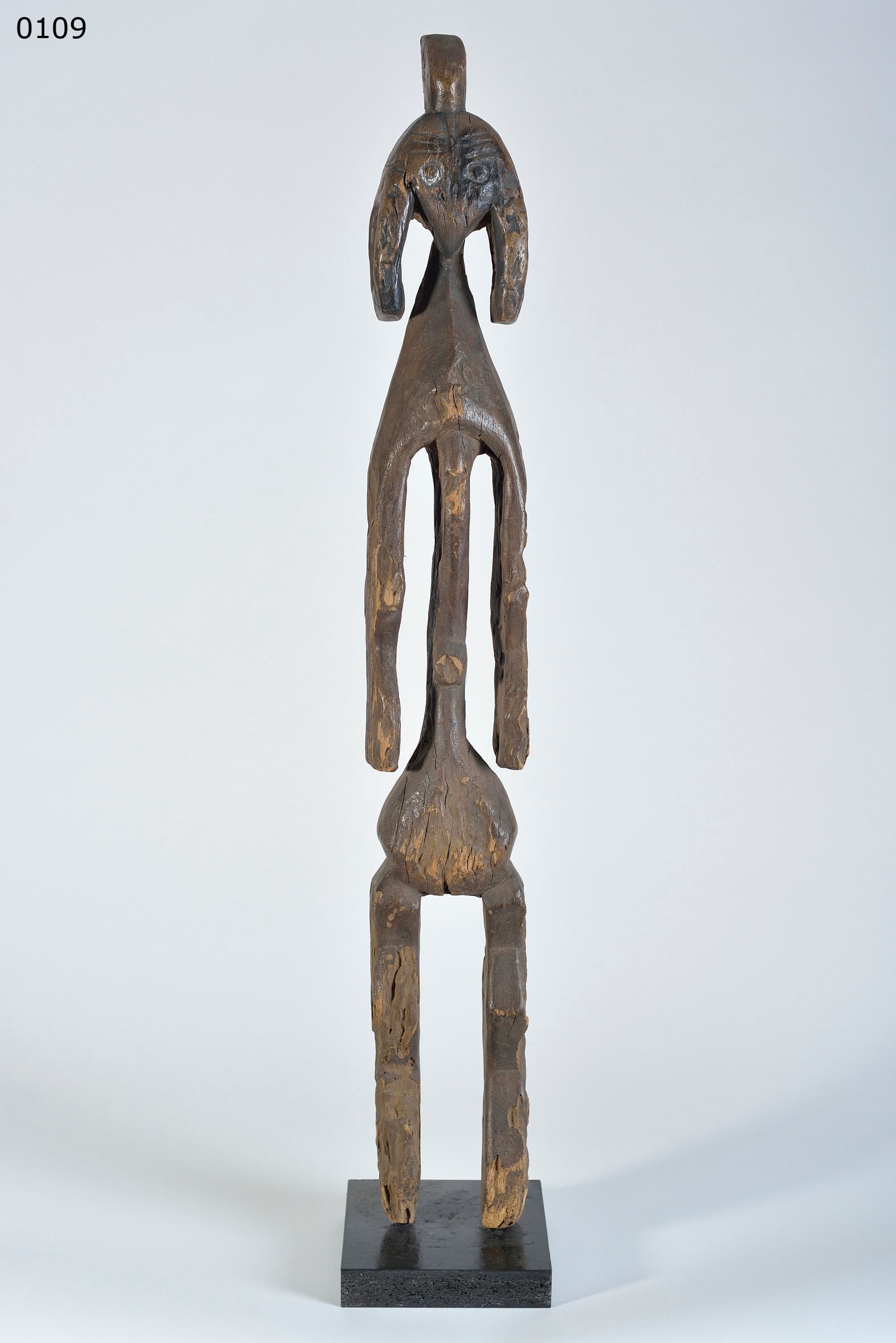
A large radically abstract wooden figure (attributed to the first half of the 20th century, 113 cm) from the Mumuye of Nigeria — elongated tubular torso, crested head, and ribbon-like arms swooping down to carve negative space.
1. An influential style of African abstraction
The Mumuye of the Benue River Valley carve what many art historians consider among the most dynamically abstract statuary in Africa.
- Negative Space as Structure: Rather than carving a solid block of wood, the Mumuye sculptor carves into the wood to free the arms, which hang like architectural buttresses. The air between arms and torso is as important to the visual impact as the wood itself.
- A Female Identity: While many Mumuye figures (Iagalagana) are stylized to the point of androgyny, this piece is identified as female. The prominent sagittal crest represents a traditional coiffure once worn by both men and women of high status.
2. Active divination, not passive memorial
Despite being called "ancestor statues," these objects were not passive grave markers.
- The Rainmaker's Tool: They were the personal property of elders, diviners, and rainmakers. A diviner would hold the statue, speak to it, and physically channel ancestral guidance during times of war, sickness, or drought.
Summary
This Mumuye female figure is a notable example of proto-cubist design. It rejects anatomical realism in favor of a fluid, kinetic abstraction, consistent with its traditional role as an active instrument of the Benue Valley diviner.
Written with AI assistance from the collection appraisal, object photography and our own research; editorially reviewed. Mistakes are possible — corrections are welcome. How we work →