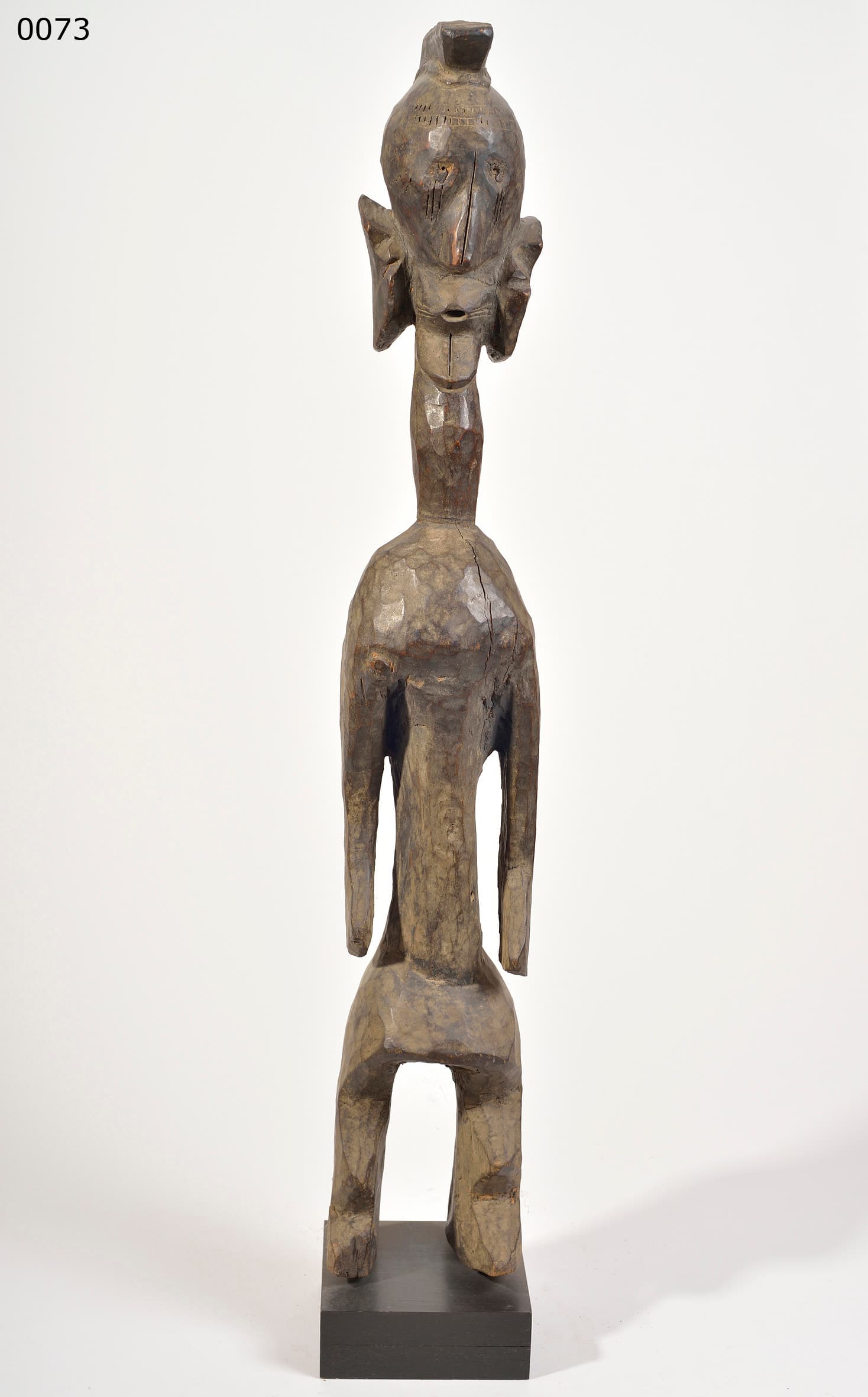
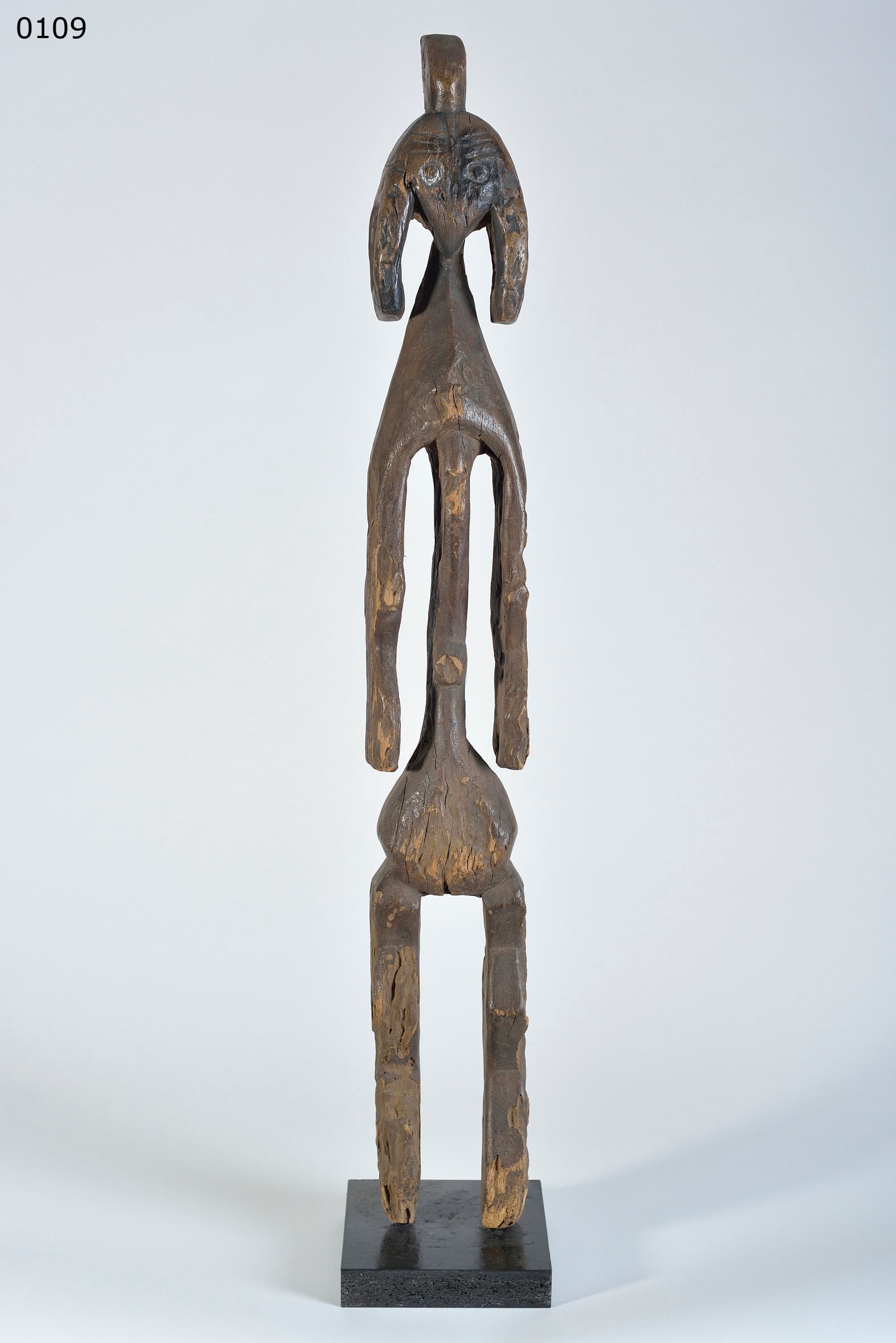
A highly kinetic wooden figure (1st half 20th C., 58 cm) from the Mumuye of Nigeria — elongated tubular torso, crested head with prominent flared ears, and ribbon-like arms sweeping away from the body to open dramatic negative spaces.
1. An expression of African cubism
The Mumuye of the Benue River Valley carve what many art historians consider among the most dynamically abstract statuary in Africa.
- Negative Space as Design: Arms detach from the body and swoop downward like architectural buttresses.
- Heavy Wood Made Airy: The resulting silhouette vibrates with visual kinesis — dense hardwood dematerialized into flowing ribbons.
2. Ambiguity and elongation
Mumuye figures often read as sexually ambiguous.
- Androgynous Form: The tubular torso avoids explicit anatomy, focusing the viewer on rhythm and stance rather than gender.
- Prestige Ornaments: The prominent sagittal crest and flared ears depict elite coiffures and ear plugs, emphasizing the figure's supernatural ability to "hear" the petitions of the living.
3. The diviner's tool
Though labeled "ancestor statue," these were active instruments.
- Personal Property: Owned by elders, diviners, and rainmakers — not passive grave markers.
- Consulted in Crisis: Held, spoken to, and fed sacrificial material to channel ancestral guidance during war, sickness, or drought.
Summary
This Mumuye figure is a striking example of proto-modernist design. It rejects anatomical realism in favor of a fluid, kinetic abstraction, consistent with the active physical instruments of Benue Valley diviners.
Written with AI assistance from the collection appraisal, object photography and our own research; editorially reviewed. Mistakes are possible — corrections are welcome. How we work →