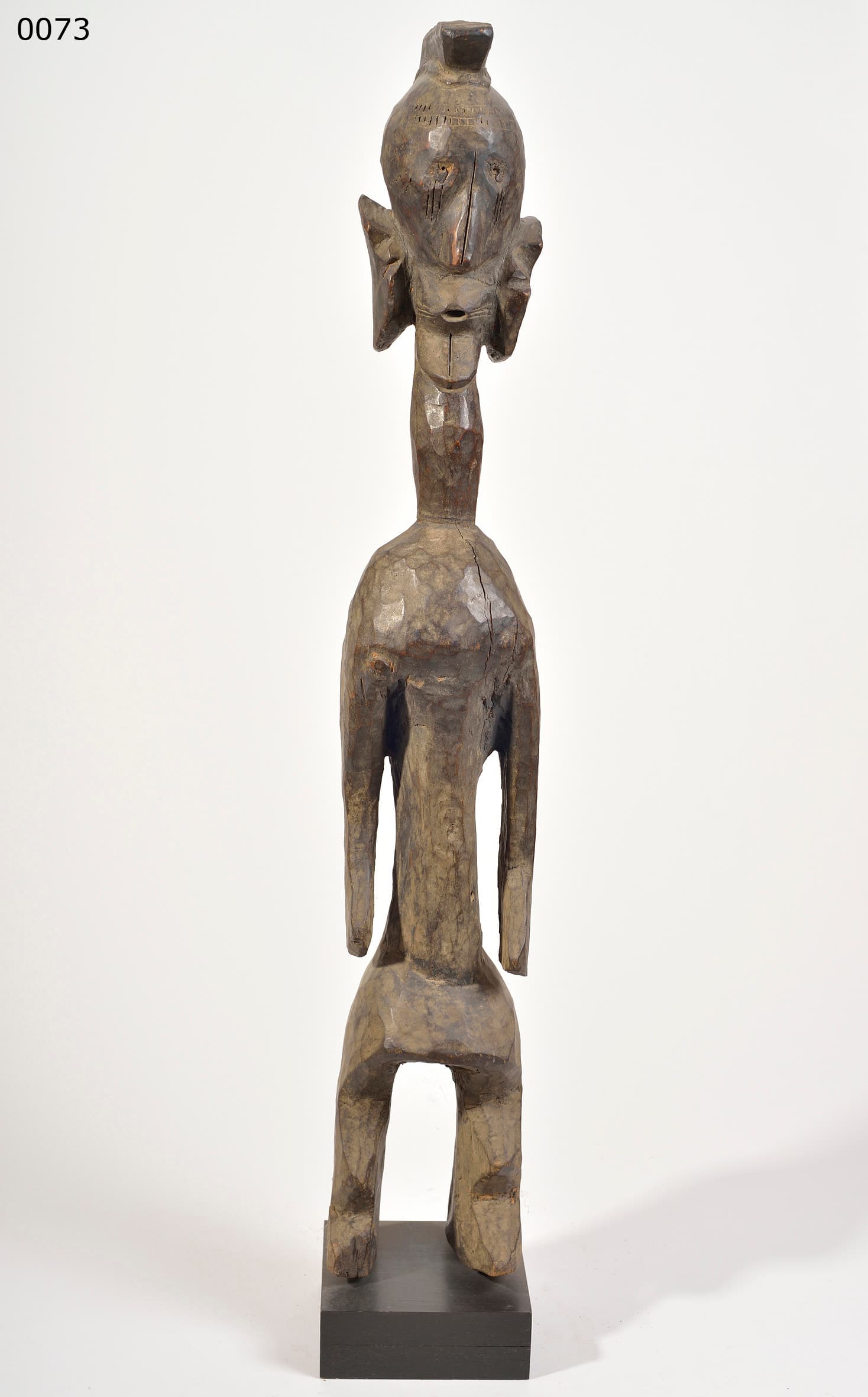
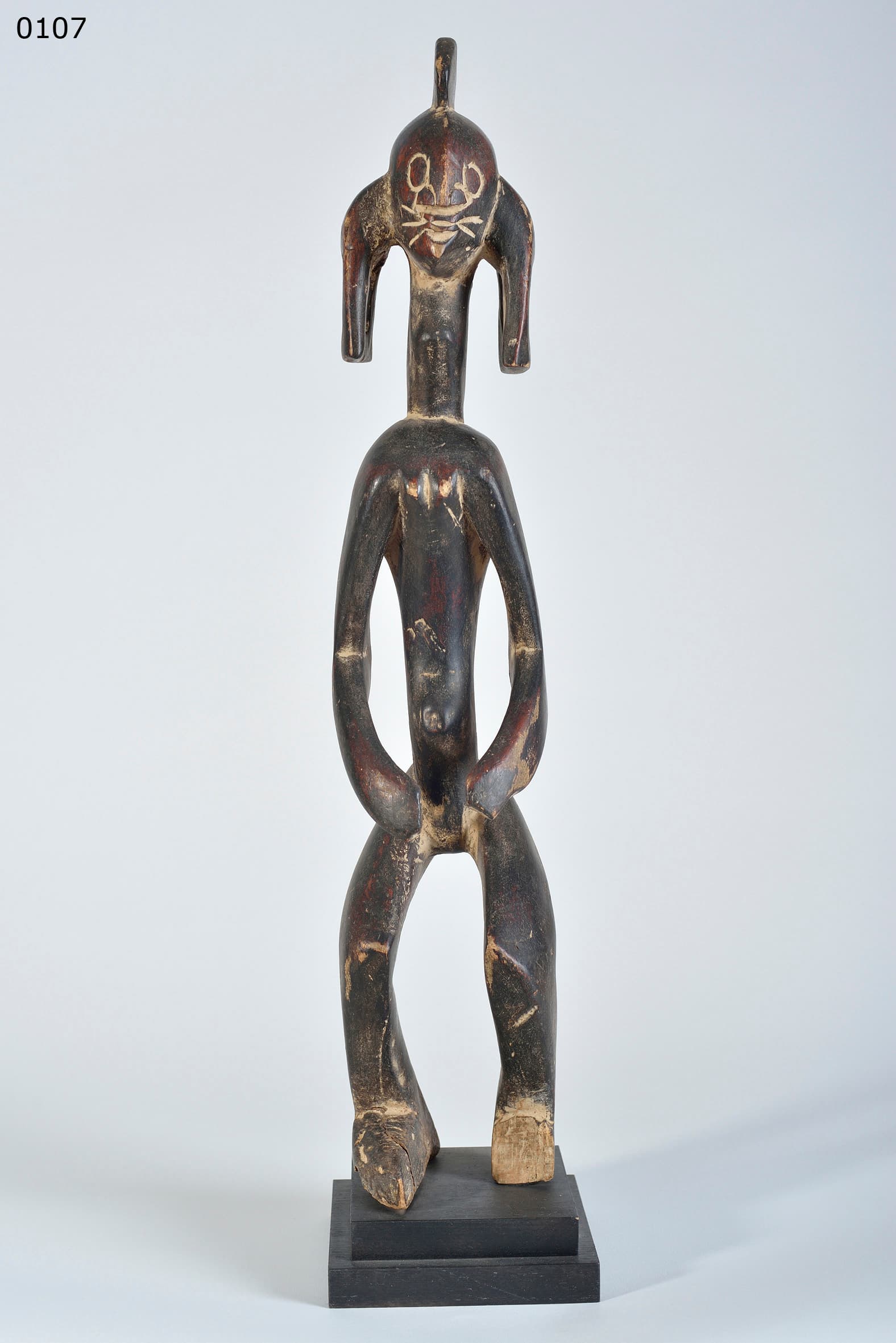
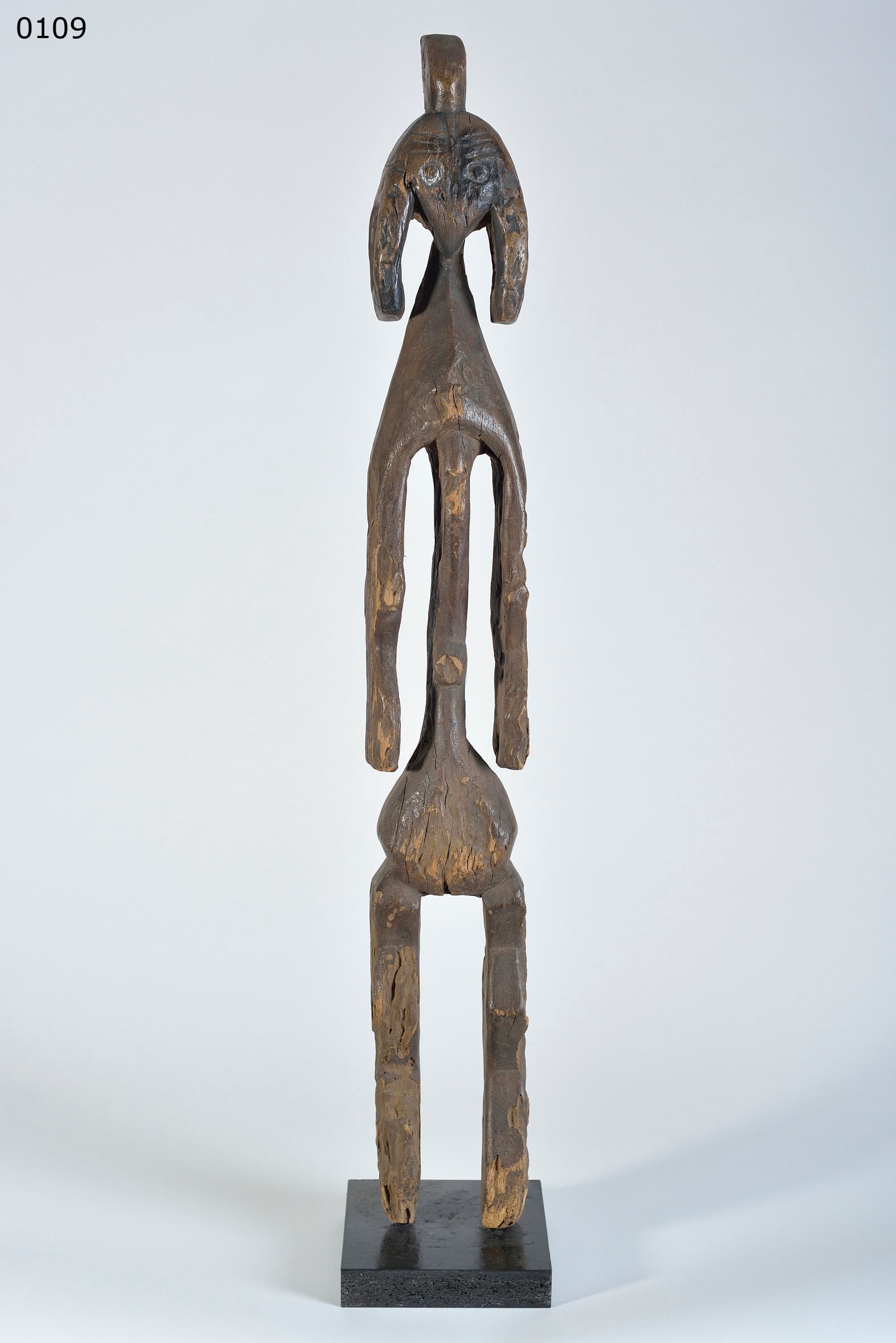
A towering, radically abstract wooden figure (likely first half of the 20th century, 134 cm) from the Mumuye of Nigeria — long columnar torso, helmet-like head with flared ears, and sweeping ribbon-like arms that carve negative space. Exhibited at the French Embassy in Vienna.
1. African cubism and extreme abstraction
The Mumuye, living along the Benue River, remained largely isolated until the late 1960s. When their art was "discovered," it shocked the art world with its modern, almost cubist abstraction.
- Negative Space: The distinctive quality of Mumuye carving lies in what is missing. The arms detach from the body and swoop downward, creating large voids that make the heavy wood feel airy and kinetic.
2. Divination and active utility
Despite the "ancestor" label, these figures (Iagalagana) were not passive grave markers.
- Rainmaking and Healing: They were owned by powerful elders, diviners, and rainmakers. The figures were actively held, spoken to, and sometimes even physically "punished" if they failed to bring rain or heal the sick.
- Prestige Provenance: At 134 cm, this is a substantial example of the style, which was exhibited at the French Embassy in Vienna.
Summary
This Mumuye figure is a notable example of sculptural abstraction. Its dynamic interplay of solid wood and negative space is characteristic of the Benue River Valley aesthetic, which is widely noted for its proto-modernist qualities.
Written with AI assistance from the collection appraisal, object photography and our own research; editorially reviewed. Mistakes are possible — corrections are welcome. How we work →