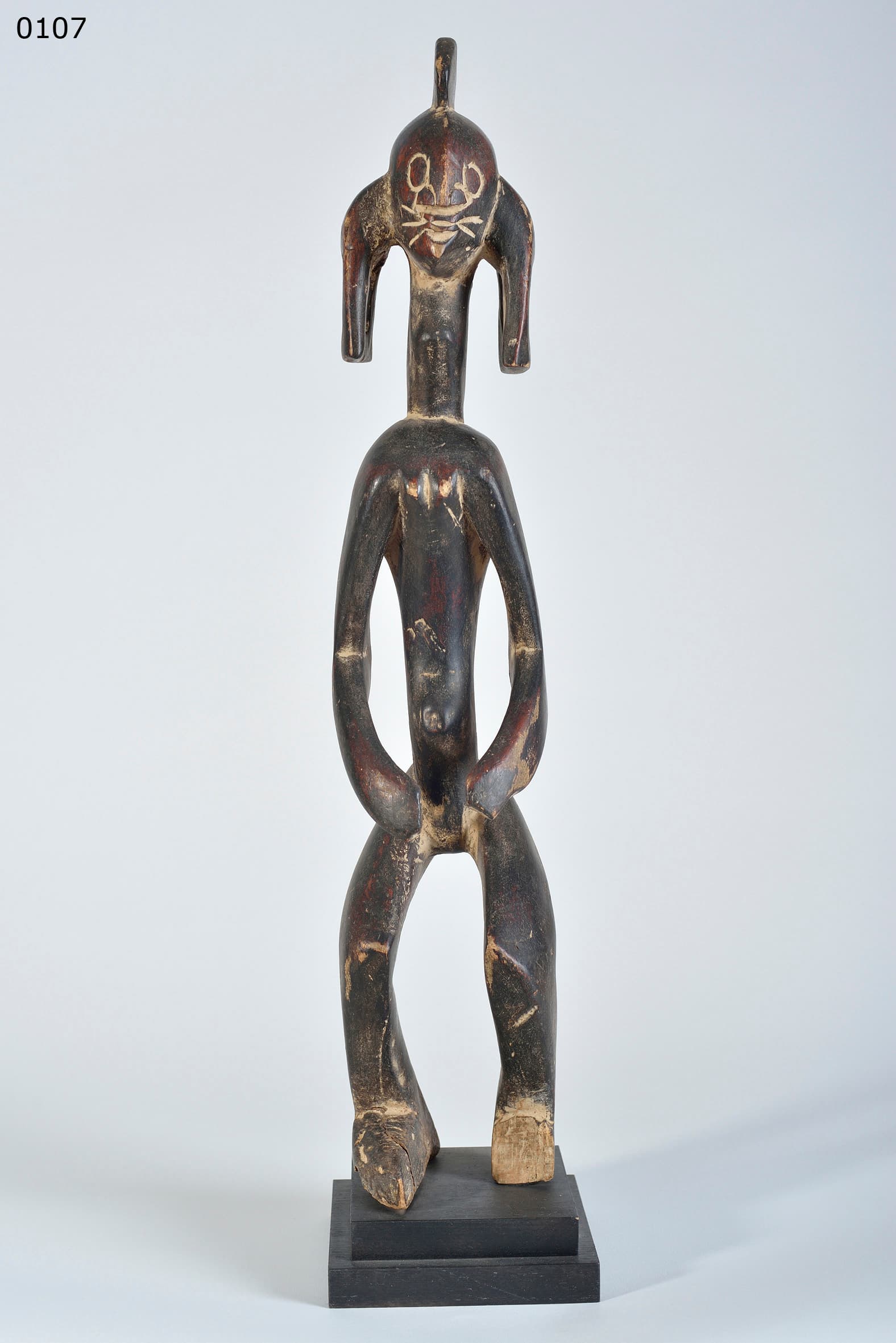
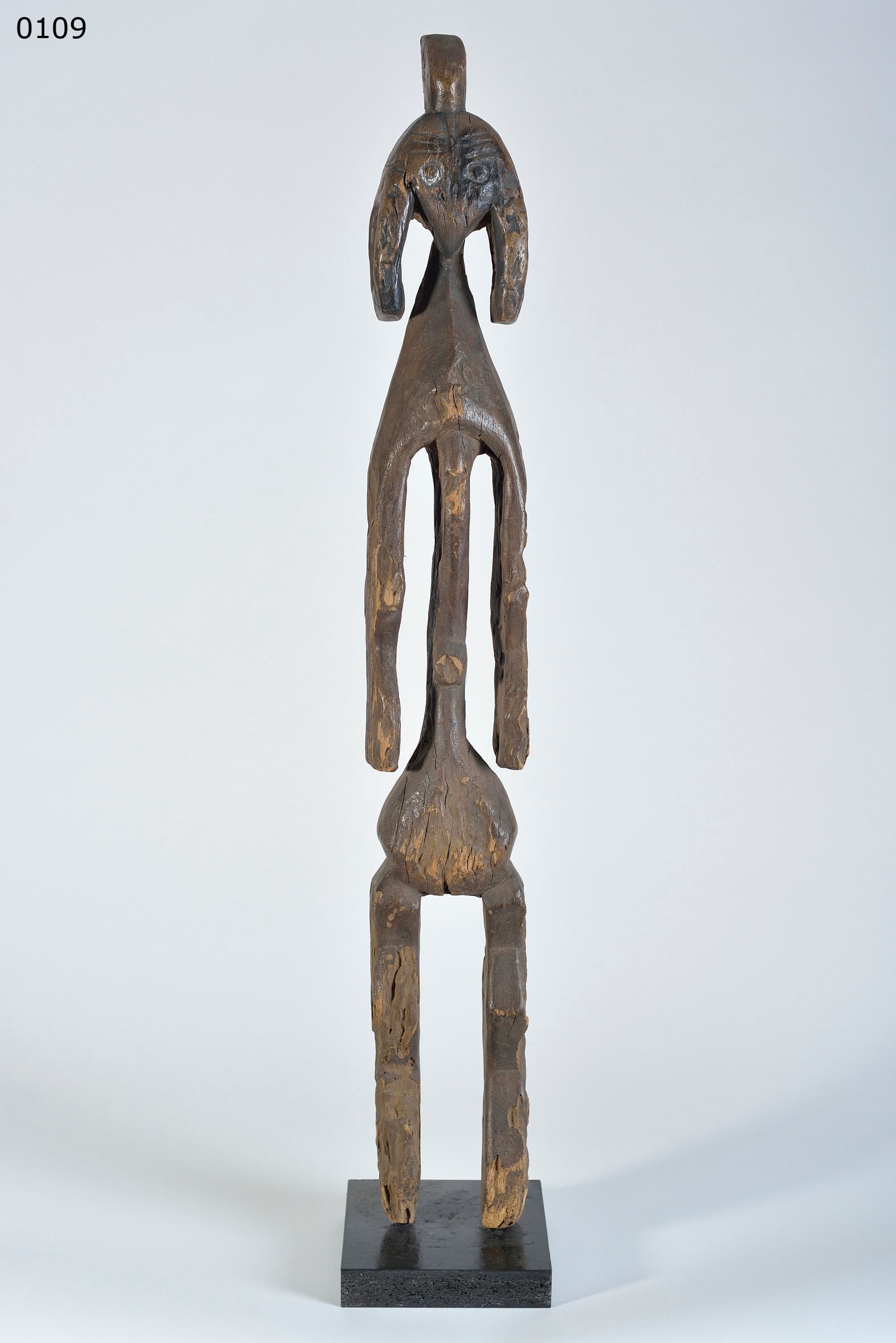
A large, abstract wooden figure (attributed to the first half of the 20th century, 106 cm) from the Mumuye of Nigeria — featuring an elongated tubular torso, crested head, and ribbon-like arms detached from the body.
1. African cubism of the benue valley
The Mumuye, historically situated along the Benue River, produce statuary whose modern cubist aesthetic drew significant attention from the art world when first widely documented in the late 1960s.
- Detached Arms: The arms separate from the torso and swoop downward, creating large voids of negative space. This interplay of solid and void lends the heavy wood an airy, kinetic quality.
- The Sagittal Crest: The ridged, helmet-like head echoes a traditional coiffure once worn by both high-status men and women, suggesting an androgynous authority.
2. Active divination
Despite the "ancestor" label, these figures (Iagalagana) are traditionally understood to have served as active ritual objects rather than passive grave markers. They are documented as being kept by elders, diviners, and rainmakers, who held, consulted, and sometimes even "punished" them when rain or healing failed to come.
Summary
This Mumuye figure is a compelling example of abstract sculpture. Its dynamic interplay of solid wood and negative space is highly characteristic of the Benue River Valley aesthetic — a traditional instrument of divination that recalls the formal qualities of modernist sculpture.
Written with AI assistance from the collection appraisal, object photography and our own research; editorially reviewed. Mistakes are possible — corrections are welcome. How we work →