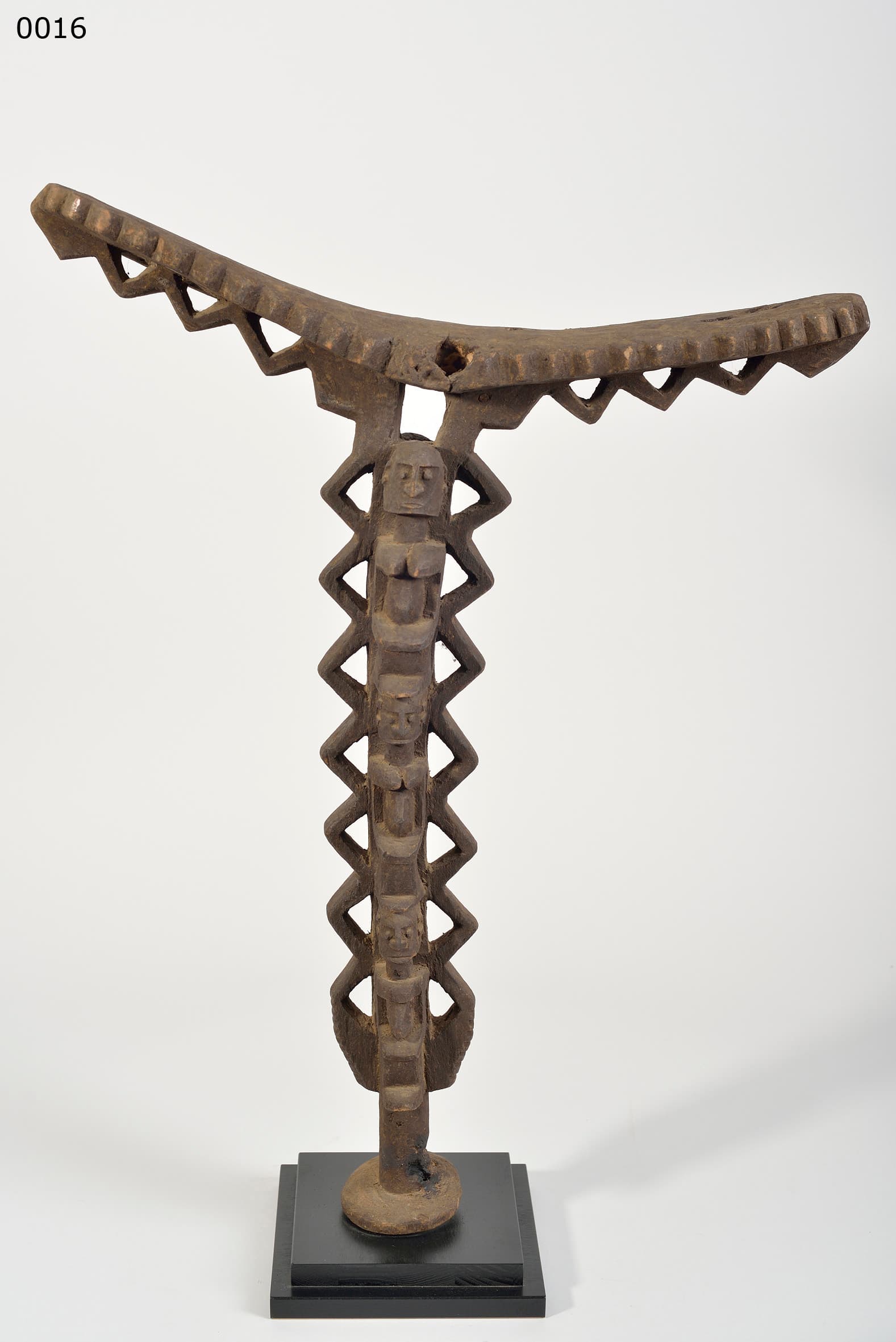
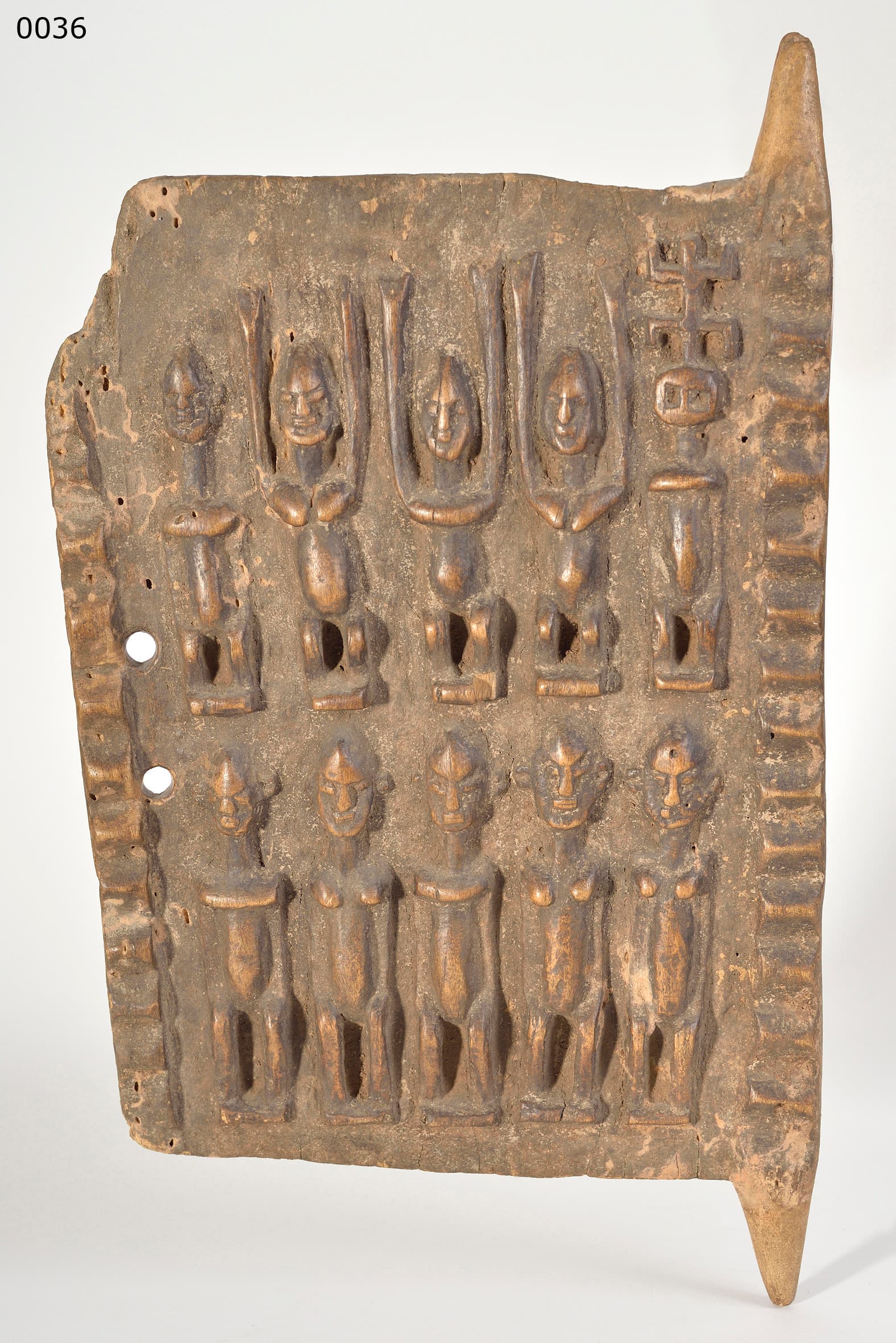
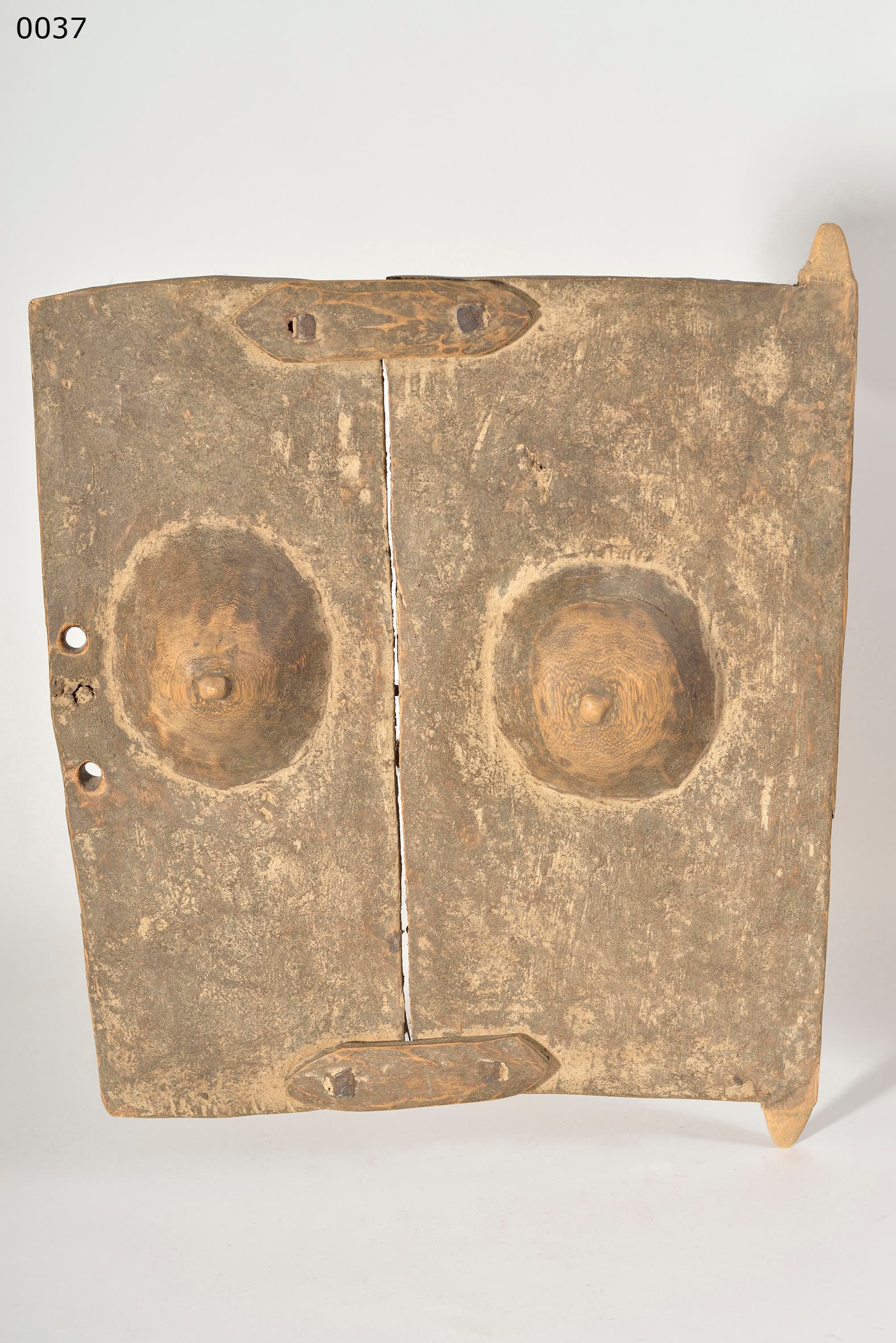
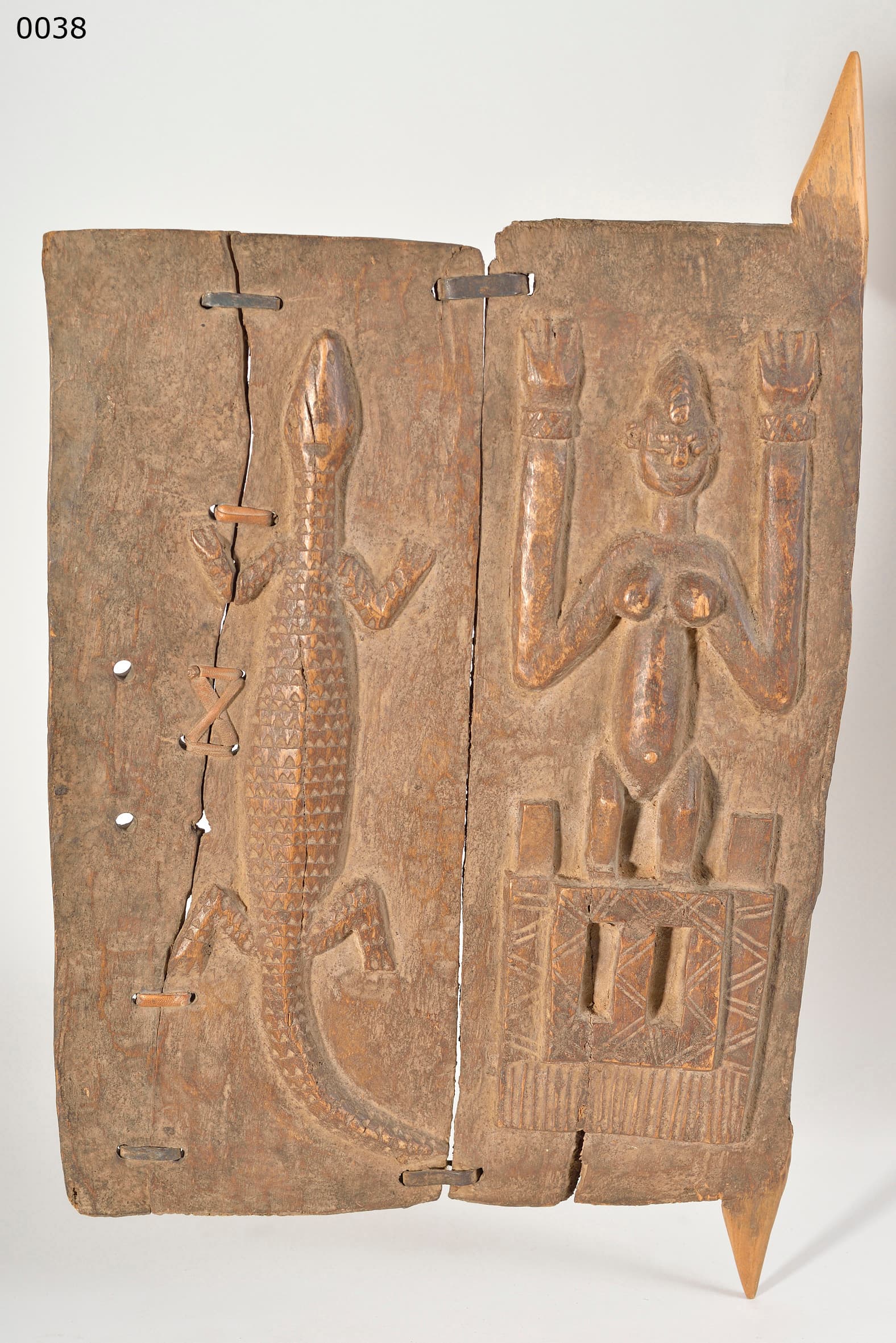
This tall iron staff relies on a prominent, zigzagging central shaft that resolves into an abstract, elongated horizontal head with two rear-sweeping antennae or horns. The metal presents a rough, granular, and uniform terrestrial oxidation.
1. Aesthetic style — serpentine waveforms and mythic antennas
This staff is a dynamic expression of Dogon kinetic forging. The central shaft is manipulated into a series of tight, undulating zigzags, visually embodying the strike of lightning or the slithering motion of a serpent. This energetic waveform terminates in a sleek, horizontal head, adorned with two long, backward-sweeping horns or antennae. These prongs are not merely zoomorphic details (referencing an antelope or mythical reptile); they act as literal, metallic antennas, designed to reach back into the cosmos to pull down the kinetic energy implied by the zigzagging spine.
2. Ritual function — rain catchment and lightning symbolism
The visual alignment with lightning and serpents intrinsically links this staff to the cult of the Nommo and the desperate necessity of rain. Driven firmly into the agricultural fields or a central village shrine, the staff served as an esoteric lightning rod. The Dogon believed that the sharp, jagged geometry of the iron would physically attract the storm clouds, while the terrestrial base grounded that celestial energy, infusing the dry Sahelian soil with the water required to sustain the millet crops.
3. Physical patina — shrine patination and high-carbon forging
The heavy, granular rust covering the length of the staff is indicative of primary outdoor use. Despite the deep terrestrial oxidation — which has caused the iron to flake and pit — the sharp angles of the zigzags and the thin, sweeping antennae have maintained their structural integrity. This is a testament to the exceptional high-carbon forging skills of the Jemme (blacksmith caste), who crafted ritual technology explicitly designed to survive for generations in one of the planet's harshest climates.
Summary
A brilliant fusion of serpentine energy and lightning symbolism, this iron staff operated as an esoteric agricultural lightning rod. Its heavy, granular terrestrial rust guarantees its authentic, historical use as an outdoor rainmaking implement.
Documentation: published in "DOGON".
Written with AI assistance from the collection appraisal, object photography and our own research; editorially reviewed. Mistakes are possible — corrections are welcome. How we work →