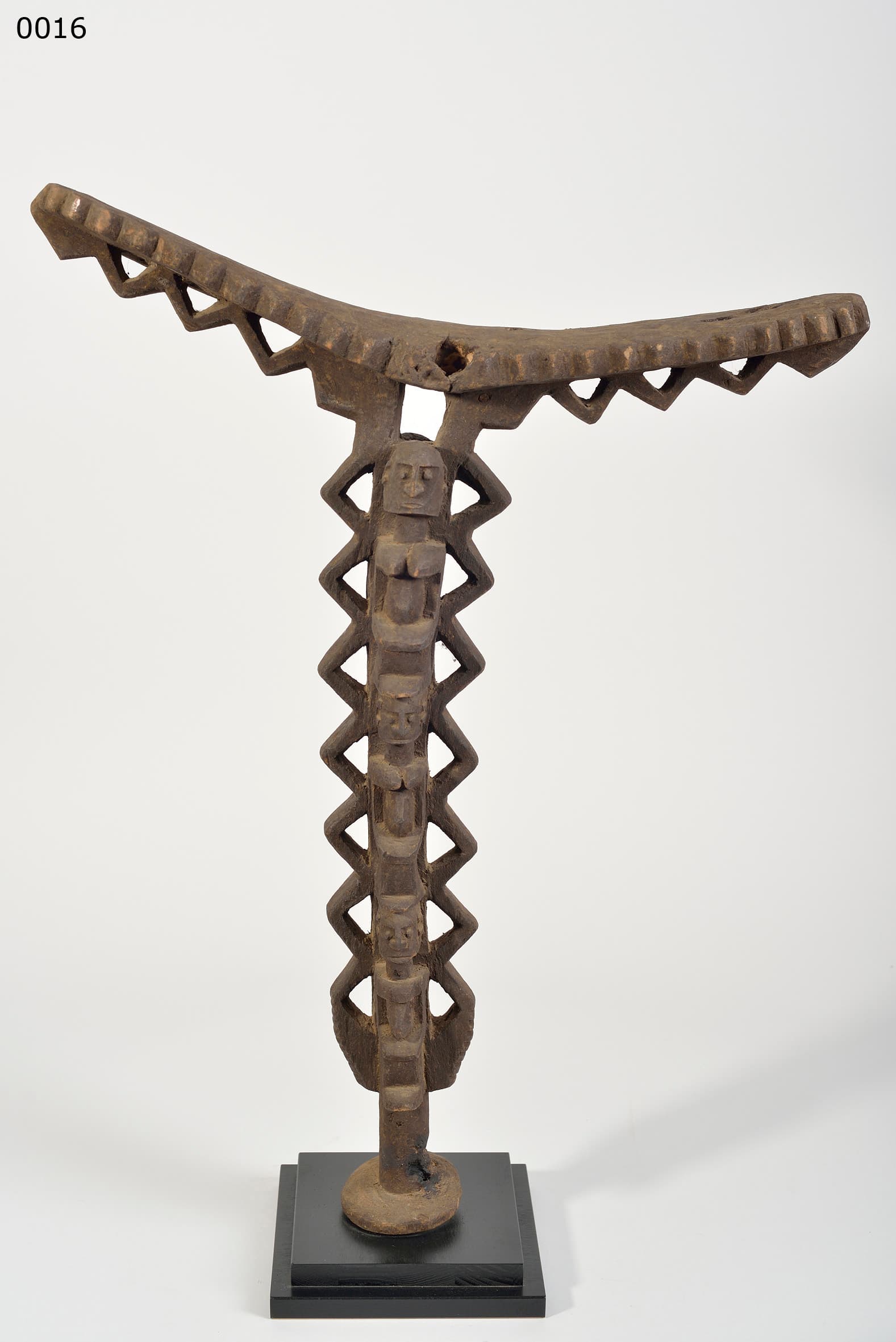
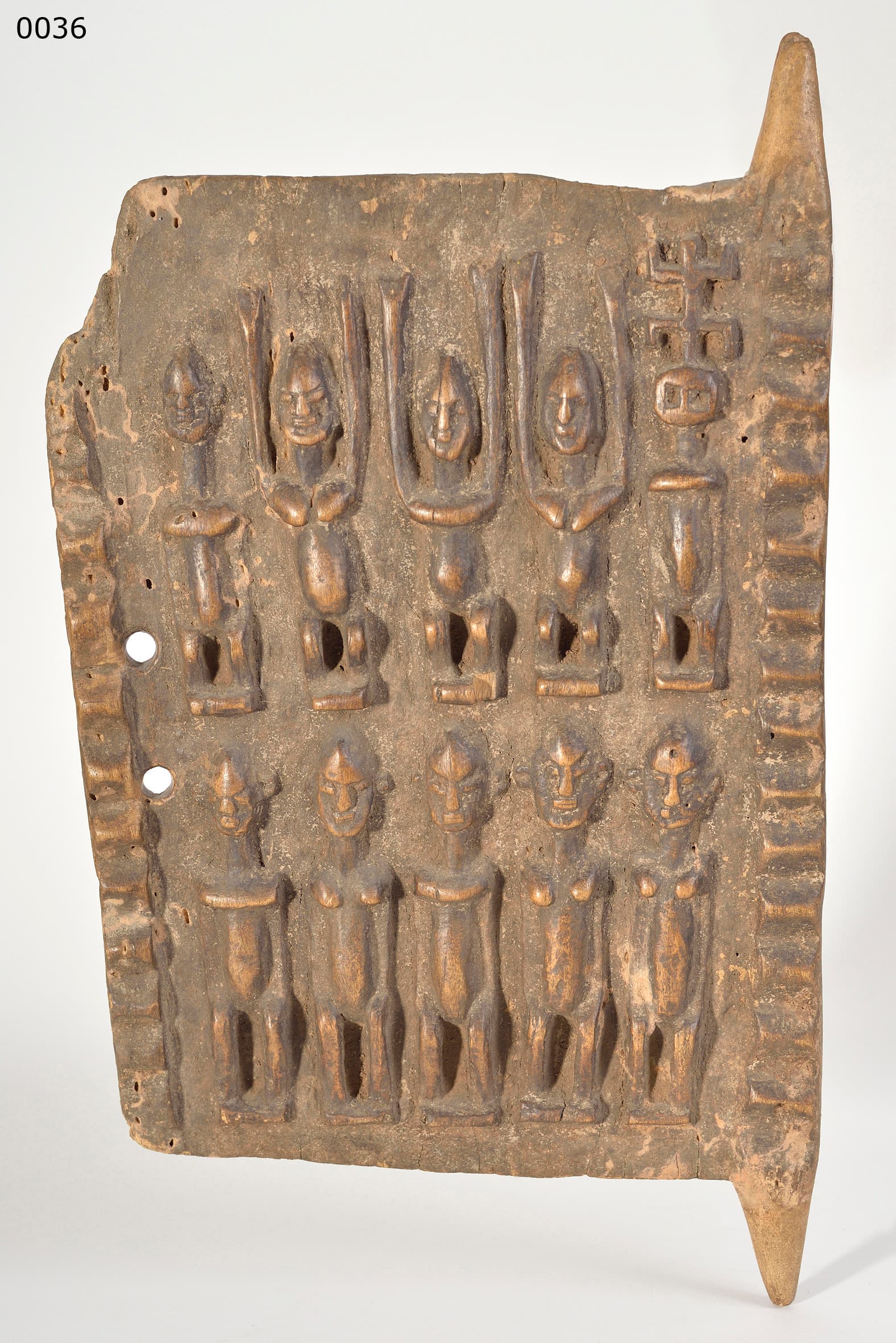
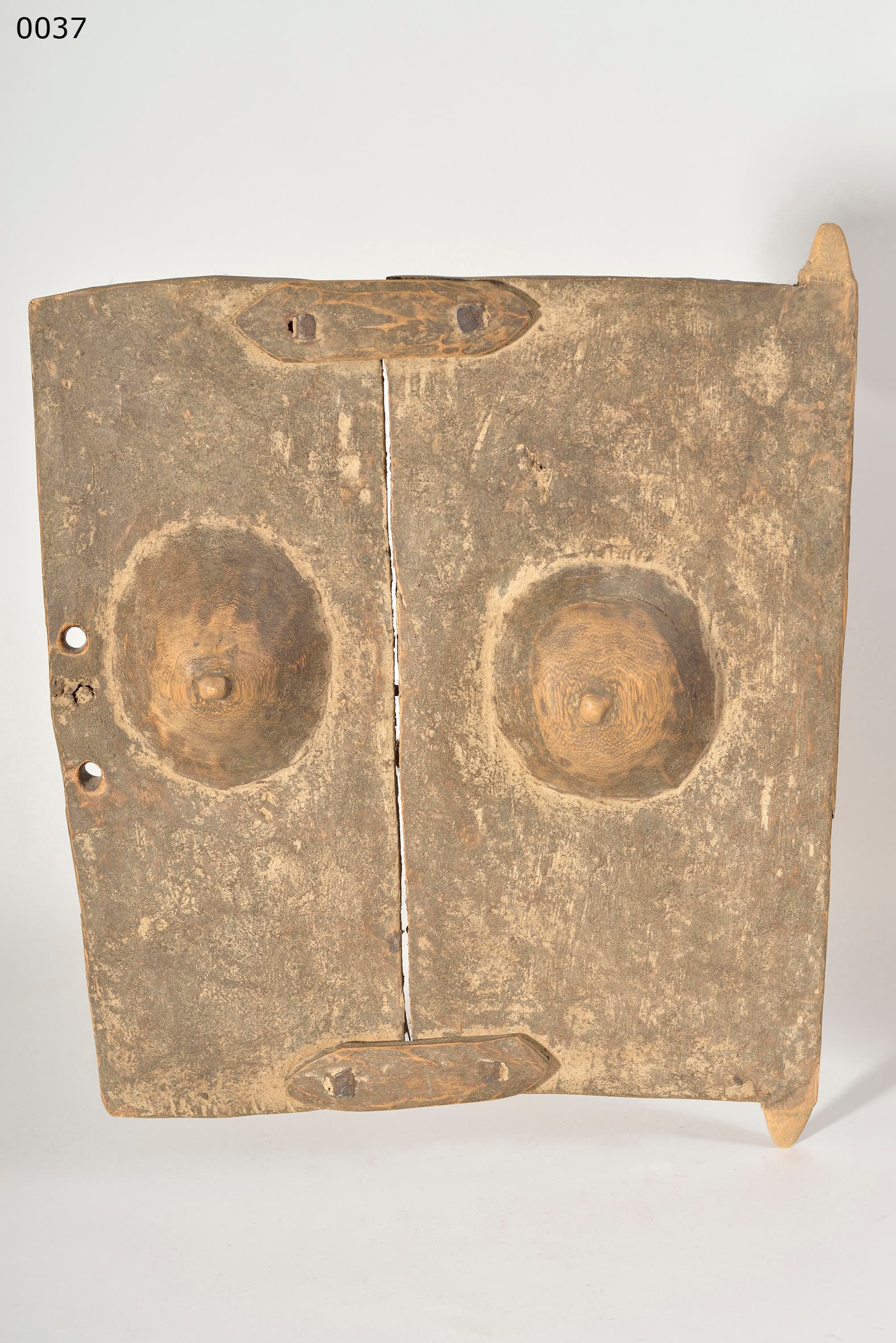
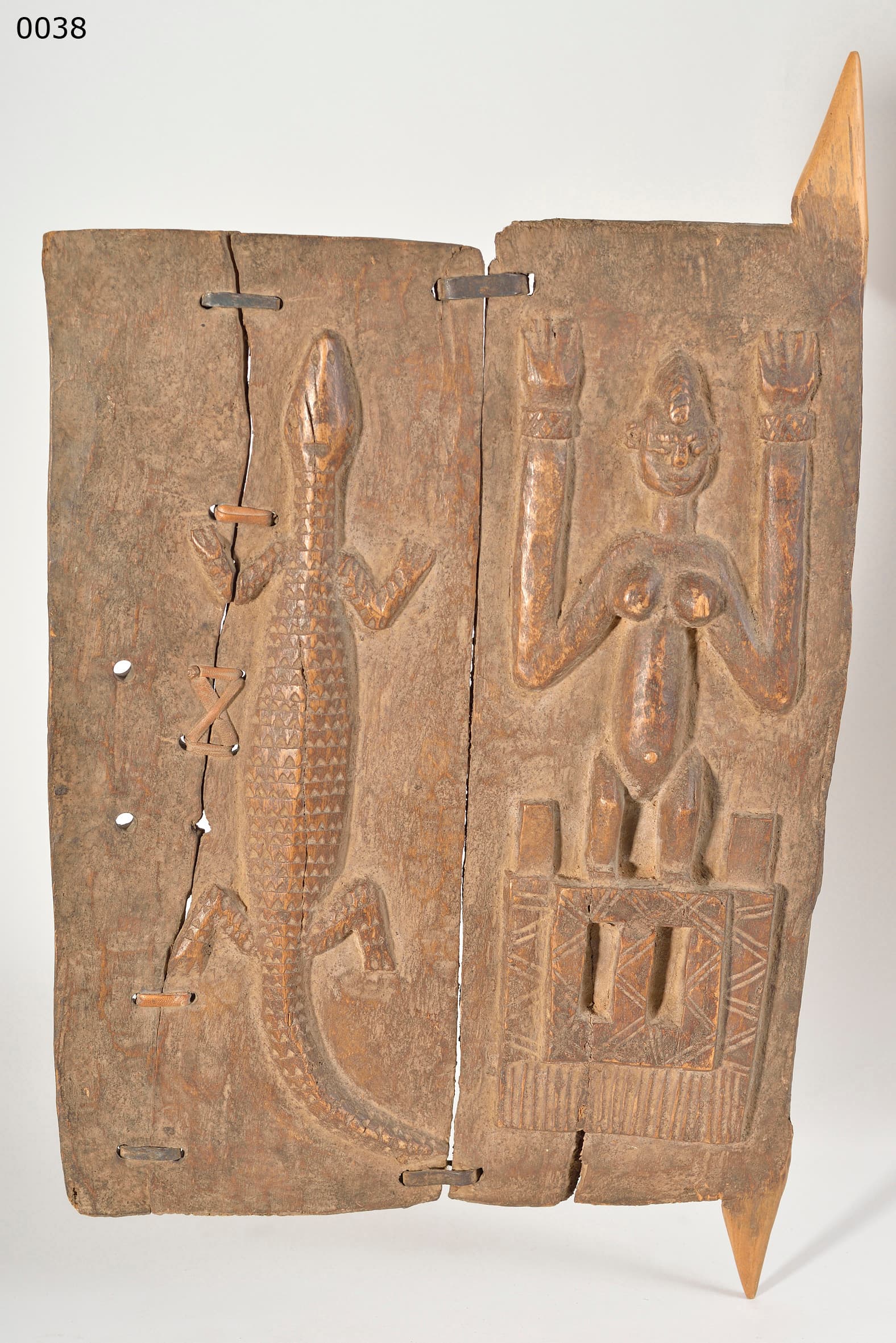
Forged entirely from iron, this rare neckrest features a classic curved pillow plate supported by a vertical post on a flared base, with an exceptionally long, horizontal iron tang extending from the side. The surface is heavily pitted and degraded by profound rust.
1. Aesthetic style — translating wood to iron and the Tellem legacy
Neckrests are ubiquitous across Africa, typically carved from wood to protect elaborate coiffures during sleep. However, the execution of this object in solid, forged iron radically alters its ontological status. By translating a common domestic form into an indestructible, heavy metal, the blacksmith elevated the object from the realm of the living into the realm of the eternal. The sweeping, minimalist geometry of the curved plate draws directly on the ancient aesthetic legacy of the Tellem, physically linking the deceased to the mythic founders of the Bandiagara cliffs.
2. Ritual function — funerary practices and the cave tombs
The primary indicator of this object's specific function is the massive, horizontal iron tang projecting from its side. This spike was not meant for a domestic bed; it was designed to be driven directly into the soft rock or packed earth of the high cliff-face caves where the Dogon interred their elite dead (such as Hogons). The neckrest served to physically elevate the skull of the deceased — the sacred repository of their intellect and nyama — isolating it from the impurity of the cave floor and securing it firmly in place for eternity.
3. Physical patina — cave burial patination and extreme pitting
The 19th-century dating of this artifact is overwhelmingly supported by its advanced state of metallurgical decay. The iron exhibits a specific type of dry, deep-tissue pitting characteristic of objects left for centuries in the arid, yet alkaline micro-climates of the Bandiagara funerary caves. The surface has bubbled and degraded significantly, yet the structural integrity of the heavy iron remains intact, providing an unadulterated archaeological record of Dogon elite burial practices.
Summary
Elevating a domestic form into eternal metal, this rare iron neckrest was engineered specifically for the cliffside tombs of the Dogon elite. Its massive anchoring tang and profoundly pitted cave-patina authenticate it as a highly significant 19th-century funerary relic.
Documentation: published in "DOGON".
Written with AI assistance from the collection appraisal, object photography and our own research; editorially reviewed. Mistakes are possible — corrections are welcome. How we work →