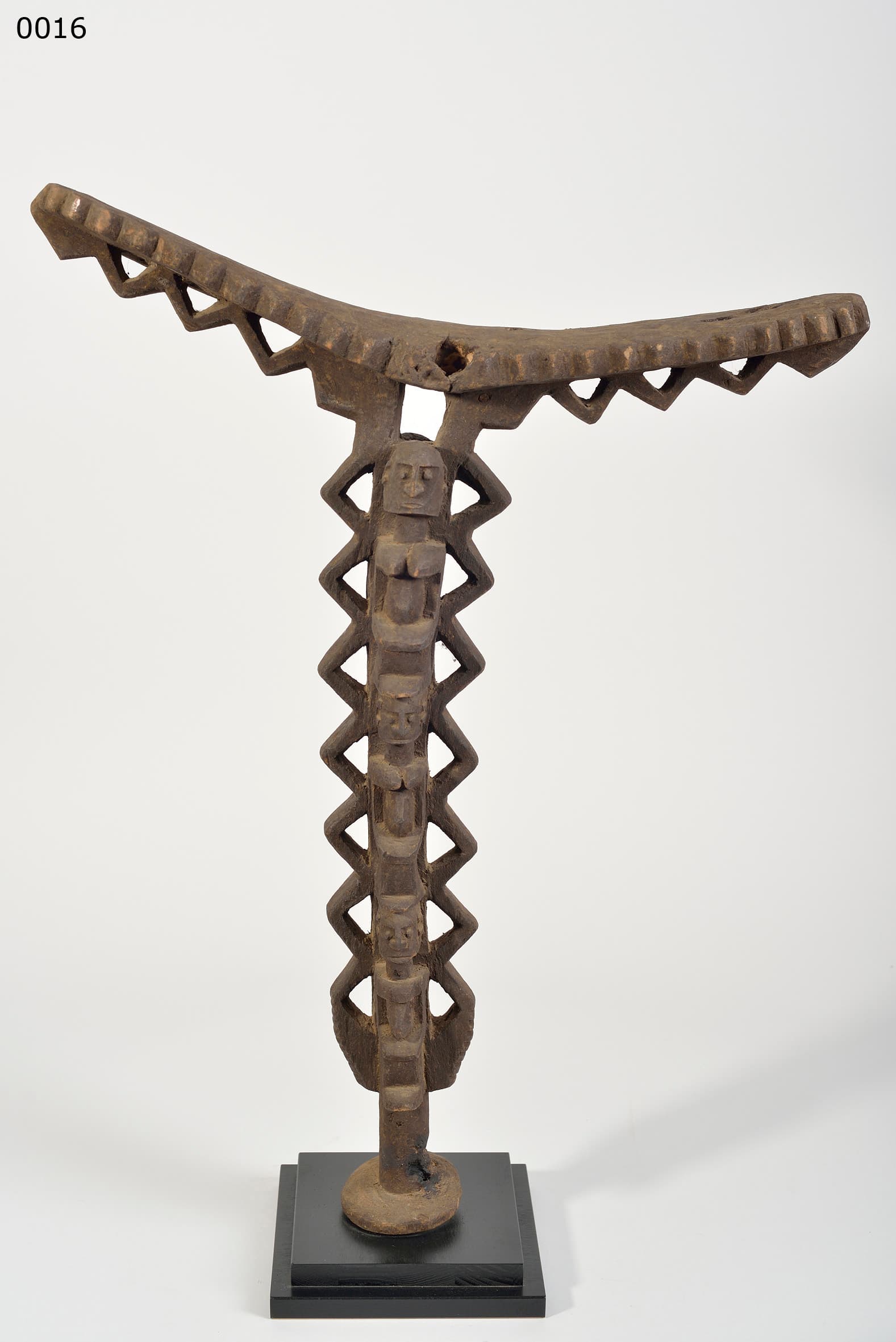
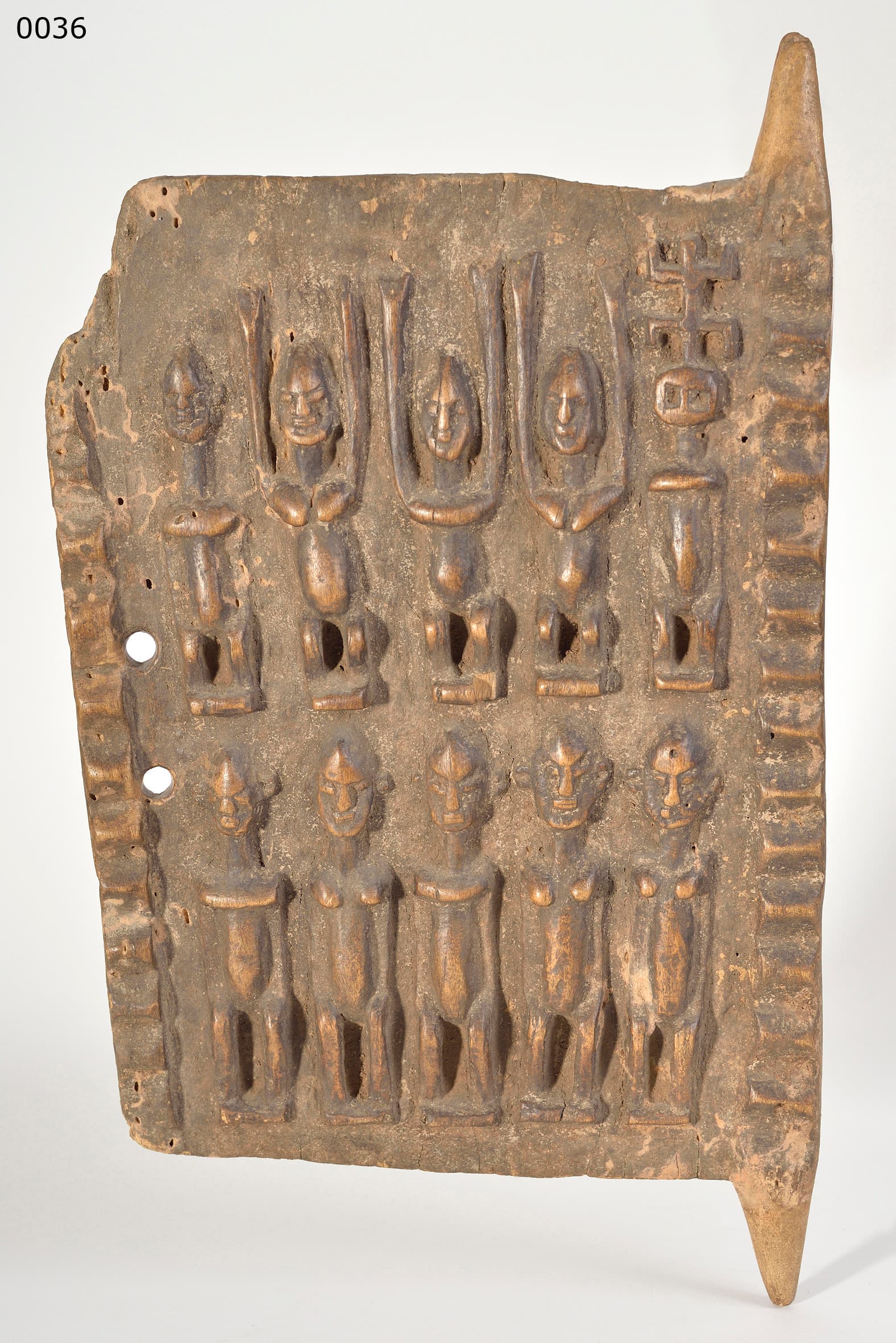
This pair of ritual implements features vertical iron shafts adorned with diminutive, abstract human figures in relief, terminating in sharply hooked apexes that hold clusters of flat iron discs. Both pieces exhibit a dark, earthy, and highly stable rust crust.
1. Aesthetic style — sistrum typology and the human grip
These objects represent a specific class of African acoustic instruments known as sistra (or rattles). The blacksmith forged a tall vertical shaft, bending the top into a strict 90-degree angle to serve as a rail for the loose iron discs. What elevates these beyond simple instruments is the inclusion of the abstract human figures forged directly onto the central shafts. These figures act not only as an ergonomic grip for the priest but as visual representations of the ancestors themselves, literally holding the instrument that commands their attention.
2. Ritual function — acoustic awakening of the binu
In Dogon ritual practice, the sharp, percussive sound of iron clashing against iron is believed to be the most effective way to cut through the spiritual atmosphere and reach the Nommo. During high-stakes ceremonies at the Binu shrine, the priest would violently shake these implements. The flat discs sliding and crashing against the iron rail created a deafening, metallic clatter designed to "wake up" dormant spirits, drive away malevolent forces, and forcefully demand the cosmos's attention to the village's sacrifices.
3. Physical patina — handling wear and stable rust
The patination on these two sistra perfectly reflects their active, kinetic use. The central shafts — specifically around the area of the abstract human figures — show a slightly smoother, dark-brown patination where the hands of the priests repeatedly gripped them during decades of ceremonial shaking. Conversely, the hooked rails and the flat discs retain a thicker, rougher layer of oxidation. This differential wear pattern is the ultimate physical proof of their functional history.
Summary
Fusing abstract human portraiture with loud, percussive architecture, these iron sistra were the acoustic triggers of the Dogon Binu religion. Their differential handling wear and stable rust authenticate them as deeply utilized, early 20th-century ceremonial instruments.
Documentation: published in "DOGON".
Written with AI assistance from the collection appraisal, object photography and our own research; editorially reviewed. Mistakes are possible — corrections are welcome. How we work →