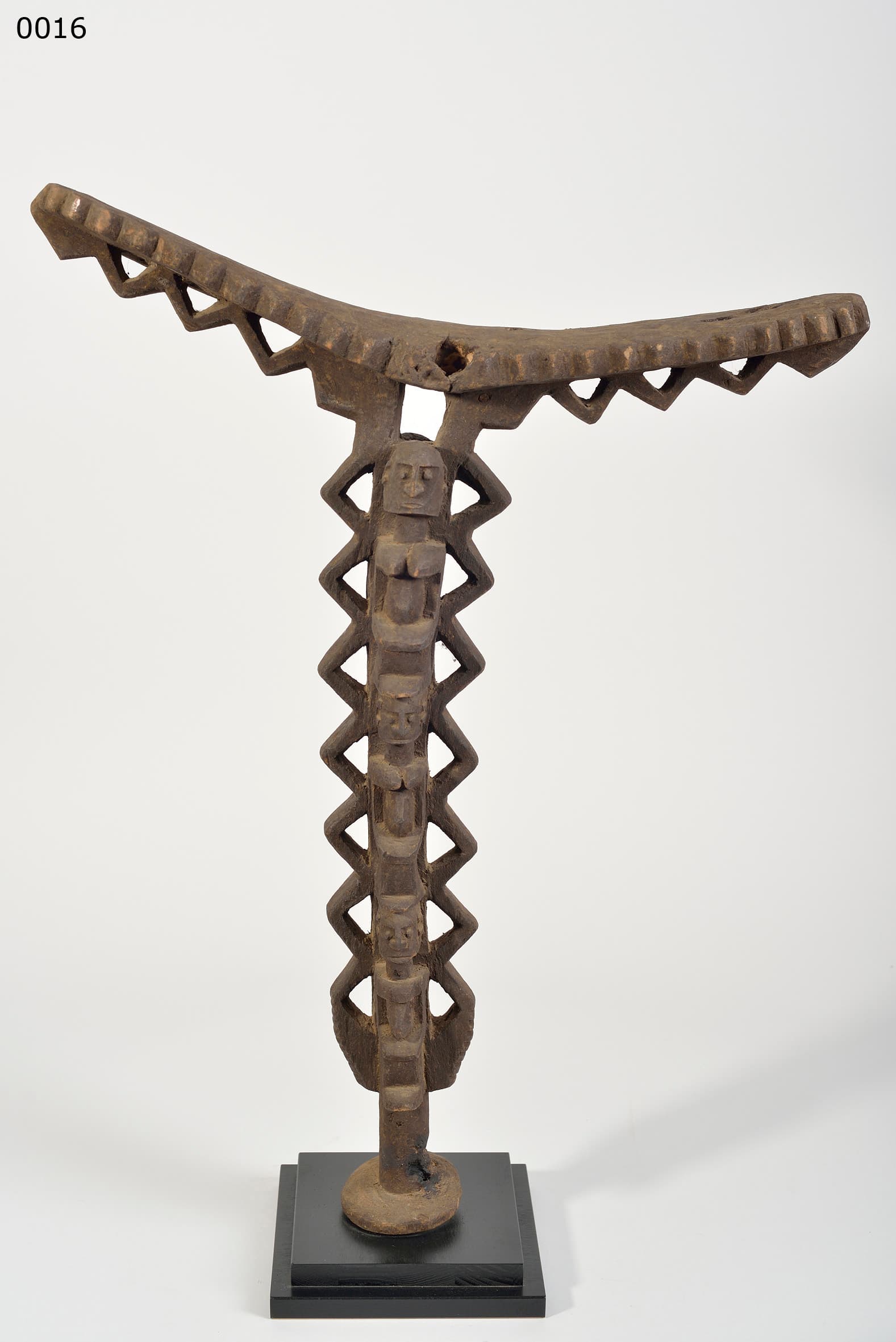
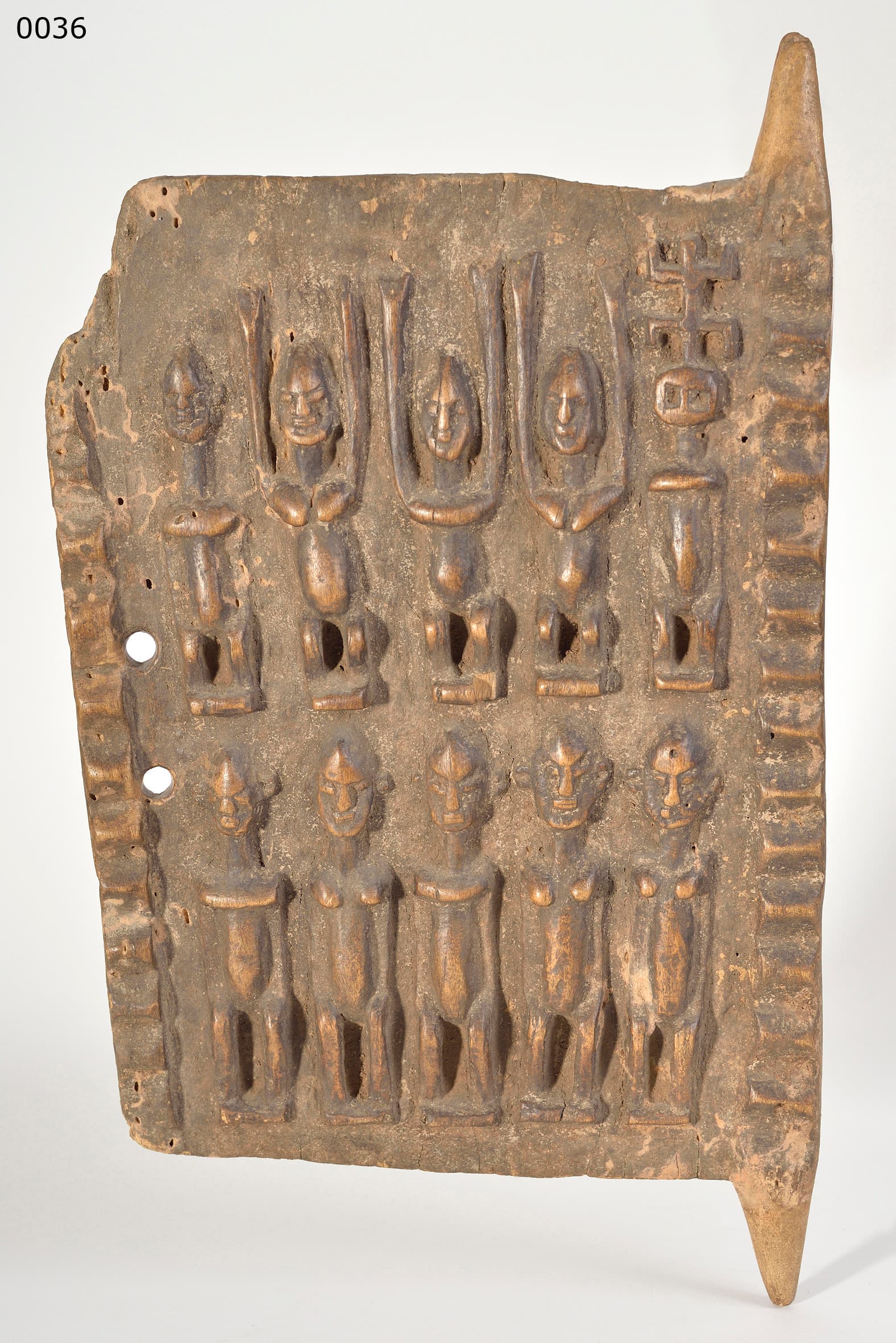
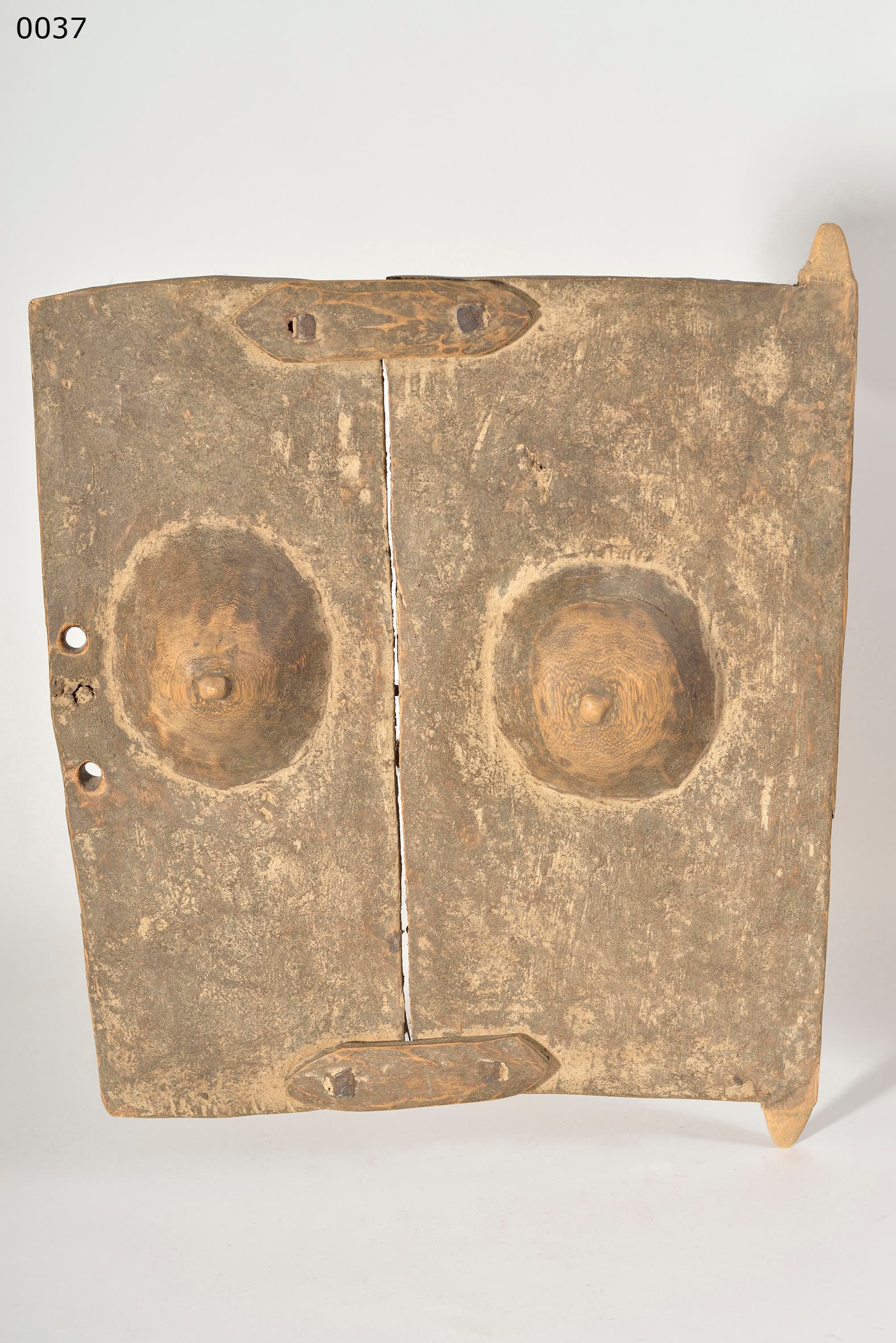
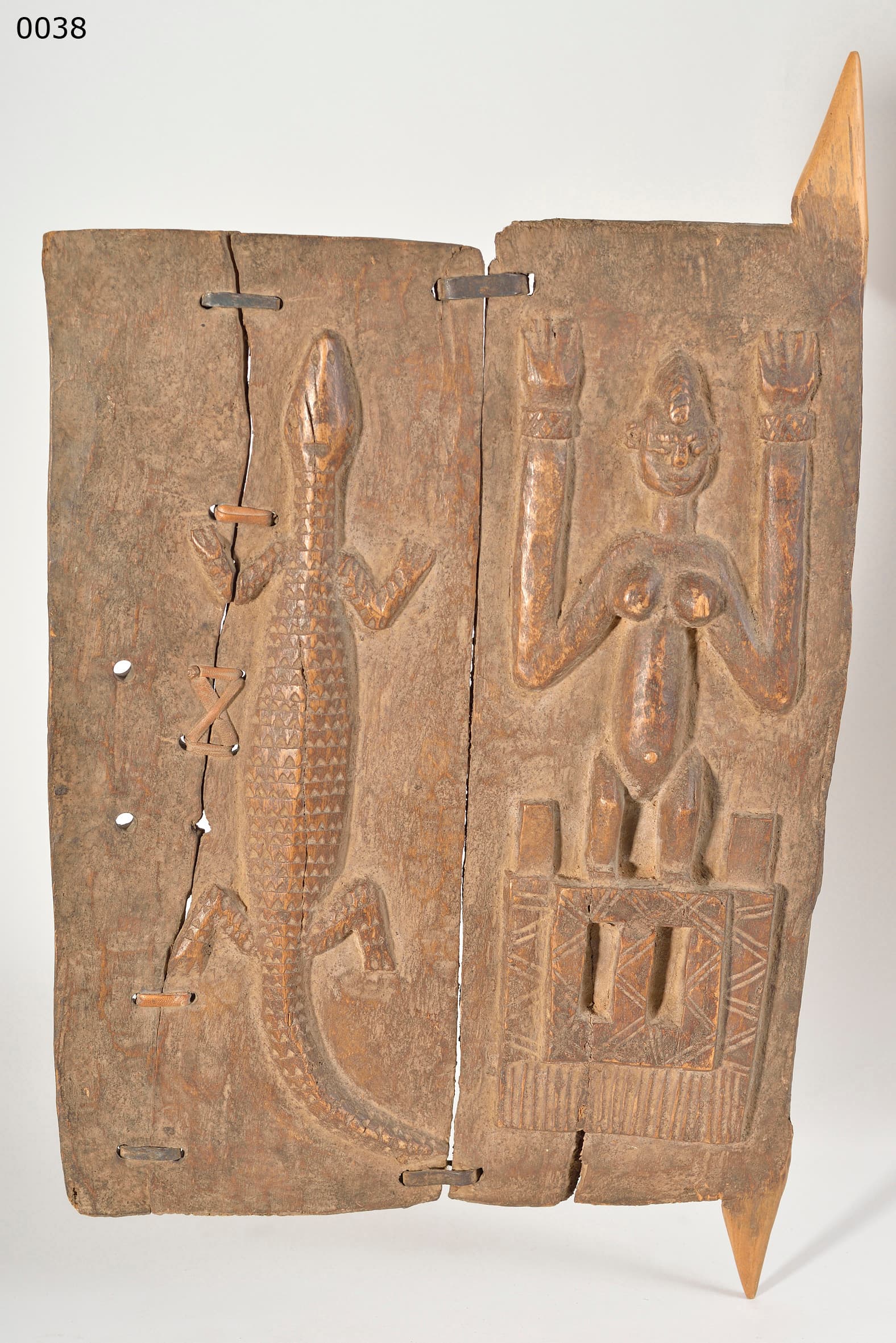
Reaching 86 cm in height, this staff culminates in a schematic human figure with upraised arms, while the mid-shaft hosts an umbrella-like arrangement of spiraling hooks and hanging conical bells. It displays a dense, granular, and uniform layer of terrestrial rust.
1. Aesthetic style — tiered cosmology and the orans gesture
This monumental staff utilizes a tiered composition to address multiple cosmological needs simultaneously. The apex is dominated by the classic orans (praying) figure, its wide, U-shaped arms raised high to catch the blessings and rain of the creator god, Amma. Halfway down the shaft, the blacksmith forged an intricate, umbrella-like array of spiraling hooks. This visually separates the staff into the celestial realm of prayer above and the turbulent, terrestrial realm of defense and magic below.
2. Ritual function — rainmaking and shrine defense
This staff is associated with the various ritual roles of a high-ranking Dogon priest. During agricultural crises, the upraised arms served to symbolically harvest rain from the sky. Concurrently, the lower array of hooks and suspended bells acted as a defense perimeter. As the wind or the priest moved the staff, the bells would chime, satisfying the acoustic requirements to awaken the Nommo while the hooks were intended to snare negative forces attempting to disrupt the rainmaking ceremonies.
3. Physical patina — deep burial oxidation and dual patina
The base of this staff, forged into a sharp, spear-like point, indicates it was designed to be driven deeply into the packed earth of a shrine. The patination reflects this: the lower third of the iron is encased in a highly granular, thick crust of terrestrial rust and soil concretions, while the upper section shows a slightly smoother, atmospheric oxidation. This dual-zone weathering pattern is consistent with a long, stationary placement as a 20th-century outdoor altar centerpiece.
Summary
A synthesis of celestial supplication and terrestrial defense, this tiered iron staff is associated with Dogon rainmaking. Its spear-like base and heavy, dual-zone terrestrial rust are consistent with long-term installation in a Malian sanctuary.
Documentation: published in "DOGON".
Written with AI assistance from the collection appraisal, object photography and our own research; editorially reviewed. Mistakes are possible — corrections are welcome. How we work →