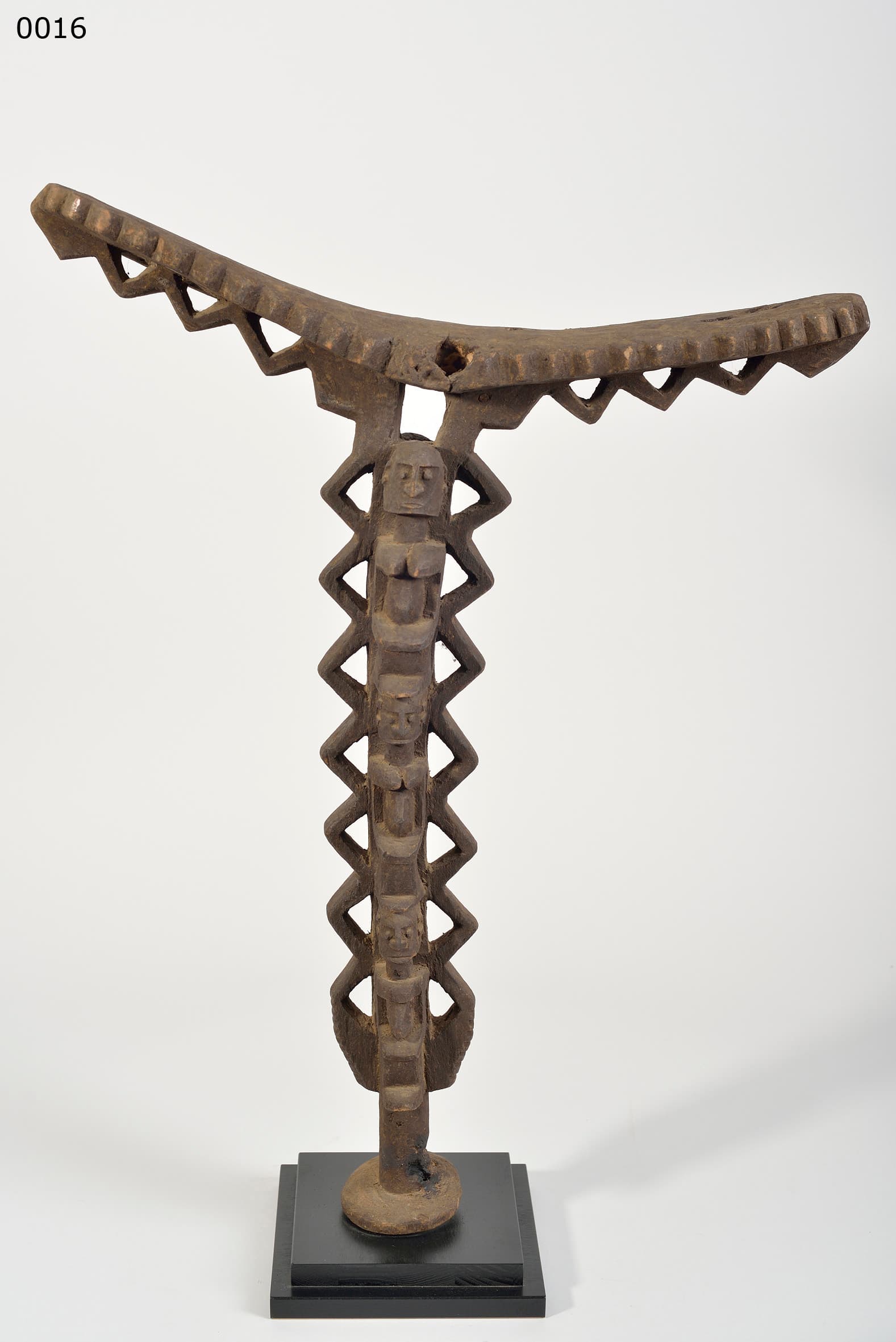
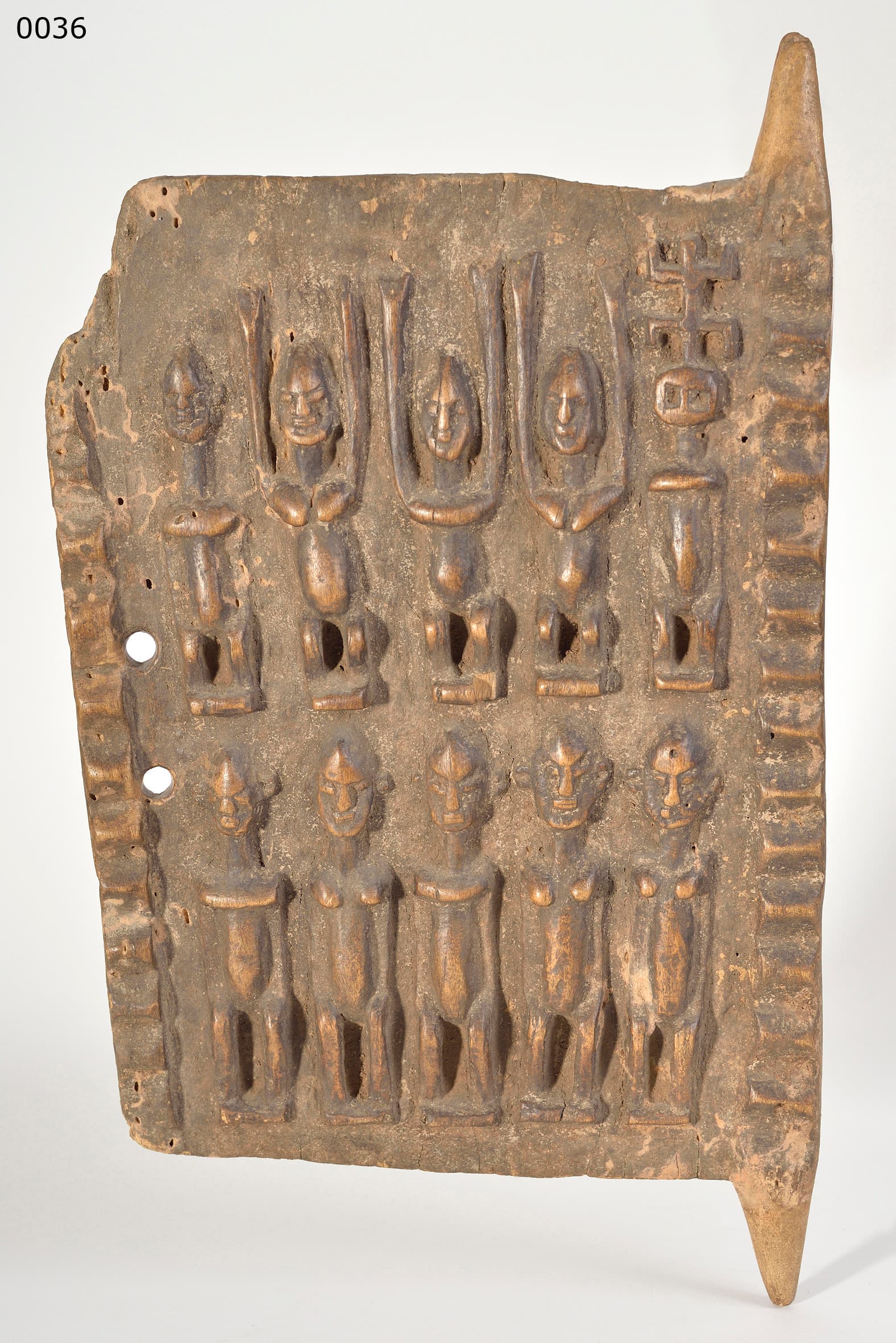
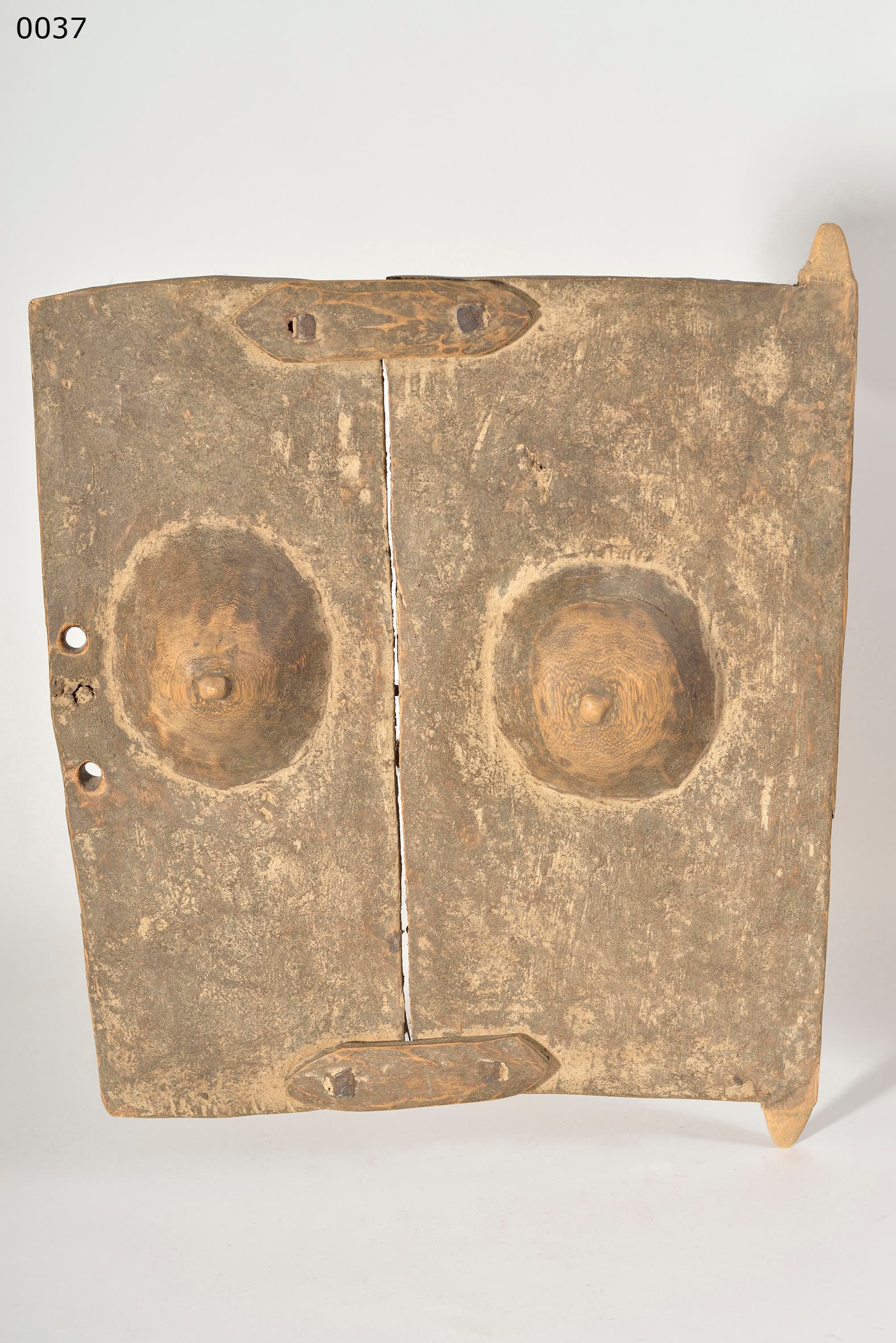
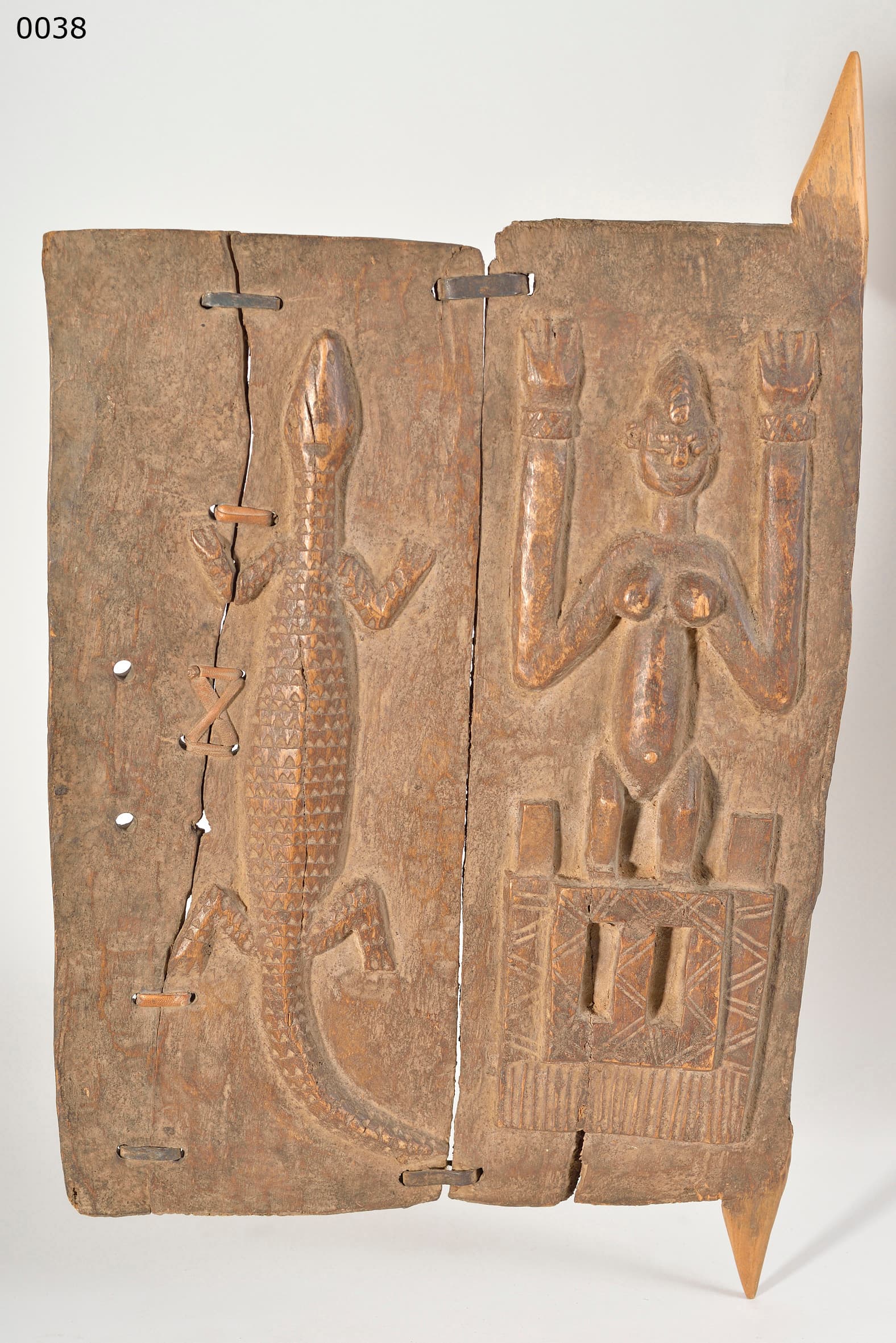
This 60 cm iron staff is characterized by a primary humanoid figure at the apex holding a cluster of bells on one side, and a secondary, smaller figure or appendage clinging to the mid-shaft below it. The metal surface is obscured by a dense, irregular crust of dark brown oxidation.
1. Aesthetic style — multi-figural composition and the climbing motif
This staff represents a complex narrative of spiritual hierarchy and movement. The presence of two distinct figures on a single vertical axis is consistent with the Dogon concept of lineage — the ancestral founder above, and the subsequent generations below. Furthermore, the lower figure appears to be clinging to or climbing the shaft, a motif strongly associated with the descent of the Nommo (creator spirits) from the heavens or the journey of the human soul reaching toward the celestial realm. This infuses the static iron with an upward, kinetic narrative.
2. Ritual function — asymmetrical acoustic defense
Unlike symmetrically balanced staffs, this object features a clustered, heavy concentration of bells on just one side of the upper figure. This deliberate asymmetry creates a physical and acoustic "weight" that shifts the balance of the staff. In ritual use, this side-heavy design would cause the staff to swing and chime erratically when struck against the ground or caught by the wind. This erratic acoustic pattern was believed to be particularly effective at disorienting and repelling malevolent witchcraft (sugi), creating an unpredictable sonic defense perimeter.
3. Physical patina — irregular patination and canonical record
The iron exhibits a thick, highly irregular patination where areas of dense, granular rust contrast with smoother, dark brown oxidation. This uneven weathering suggests that the staff was partially protected, perhaps leaning against a shrine wall or partially covered by a protective overhang, allowing the elements to weather it asymmetrically over the decades. Its inclusion in the "DOGON" publication supports the interpretation of this weathering pattern as consistent with early 20th-century Malian ritual practice.
Summary
Utilizing an asymmetrical acoustic cluster and climbing motifs, this staff serves as an example of Dogon spiritual defense and lineage representation. Its irregular oxidation and published history support its attribution as a significant ethnographic artifact.
Written with AI assistance from the collection appraisal, object photography and our own research; editorially reviewed. Mistakes are possible — corrections are welcome. How we work →