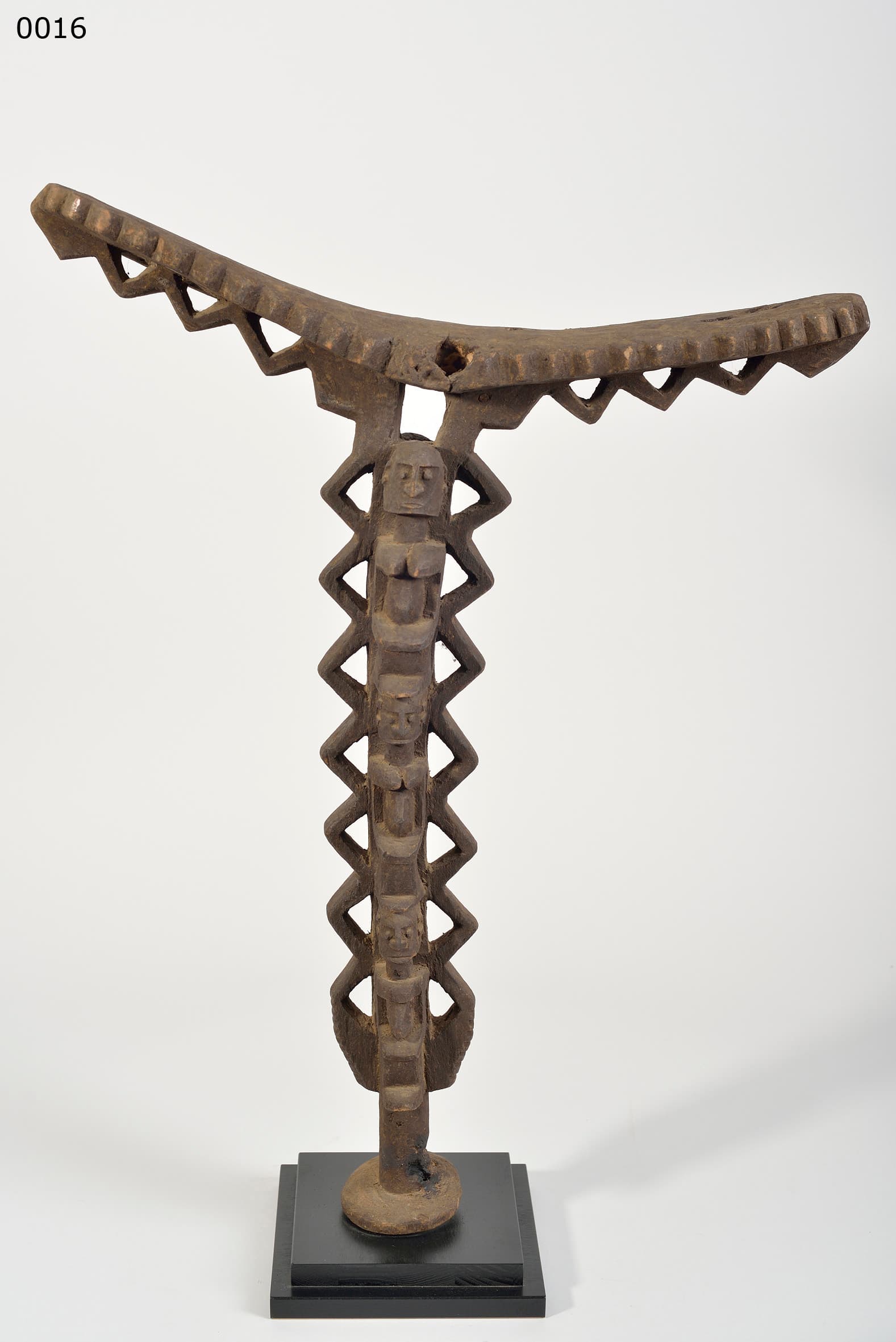
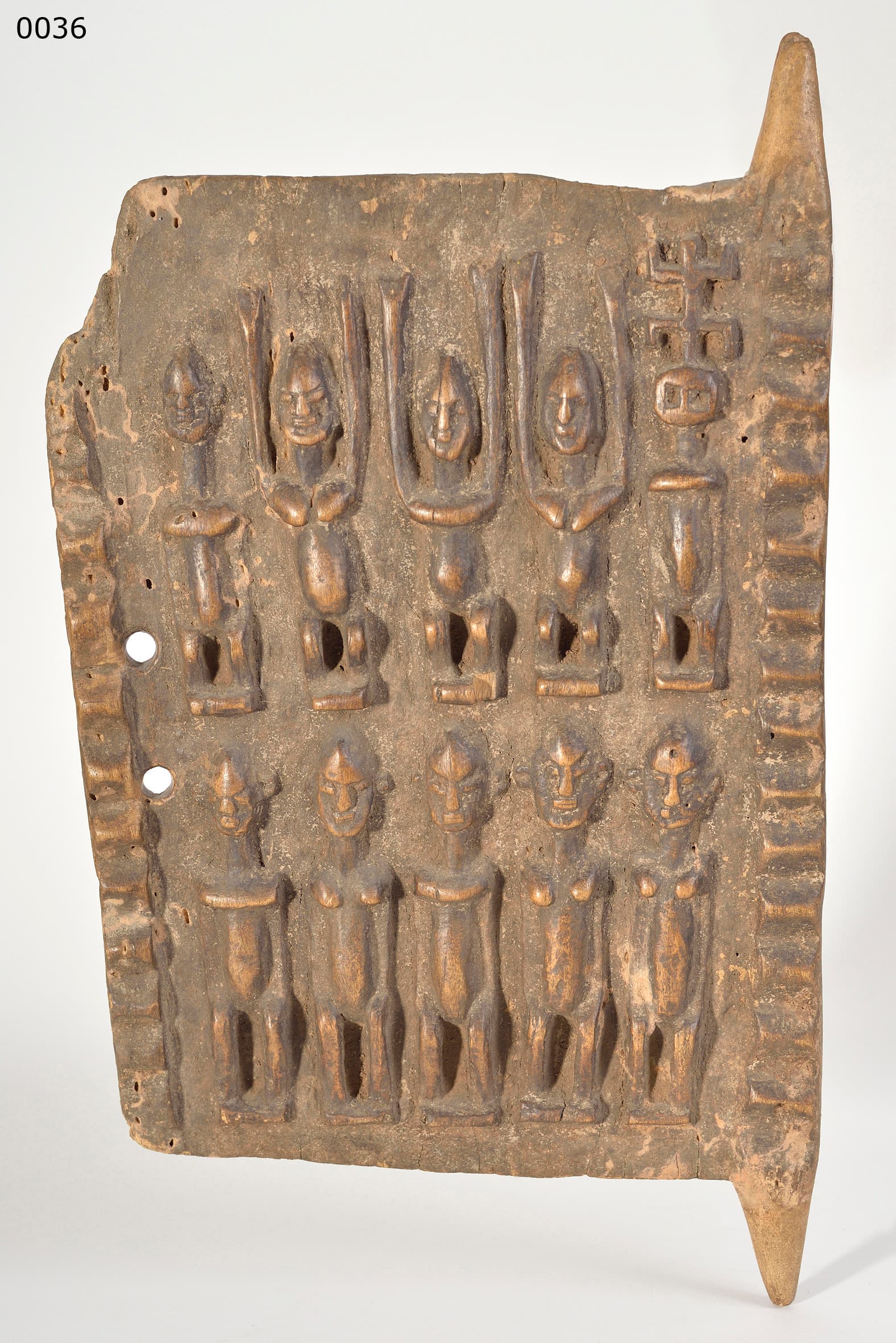
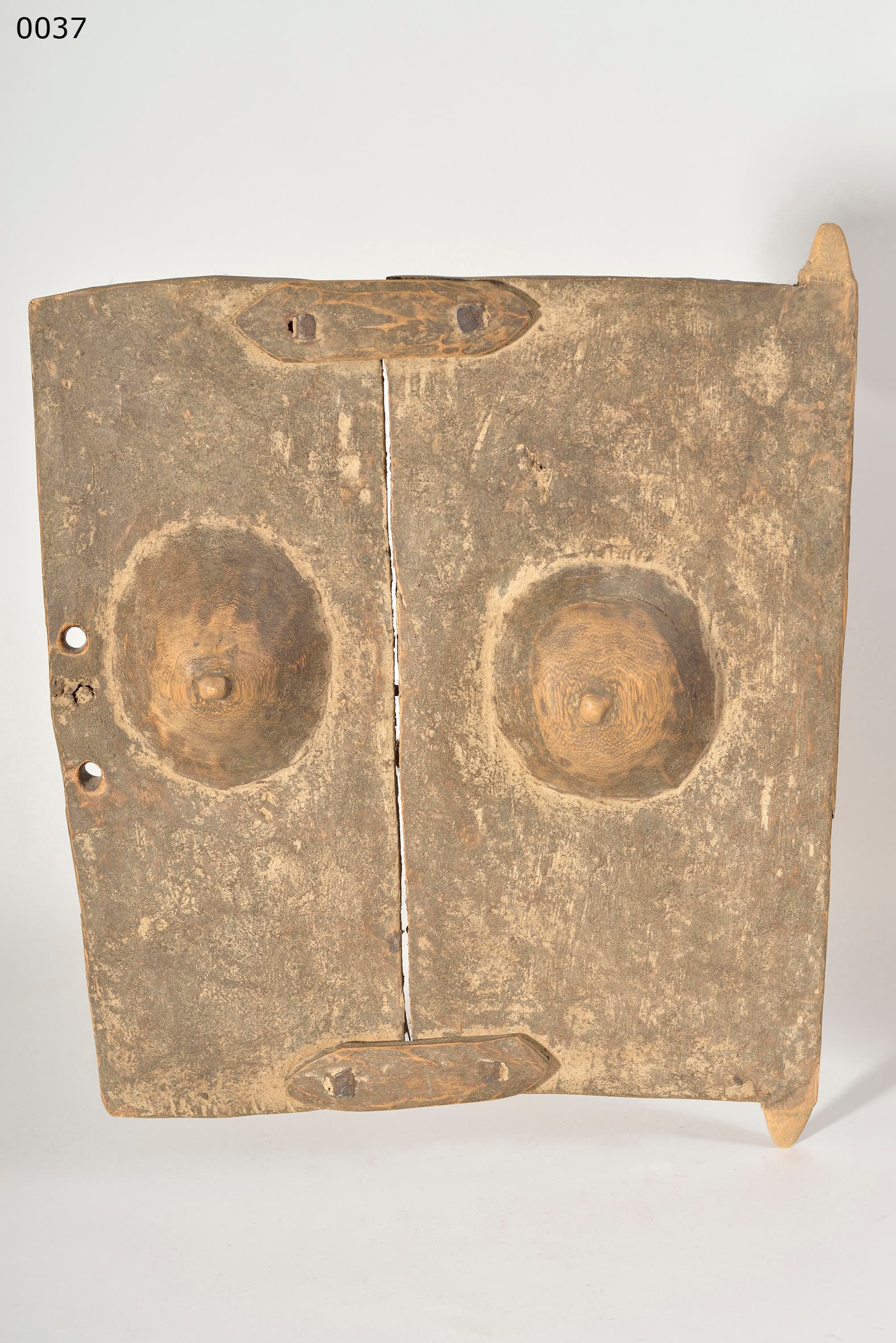
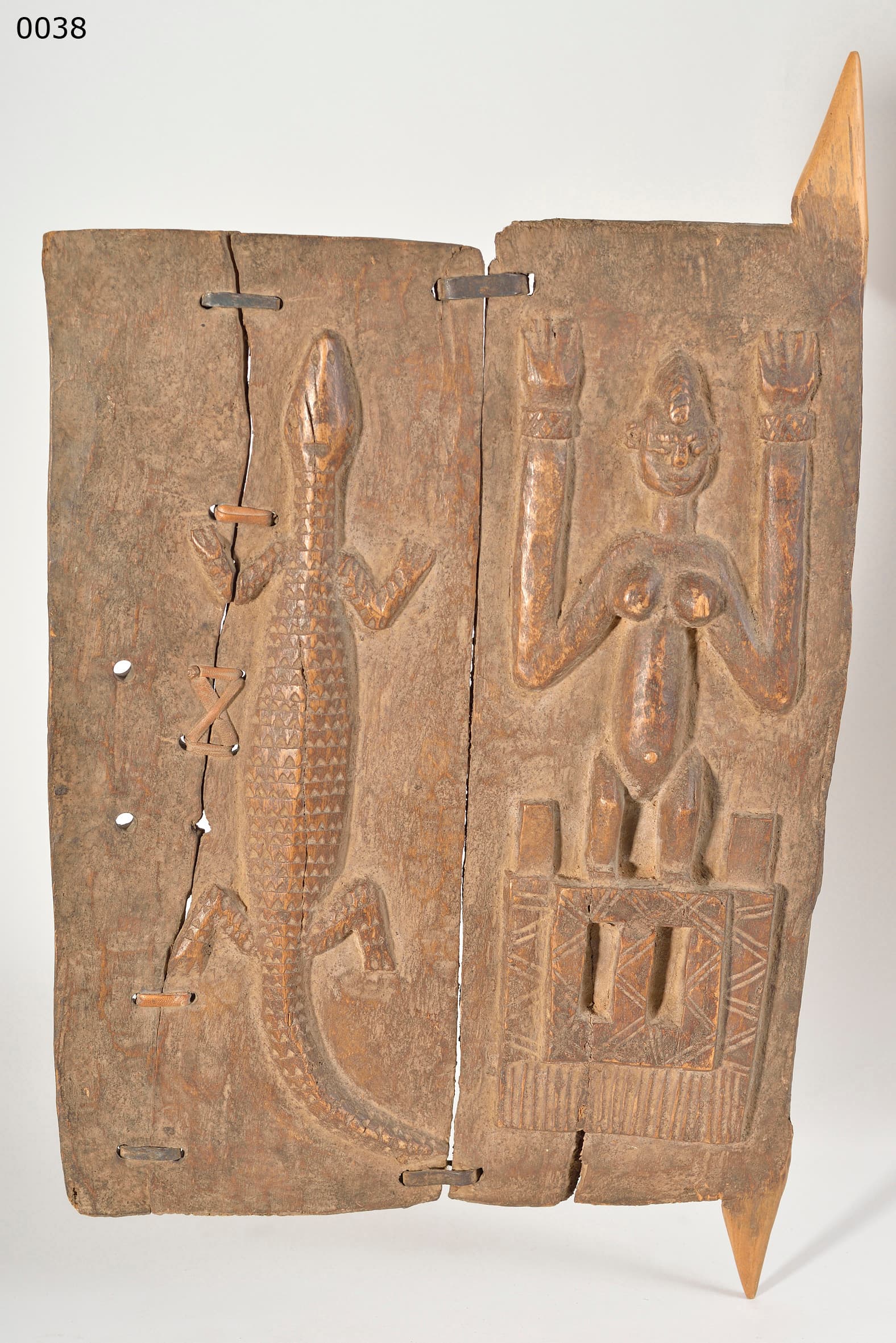
This 104 cm staff is topped by a stylized orans (praying) figure and features a long central shaft heavily punctuated by tight torsional twists and intermittently spaced loops suspending single bells. A dense, dark-brown iron-oxide patina covers the object.
1. Aesthetic style — distributed acoustics and torsional energy
This staff utilizes a distinctive method of distributing ritual energy across a large physical space. Rather than clustering all the bells at the top or bottom, the blacksmith dispersed them along the entire 104 cm length. Interspersed between these acoustic nodes are tight, spiraling twists in the iron (torsional forging). This design creates a continuous vertical rhythm; the twists represent the spiraling descent of water or cosmic energy, while the bells serve as acoustic checkpoints, ensuring the spiritual frequency resonates along the entire axis connecting heaven and earth.
2. Ritual function — the cult of rain and Nommo invocation
The orans figure at the apex, with its rigid, U-shaped upraised arms, is consistent with its identification as an instrument of supplication to Amma for rain. When the Hogon engaged in rainmaking ceremonies, this staff is understood to have been a primary interactive tool. Striking the long shaft would cause a cascading, polyrhythmic chime as the bells rang at different intervals. This complex acoustic signature was deemed necessary to penetrate the various layers of the Dogon cosmos and was believed to invite the delivery of life-saving moisture to the fields.
3. Physical patina — stable atmospheric maturation
The patination on this tall staff is remarkably uniform and stable. Unlike iron that is buried deeply in the mud, which bubbles and flakes violently, this piece exhibits a smooth, dark brown, "cured" rust. This indicates it was primarily stored indoors — likely suspended from the rafters of a Togu Na or a chief's residence — and only brought outdoors for specific, seasonal ceremonies. This careful, atmospheric maturation over the early 20th century is consistent with the well-preserved state of the delicate suspension rings.
Summary
Distributing acoustic bells and torsional energy along a 104 cm axis, this staff is a highly engineered tool for Dogon rainmaking. Its stable, dark atmospheric rust and published lineage support its attribution as a cherished, actively curated ceremonial object.
Written with AI assistance from the collection appraisal, object photography and our own research; editorially reviewed. Mistakes are possible — corrections are welcome. How we work →