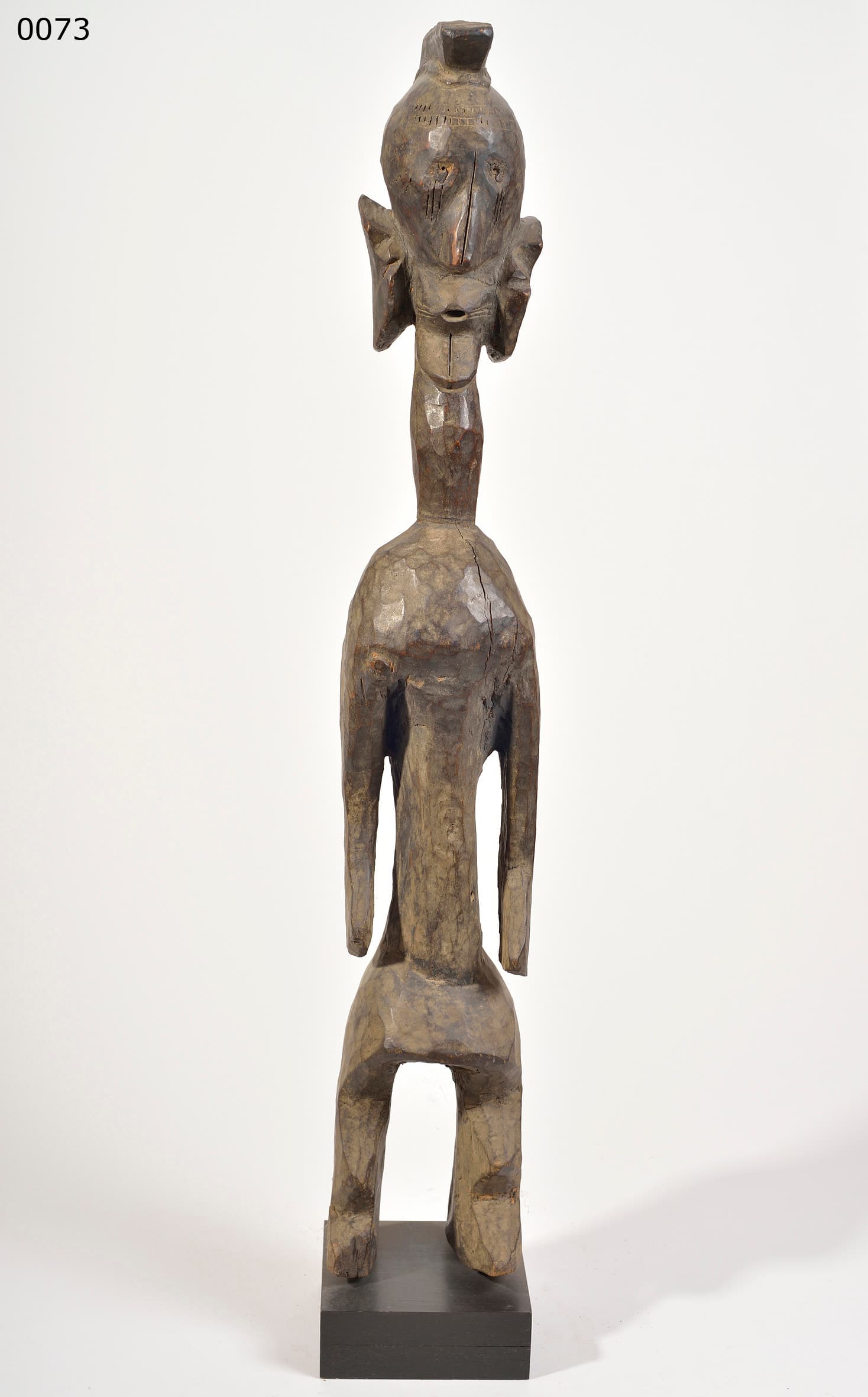
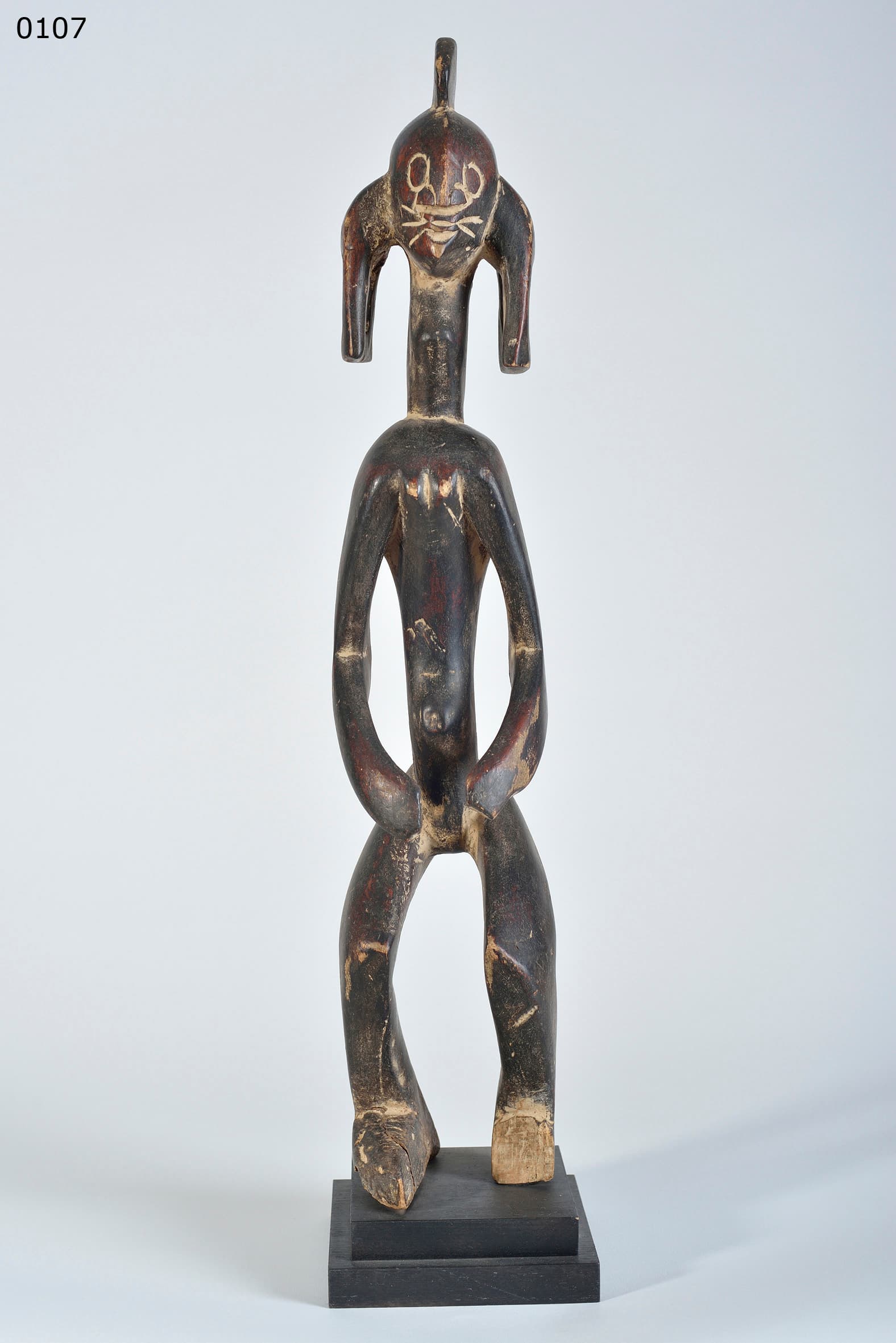
A wooden figure (81 cm) from the Mumuye of Nigeria, attributed to the 19th century — elongated tubular torso, crested head with large flared ears, and long ribbon-like arms swooping downward to create dramatic negative space on either flank.
1. A 19th-century attribution
Pre-colonial Mumuye figures are considered rare.
- Deep Ritual Patina: The surface is eroded, cracked, and encrusted with sacrificial material — showing wear consistent with nineteenth-century shrine use.
- Pre-Contact Aesthetics: Carved in a style associated with the period before European trade goods reshaped Nigerian visual culture, this figure retains classic proportions of the Mumuye idiom.
2. The cubist silhouette
The formal language represents a highly developed example of Benue Valley abstraction.
- Ribbon Arms: Carved free of the body, the arms sweep outward like buttresses, dematerializing the dense hardwood into a floating rhythm.
- Elongated Head: The tall sagittal crest and enormous ears encode prestige coiffure and ear plugs, suggesting a person of high ancestral rank.
3. Diviner's oracle
This figure is associated with an active ritual role rather than serving as a passive grave marker.
- The Priest's Instrument: Traditionally associated with a master diviner (Iaga) and used in divinatory sessions.
- Ancestor Mouthpiece: In Mumuye tradition, questions about sickness, theft, war, and drought were posed directly to the figure, whose mediated replies were understood to carry the authority of the ancestors.
Summary
This Mumuye figure, attributed to the 19th century, is a significant example of pre-colonial Benue Valley sculpture. Its kinetic, ribbon-armed silhouette and rich ritual patina suggest its role as an important oracular instrument used by a Mumuye diviner.
Written with AI assistance from the collection appraisal, object photography and our own research; editorially reviewed. Mistakes are possible — corrections are welcome. How we work →