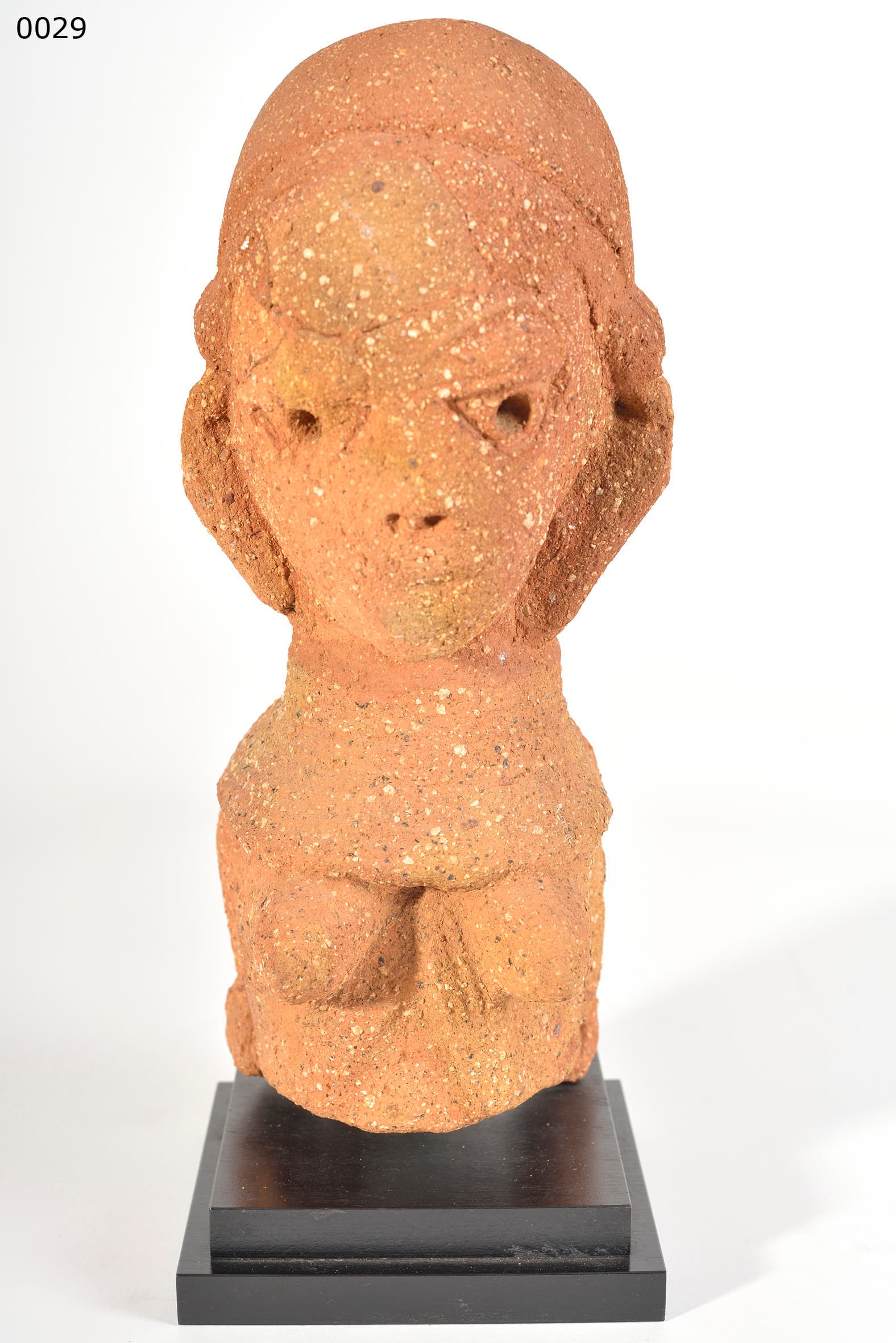
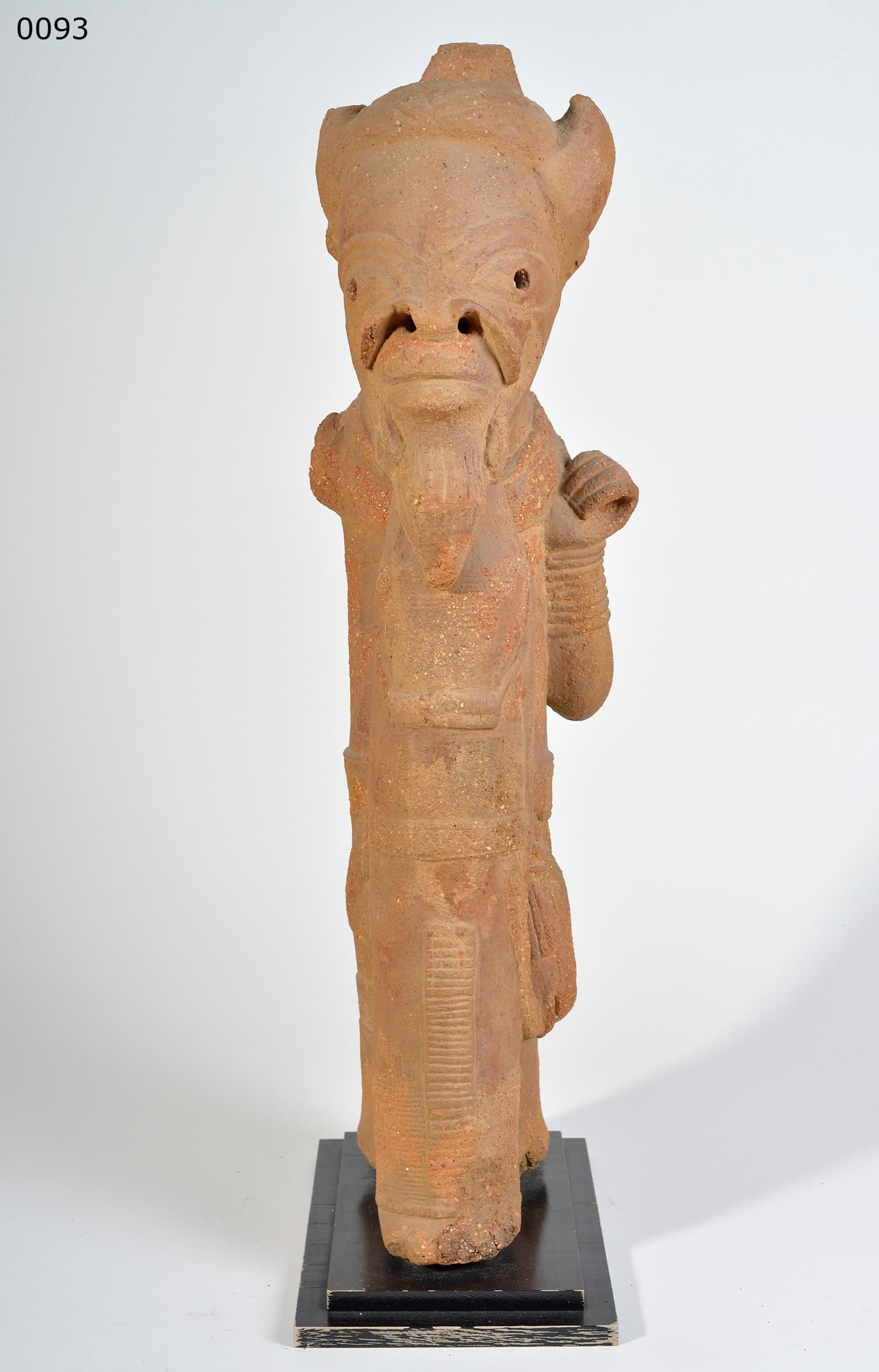
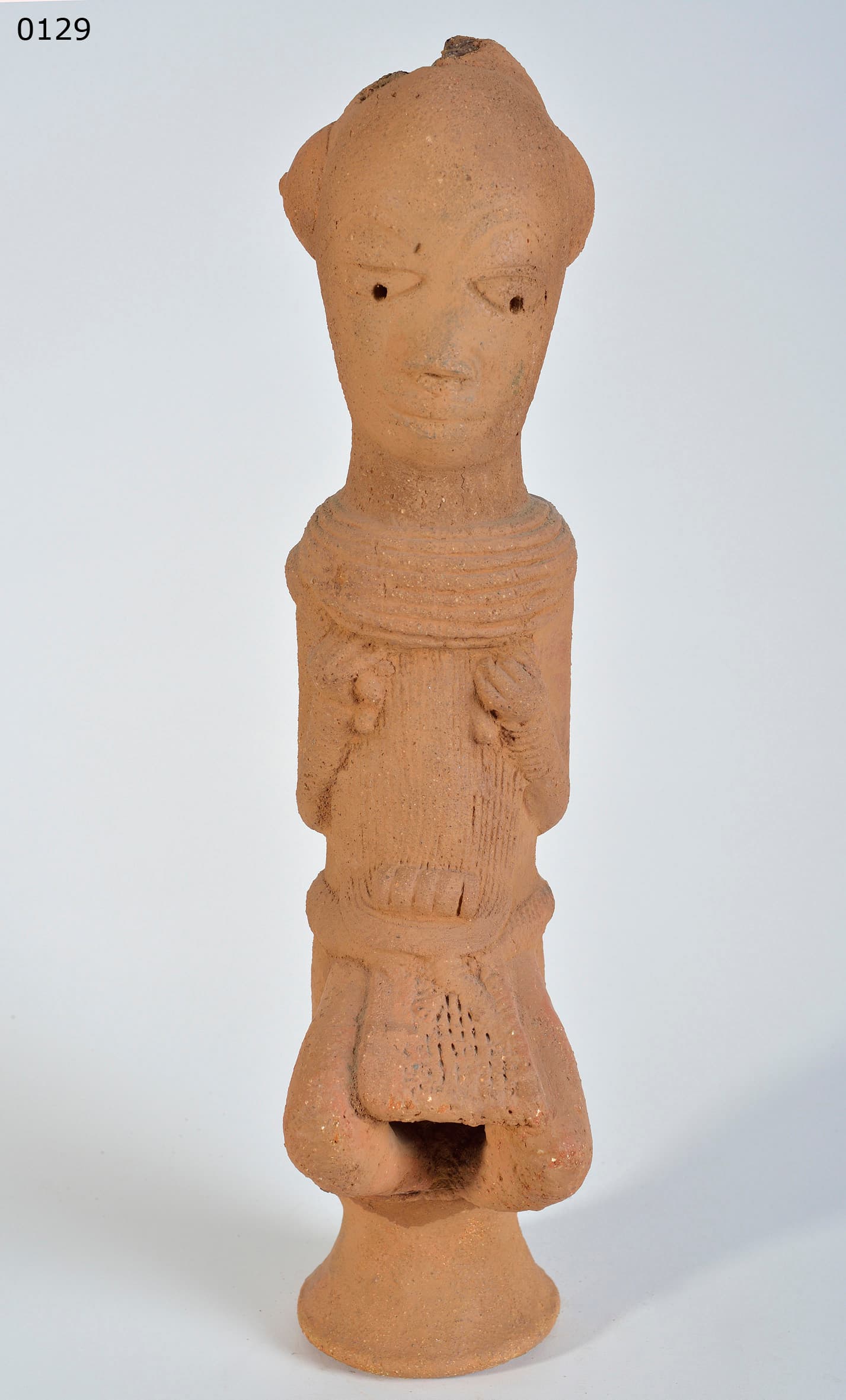
This 22 cm terracotta head fragment features the classic, deeply pierced triangular eyes, flared nostrils, and full lips characteristic of the Nok culture. The orange-red clay is heavily abraded, lacking its original slip, and is peppered with quartz inclusions and earthen soil deposits.
1. Aesthetic style — the subtractive geometry of Nok portraiture
Dating back two millennia, the Nok culture created a highly standardized, globally recognized ceramic aesthetic. This head exemplifies their sophisticated geometric approach to human portraiture. The artist utilized a combination of additive modeling (building up the lips and nose) and dramatic subtractive carving, cutting deeply into the clay to create the iconic, sharp-edged, triangular or semi-circular eyes. This severe geometry creates a striking interplay of light and shadow, giving the face an intense, commanding, and timeless psychological presence.
2. Ritual function — shrine fragmentation and firing technology
Originally, this 22 cm head was not an isolated object, but the top of a massive, full-bodied terracotta figure used in ancient agricultural or ancestral shrines. The deep piercing of the pupils, nostrils, and mouth was an absolute technological necessity; it allowed steam and hot air to escape from the thick clay core during the open-pit firing process, preventing the massive sculpture from exploding. Its current fragmented state is a testament to the collapse of these ancient shrines and centuries of subterranean pressure.
3. Physical patina — total surface abrasion and mineralization
The physical characteristics of this piece show wear consistent with an age of approximately two thousand years. The original, likely smoothed and polished outer layer (slip) of the clay has been completely eradicated. What remains is the raw, internal ceramic matrix, which is highly porous and granular. The entire surface is heavily abraded, with edges softened by centuries of soil movement and groundwater erosion. Deeply ingrained, calcified soil deposits remain locked within the pierced eyes and crevices, suggesting a long period of burial.
Summary
A textbook execution of ancient Nigerian geometry, this terracotta head possesses the intense, pierced gaze that defines the Nok civilization. Its severely abraded, highly granular, and mineral-encrusted surface is consistent with a long period of burial.
Written with AI assistance from the collection appraisal, object photography and our own research; editorially reviewed. Mistakes are possible — corrections are welcome. How we work →