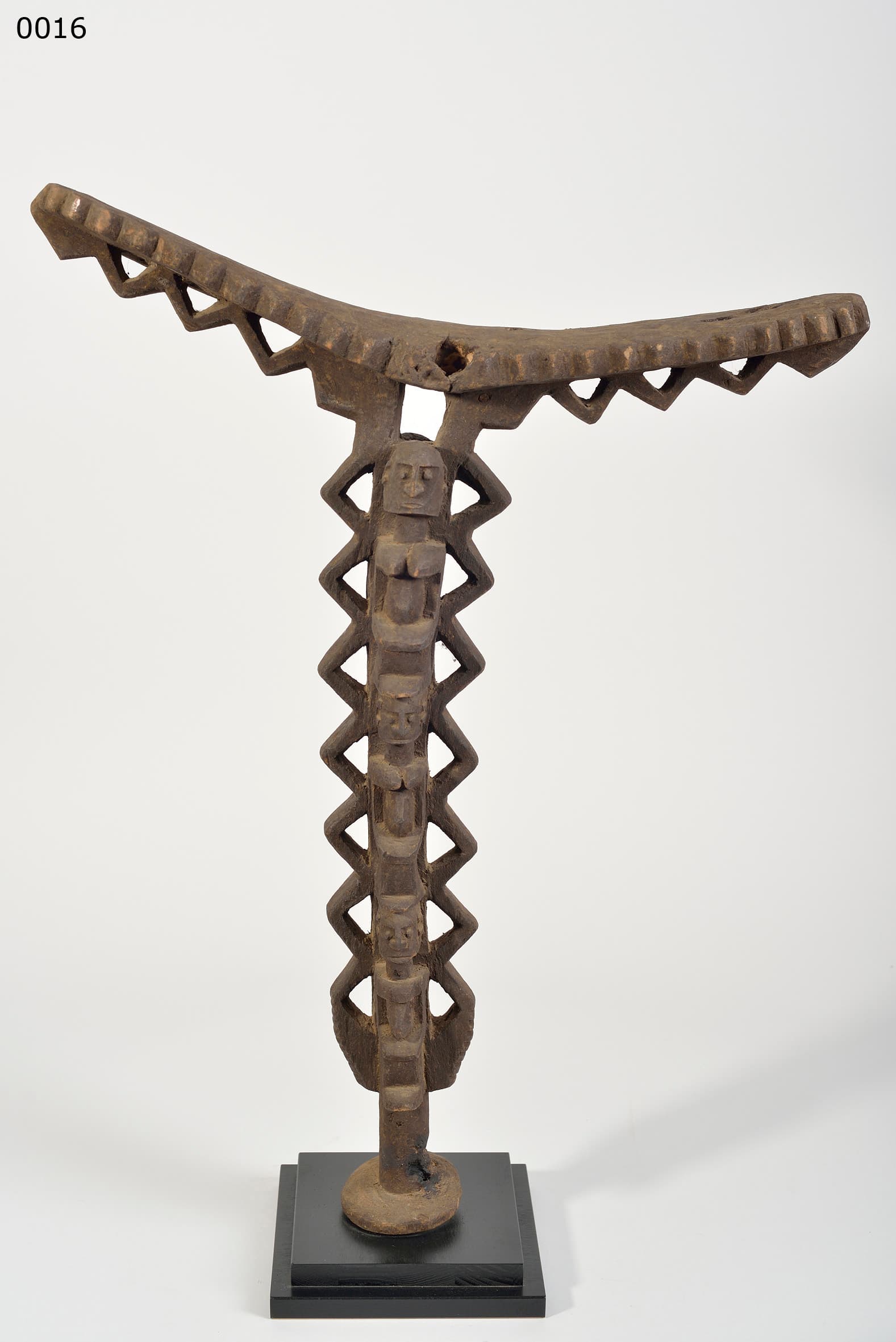
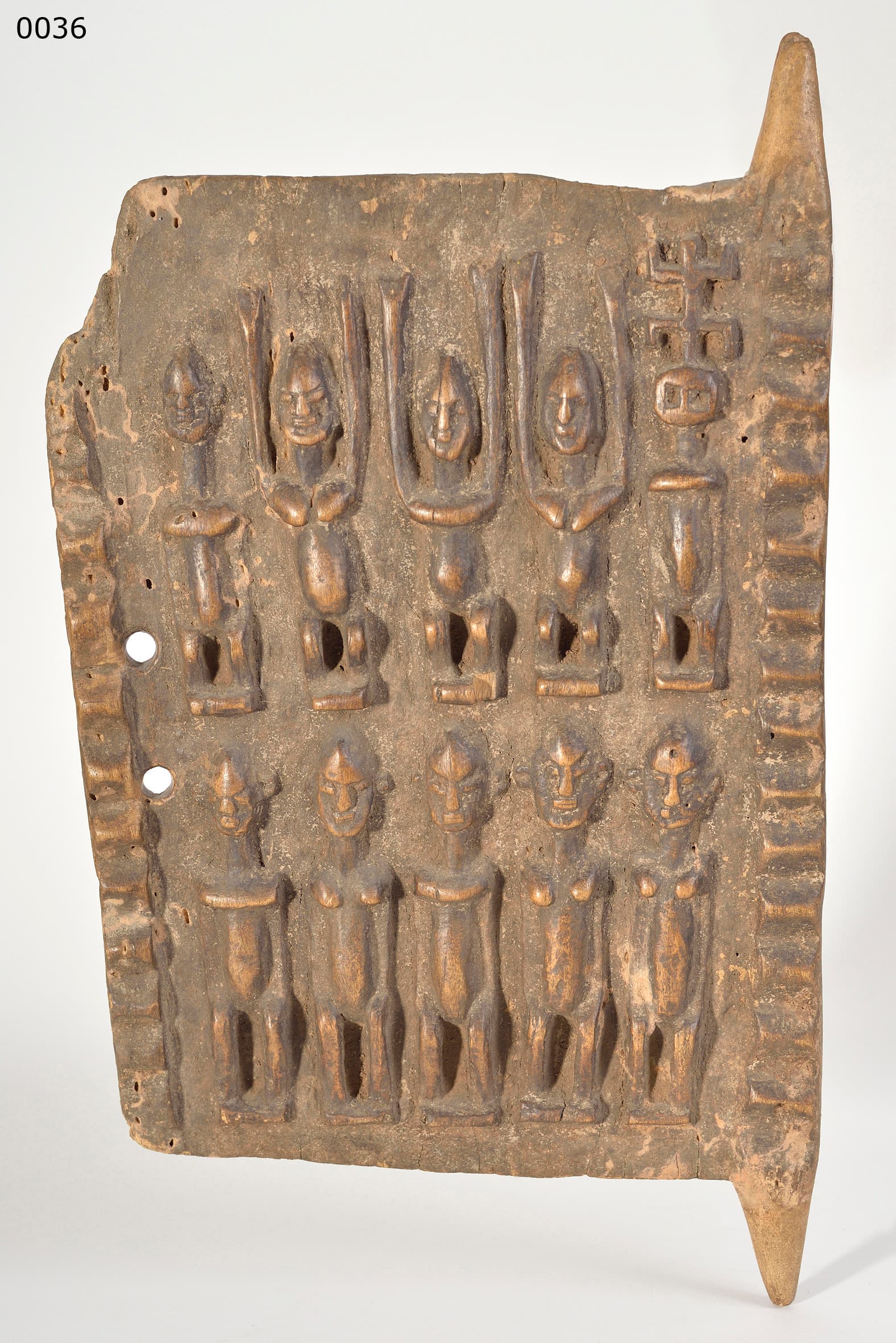
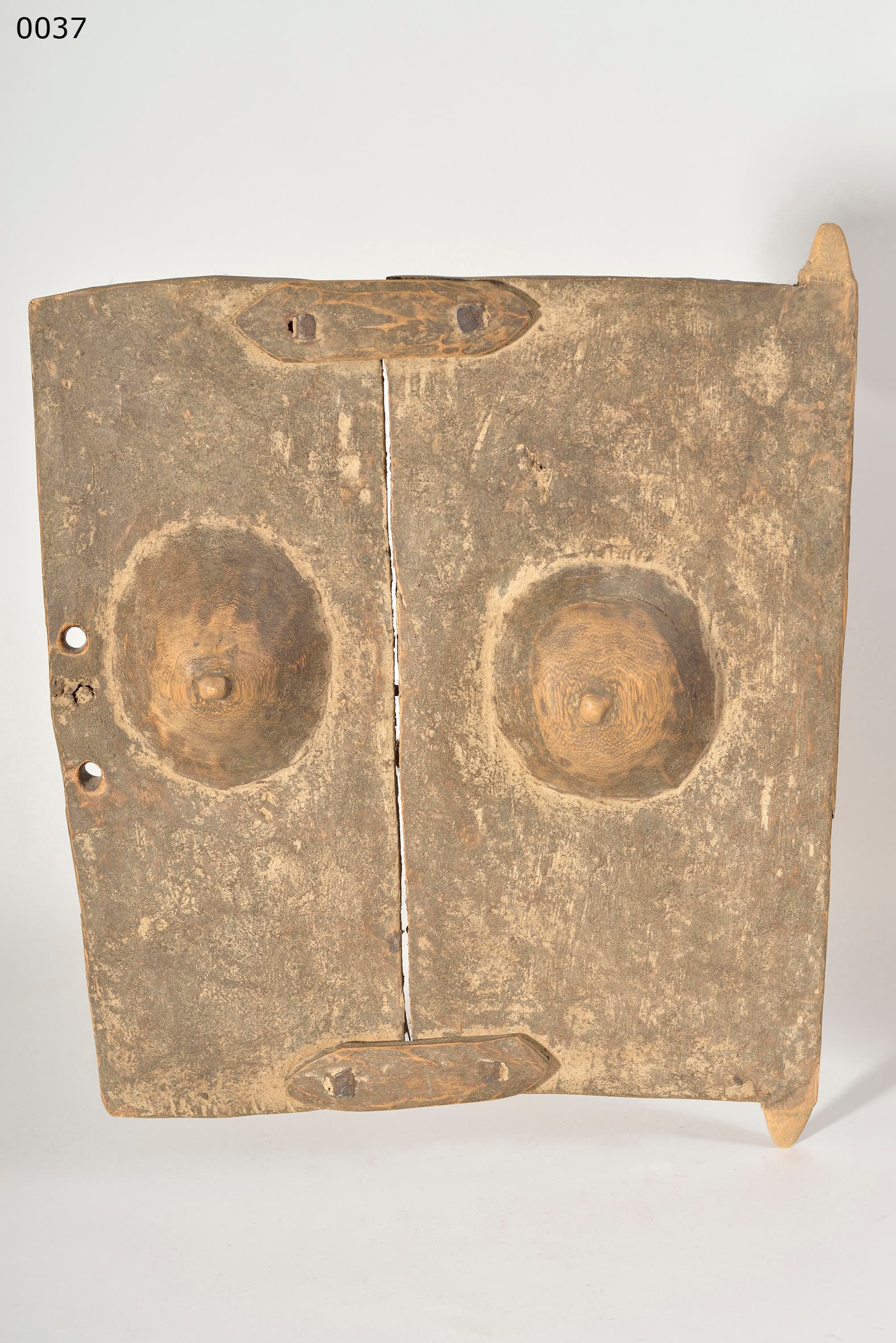
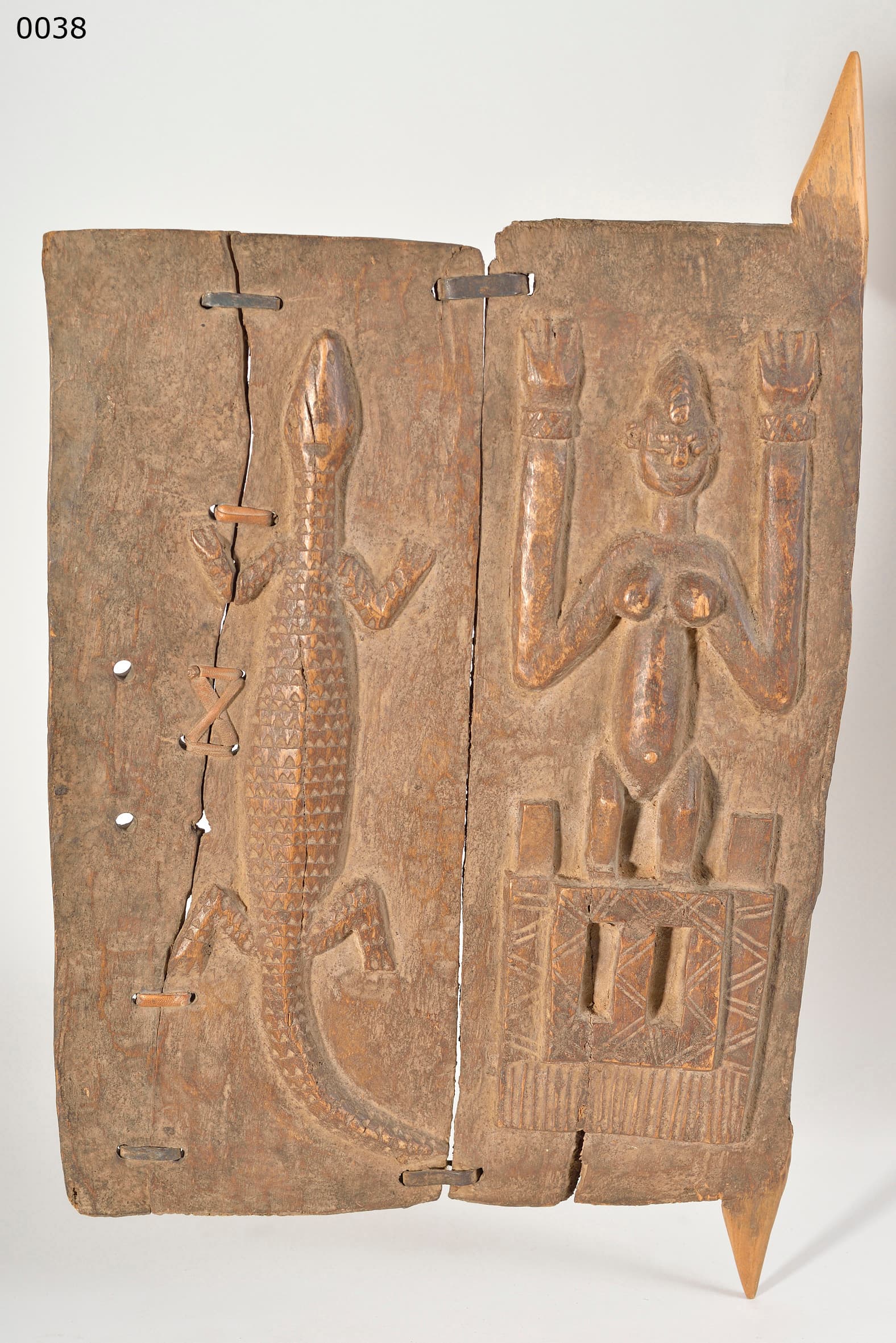
A heavily encrusted wooden sculpture (48 cm) from the Dogon of Mali, attributed to the 17th to 19th century based on its extensive surface wear — an elongated male figure seated on a traditional circular Dogon stool, features almost entirely eroded into the patina.
1. The seated patriarch
In Dogon statuary, posture dictates status.
- Standing vs. Seated: Where standing figures project active prayer or vitality, a figure seated on a stool represents established, immovable authority.
- Hogon or Nommo: This figure likely embodies a Hogon (supreme spiritual leader) or a Nommo (founding primordial ancestor). The stool is a miniature replica of the actual leadership stools that symbolize the center of the universe in the cosmology documented by Marcel Griaule (though heavily contextualized by Walter E.A. van Beek in 1991). Between his legs, the man holds a large, drop-shaped object with a downward extension, possibly a stylized animal mask or a ritual vessel.
2. Severe sahelian erosion
The surface of this sculpture is a landscape of profound weathering.
- Features Almost Gone: Generations of handling, wind, and ritual anointing have smoothed the face into near-abstraction. The soft edges beneath the crust, rounded by prolonged exposure, show wear consistent with a significant passage of time.
- Sacrificial Altar Crust: The exceptionally thick, deeply cracked, and dry sacrificial patina (patine croûteuse) is consistent with a functional piece kept in a binu sanctuary rather than a display object protected from wear. Such massive encrustations result from repeated libations of millet porridge, animal blood, and plant juices.
3. The architecture of the body
Even through the erosion, the classic Dogon cubism is evident.
- Cliff-Like Construction: The torso is a long cylinder, shoulders are squared, arms drop at sharp right angles, and the face features the typical arrow-shaped nose.
- Bandiagara in Wood: The architectural approach visually links the founding ancestors to the sheer vertical cliffs of the Bandiagara Escarpment that the Dogon call home. Kept in these extremely dry caves, such sculptures were protected from termite damage and weathering.
Summary
This archaic-style Dogon figure, attributed to the 17th to 19th century, is a notable example of surviving historical wood sculpture. As research associated with Rogier Bedaux on Tellem-Dogon continuity and Hélène Leloup's stylistic classifications suggests, the age of such deeply eroded, encrusted sculptures can stretch back centuries. Seated in traditional authority, its surface offers a tangible connection to the foundational narratives of Mali's cliff-dwellers.
Written with AI assistance from the collection appraisal, object photography and our own research; editorially reviewed. Mistakes are possible — corrections are welcome. How we work →