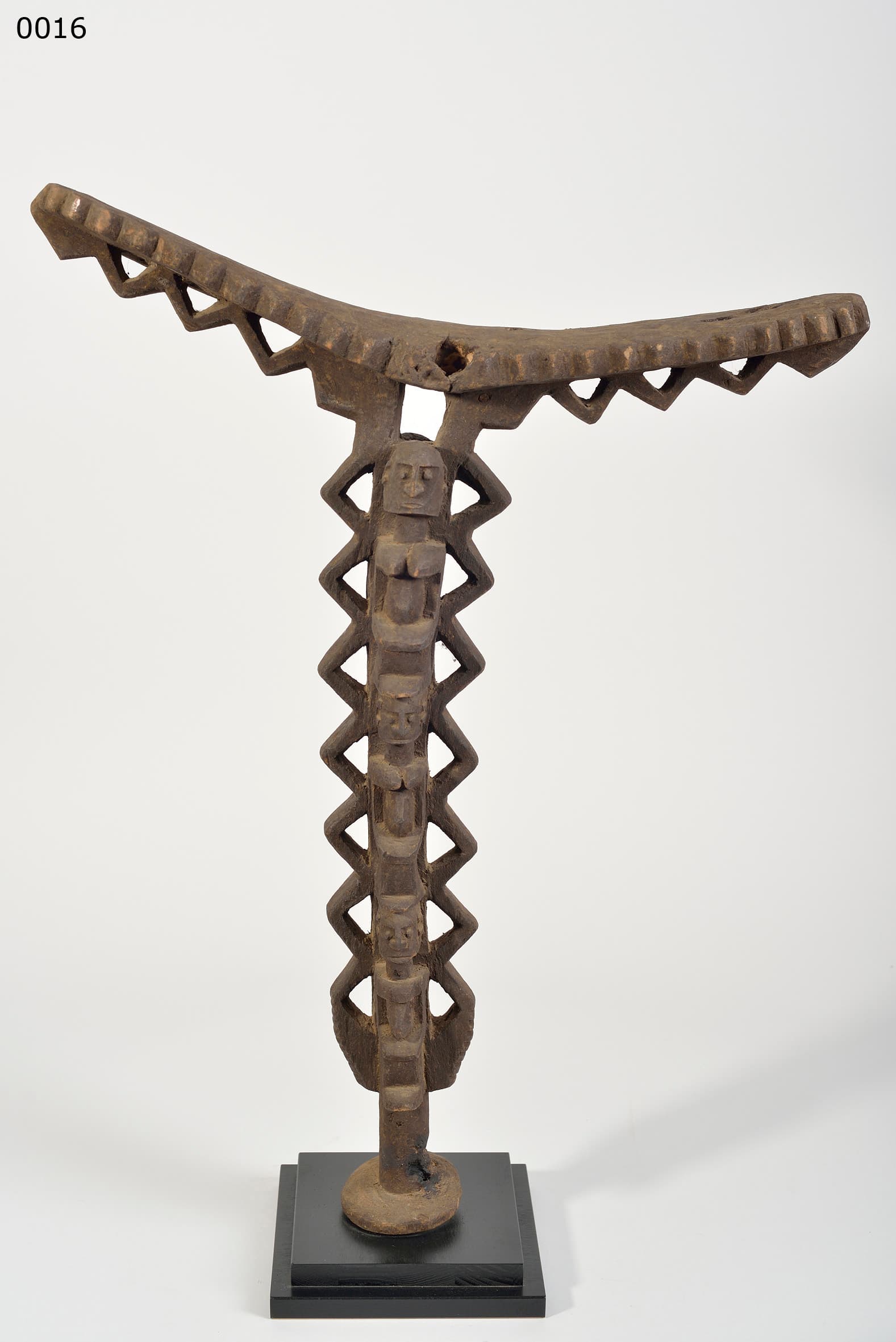
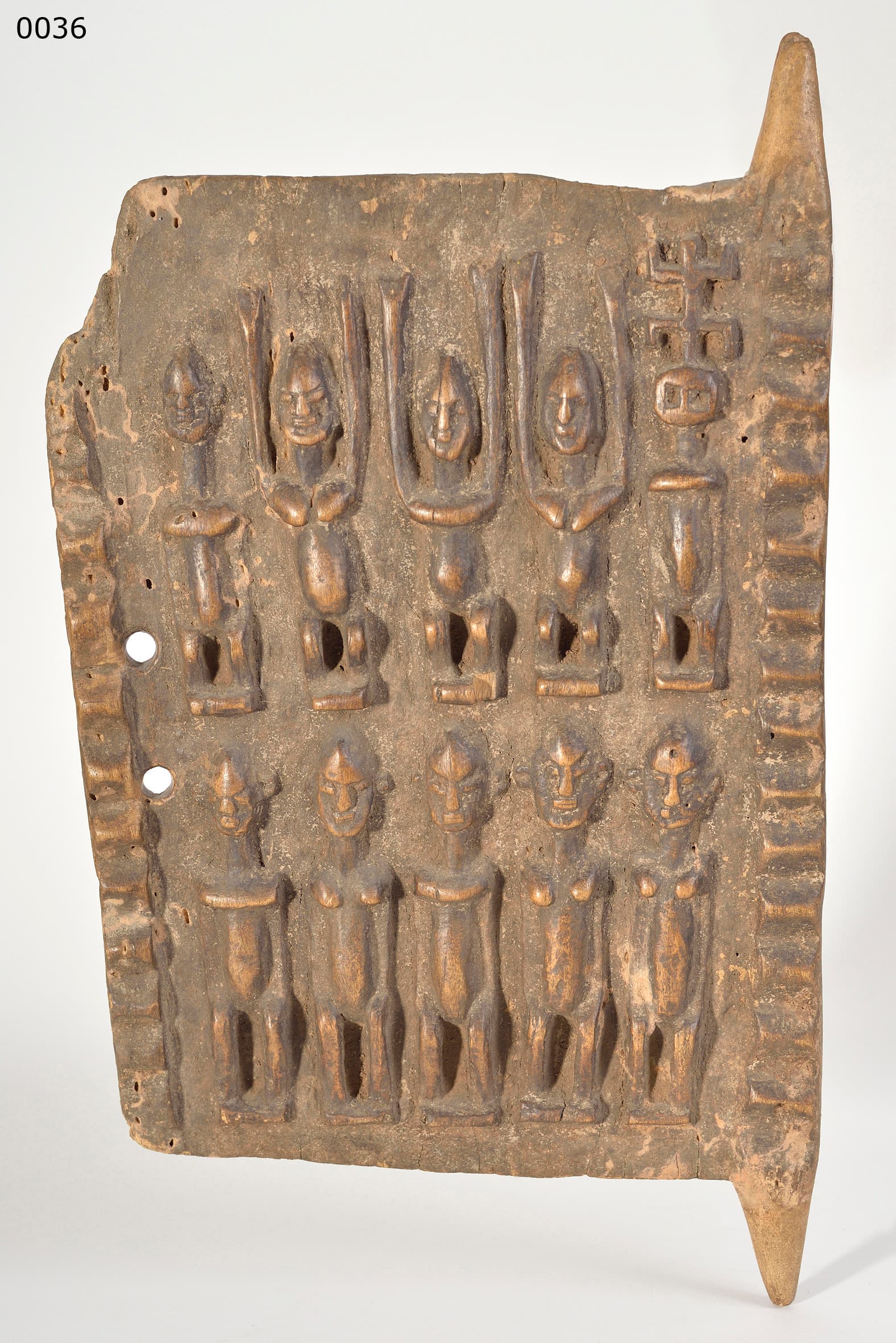
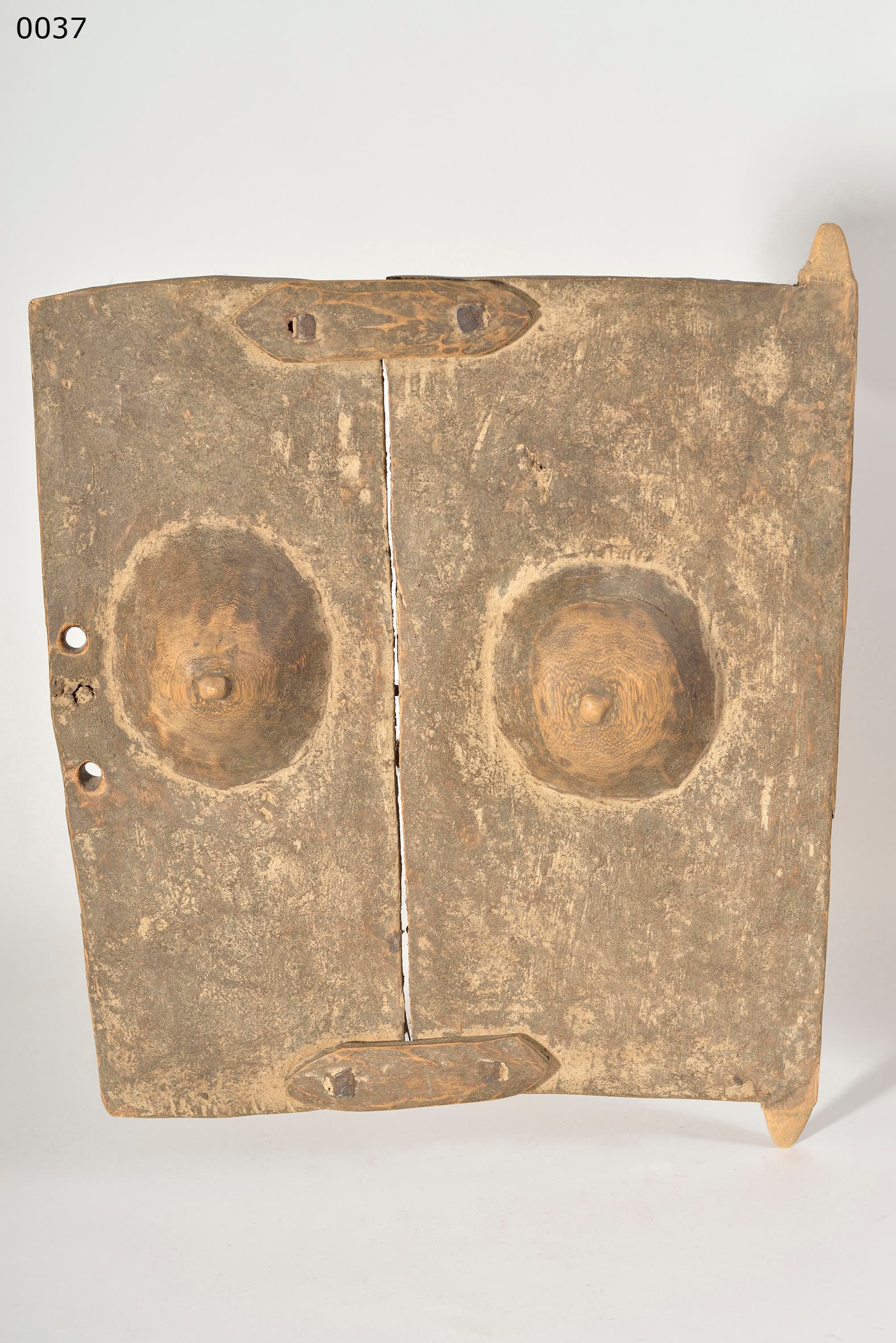
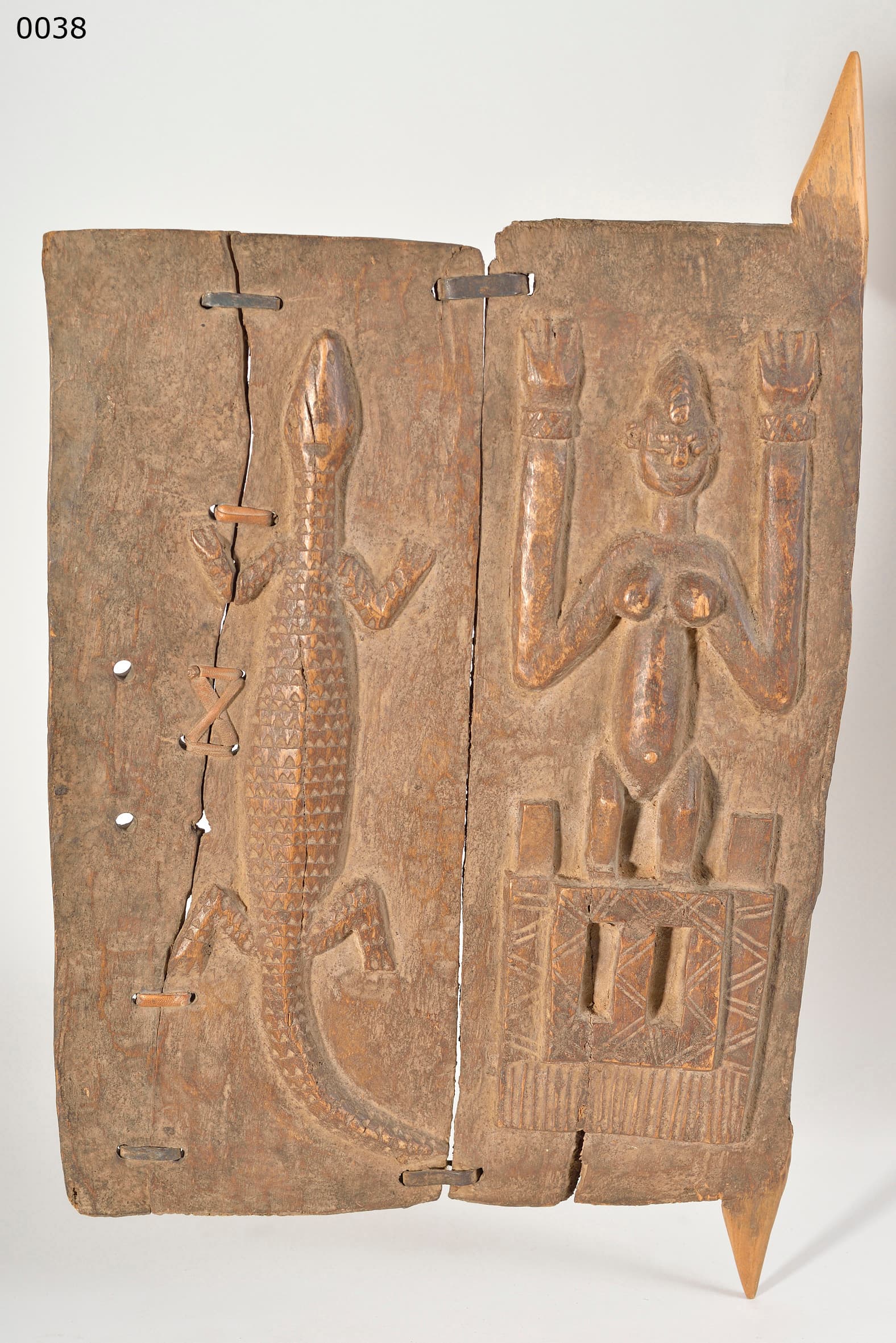
A substantial wooden altar ladder (1st half 20th C., 90 cm) from the Dogon of Mali — forged from a single piece of dense hardwood, branching into an organic Y-shape with deeply notched staggered footholds, the surface desiccated to a bleached earthy brown.
1. Minimalist sculptural form
Dogon ladders are celebrated by global art historians for their profound minimalist abstraction.
- Function Made Sculpture: The deeply cut staggered notches carved into a single continuous trunk create a rhythmic interplay of positive and negative space.
- Echoes of the Escarpment: The organic yet highly structured form mirrors the rugged vertical landscape of the Bandiagara Escarpment where the Dogon reside.
2. Ascension and ancestral communication
Beyond their utilitarian role, these ladders carry immense symbolic weight in Dogon cosmology.
- Spiritual Pathway: They represent the literal and spiritual route between the earthly realm and the ancestral spirits.
- Conduit at the Altar: Smaller ladders or retired granary ladders were placed against altars to facilitate the descent of the ancestors, serving as a channel for prayers, libations, and protective energies.
3. Dry patina and sahelian weathering
The wood carries a surface character consistent with Malian antiquity.
- Arid Desiccation: Decades of exposure to the extreme Sahelian climate, combined with natural drying and tactile foot-wear on the steps, support an attribution to the early 20th century.
- Irreproducible Fissures: The deep cracks and organically softened edges are consistent with natural aging, supporting the object's authenticity.
Summary
Bridging the utilitarian and the sculptural, this Dogon altar ladder is a notable example of minimalist African design. Its rugged, deeply oxidized surface and cosmological resonance make it a compelling representative of this artistic tradition.
Written with AI assistance from the collection appraisal, object photography and our own research; editorially reviewed. Mistakes are possible — corrections are welcome. How we work →