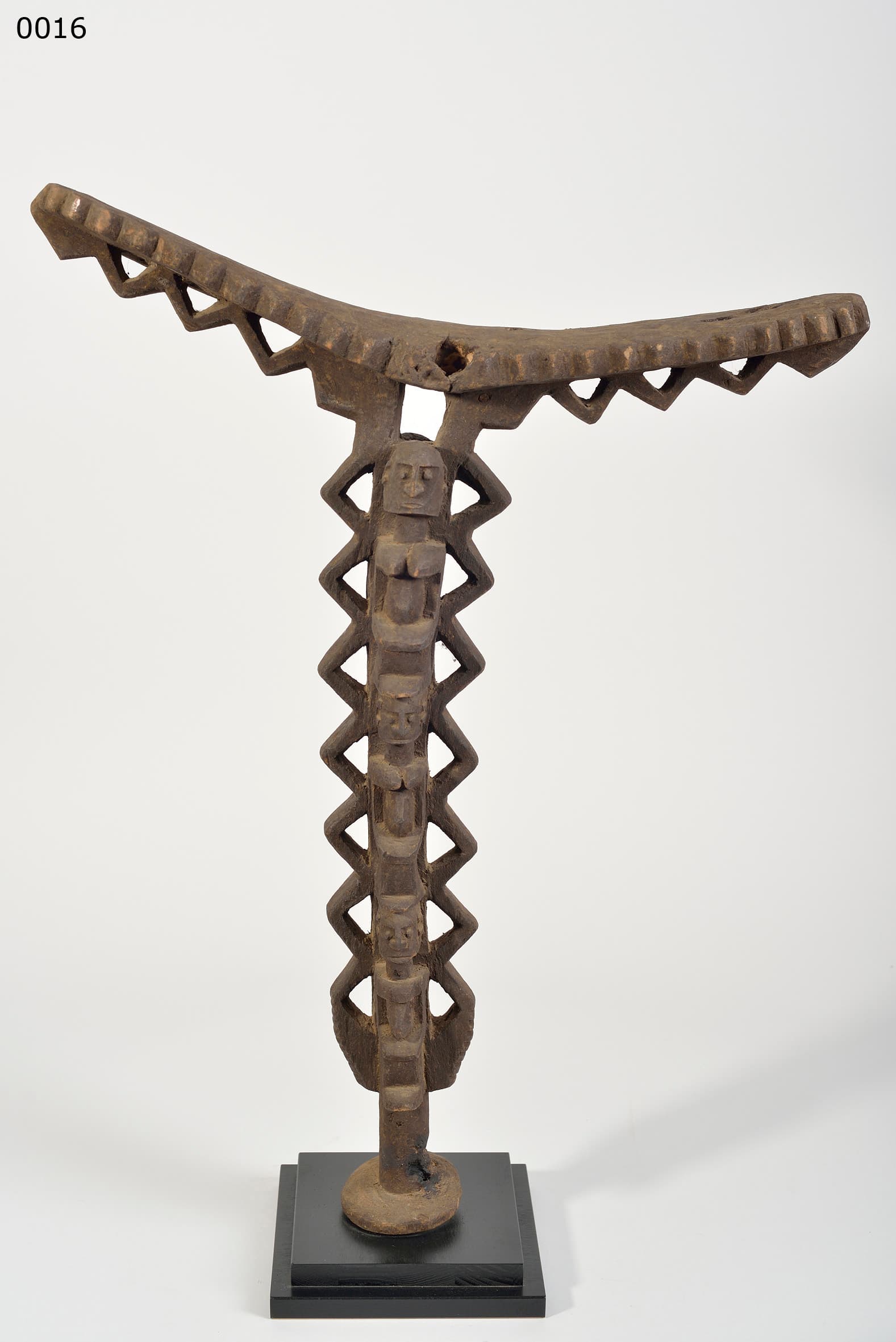
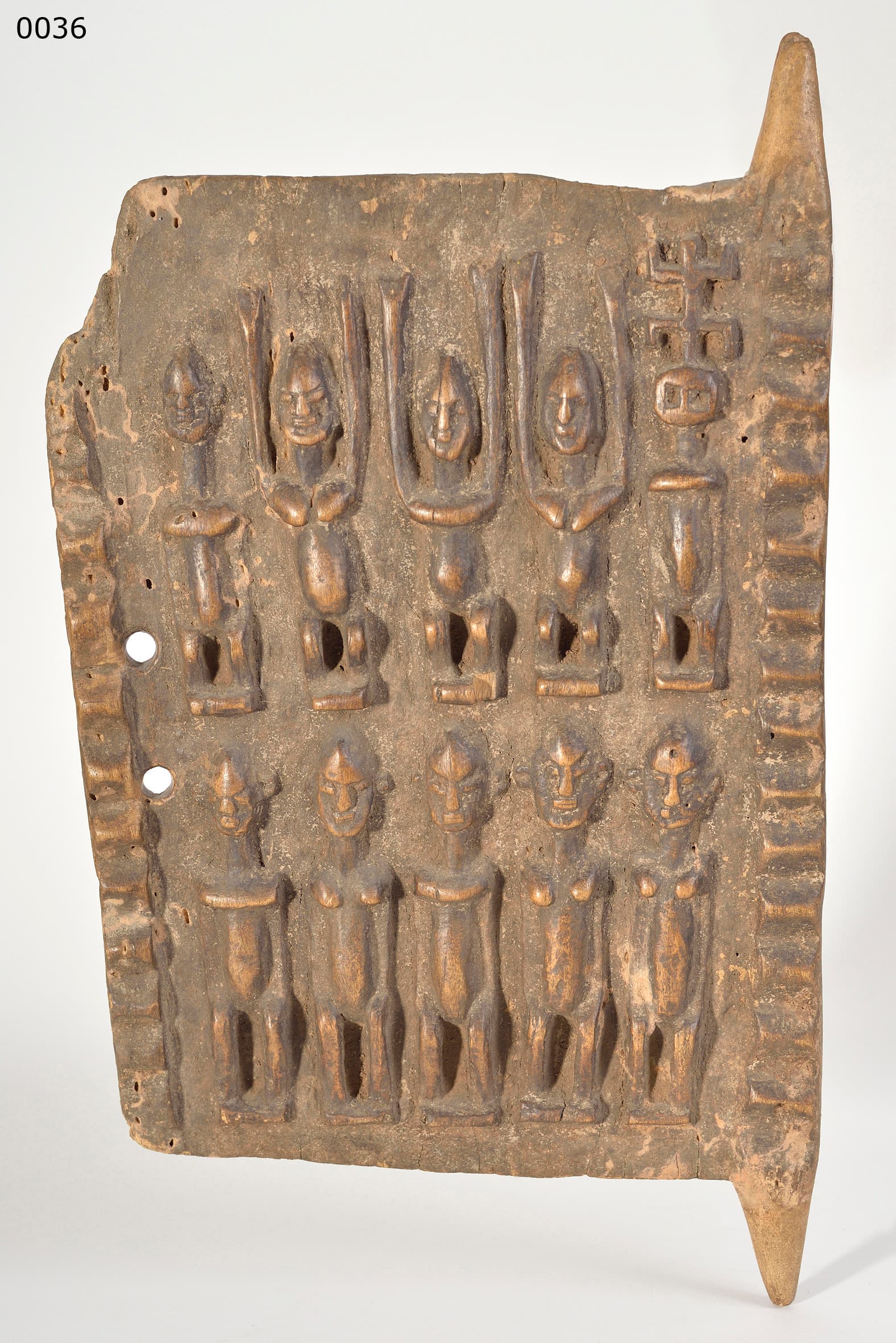
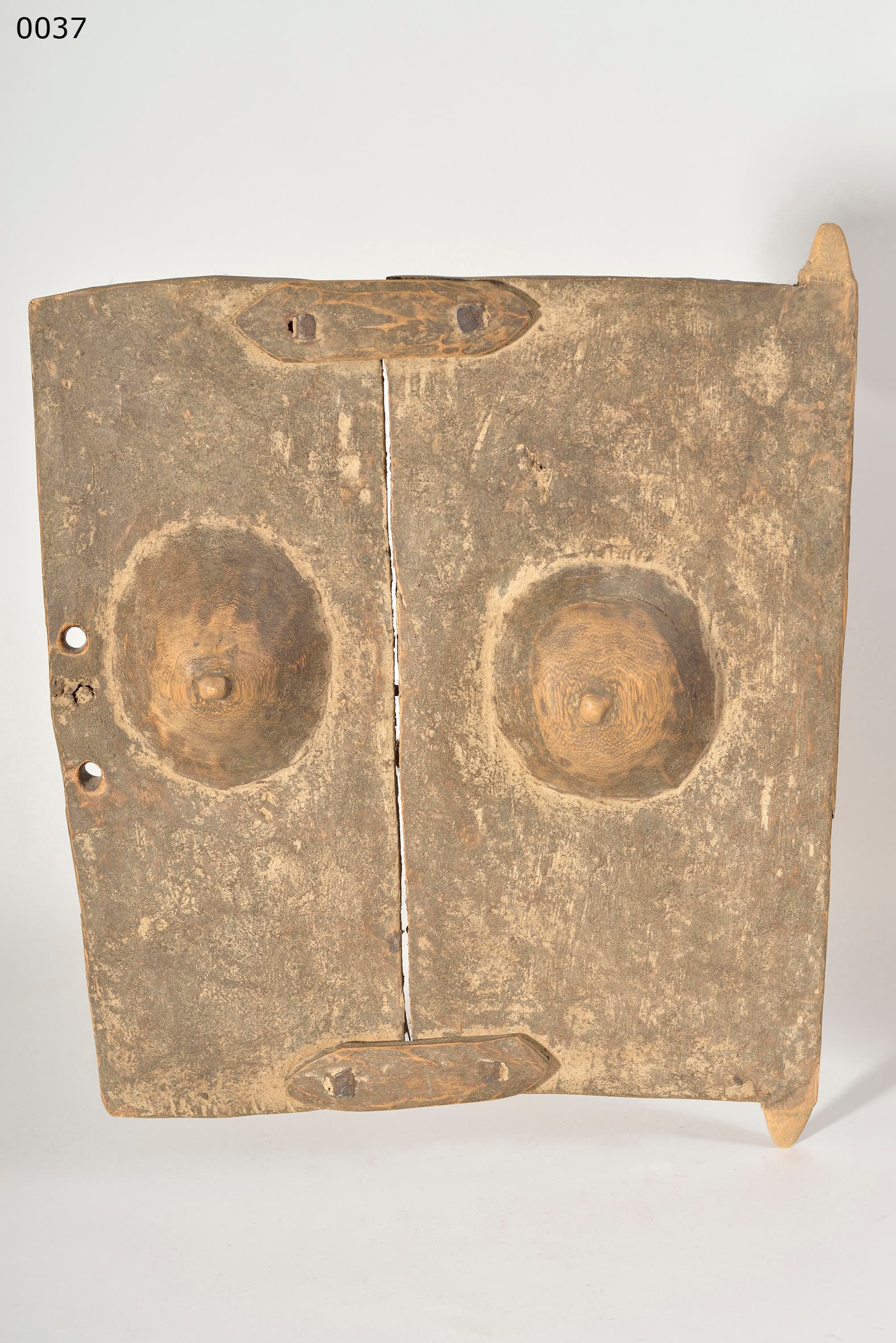
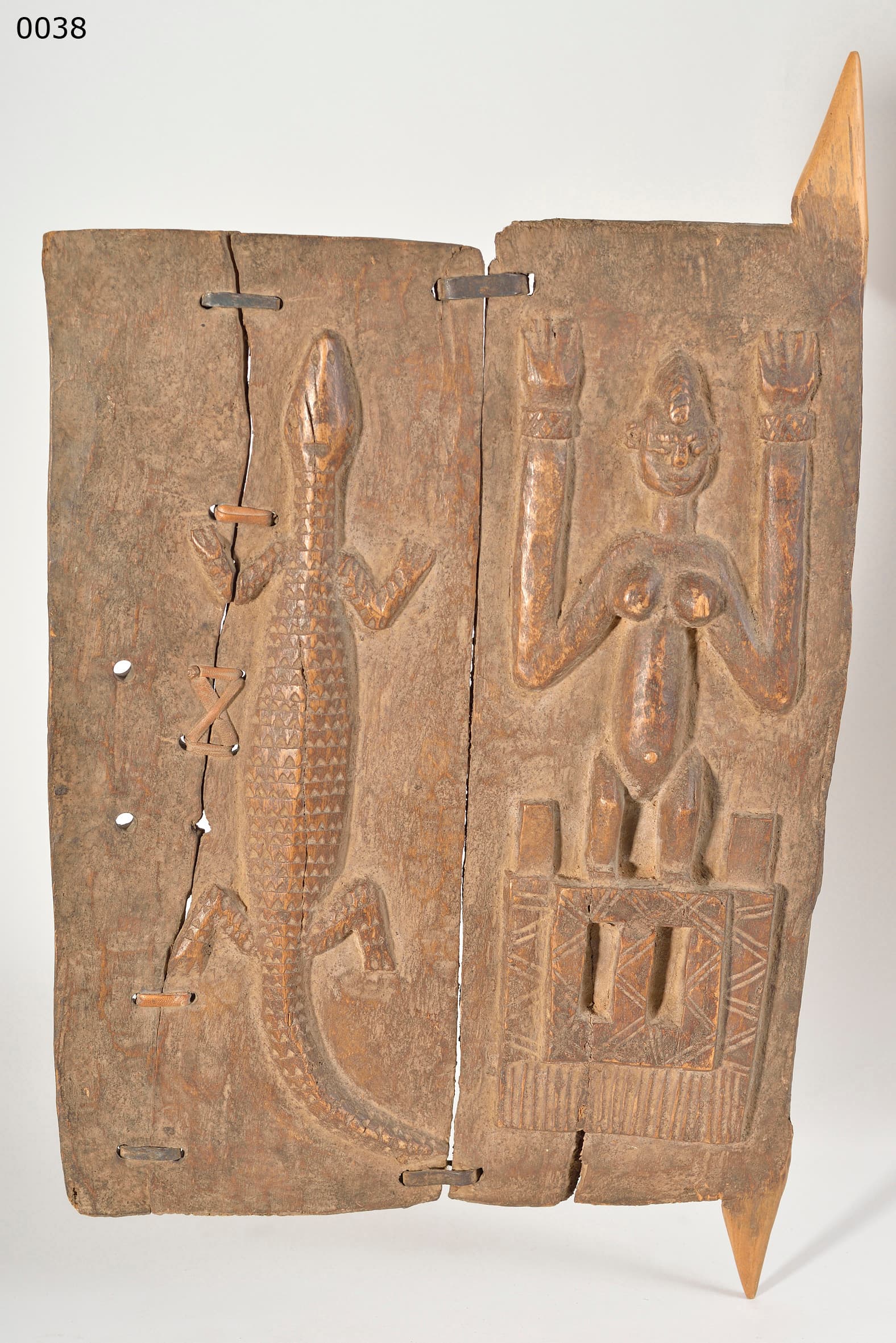
A Dogon stool-altar (48 cm) from Mali, with features compatible with an 18th- to 19th-century attribution — a circular base and seat connected by a ring of abstract, heavily stylized caryatid figures standing rigidly with arms at their sides, enveloped in a thick brittle encrustation of sacrificial matter. Deep drying cracks and an eroded surface suggest its substantial age.
1. Cosmological architecture
The Dogon stool is one of the most conceptually dense objects in African art — a localized model of the universe.
- Imago Mundi: The upper and lower disks represent the sky and the earth; the caryatid posts that connect them symbolize the Nommo, primordial beings who brought order to the world. This Sirius cosmology and Nommo creation myth, famously documented by Marcel Griaule, was critically revised by Walter E.A. van Beek in 1991, sparking ongoing debates about whether the material was authentic esoterica or a co-construction with his informant Ogotemmêli.
- Sitter at the Axis: The design physically manifests cosmic interconnectedness, placing anyone seated on it at the exact center of the spiritual and physical universe.
2. Authority of the hogon
These symbolic stools are typically associated with the Hogon, the supreme religious and political leader of a Dogon community.
- Seat of Power: Beyond furniture, the stool is the formal seat from which the Hogon delivers judgment and performs rites.
- Active Altar: In times of crisis or during agricultural rites, the stool becomes the focal point for offerings directed at the ancestors and the earth — converting furniture into an active conduit for divine intervention.
3. Deep encrustation and 18th–19th-century attribution
The physical surface shows wear consistent with the piece's age and ritual life.
- Layered Libations: Thick uneven encrustation of millet gruel and animal blood has baked into the wood, creating a brittle crust. The substantial loss of substance at the base and the highly weathered facial features of the caryatids point to a long-lasting natural decay process within the dry, protected environment of the Bandiagara cliff sanctuaries.
- Irreplicable Stratigraphy: This sedimentary record is consistent with long-term use in community rituals — such patination is difficult to artificially replicate. Such preservation conditions also highlight the Tellem-Dogon continuity explored by Rogier Bedaux, where the longevity of cliff-dwelling artifacts bridges centuries of cultural history.
Summary
Operating simultaneously as a cosmic diagram, a seat of power, and an active altar, this Dogon stool is a significant artifact of West African religious life. Its age, suggested by extensive weathering, and thick sacrificial crust support an attribution to the 18th or 19th century.
Written with AI assistance from the collection appraisal, object photography and our own research; editorially reviewed. Mistakes are possible — corrections are welcome. How we work →