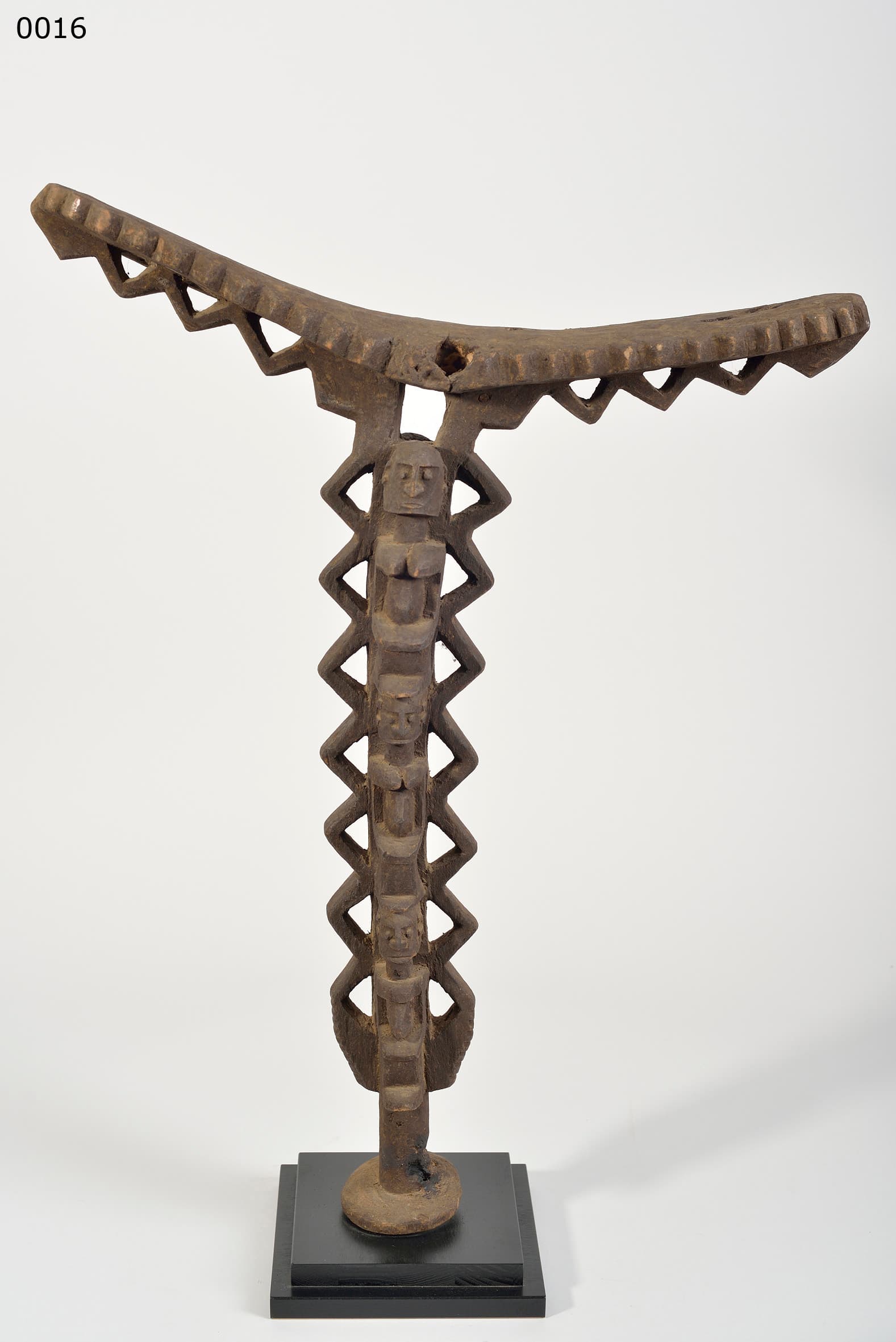
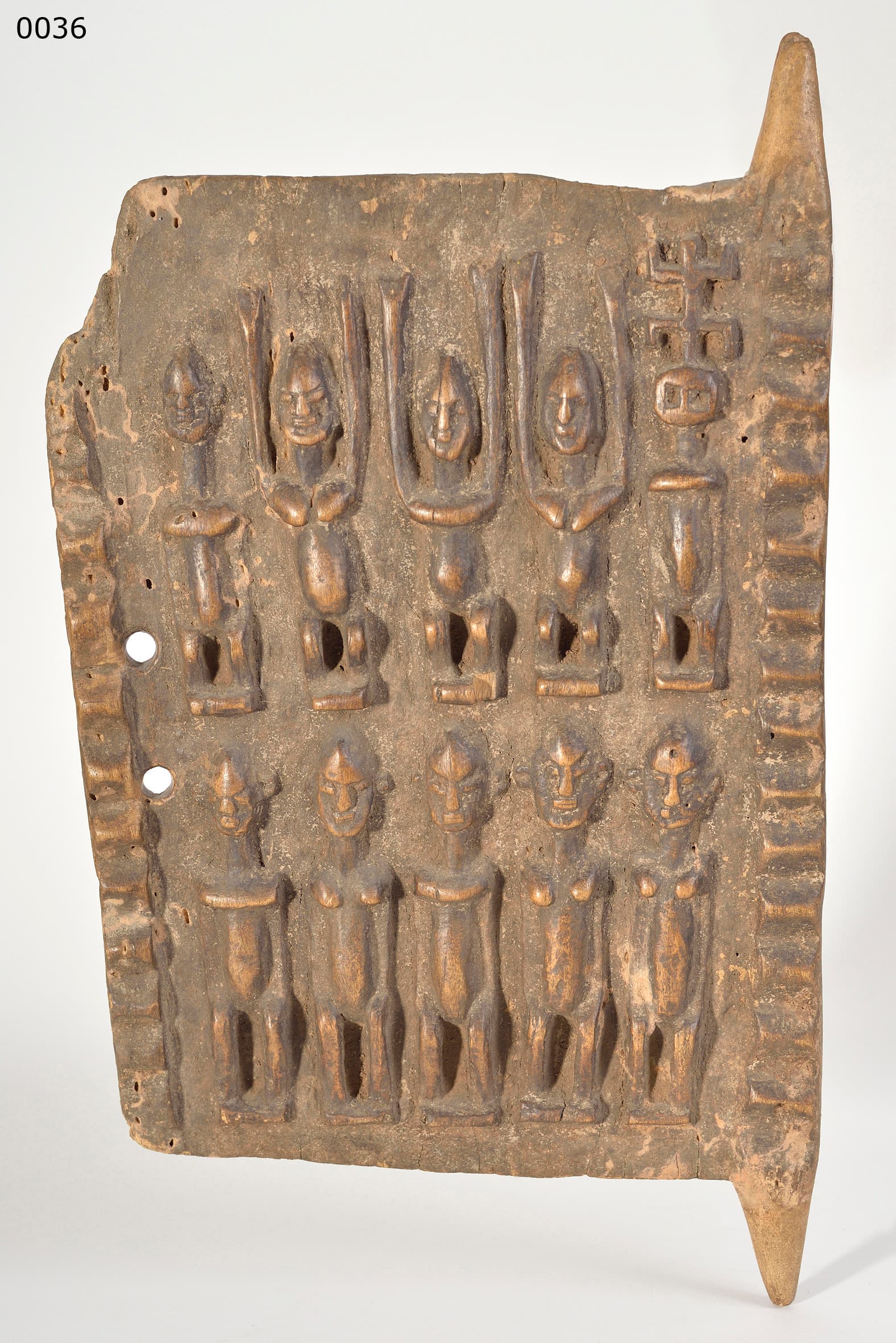
An abstract vertically oriented wooden figure (18th–19th C., 31 cm) from the Dogon of Mali — highly stylized helmet-like crested head, elongated cylindrical neck, and zig-zagging geometric arms connecting to the cubist torso. The heavily degraded spongy wood shows deep desiccation, insect damage, and extreme historical weathering consistent with an attribution earlier than the 20th century.
1. Tellem and early Dogon aesthetics
The severe abstraction and raised zig-zag arm posture place the object in the archaic spectrum, strongly echoing the ancient Tellem style that shaped later Dogon carvers. As scholars like Hélène Leloup and Rogier Bedaux have noted, such highly reduced, weathered works are often relics of older cults.
- Stripped of Naturalism: The figure is reduced to pure architectural geometry, featuring rudimentary, blocky facial features.
- Timeless Over Mortal: The austerity projects the indestructible nature of the ancestor's spirit rather than their earthly, perishable likeness.
2. Intercession with the divine
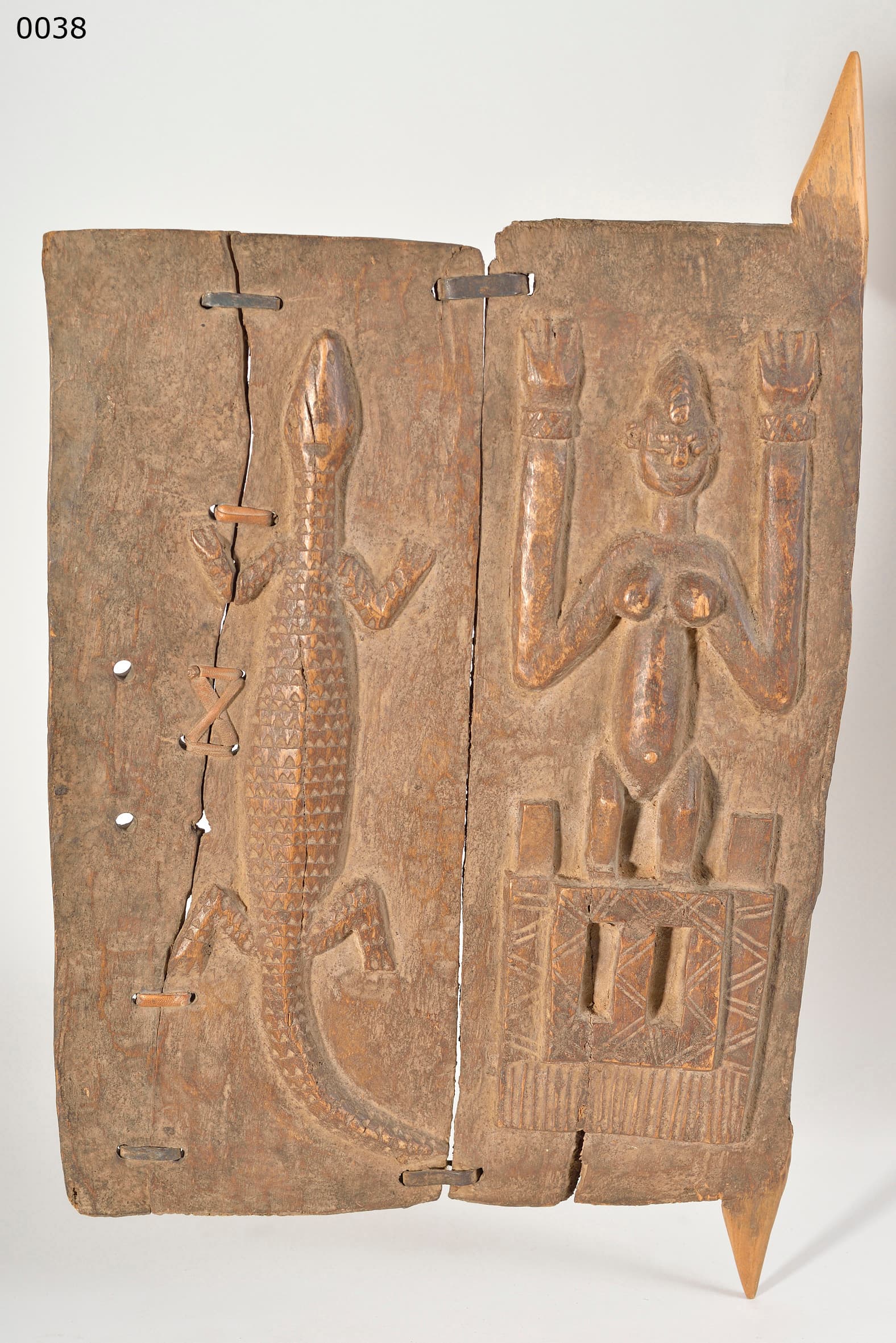
Figures with this specific arm posture are widely interpreted as gestures of prayer.
- Imploring Amma: Raised or sharply bent arms petition the creator god Amma for rain — the critical resource of the Bandiagara environment.
- Placed in Sanctuaries: Such figures lived for generations in familial shrines or the dry high cave sanctuaries of the Bandiagara cliffs, acting as eternal intercessors on behalf of the living community.
3. Profound environmental degradation
The physical state of the wood suggests significant age, deep ritual use, and exposure.
- Cellular Breakdown: Deep desiccation and the porous, age-patinated wood surface reveal centuries of climate cycling. Faint crusty remnants suggest repeated ritual libations (such as millet porridge or animal sacrifices) that fused with the wood before being eroded by the elements.
- No Polished Veneer: The absence of a glossy handling patina suggests the figure was an undisturbed sacred object rather than one frequently handled — compatible with 18th- or 19th-century preservation in place.
Summary
Echoing the ancient aesthetics of the Tellem, this Dogon ancestor figure is a striking study in minimalist religious art. Its profound environmental weathering and expressive prayerful posture are consistent with works of significant age and ritual tradition.
Written with AI assistance from the collection appraisal, object photography and our own research; editorially reviewed. Mistakes are possible — corrections are welcome. How we work →