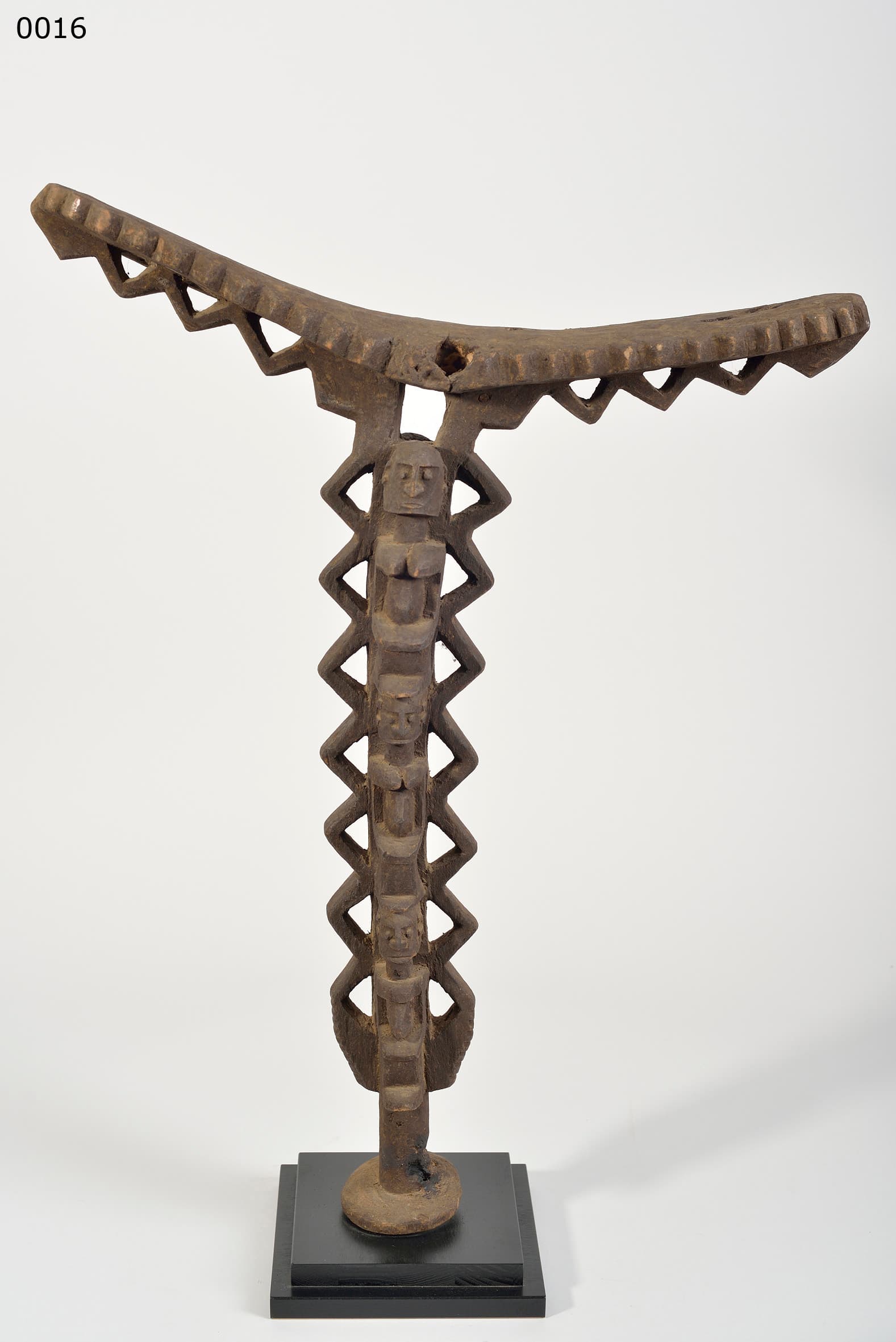
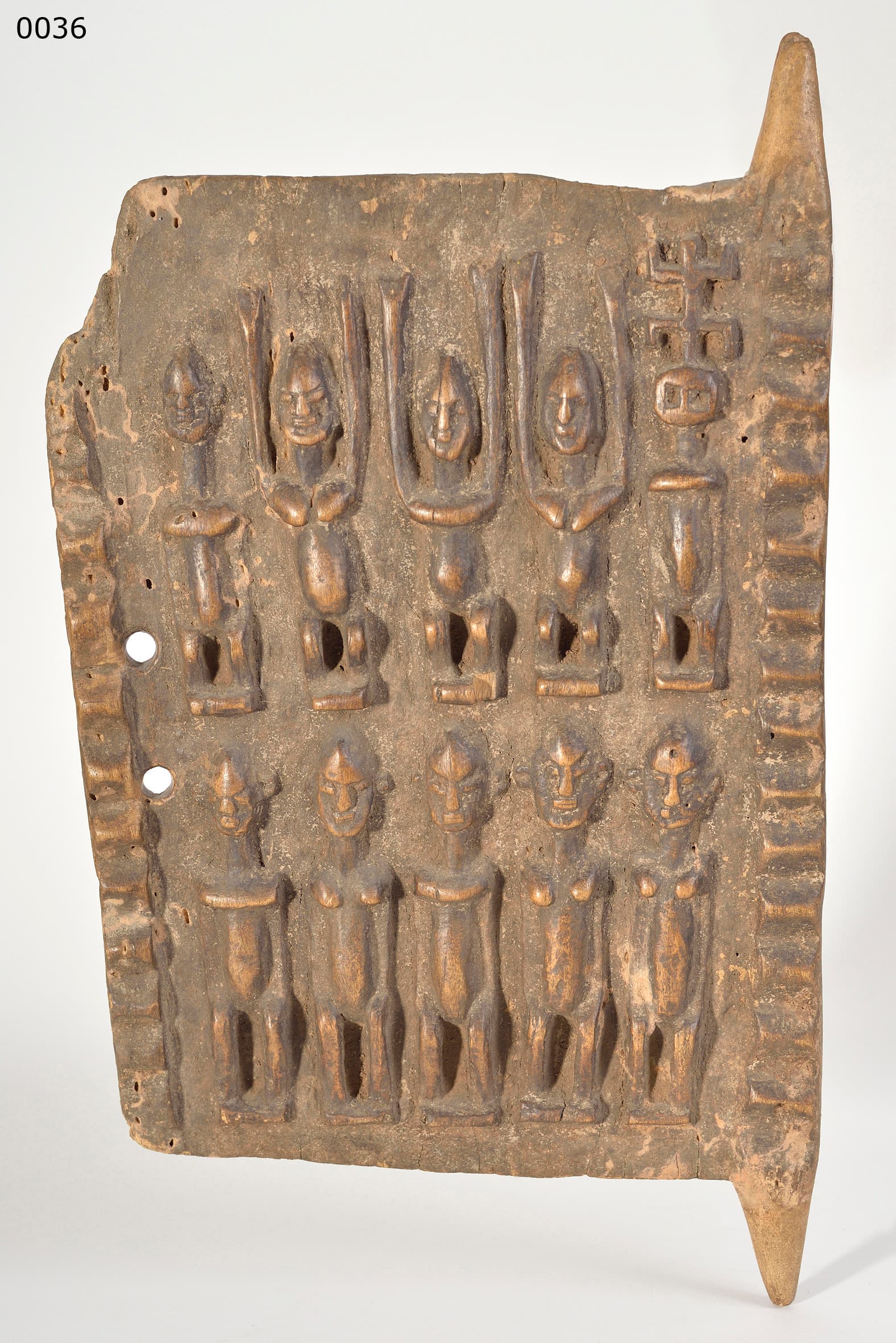
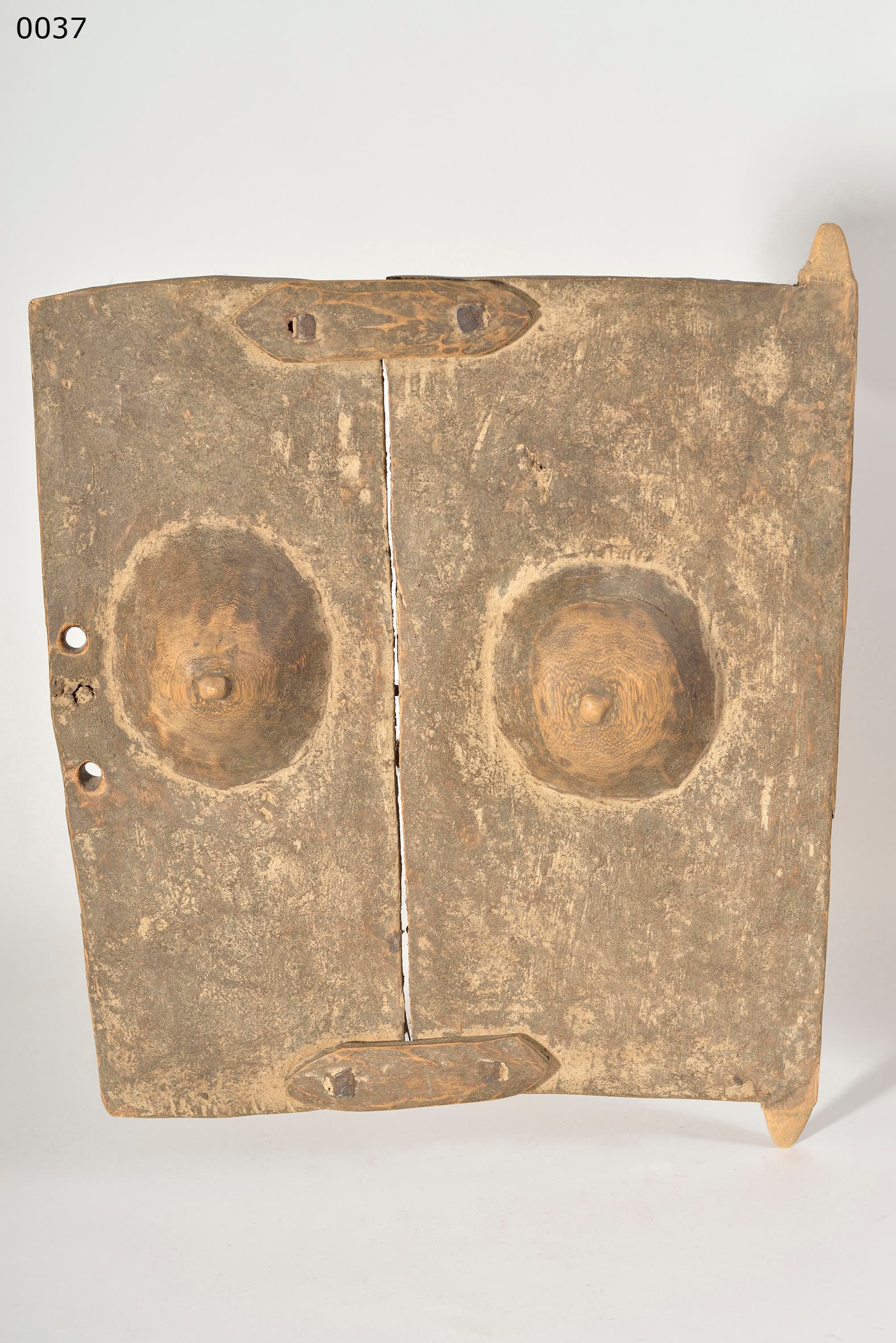
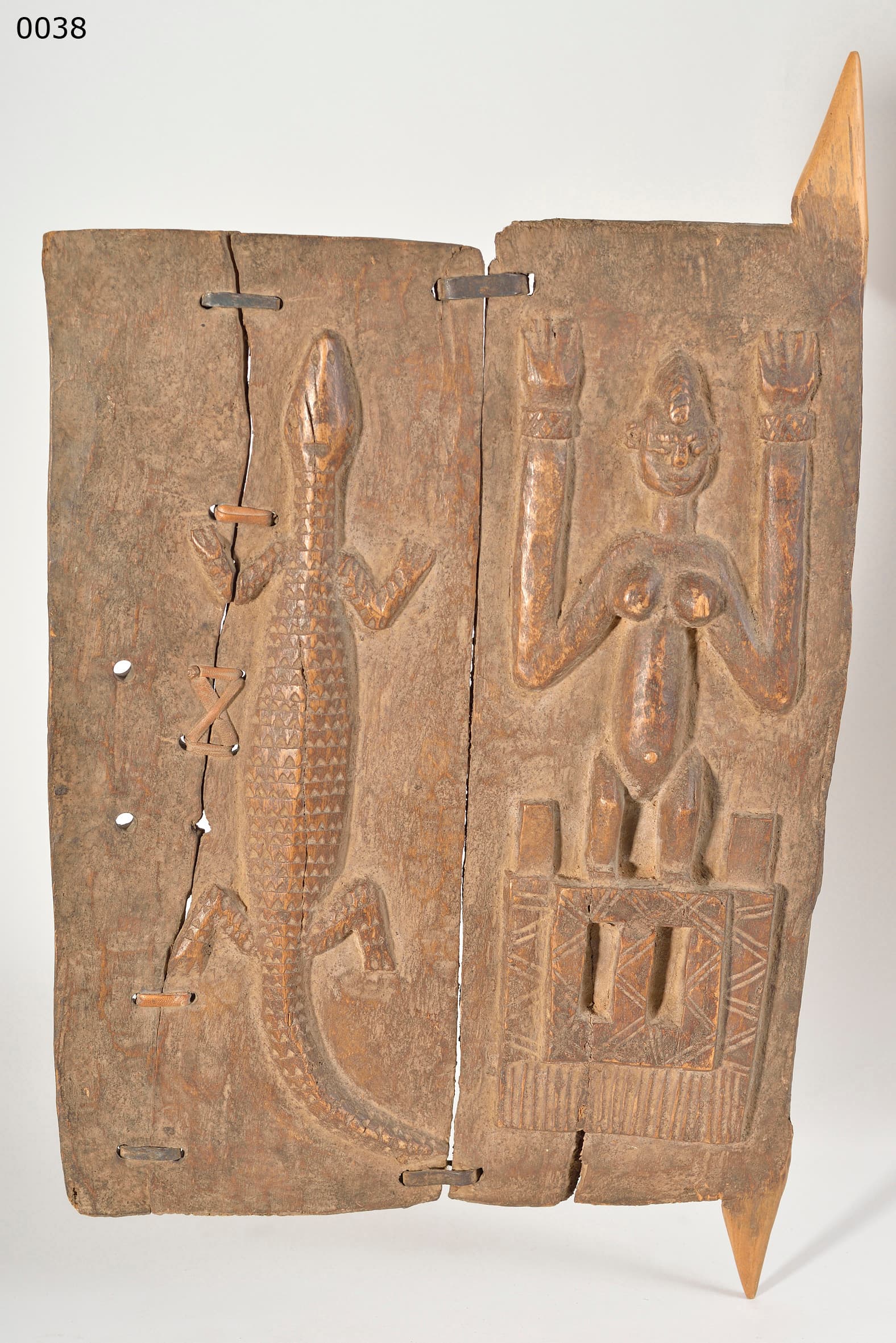
A rugged volumetric wooden sculpture (19th–20th C., 24 cm) from the Dogon of Mali — a formidable rider atop a stylized horse, the steed's head exaggerated in scale, the rider's helmet-like head reduced to a simple sphere, the wood carrying a dry checked Sahelian patina. The geometric diamond ornamentation on the base and the blocky abstraction point to established stylistic conventions that Hélène Leloup often attributes to the workshops of the Bombou-Toro or N'duleri regions.
1. Equestrian status and the hogon
In the rugged terrain of the Bandiagara Escarpment, horses are rare, expensive, and difficult to maintain.
- Ultimate Prestige Symbol: The equestrian figure in Dogon art is the supreme symbol of wealth, power, and political rank.
- Hogon or Deified Hero: The rider likely represents a Hogon (supreme spiritual and political leader) or a mythical ancestor from the Nommo creation cycle. The oversized horse head emphasizes the animal's life force and the commanding presence required to master it.
2. Cosmological journey
Beyond earthly politics, the horse in Dogon mythology is the "animal of the world."
- Ark Between Realms: The horse is the vehicle that connects the earthly realm to the spiritual domain.
- Eternal Composure: Placed on a shrine, the equestrian figure acts as an intercessor, metaphorically riding between the living and the ancestors — the rider is depicted not in action but in a strict upright posture and rigid timeless composure. The proportions emphasize spiritual significance over pure naturalism, reflecting mastery over both realms.
3. Environmental checking and shrine provenance
The physical condition of the sculpture strongly argues against it being created as late as the first half of the 20th century, authenticating the piece as a Sahelian shrine object preserved over generations.
- Deep Vertical Cracks: The profound, dry weathering with massive drying cracks—particularly on the horse's neck and torso, as well as the base—is the definitive natural aging signature of extreme Sahelian heat cycling. The facial features are almost entirely worn away by decades of environmental exposure.
- No Artificial Polish: Unlike altar sculptures hidden under thick, encrusted sacrificial layers of millet porridge and blood, this figure shows a dry, heavily oxidized, and leached patina. This confirms very long storage in an extremely dry environment, typically in the rock overhangs or ancestral shrines of the Bandiagara cliffs, long prior to Western market entry.
Summary
A profound symbol of leadership and cosmological power, this Dogon equestrian figure is carved with a rugged monumental presence despite its size. Its deeply checked, leached dry Sahelian patina guarantees its 19th- to 20th-century authenticity and ritual significance.
Written with AI assistance from the collection appraisal, object photography and our own research; editorially reviewed. Mistakes are possible — corrections are welcome. How we work →