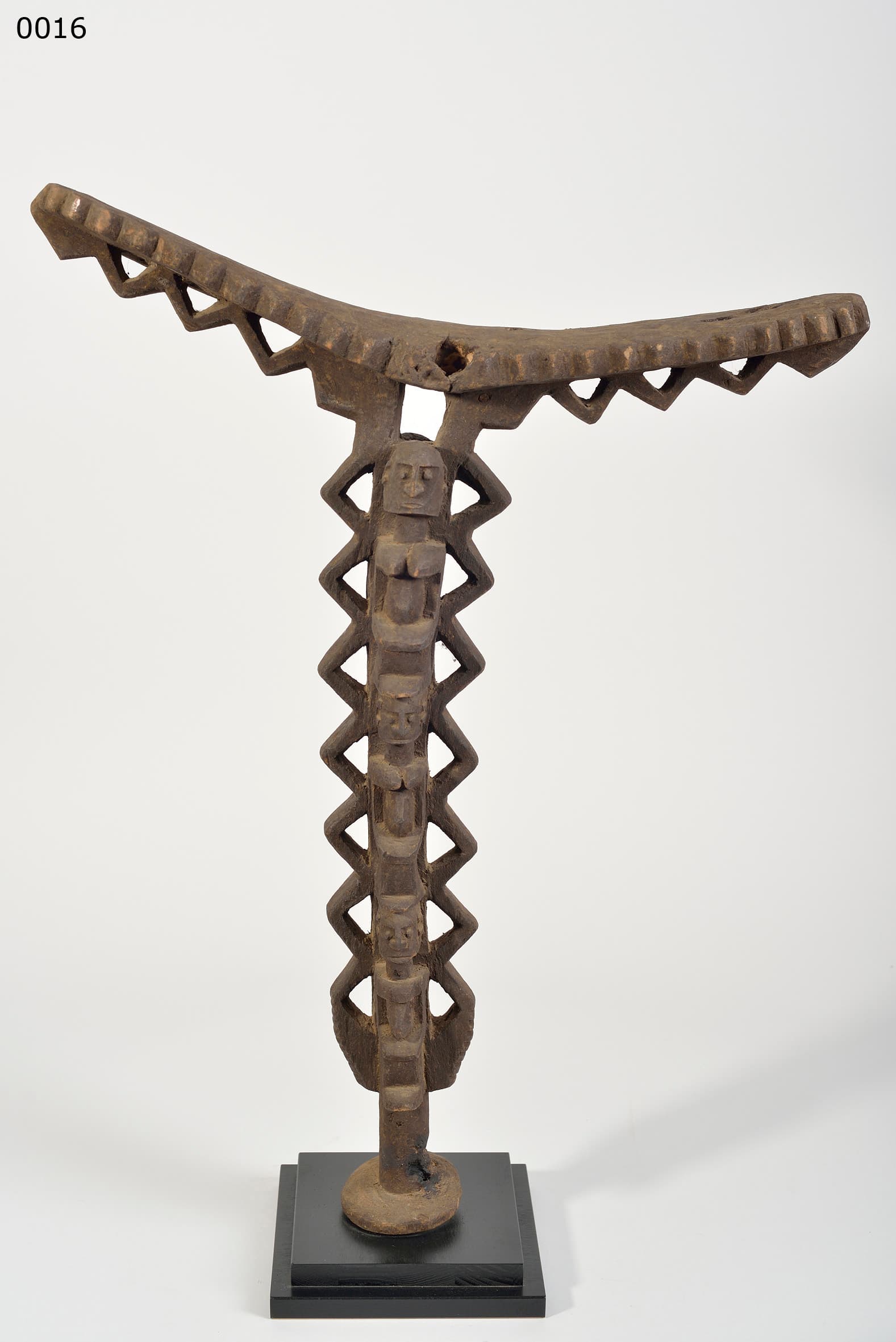
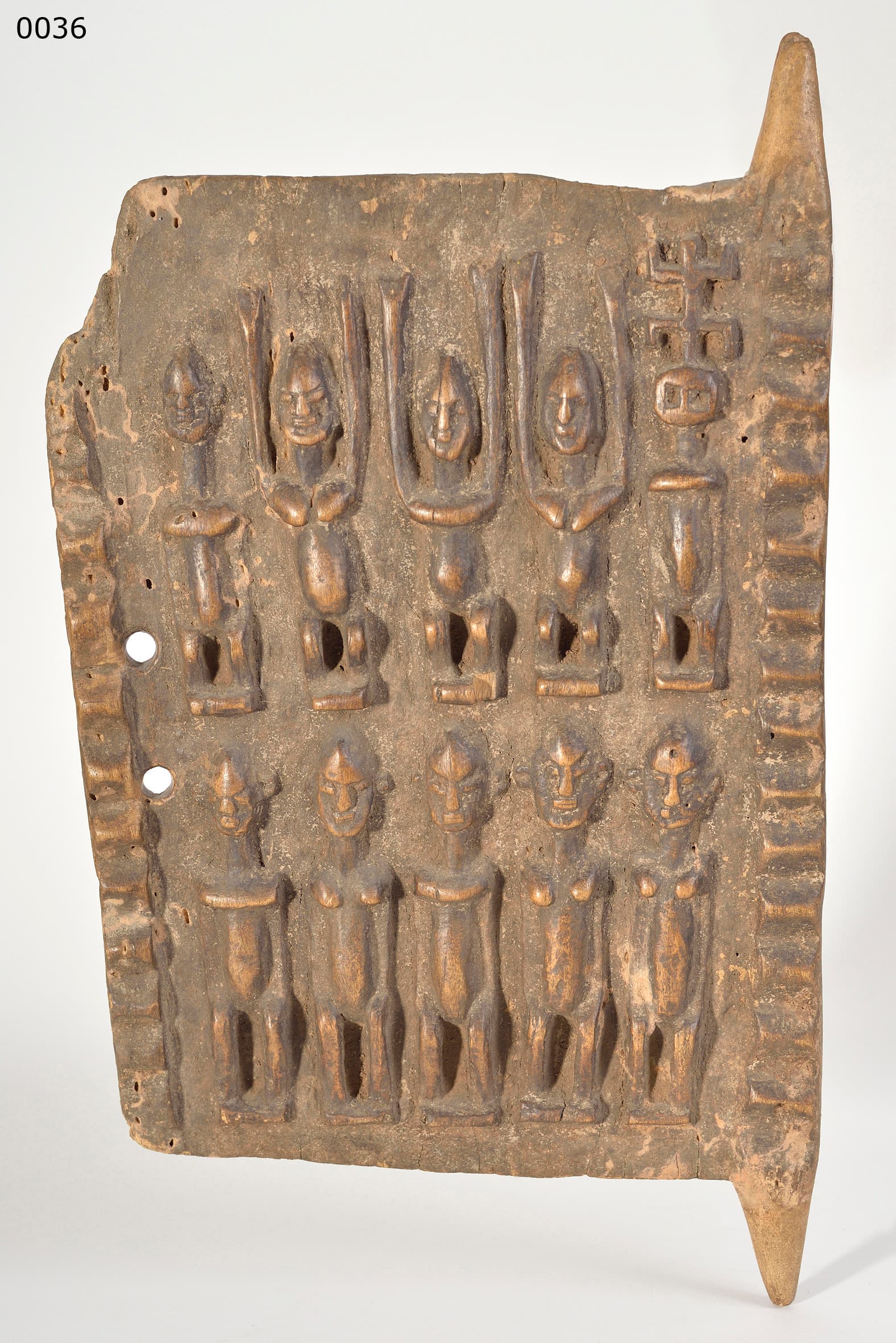
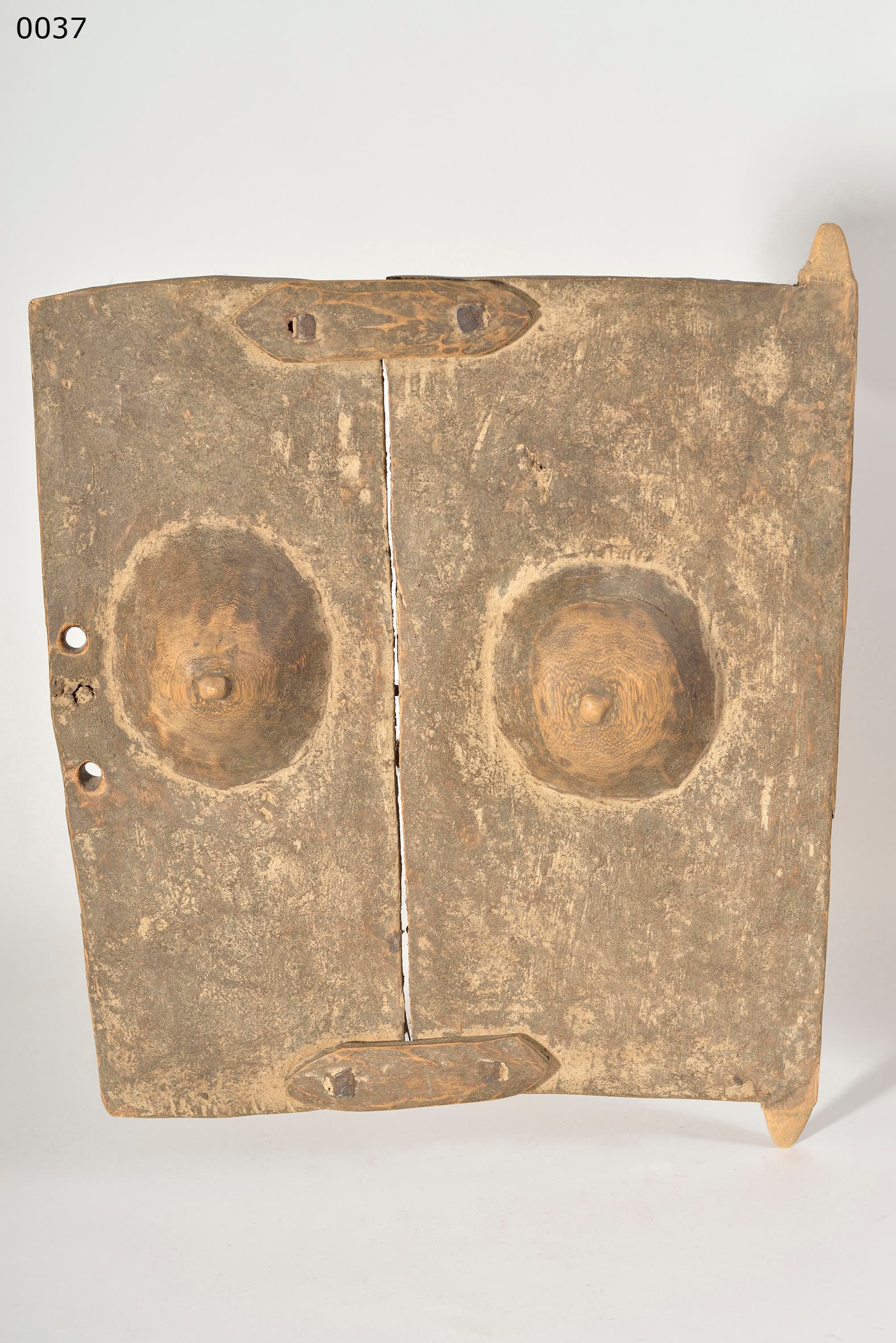
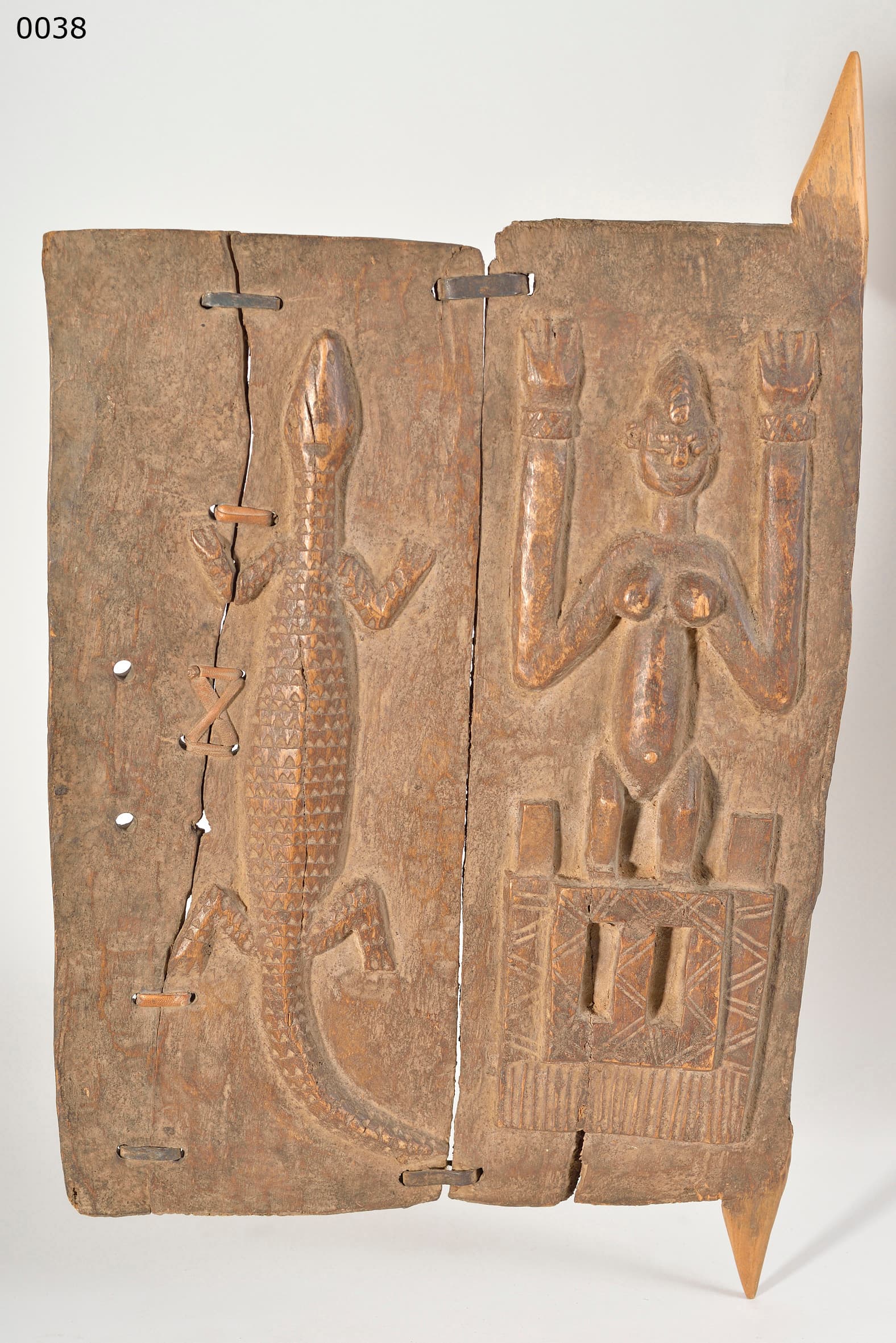
A Dogon neckrest (35 cm) from Mali, attributed to the 18th or 19th century—carved into the highly stylized abstract form of a four-legged horse, the gently saddle-like curved back serving as the head support, with intricate geometric incising along the edges and a deep, extremely dry dark brown patina.
1. Zoomorphic integration and status
Dogon carvers are known for integrating animal symbolism into functional objects.
- Back as Pillow: The horse's back accommodates the human neck — utility and elite iconography merged in one form.
- Supreme Prestige Animal: The horse is a key symbol of wealth, authority, and mythological power in the rugged Bandiagara — the owner (traditionally associated with a Hogon or wealthy elder) projects elevated social standing even while asleep.
2. The mythological mount
In Dogon cosmology the horse is not just a beast of burden but the "ark of the world."
- Ark Between Realms: A divine vehicle traversing the realms of the living and the dead. In the classical, highly mythologized interpretation by Marcel Griaule and Germaine Dieterlen, the zigzag motifs of the supports are often read as the descent of the mythical Nommo ark or as symbols of water and lightning.
- Dreamtime Alignment: An equine neckrest functionally aligns the sleeper's mind with the spiritual journeys of the ancestors. However, Walter E.A. van Beek’s fundamental 1991 revision rightly pointed out that Griaule's esoteric cosmology is often not reproducible in the field today, and not every functional object necessarily reflects this complex mythology. Regardless of the exact mythical charge, the zig-zag patterns incised along the flanks are traditionally associated with vital cosmological energy.
3. Handling wear consistent with an 18th to 19th-century attribution
The surface is characterized by a deep, partly encrusted handling patina built up over generations.
- Oil-Soaked Contact Zones: The edges of the animal's head, tail, and the central saddle dip have been worn completely smooth by decades of skin and hair-oil contact. The heavily rounded edges on the snout and ears testify to material fatigue from intense ritual and daily use.
- Deep Structural Oxidation: Organic wear combined with hardened oxidized grain supports an attribution to the 18th or 19th century and active pre-colonial use. Thanks to the exceptionally dry climatic conditions in the caves of the Bandiagara cliffs—a preservation phenomenon also documented by Rogier Bedaux during his excavations of the older Tellem culture—wood objects in this region can survive for centuries.
Summary
A fusion of zoomorphic symbolism and daily function, this Dogon equestrian neckrest is a notable example of utilitarian carving. Its lustrous handling patina, weathering marks, and intricate geometric details are consistent with an archaic, highly refined work of this tradition.
Written with AI assistance from the collection appraisal, object photography and our own research; editorially reviewed. Mistakes are possible — corrections are welcome. How we work →