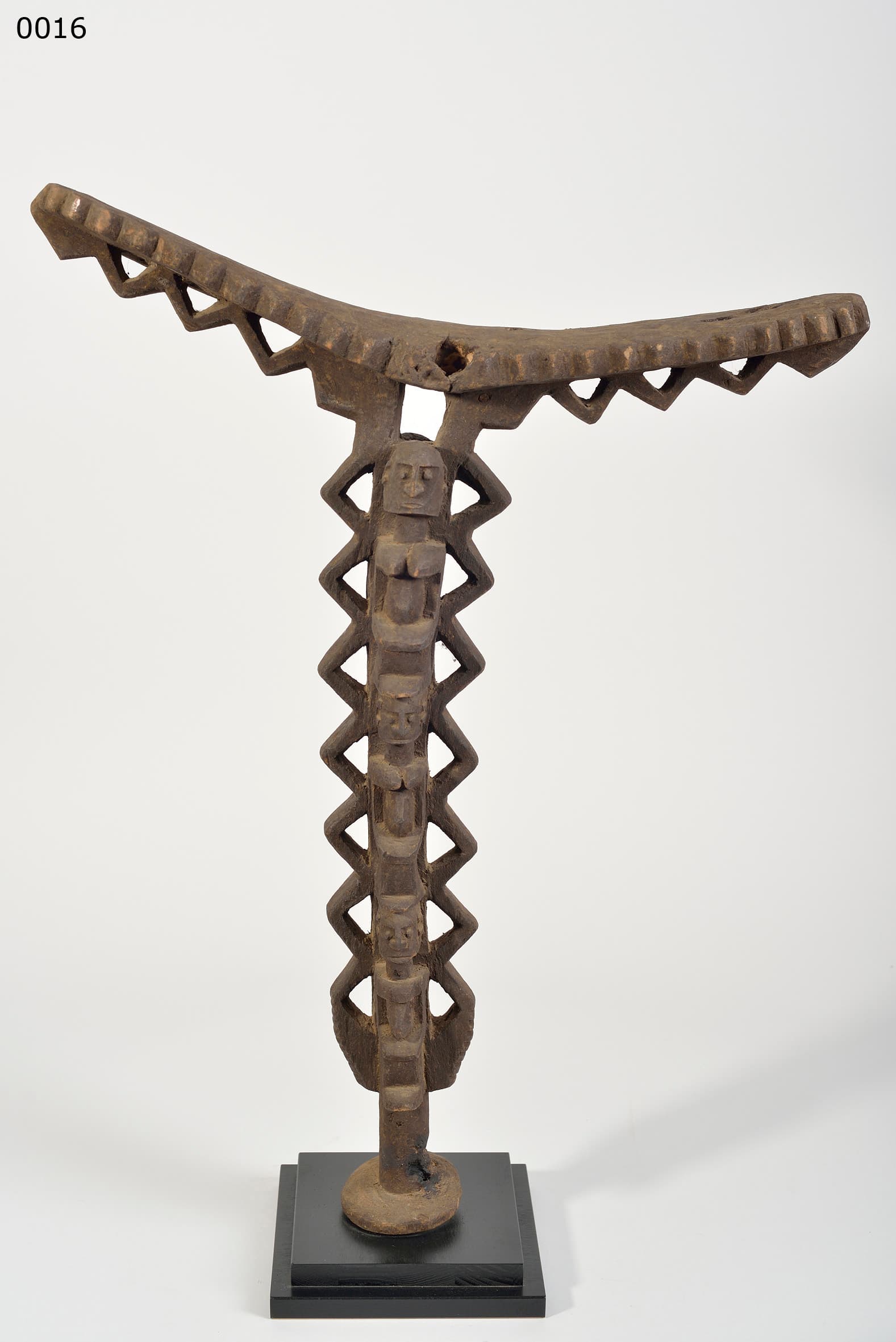
An elegant 19th-century Dogon neckrest (29 cm) from Mali — a sweeping curved head support terminating in downward-facing stylized animal heads, resting on two dynamically angled zig-zag carved legs, the wood carrying a deep oxidized slightly crusty patina.
1. Dynamic architectural geometry
Deviating from simple vertical pillars, this carver used angled chevron-shaped legs to create a highly dynamic, spring-like composition.
- Structural Storytelling: The carved zig-zag lines frequently represent the descent of the Nommo or the flow of life-giving water.
- Cosmology in Geometry: Embedding these narratives into the structure transforms a simple headrest into a piece of architectural myth — the neckrest carries cosmology in every line.
2. Zoomorphic protection during sleep
The extremities of the curved platform are carved into stylized animal heads, likely horses or mythical beasts.
- Sleep as Vulnerability: In Dogon belief, sleep is a state where the spirit wanders away from the body.
- Vigilant Guardians: The zoomorphic finials act as apotropaic sentinels, protecting the sacred head — the seat of nyama — during the night.
3. 19th-century patination
The surface wear perfectly corroborates the 19th-century dating.
- Smoothed Contact Zones: Darkened areas along the central dip of the platform are the result of decades of contact with human skin and hair oils.
- Crust in the Recesses: The recessed geometric carvings retain a dry oxidized crust — authentic continuous use in the harsh Malian climate, free of modern varnishes.
Summary
Merging kinetic architectural design with zoomorphic guardianship, this Dogon neckrest is a superb example of functional West African art. Its rich tactile handling patina and structural complexity make it a highly desirable 19th-century artifact.
Written with AI assistance from the collection appraisal, object photography and our own research; editorially reviewed. Mistakes are possible — corrections are welcome. How we work →