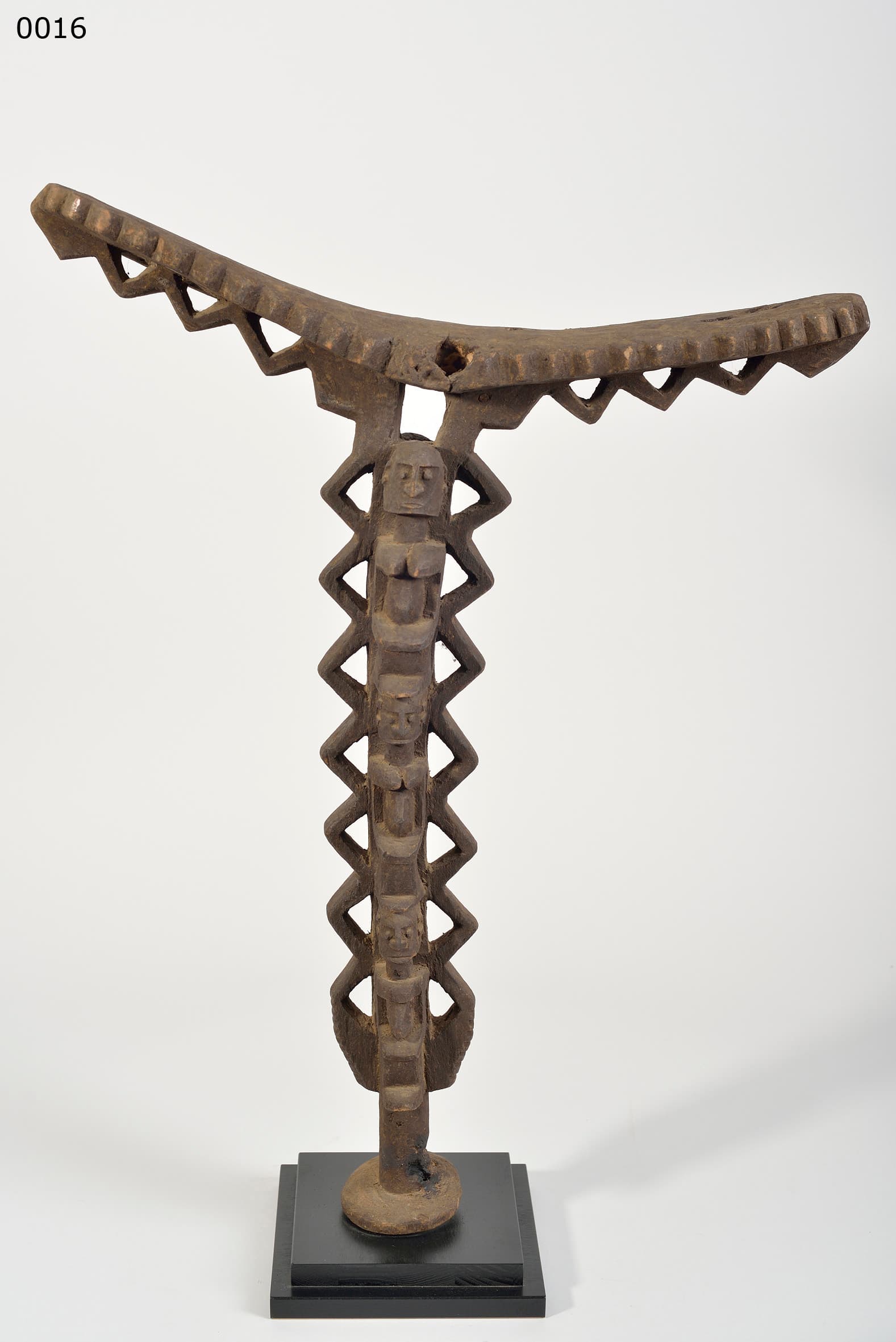
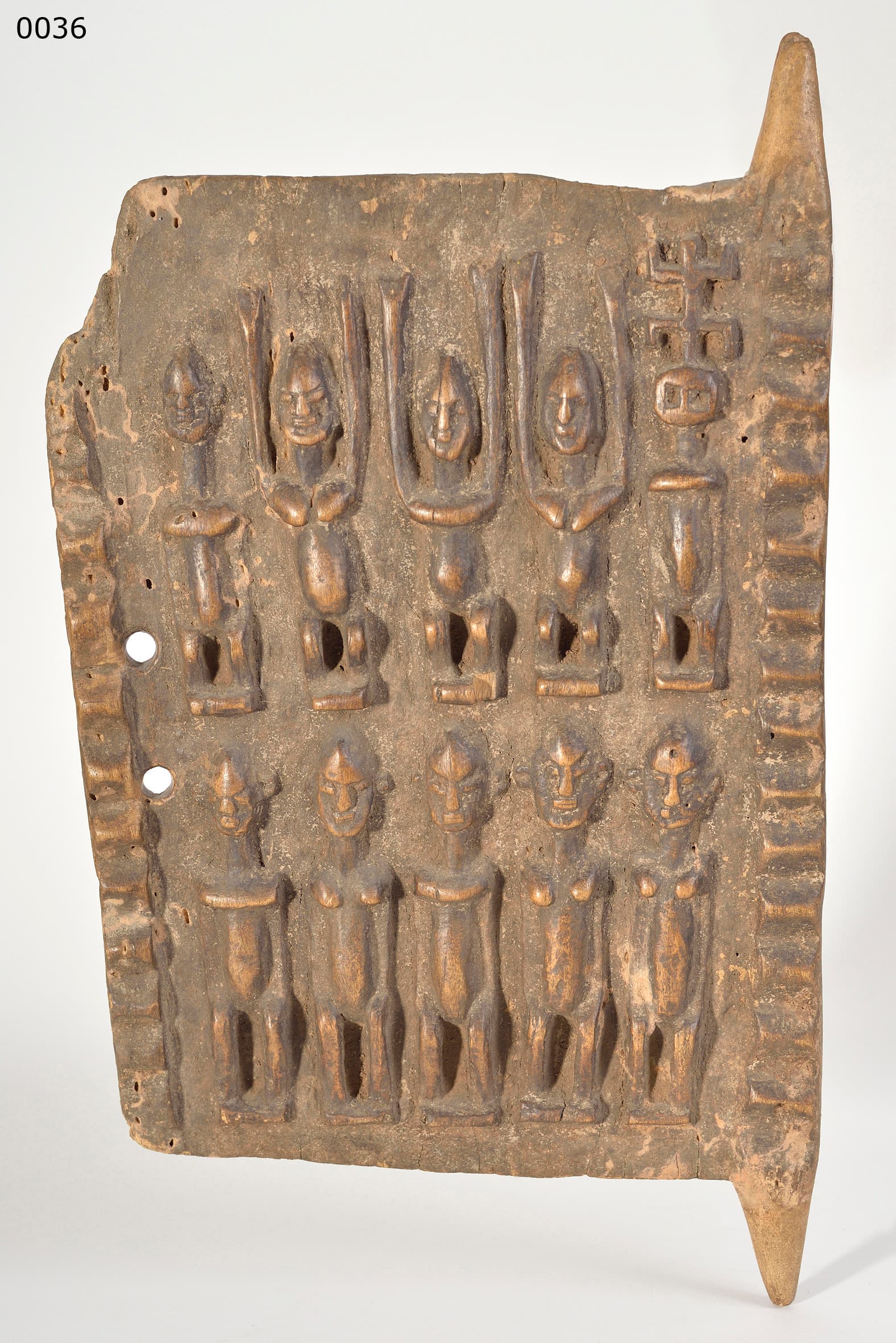
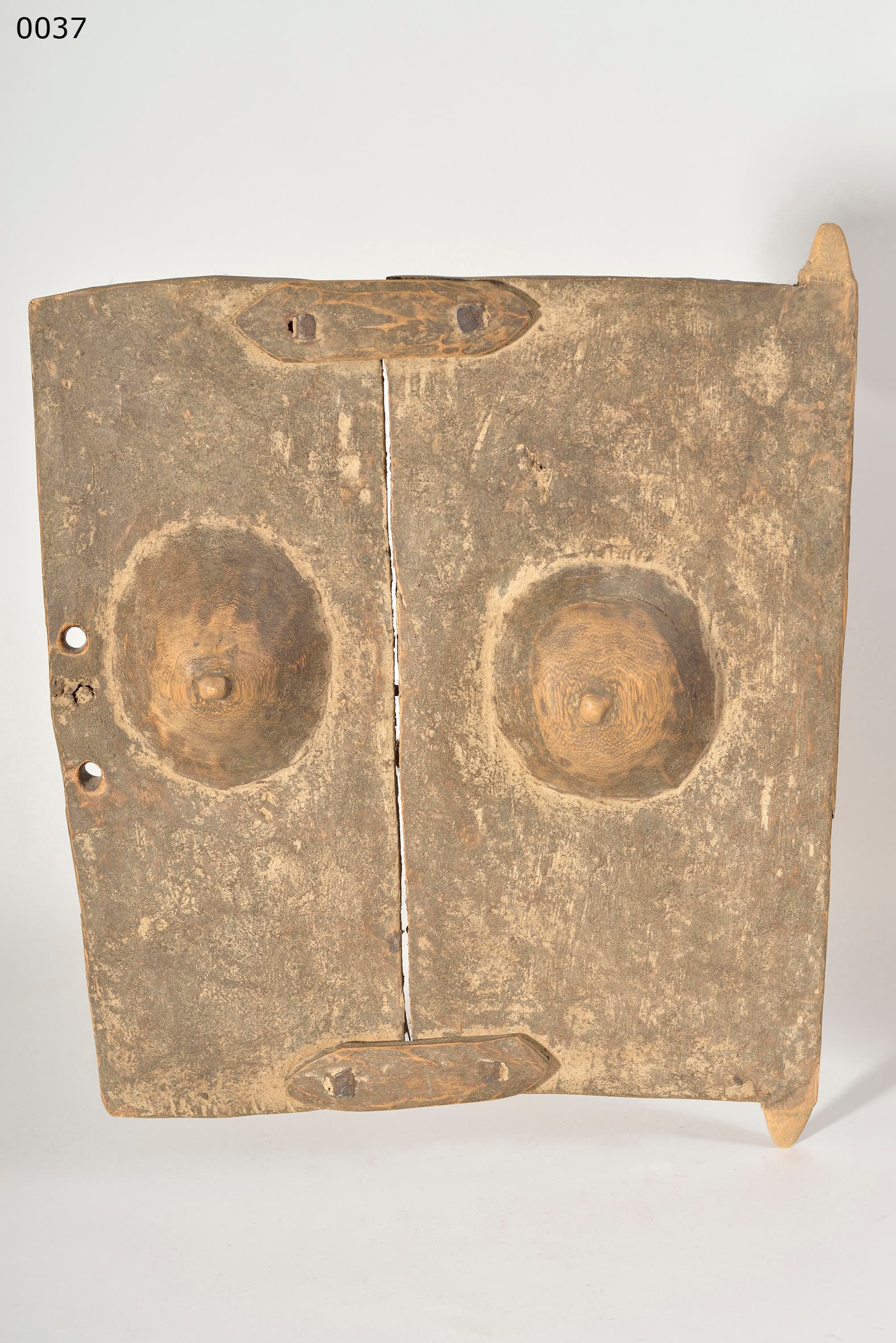
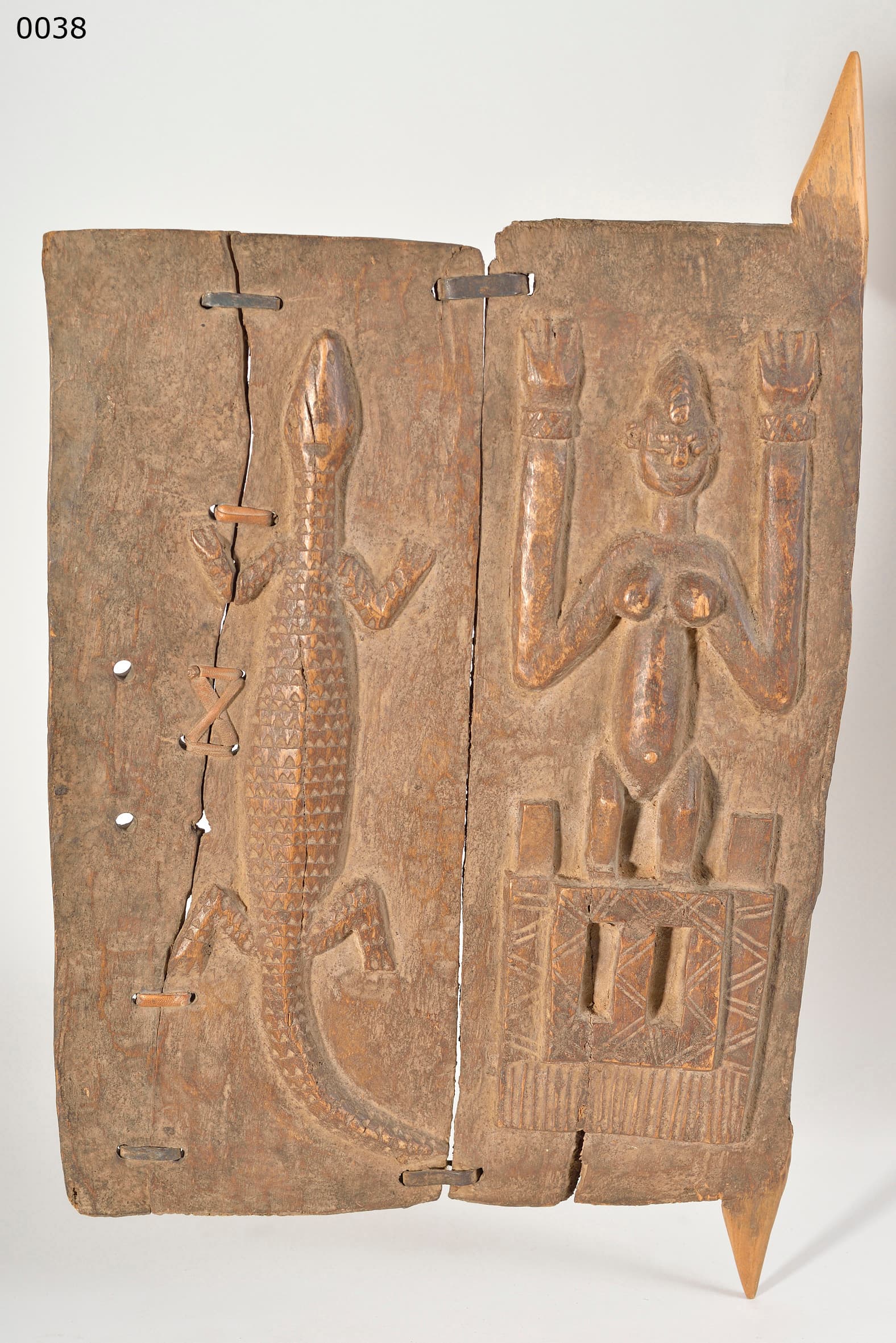
A Dogon ritual box (46 cm) from Mali, attributed to the 19th century — rectangular form with a fitted lid, carved to resemble an animal with a head at one end and a tail at the other, flanks lined with a procession of raised figures, the aged wood carrying a dry highly textured eroded Sahelian patina.
1. The ark of amma's creation
This object is traditionally understood as a manifestation of the central Dogon creation myth.
- Amma's Grand Ark: The box represents the ark sent by the creator god Amma, descending to earth carrying the Nommo, animals, plants, and the essential skills of civilization.
- Nommo in Relief: The raised figures along the sides are the Nommo themselves — the structured compartmentalized descent of all earthly life from the cosmos encoded into the sides of a wooden container.
2. Receptacle for sacred matter
Such conceptually dense boxes are believed to have been reserved for ritual rather than mundane storage.
- Kept by the Hogon: Senior priests used them to hold divinatory tokens, first-planting seeds, or ritually charged roots.
- Infused by Container: By placing vital items inside a model of the primordial ark, the contents were infused with the foundational life-giving energies of creation itself — protection from spiritual contamination built into the vessel.
3. Ritual encrustation and age
The surface shows wear consistent with 19th-century ritual life.
- Crust in the Nommo: Heavily eroded with remnants of sacrificial libations trapped within the intricate carvings of the Nommo figures.
- Structural Fissures: Deep checking is consistent with long-term use in a Malian shrine environment prior to Western collection.
Summary
Acting as a physical model of the Dogon universe, this ritual box is a notable example of mythological storytelling in wood. Its age, deep ritual crust, and cosmological significance support an attribution to the 19th century.
Written with AI assistance from the collection appraisal, object photography and our own research; editorially reviewed. Mistakes are possible — corrections are welcome. How we work →