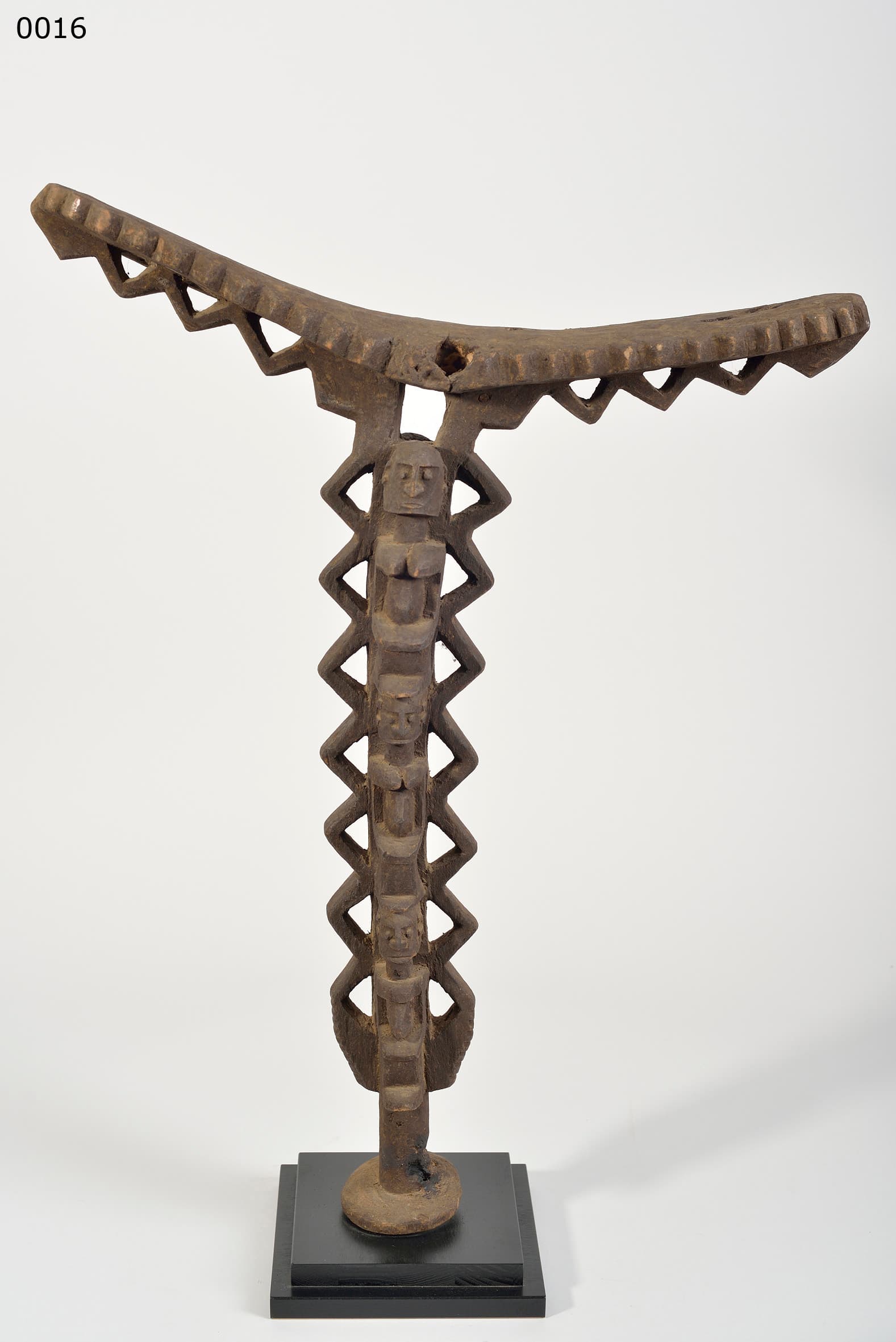
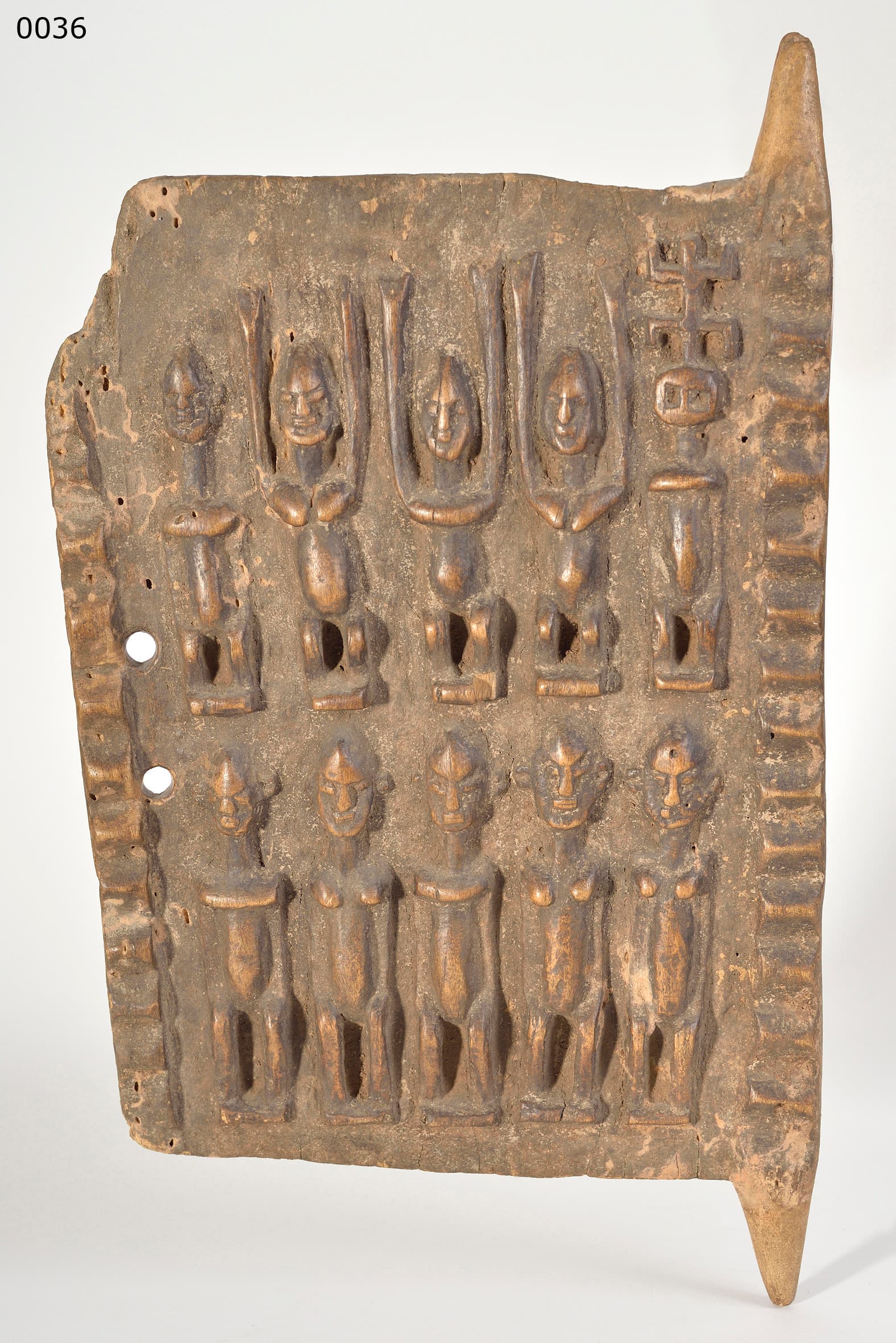
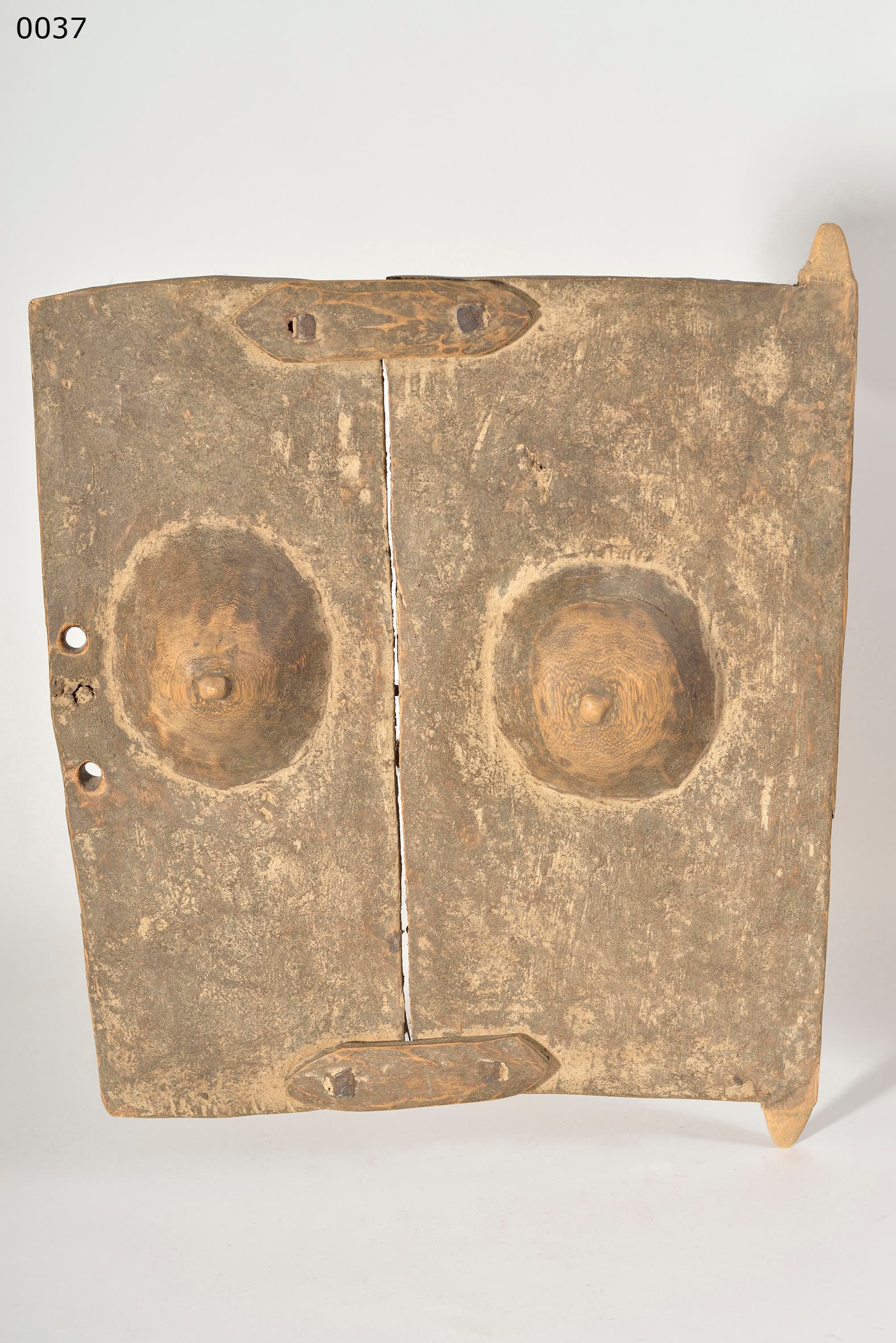
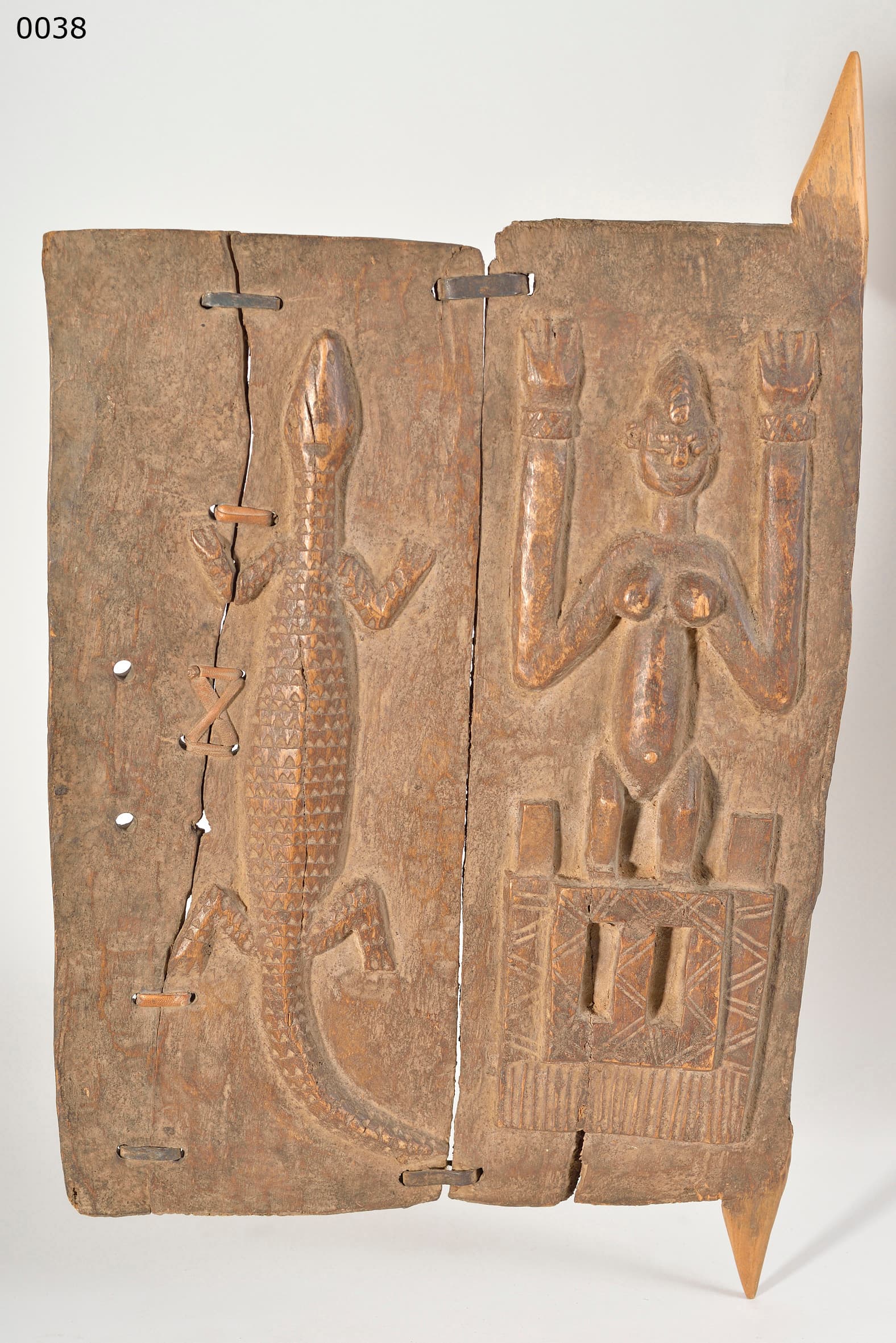
A complex Dogon funerary neckrest (24 cm) from Mali — a curved upper platform featuring a fine geometric notch pattern and terminating in abstract animal heads, supported by a central pillar flanked by two angled supports shaped like stylized descending horses. The distinct dual patina—smooth and greasy on top from years of use during life, yet rough and encrusted at the base—is consistent with a creation in the 18th to 19th century. The wood is remarkably dry, structurally checked, and deeply worn. Published in Leloup, "Dogon" (p. 22).
1. The equine caryatids
This neckrest is a sophisticated example of structural carving, using the horse — a traditional symbol of Dogon prestige — as load-bearing caryatids.
- Form and Function Fused: The stylized downward-facing horses provide architectural stability. While Marcel Griaule esoterically interpreted the horse as the first animal of the creation ark, modern scholarship, following Walter E.A. van Beek's 1991 restudy, views the motif more pragmatically as a pure status symbol.
- Broadcasting Rank: The equine caryatids visually project the owner's high social rank, immense wealth, and spiritual mobility — the status of the sleeper encoded into the supports of his headrest.
2. Funerary elevation and status
Designated as a male funerary neckrest, this object accompanied an elite individual into the dry cliffside burial caves of the Bandiagara.
- Hogon or Senior Elder: The caliber of carving and the horse symbolism suggest the grave of a high-ranking spiritual leader.
- Eternal Mounts for the Soul: The horses assist the spirit's journey from the earthly realm into the ancestral domain. Concurrently, the continuous use of such neckrests as grave goods touches upon Rogier Bedaux's Tellem-Dogon controversy, demonstrating a profound cultural adaptation of older regional burial practices.
3. Canonical status and taphonomy
The extreme desiccation of the wood is consistent with the environmental conditions of the Dogon burial caves.
- Pale Chalky Oxidation: Deep longitudinal cracks, dry oxidation, and thick crusts from bat guano and ritual libations on the base are consistent with extended cave residence.
- Documented Provenance: Publication in Leloup's Dogon (p. 22) supports its attribution, its 18th–19th-century dating, and its historical significance.
Summary
A sophisticated synthesis of structural ingenuity and elite equine symbolism, this Dogon funerary neckrest is a significant example of its type. Its cave-weathered surface and publication history support its attribution as an 18th–19th-century African antiquity.
Written with AI assistance from the collection appraisal, object photography and our own research; editorially reviewed. Mistakes are possible — corrections are welcome. How we work →