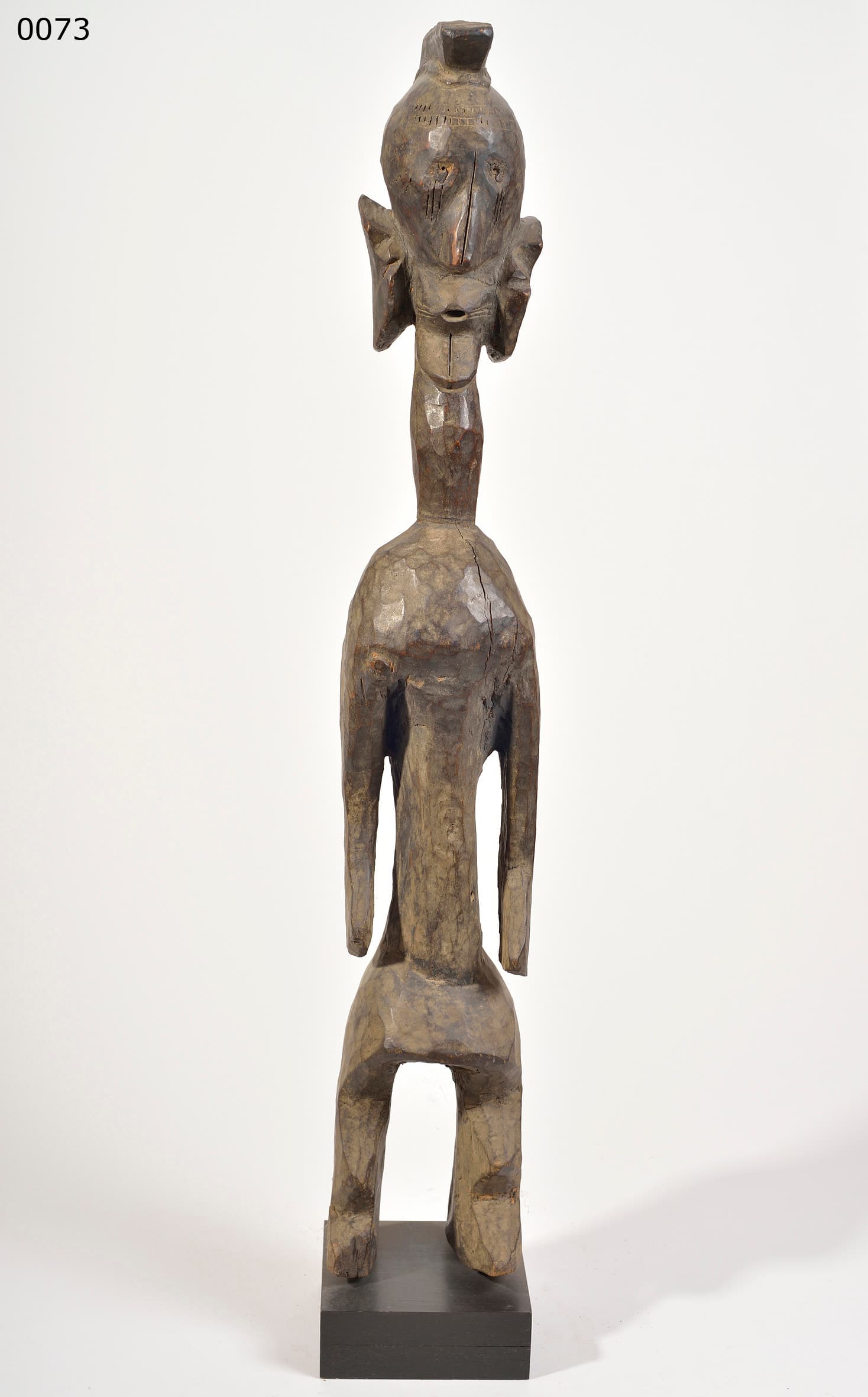
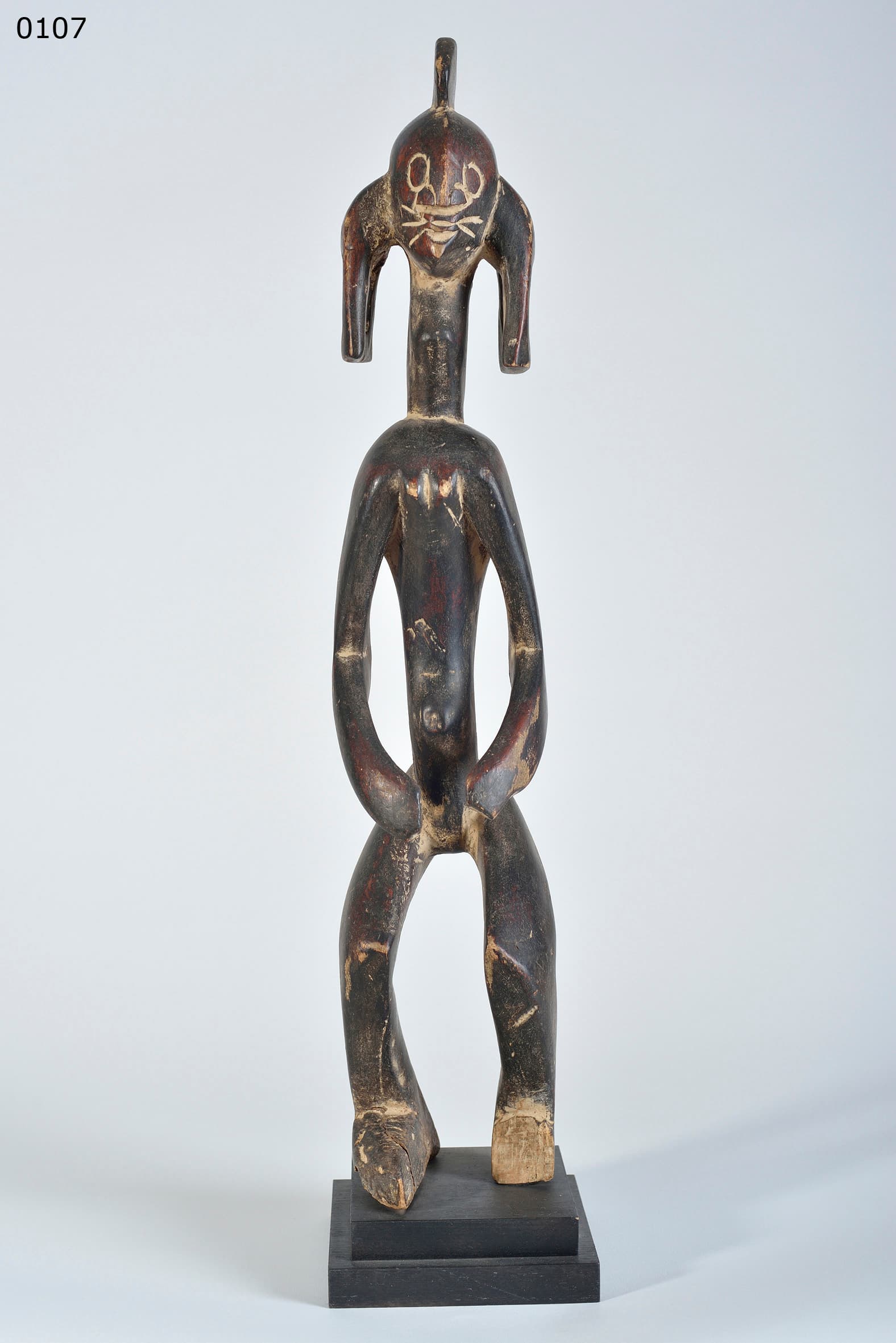
A towering wooden ancestor figure (attributed to the first half of the 20th century, 78 cm) from the Mumuye of Nigeria — soaring columnar torso flanked by sweeping ribbon-like arms, abstract crested head with prominent stylized ears, the dark wood heavily encrusted with a crusty oxidized shrine patina.
1. Proto-cubist abstraction
Mumuye sculpture is recognized for its use of negative space.
- Void as Material: Rather than carving a solid block, the artist carves away wood between torso and arms, producing ribbon limbs that wrap around empty air.
- Kinetic Weightlessness: The technique gives a heavy hardwood figure a sense of latent movement — defying the monolithic convention of most African carving.
2. The vabo society and polyvalent shamanism
These statues are polyvalent spiritual instruments, not named-ancestor monuments.
- Hidden in the Tsafi: Stored in specialized sacred huts, brought out by elders of the Vabo society only when needed.
- Rain, Healing, Justice: The same figure could be deployed to heal sickness, identify a thief, or — most critically in the arid Benue River Valley — invoke the heavy rains necessary for agricultural survival.
3. Shamanic encrustation and benue weathering
The heavy varied surface reflects an active shrine life.
- Libation Stratigraphy: Repeated applications of millet beer, sacrificial blood, and chewed kola nut spat on the figure during divination rites have built up a thick crusty patina.
- Softened Cubist Edges: The originally sharp proto-cubist edges have softened under handling, showing wear consistent with a first-half 20th-century ritual provenance.
Summary
An expressive example of dynamic negative space and cubist abstraction, this 78 cm Mumuye figure demonstrates the kinetic qualities associated with Nigerian art. Its crusty divination patina and soaring architectural fluidity are consistent with a significant ethnographic object.
Written with AI assistance from the collection appraisal, object photography and our own research; editorially reviewed. Mistakes are possible — corrections are welcome. How we work →