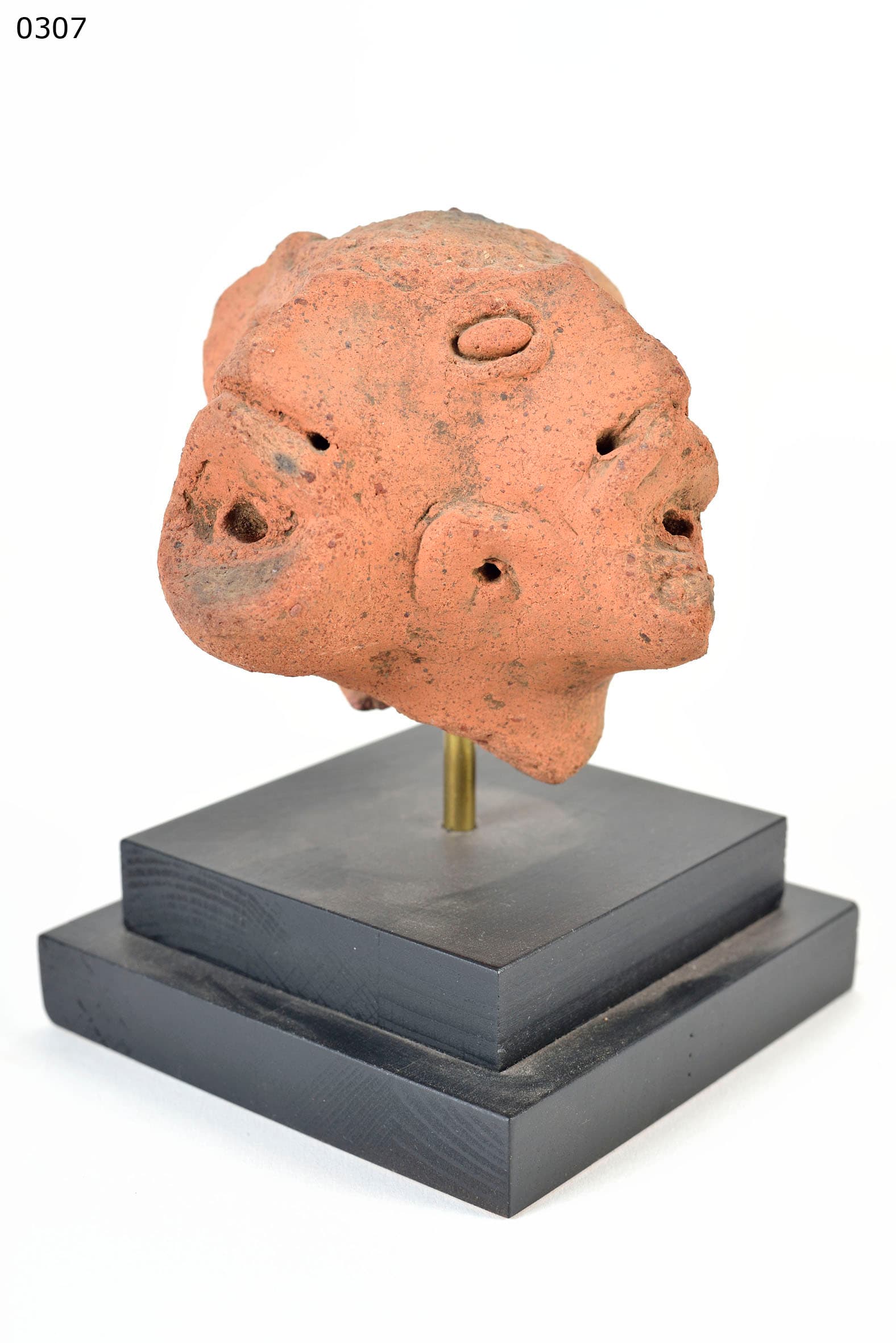
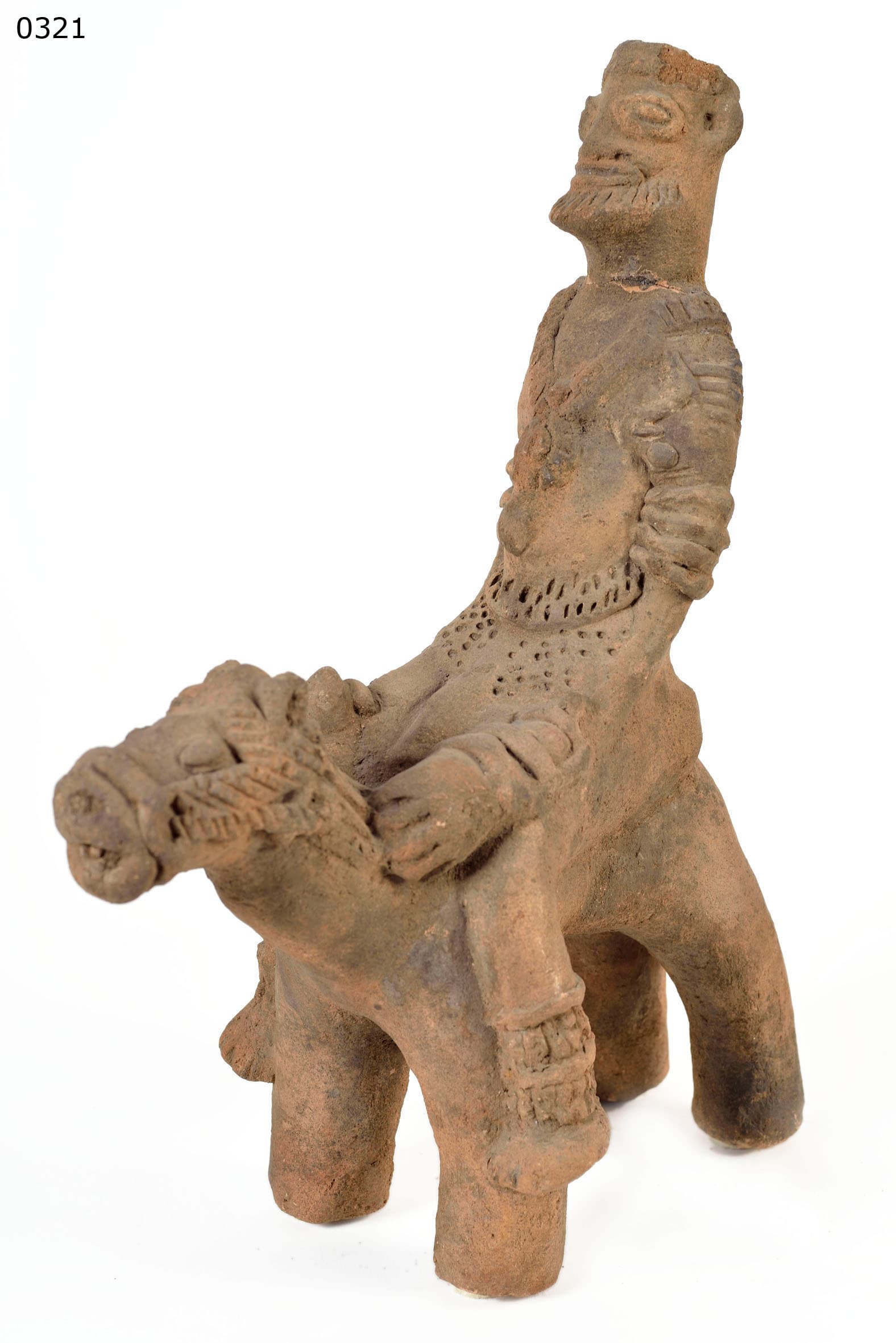
Eine dynamische Koma-Terrakotta (12.-18. Jh., 24 cm) aus Ghana - sitzend oder hockend mit nach oben zur Brust gebogenen Armen, mit einem stark beringten Hals, wulstigen, scheibenförmigen Augen und einem dramatisch geöffneten, singenden Mund. Die Terrakotta ist grob und vollständig mit einer dichten, eingebrannten Kruste aus blasser ghanaischer Erde gesättigt.
1. Koma-Bulsa Mound Enigmas
Die Koma- (oder Komaland-) Terrakotten im Norden Ghanas sind eine rätselhafte archäologische Entdeckung.
- Ausbruch aus der glatten Ästhetik: Die Kultur, die zwischen dem 13. und 18. Jahrhundert datiert wird, produzierte ausdrucksstarke, oft bauchige Figuren, die sich von der glatten Ästhetik der Nachbarregionen abheben.
- Hyperventilierende Anstrengung: Die Ausprägung dieses Beispiels - mit hervorstehenden scheibenförmigen Augen und weit geöffnetem Mund - verleiht dem Wesen einen wachen, fast hyperventilierenden Ausdruck geistiger Anstrengung.
2. Heil- oder Begräbniswächter
Koma-Figuren werden in der Regel mit organisierten kreisförmigen Hügeln assoziiert - rituellen Entsorgungsstätten, Heilschreinen oder Massengräbern.
- Austreiben von Krankheiten: Der offene Mund bedeutet, dass die Figur aktiv singt, atmet oder Krankheiten austreibt.
- Gesangliche spirituelle Wache: Als Grabfigur fungierte sie wahrscheinlich als aggressive spirituelle Wache, die Hexerei und böse Geister durch ständige übernatürliche Vokalisierung vom heiligen Grabhügel fernhielt.
3. Erdsinterung und Taphonomie
Der materielle Zustand ist vereinbar mit einer jahrhundertelangen Bestattung in den Savannenböden Nordghanas.
- Poröses, schweres Material: Die Terrakotta ist extrem porös, was auf die Verwendung von schwerem Material hinweist.
- Verschmolzene Erdvertiefungen: Tiefe, gehärtete Erdkrusten sind fest in die Vertiefungen der Gesichtszüge, den Halsring und die Räume unter den Armen eingeschmolzen – was für eine längere unterirdische Lagerung spricht.
Zusammenfassung
Diese Koma-Grabfigur, die eine aktive, stimmliche und spirituelle Kraft ausstrahlt, ist ein charakteristisches Überbleibsel der Grabhügelbauer im Norden Ghanas. Ihre ausdrucksstarke Ikonographie und die tiefe Erdverkrustung machen sie zu einem bedeutenden Zeugnis dieser Kultur.
KI-unterstützt erstellt aus Sammlungsgutachten, Objektfotografie und eigener Recherche, redaktionell geprüft. Fehler sind möglich — Hinweise darauf sind uns willkommen. Zum Verfahren →