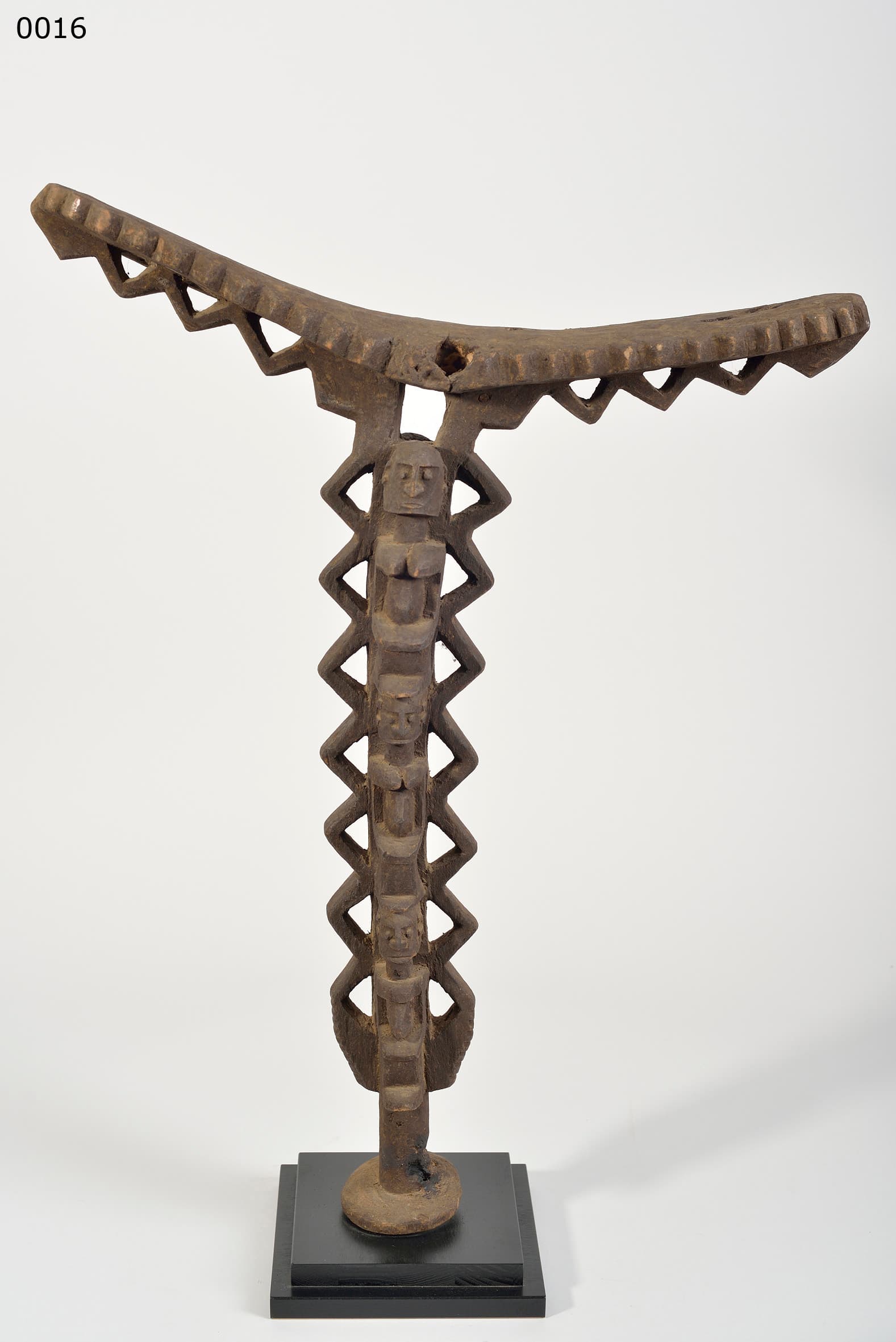
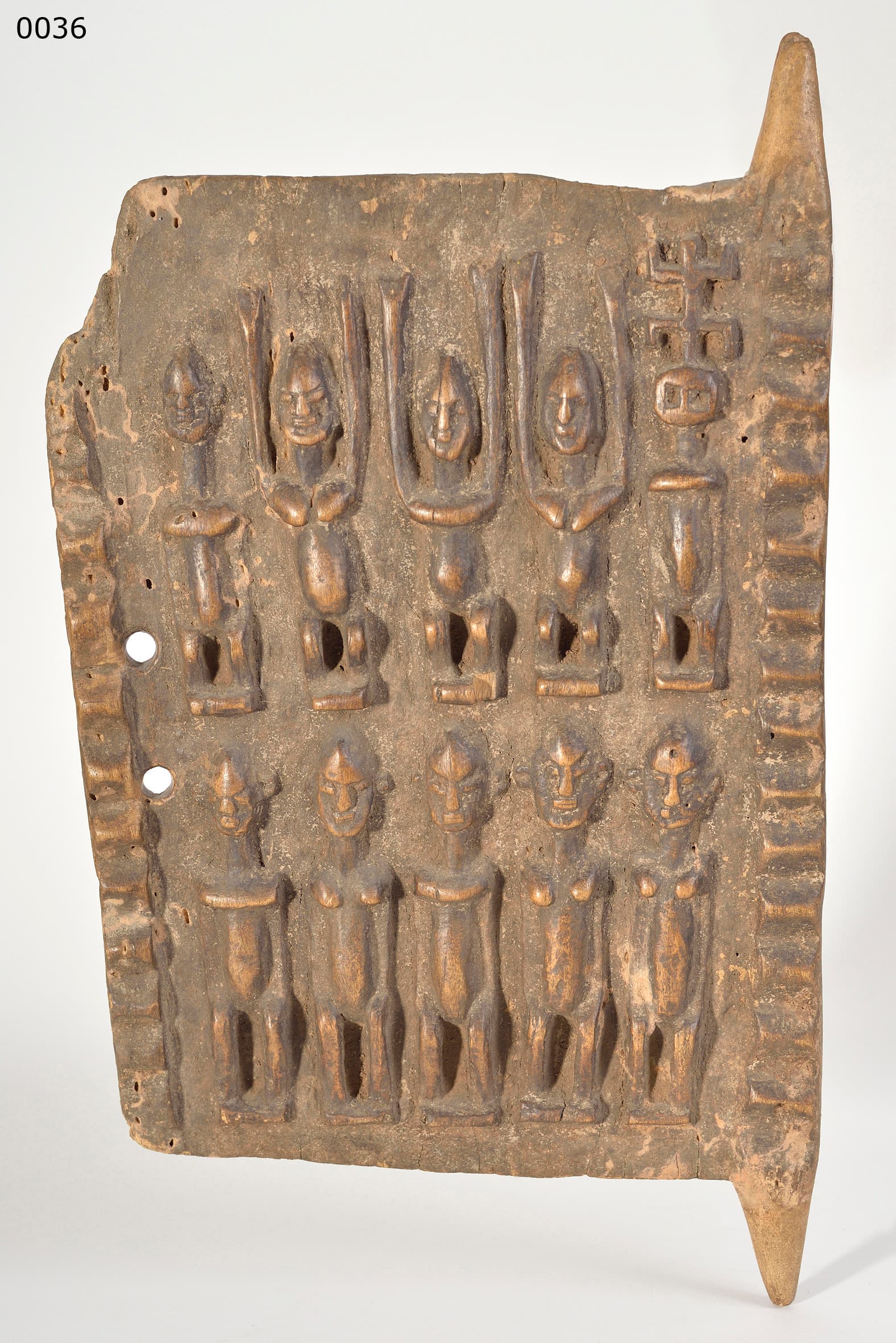
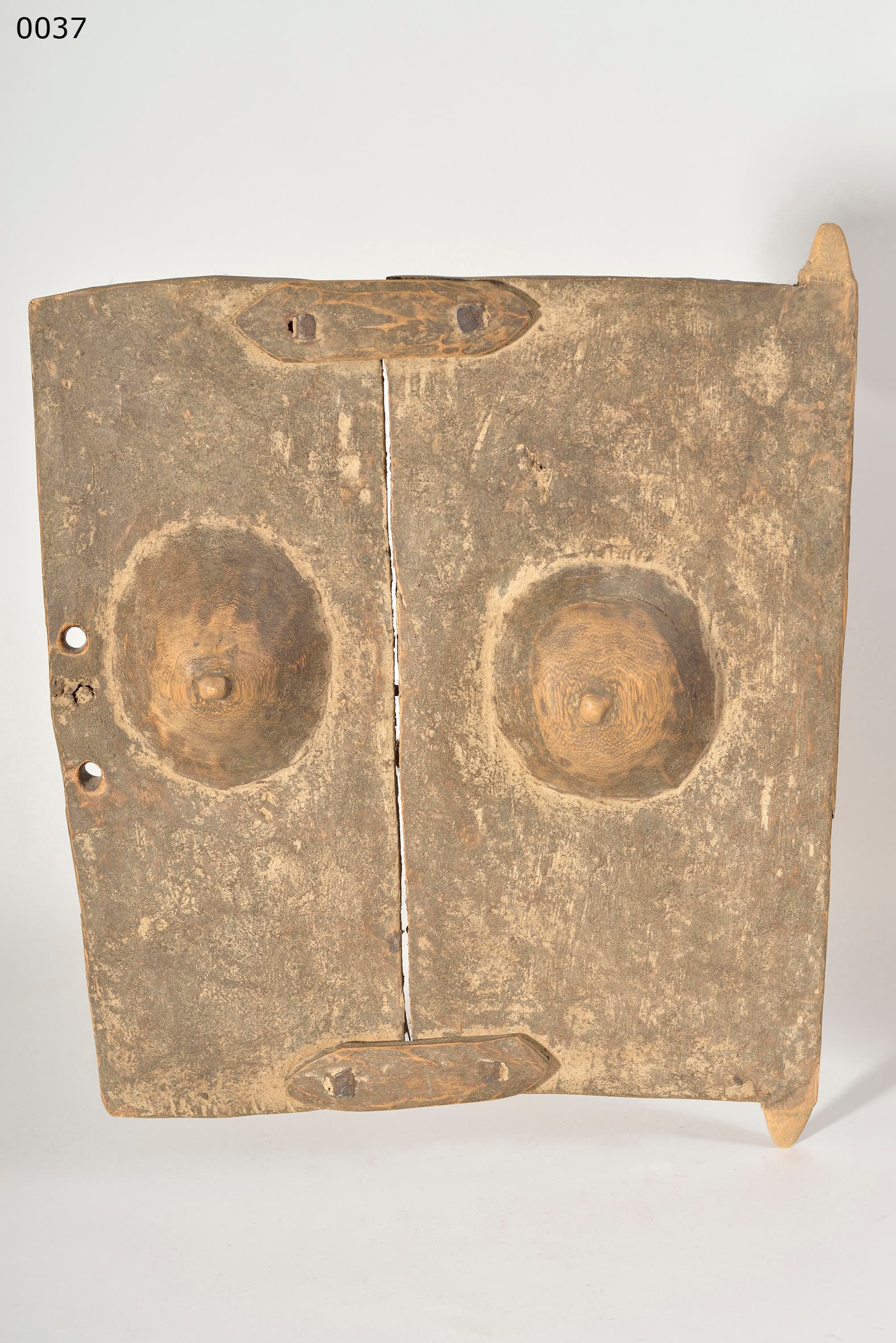
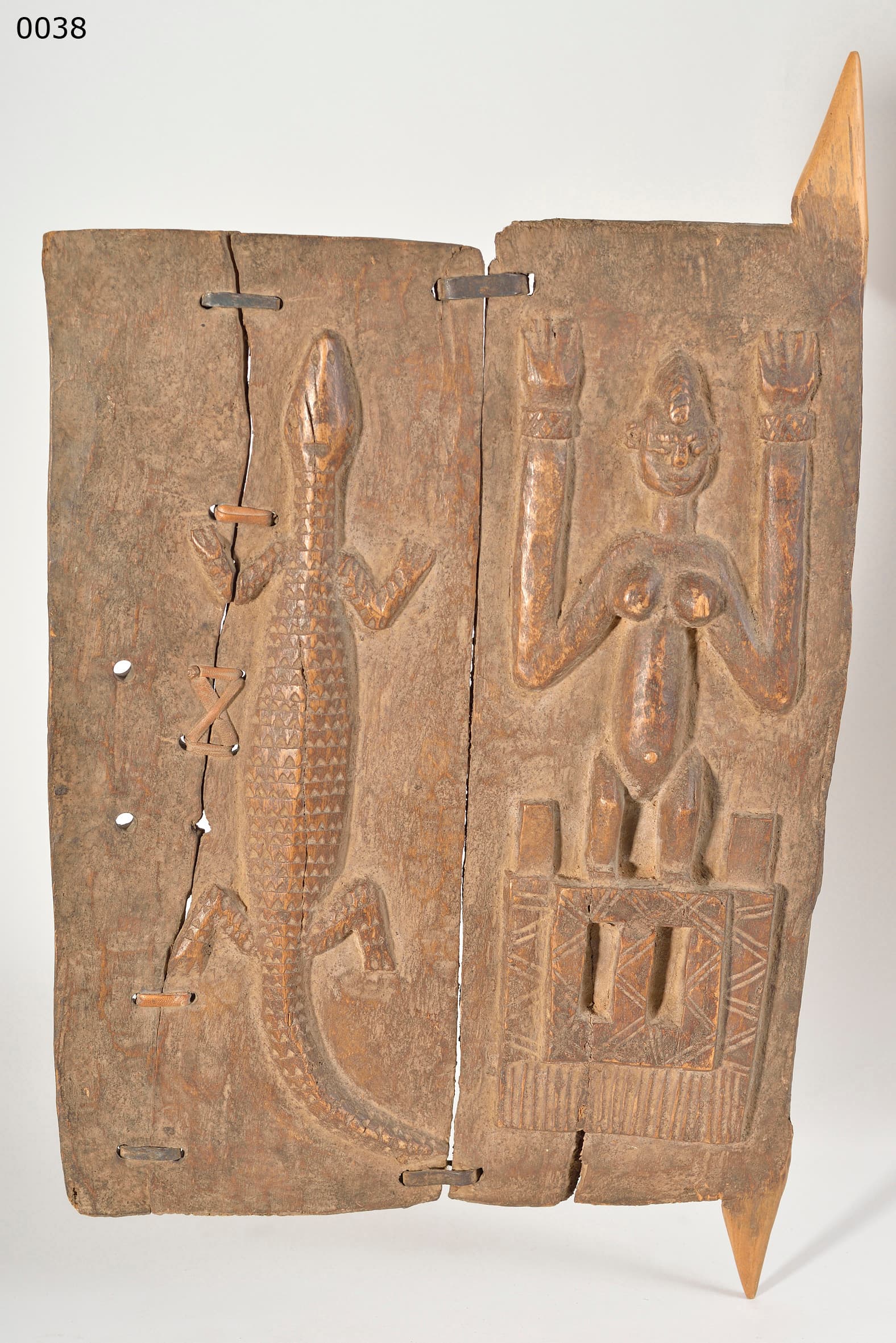
A long Y-shaped Dogon architectural post (1st half 20th C., 77 cm) from Mali — a highly stylized high-relief anthropomorphic figure carved directly into the central shaft, characterized by a pointed beard and rigid geometry, the wood extremely dry, pale, and severely weathered with significant age-related erosion on the base and extremities.
1. Architectural integration and togu na symbolism
Dogon art is fundamentally architectural, inextricably linked to the built environment of the village.
- Togu Na Support Pillar: This piece is a classic support pillar for a Togu Na (the men's meeting house) or a lineage shrine — using high-relief carving to literally integrate the ancestor into the structural support of the building.
- Monumental in Limited Timber: The figure's simplified angular form is dictated by the narrow dimensions of the timber — demonstrating the carver's ability to maximize monumental presence within a strictly limited architectural framework.
2. Supporting the community
The Togu Na is the physical, political, and judicial heart of Dogon village life.
- Actively Present Ancestor: Posts carved with ancestral figures literally and symbolically support the heavy roof under which the elders debate, govern, and pass judgment.
- Guiding Judicial Weight: The ancestor carved into the post is considered actively present — ensuring truthful speech, guiding judicial decisions, and reminding the living that the ancestors bear the weight of the village.
3. Elemental erosion and termite interaction
The severe physical condition provides a record consistent with its functional history.
- Subterranean Termite Damage: The lower section shows heavy irregular degradation caused by deep burial in sandy Malian soil and interaction with subterranean termites over decades.
- Sun-Bleached Upper: Conversely, the upper portion exhibits extreme wind and sun bleaching from exposure to the harsh Sahelian elements — the lack of commercial finishes supports its attribution as an actively utilized architectural fragment.
Summary
Functioning as both a structural pillar and a spiritual anchor, this Dogon post encapsulates the deep integration of art into daily Sahelian life. Its severe environmental weathering is consistent with its functional architectural history.
Written with AI assistance from the collection appraisal, object photography and our own research; editorially reviewed. Mistakes are possible — corrections are welcome. How we work →