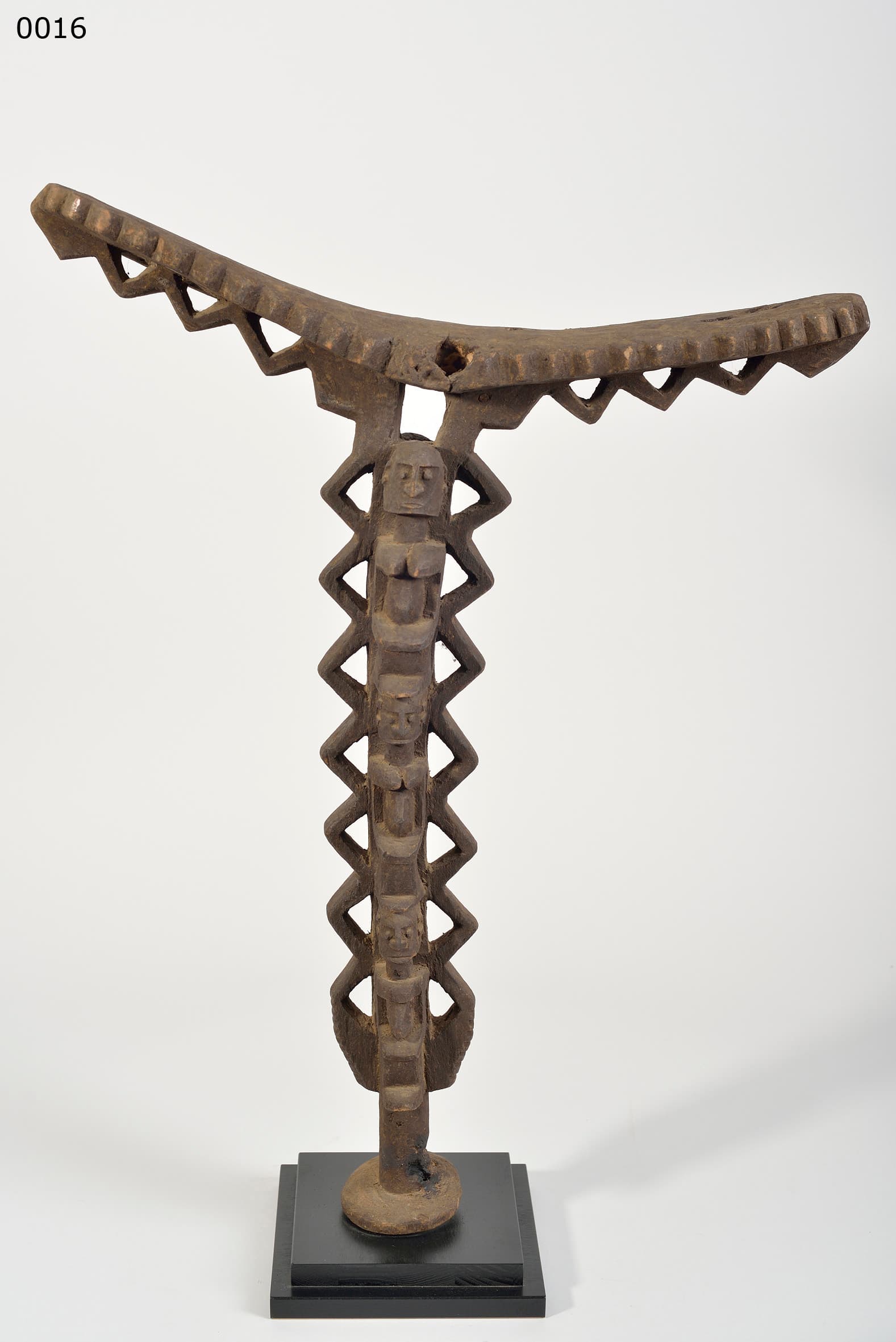
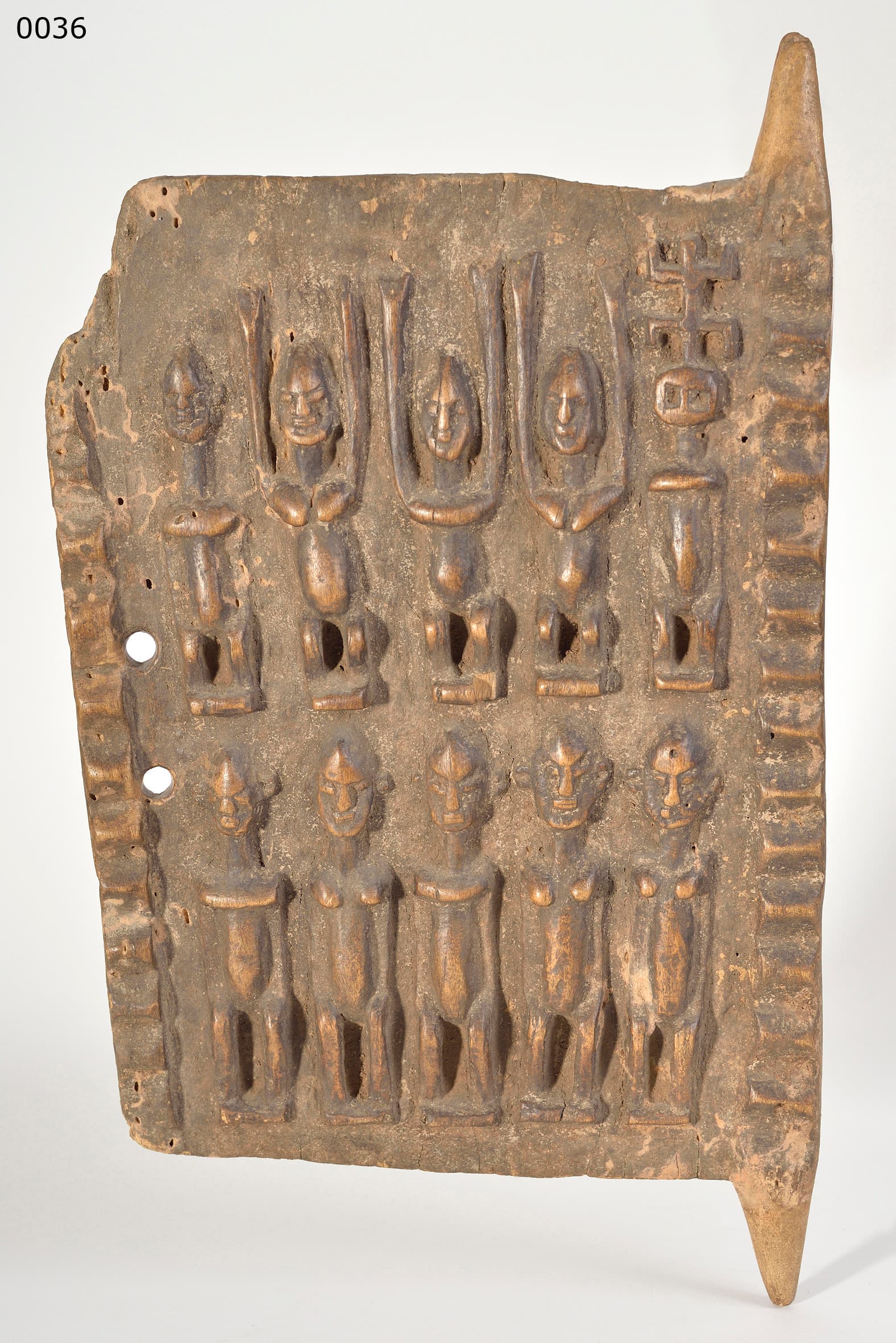
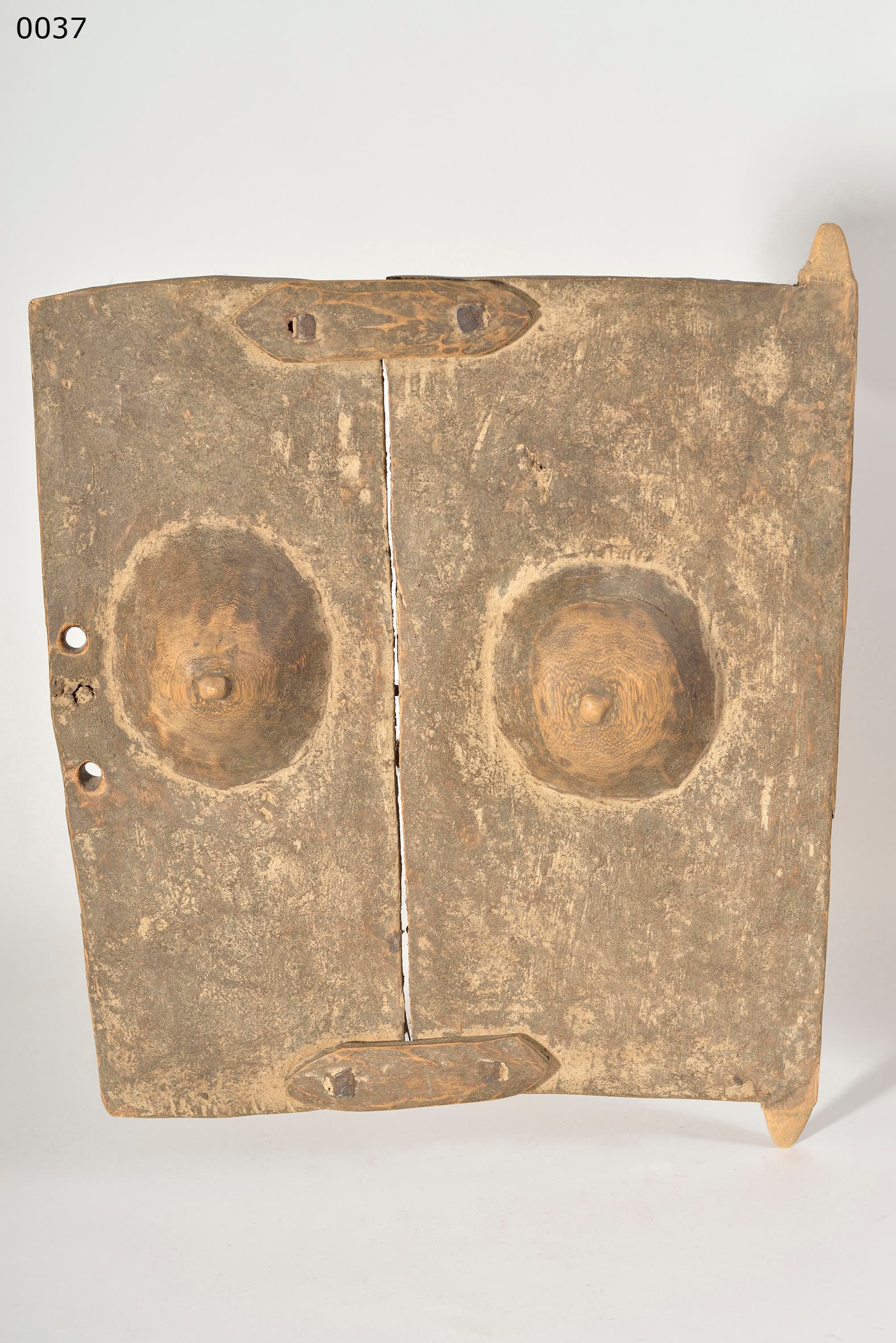
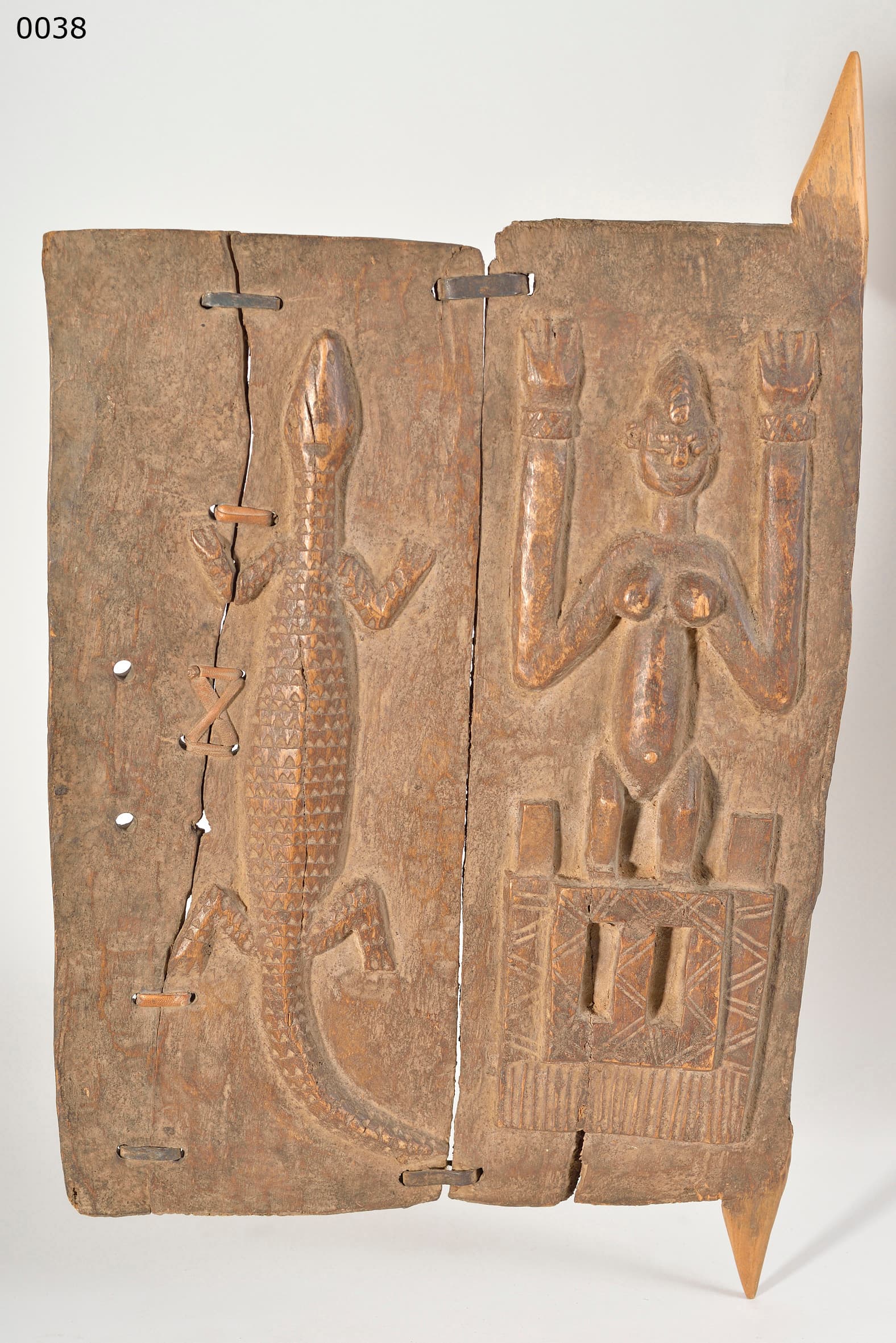
A sharply curved Dogon Domolo shoulder staff (1st half 20th C., 64 cm) from Mali — a crook-shaped wooden staff featuring a stylized elongated animal or human head carved into the hook, with distinct geometric zig-zag motifs running down the outer spine, the wood extremely dense and polished and bearing a dark oily heavily handled patina. Published in DOGON p. 67 and accompanied by a Künzi factsheet.
1. Utilitarian cubism and the domolo form
The Domolo (or ritual thief's hook) is a uniquely Dogon implement merging utility with high sculptural art.
- Shoulder-Resting Crook: Functionally shaped like a crook to rest on the shoulder or hook branches, its aesthetic is aggressively cubist.
- Zig-Zag Cosmology: The zig-zag motif carved into the spine is a classic Dogon symbol — often representing water, the descent of the Nommo (primordial ancestors) from heaven, or the path of the serpent.
2. The yau masker and ritual theft
In Dogon society, the Domolo is heavily associated with the Yau (ritual thief) masqueraders during the Dama funerary ceremonies.
- Sanctioned Chaos: The Yau plays a critical sanctioned role — roaming the village and "stealing" livestock or food to feed the masked dancers, establishing a chaotic balance to the strict order of Dogon life.
- Elite Prestige Staff: Alternatively, such highly decorated staffs were carried over the shoulder by elite elders as prestige items — signaling their status as successful farmers, initiates of the Awa (mask society), and upholders of village tradition.
3. Elite provenance and saturated patination
This Domolo is a notable example with a documented publication history.
- Documented History: Documented in the literature (DOGON p. 67) and accompanied by a Künzi factsheet, supporting its attribution.
- Handling Luster: A deeply saturated dark oily luster consistent with handling, use, and the application of shea butter or oil over an extended period.
Summary
This Domolo staff is a highly accomplished expression of Dogon geometric design applied to a ritual implement. Its published provenance and rich handling patina make it a notable example of the type.
Written with AI assistance from the collection appraisal, object photography and our own research; editorially reviewed. Mistakes are possible — corrections are welcome. How we work →