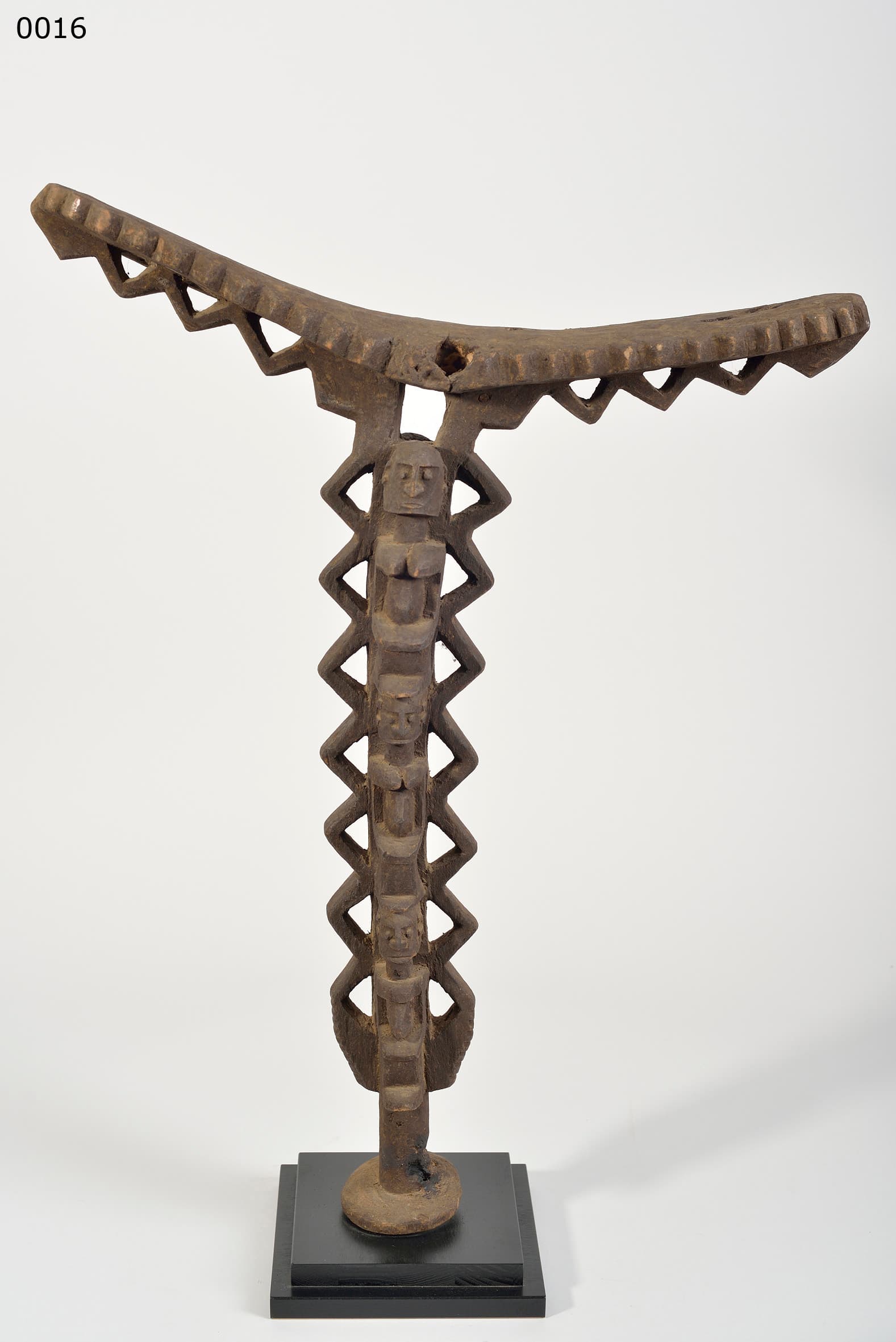
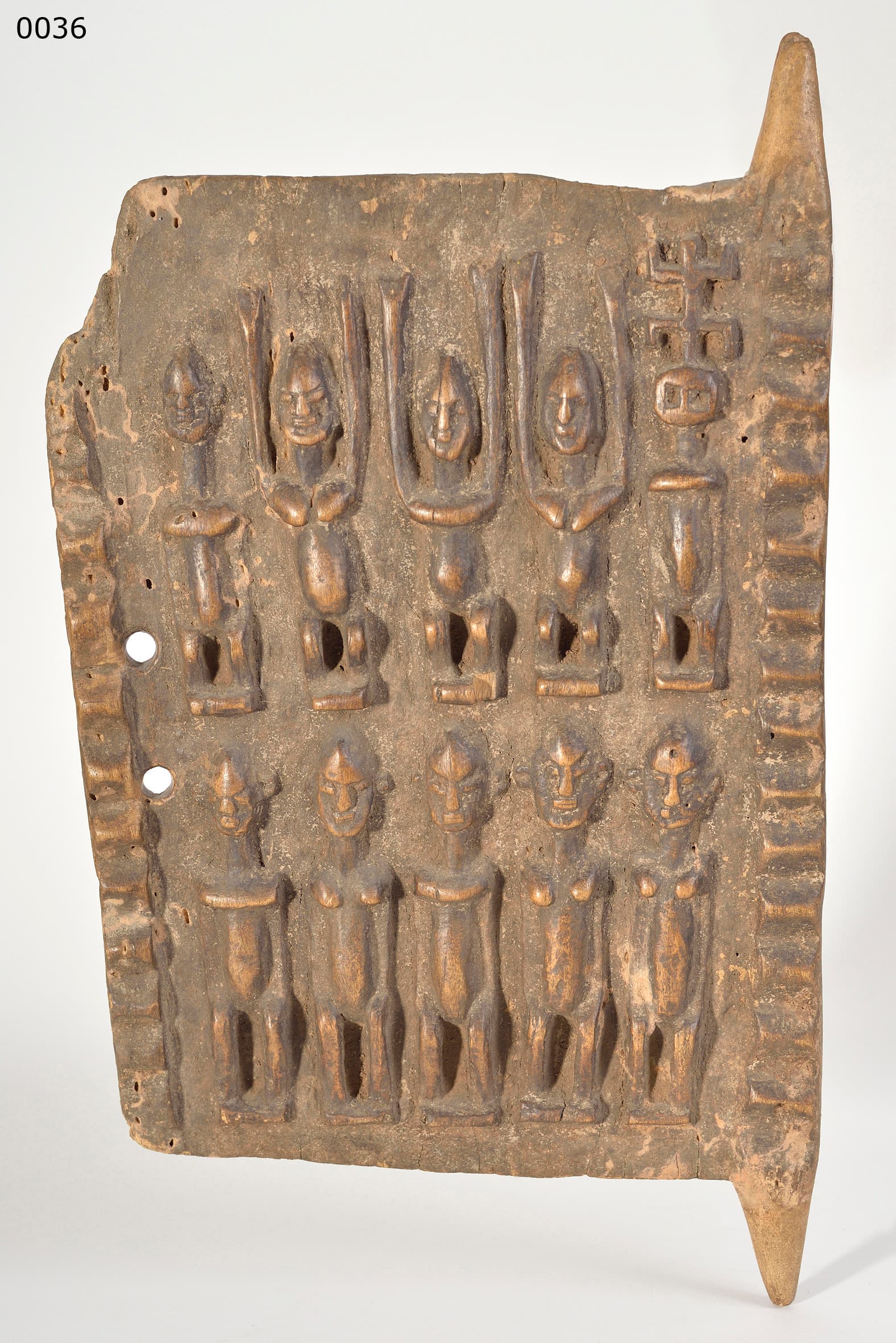
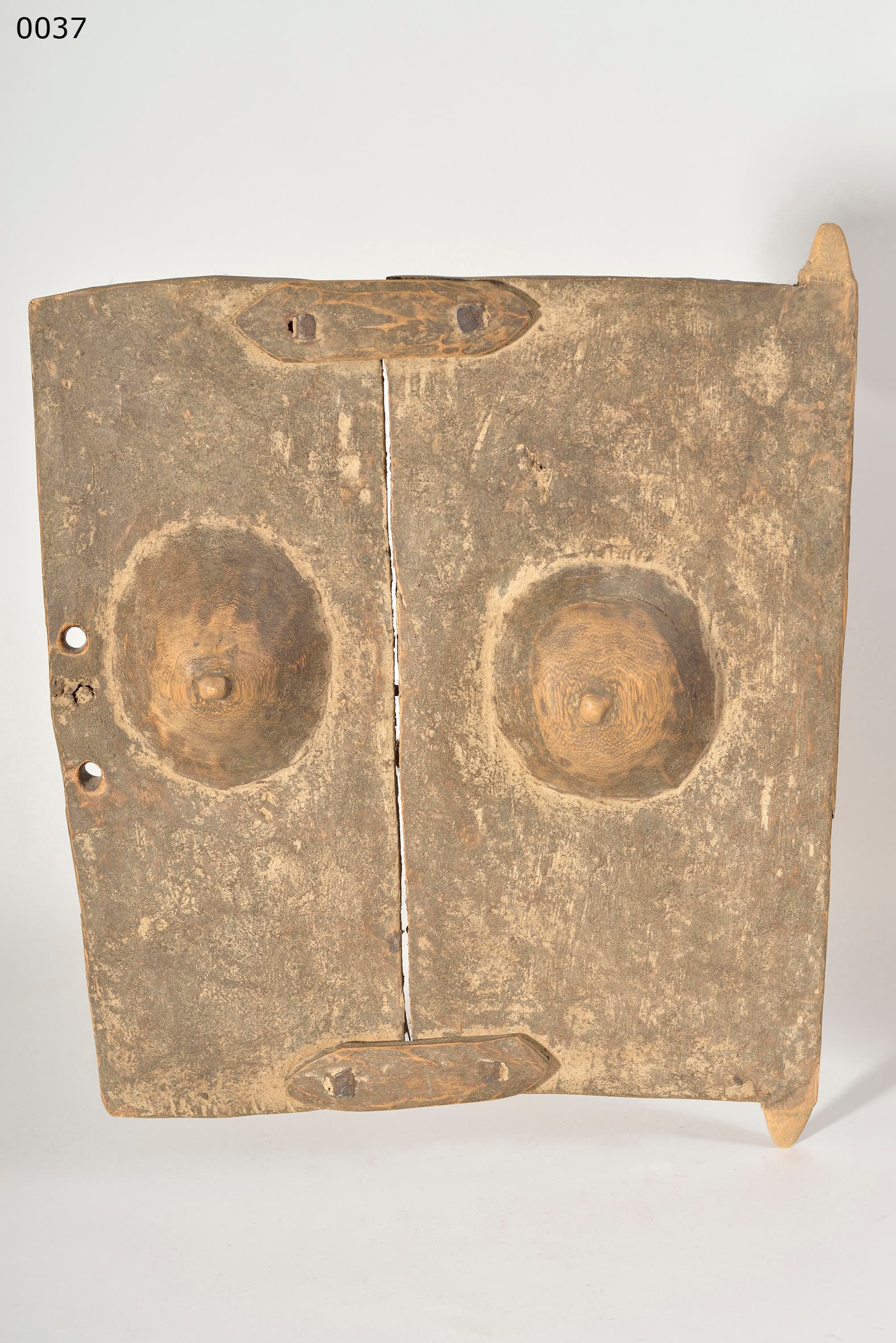
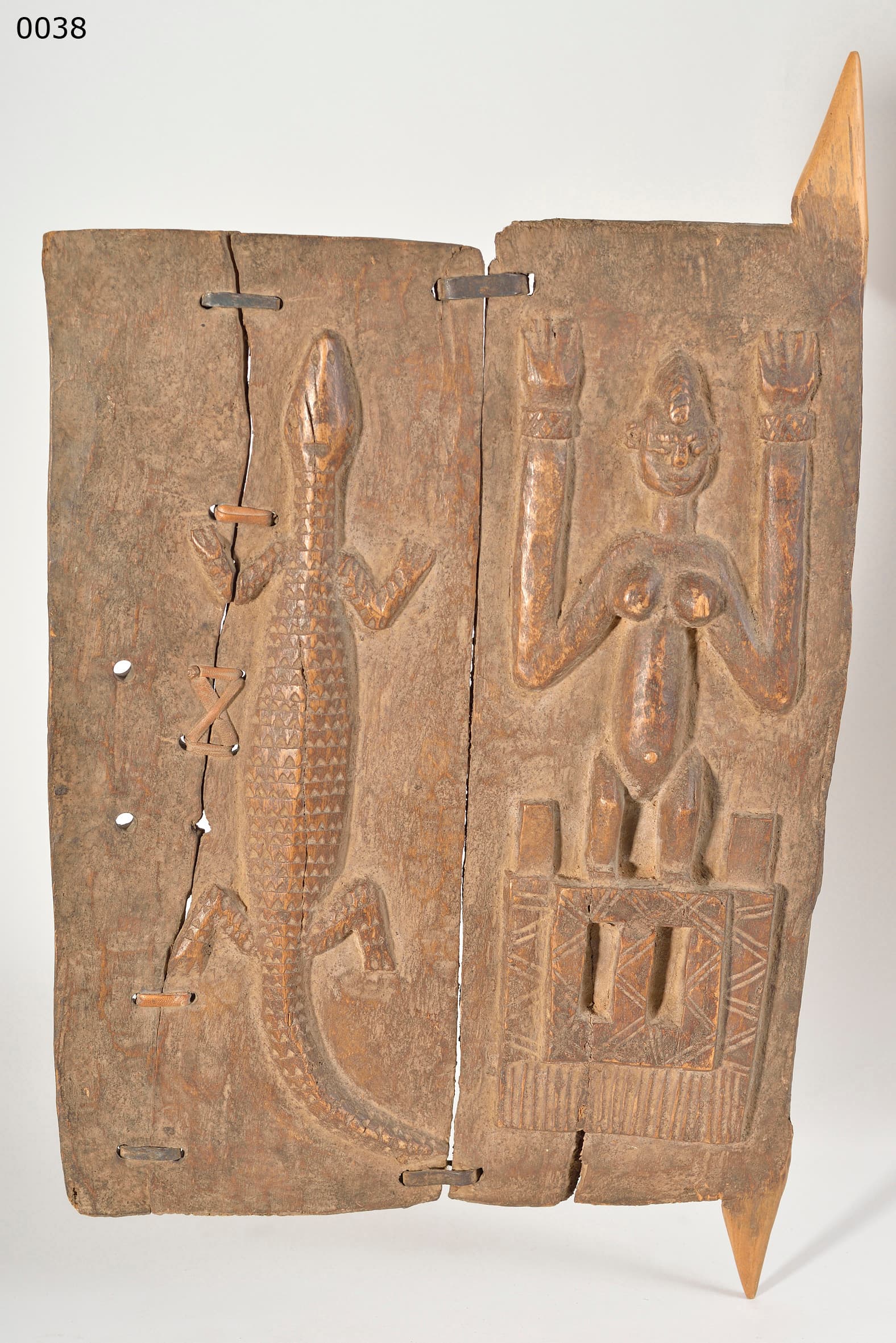
A monumental trough-like Dogon wooden ark (attributed to the 19th C., 130 cm) from Mali — carved in the shape of an elongated horse-headed vessel with flanks deeply carved in high relief featuring rows of geometric human-like figures representing the eight original Nommo, the heavy timber heavily desiccated, pale, and deeply fissured. Published in DOGON p. 68.
1. Narrative sculpture and complex relief
While Dogon art is often characterized by freestanding solitary figures, this massive ark demonstrates a capacity for complex narrative relief carving.
- Rhythmic Cubist Frieze: The thick flanks serve as a sweeping canvas — featuring a rhythmic continuous frieze of rigid cubist figures standing shoulder-to-shoulder, all integrated into the curving zoomorphic shape of the ark.
- Rare Format: The synthesis of a functional vessel shape with high-relief architectural carving is a rare Dogon format.
2. The descent of the Nommo
This object is traditionally understood as a representation of a central Dogon myth — the descent of the Ark of the World.
- Amma's Heavenly Ark: According to the cosmology recorded by Marcel Griaule, the creator Amma sent a massive ark down from the heavens, guided by a horse (represented by the carved head at the prow).
- Eight Ancestors Aboard: Inside were the eight original Nommo (primordial ancestors) who carried all the animals, plants, and knowledge required to populate the earth. This 130 cm ark is of a type traditionally associated with a Hogon's sanctuary — representing the genesis of the universe itself.
3. Canonical provenance and escarpment weathering
Documented in the reference book DOGON (p. 68), this publication supports its attribution.
- Century of Cliff-Cave Drying: The massive 130 cm length of timber shows wear consistent with long-term desiccation in the Bandiagara caves.
- Wind-Blown Nommo Erosion: Pale chalky oxidation, deep longitudinal splits running the entire length of the wood, and the soft wind-blown erosion of the high-relief Nommo figures are consistent with the weathering expected of 19th-century Malian wood sculpture.
Summary
A highly significant artifact, this massive Ark of the Nommo is a powerful representation of Dogon creation mythology. Its publication history, substantial 130 cm scale, and weathering consistent with 19th-century cave desiccation make it a highly important example of Dogon sculptural art.
Written with AI assistance from the collection appraisal, object photography and our own research; editorially reviewed. Mistakes are possible — corrections are welcome. How we work →