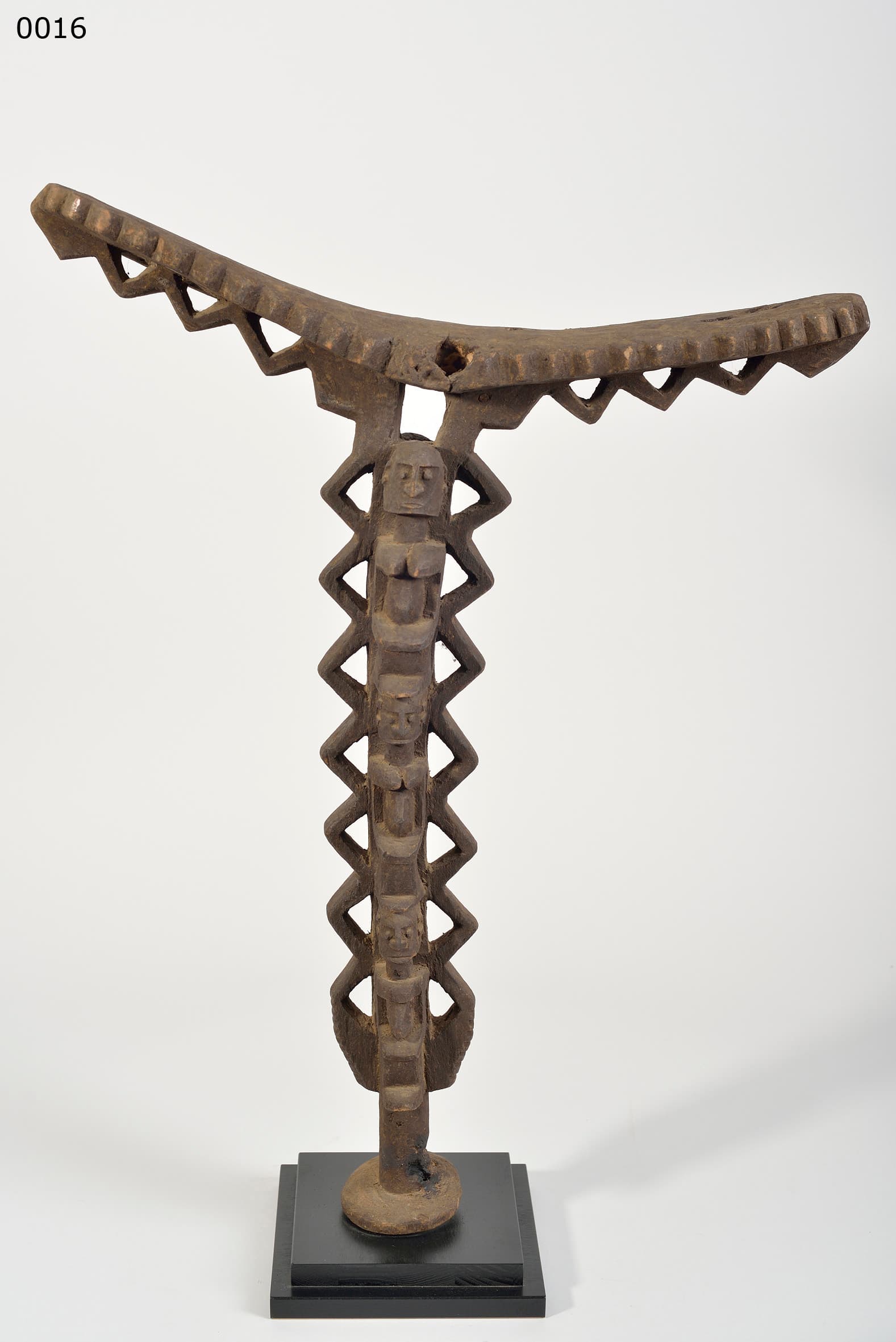
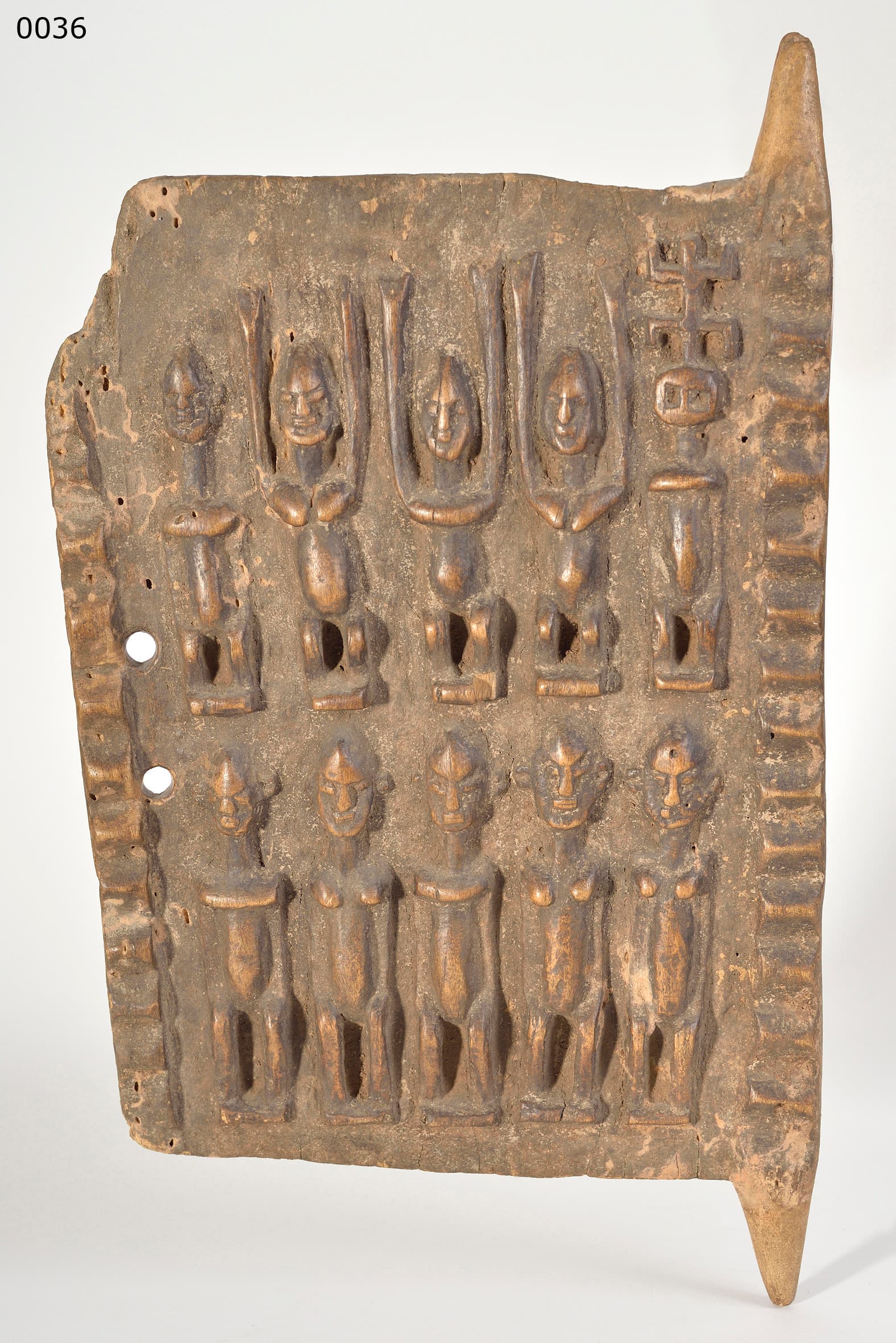
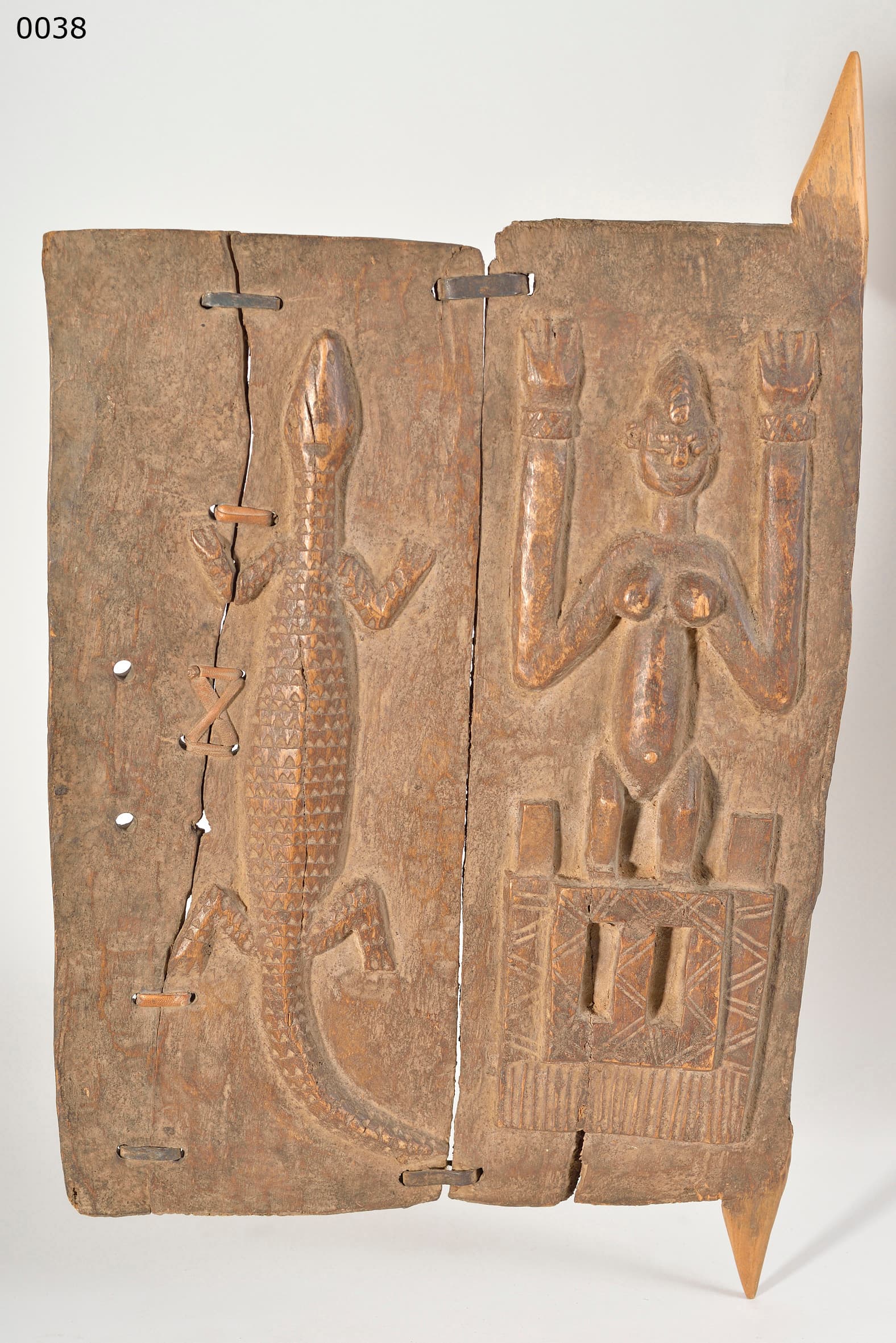
A Dogon female ancestor figure (1st half 20th C., 32 cm) from Mali — carved in the iconic raised-arms Tellem-legacy posture with arms reaching skyward, the deeply desiccated powdery heavily fissured gray-brown patina characteristic of extreme environmental aging. Part of a three-piece set (0394, 0395, 0396).
1. The Tellem legacy and cubist verticality
This sculpture beautifully encapsulates the Dogon architectural approach to the human body — relying on severe vertical elongation and cubist reduction.
- Tellem Raised-Arms Motif: The raised-arms posture is an aesthetic holdover from the Tellem — the enigmatic people who inhabited the Bandiagara cliffs before the Dogon arrived in the 15th century.
- Earth-to-Sky Vector: The Dogon absorbed this motif, transforming the human silhouette into a powerful vertical vector linking the earth to the sky — prioritizing rigid geometric rhythm over fluid anatomical realism.
2. Invoking amma and the rain catchers
The raised-arm posture is not merely decorative — it is a vital functional gesture of prayer in the arid Sahelian environment.
- Beseeching Amma: The figure represents an ancestor or Nommo (primordial spirit) actively beseeching Amma (the creator god) to send the life-giving rains necessary for the millet harvest.
- Hogon Sanctuary Placement: Kept on the private altars of village elders or within the sanctuaries of the Hogon (the supreme spiritual leader) — this dege acted as a permanent physical prayer.
3. Escarpment desiccation and cave storage
The physical surface shows wear consistent with active use in Mali.
- No Oily Coastal Polish: Completely lacks the dark oily polish found on coastal African carvings — instead exhibiting the quintessential escarpment patina of dry friable chalky oxidation.
- Stripped by Saharan Winds: Kept in the high wind-swept caves of the Bandiagara cliffside, the wood has been entirely stripped of its natural oils by abrasive Saharan winds and heat over the first half of the 20th century — producing the deep stabilized desiccation fissures on the torso.
Summary
Part of a three-piece set, this raised-arms Dogon ancestor figure exemplifies cubist reduction and Malian rainmaking iconography. Its deeply desiccated arid-weathered patina is consistent with a history of ceremonial use on the Bandiagara cliffs.
Written with AI assistance from the collection appraisal, object photography and our own research; editorially reviewed. Mistakes are possible — corrections are welcome. How we work →