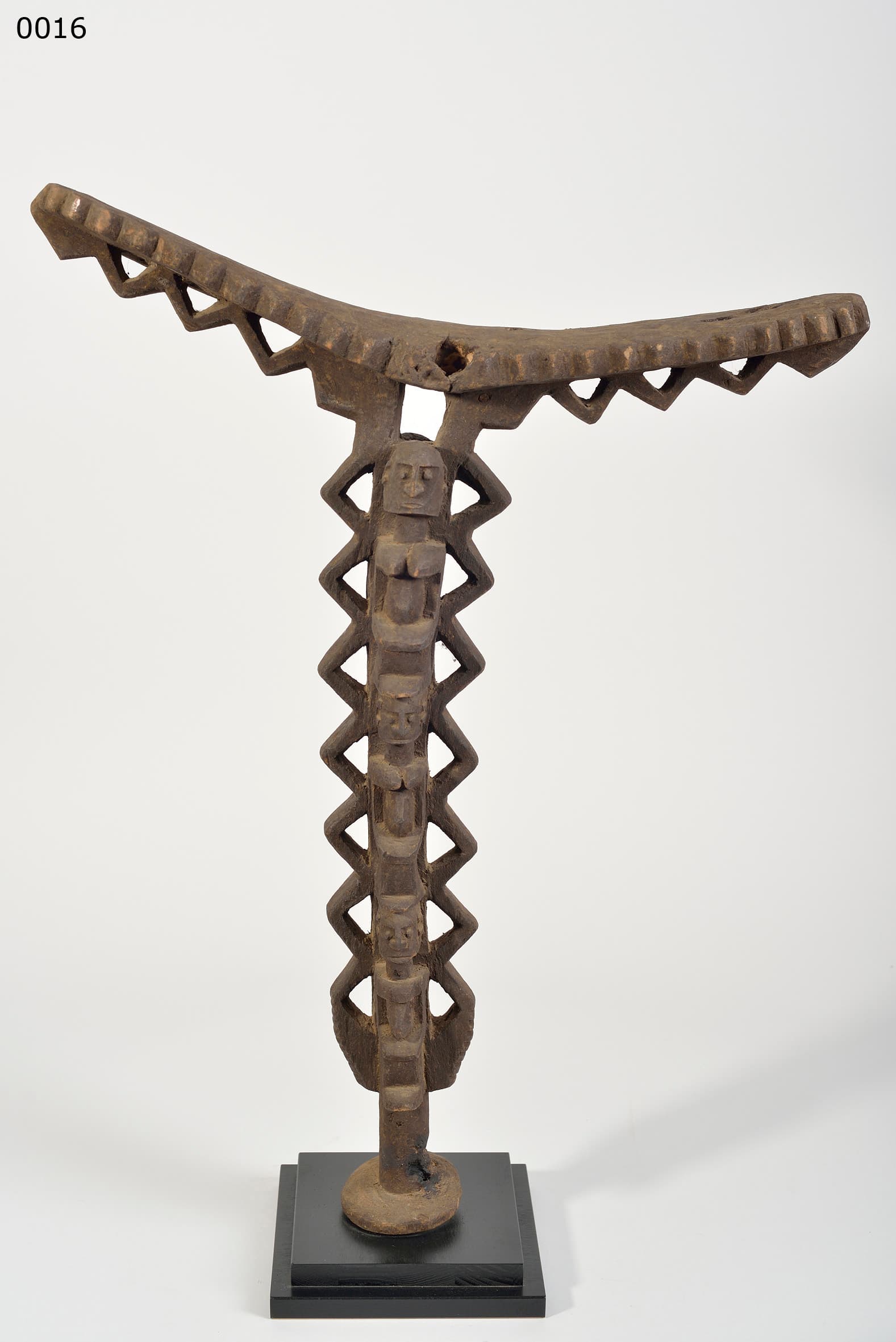
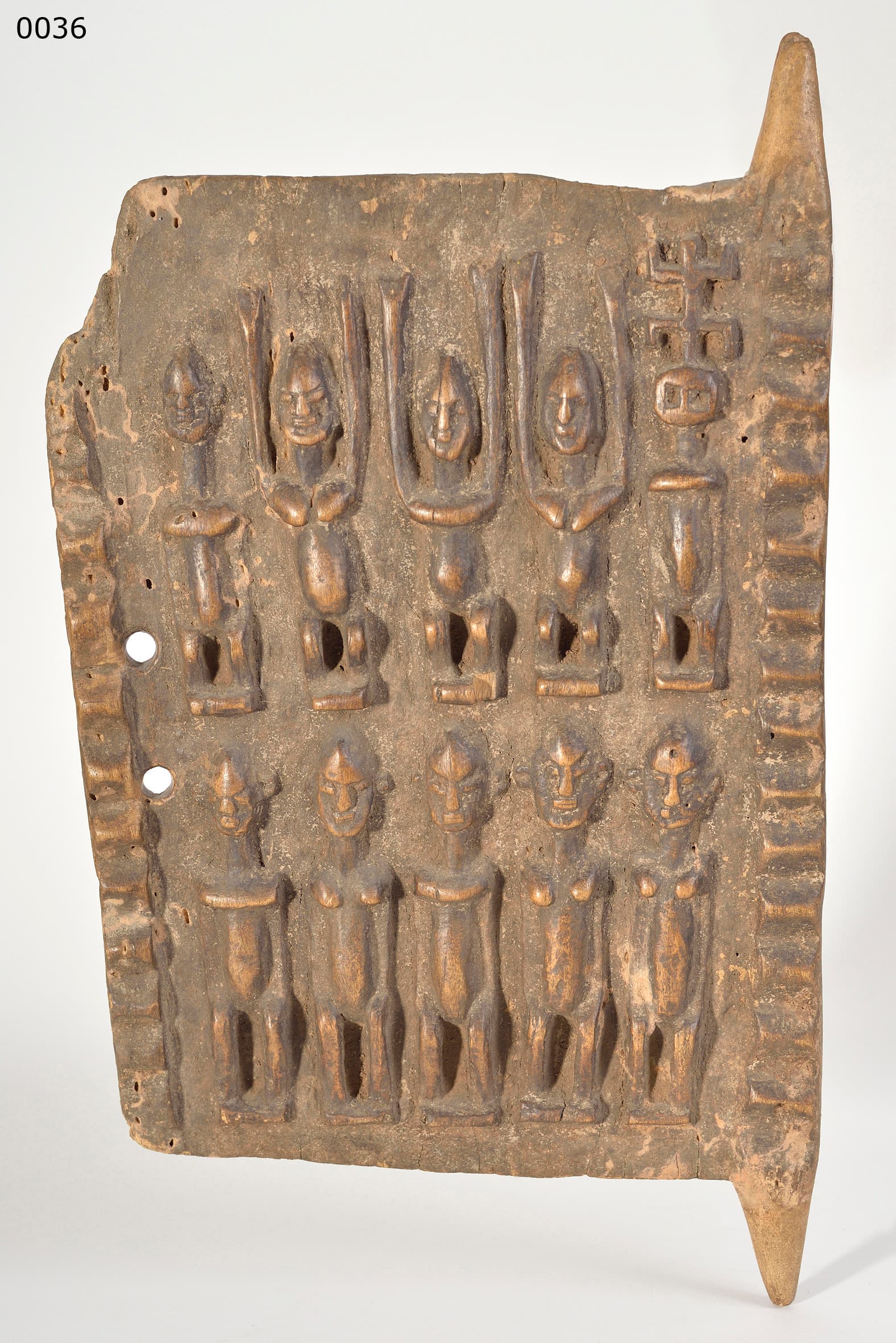
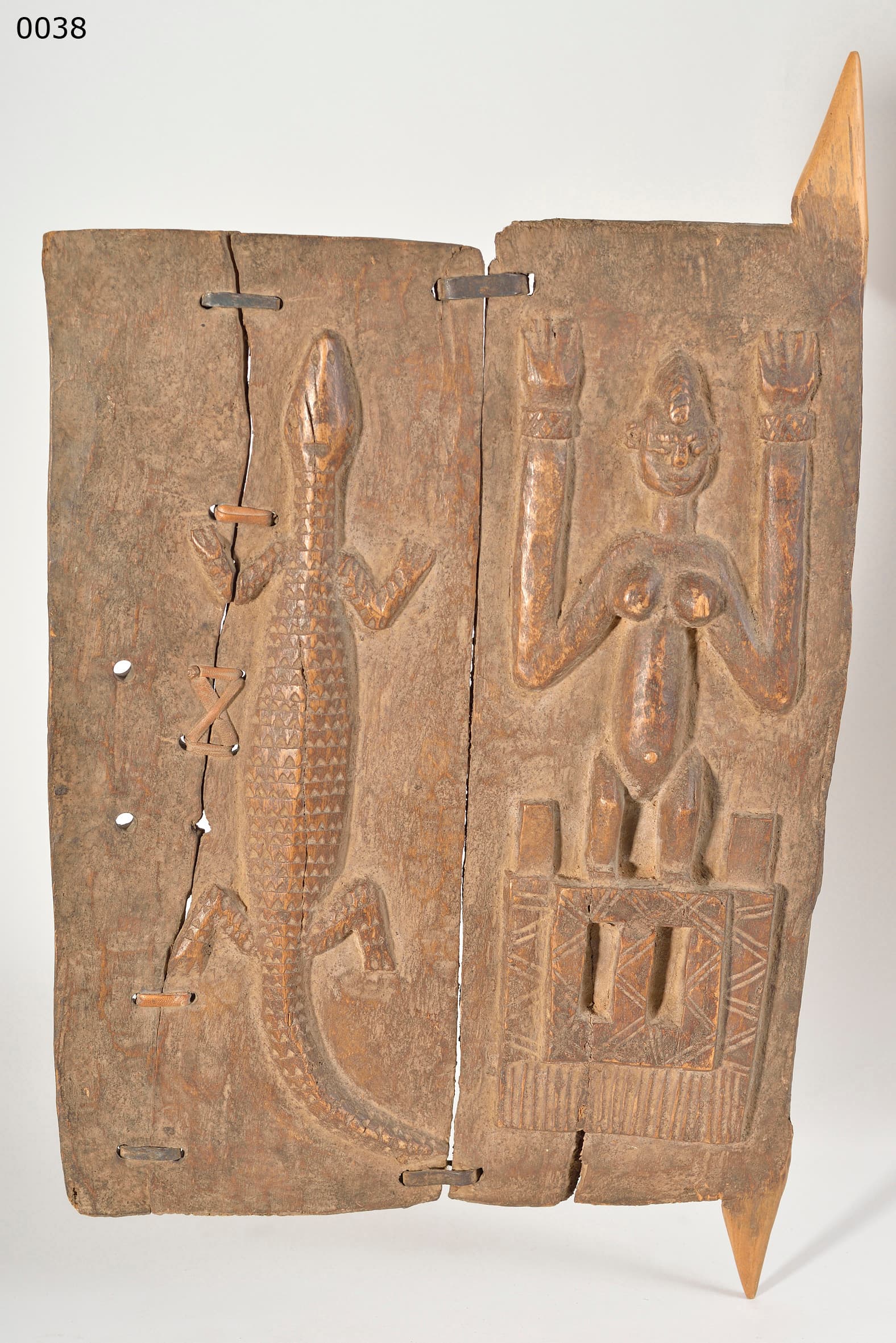
A massive highly elongated Dogon figure (attributed to the first half of the 20th century, 90 cm) from Mali — the classic Tellem-inspired raised-arms posture with a simplified helmet-like head and an intensely slender tubular torso, the pale dry timber heavily eroded with deep longitudinal fissures and a chalky wind-blasted surface. Published in DOGON p. 25.
1. The Tellem gesture of supplication
This towering figure is a compelling manifestation of the Dogon's architectural cubism — showing influence from the preceding Tellem culture.
- Unbroken Vertical Line: The defining feature is the upward-reaching arms — creating an unbroken vertical line that spans 90 cm.
- Structural Sky Pillar: The form strips away superfluous anatomical detail, rendering the torso as a strict cylinder and the head as a geometric block — extreme elongation transforms the human body into a permanent structural pillar connecting the terrestrial earth with the celestial realm.
2. Invoking amma for rain
In the unforgiving arid climate of the Malian Sahel, survival depends entirely on the brief seasonal rains.
- Universal Prayer Gesture: The raised-arms posture — arms flat against the sky — is a traditional Dogon gesture of prayer and supplication.
- Eternal Physical Prayer: The statue is understood to represent a Nommo or venerated ancestor associated with appeals to Amma (the creator god) for water and forgiveness. Traditionally kept in the open courtyards of the Hogon or in high cliffside sanctuaries, the figure stood as a physical prayer supporting the agricultural continuation of the village.
3. Canonical provenance and escarpment weathering
This sculpture is documented in literature.
- DOGON p. 25: Published in a reference book on the subject.
- Saharan Bleaching: The wood has been bleached of its natural color by the Saharan sun and wind — a powdery pale-grey patina. Deep stabilized desiccation cracks running the entire length of the torso are consistent with decades of exposure on the Bandiagara escarpment, showing a patina characteristic of prolonged outdoor placement.
Summary
A towering architectural representation of prayer, this Dogon figure is a striking example of vertical abstraction. Its documented publication history and profound chalky escarpment weathering make it a highly significant work of global ethnographic art.
Written with AI assistance from the collection appraisal, object photography and our own research; editorially reviewed. Mistakes are possible — corrections are welcome. How we work →