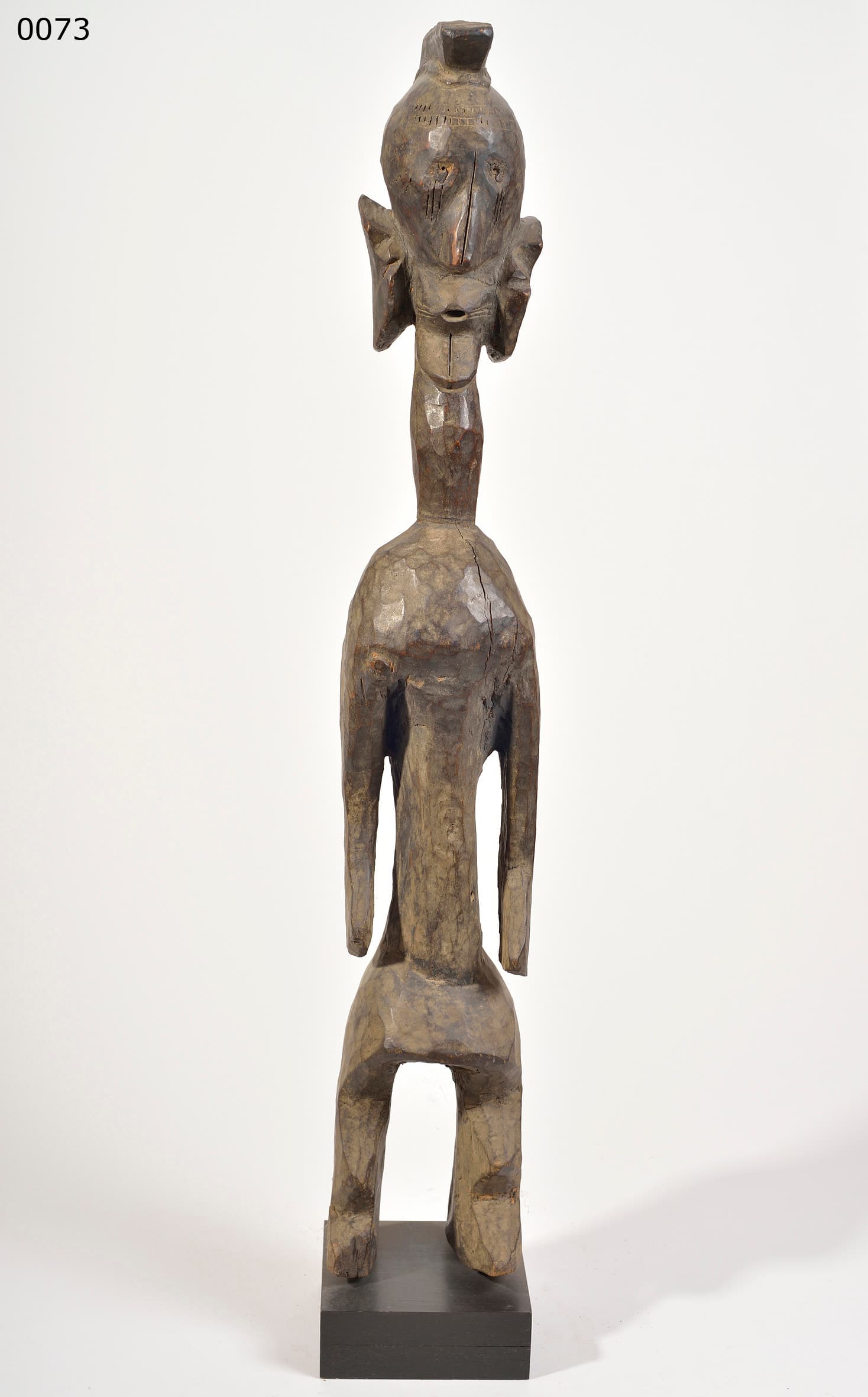
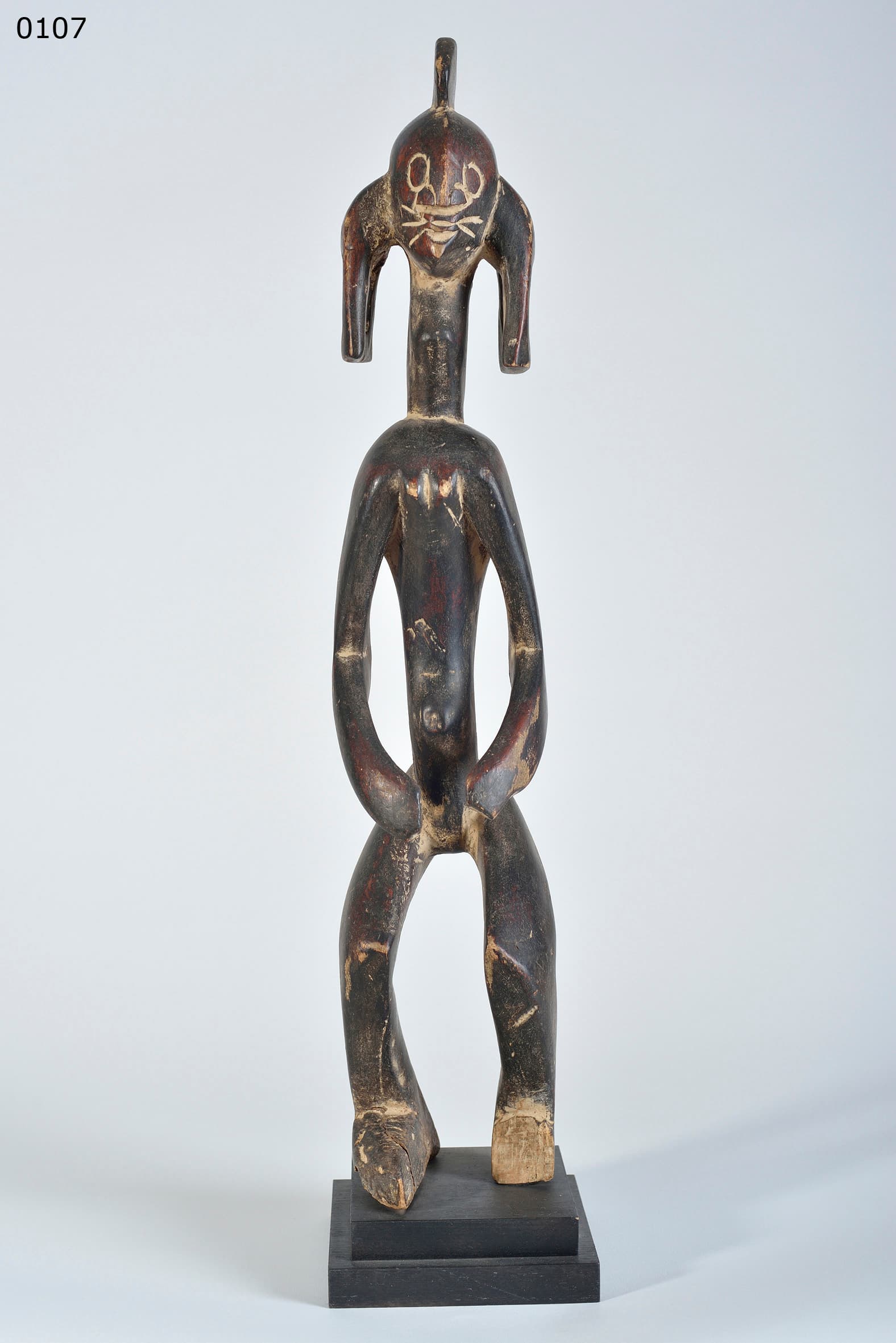
The taller companion Mumuye ancestor figure (1st half 20th C., 114 cm) from Nigeria — radical sweeping abstraction with an elongated columnar torso flanked by massive ribbon-like arms wrapping around the negative space, topped with the classic floppy lateral flange coiffure, deeply oxidized dry and eroded. Paired with 0418.
1. Dynamics of negative space and ribbon geometry
The Mumuye of the Benue River Valley produce some of the most dynamic gravity-defying sculpture in Africa.
- Architectural Cage of Wood: Long ribbon-like arms sweep, spiral, and curve away from the torso — creating an architectural cage of wood around a core of empty space.
- Floppy Lateral Flanges: The classic Mumuye lateral flange coiffure gives the head its signature asymmetric visual dynamism — profoundly influencing European Expressionist sculptors.
2. The vabong society and rainmaking magic
These figures were the highly guarded active spiritual tools of the Vabong secret society.
- Guarded Esoteric Shrines: Kept in shrines managed by powerful diviners and blacksmiths.
- Trance Dialogue: During periods of extreme crisis, sickness, or drought, the diviner engaged in a physical trance-like dialogue with the statue — moving and manipulating its ribbon-like arms to divine the future and summon the rains.
3. Monumental desiccation and earthen rot
The physical condition shows wear consistent with an early-20th-century age.
- Sun-Bleached Raw Surface: Not rubbed with protective oils — dry powdery deeply fissured sun-bleached surface from extreme environmental desiccation.
- Earth-Planted Base Rot: The base exhibits severe uneven rot and insect degradation — suggesting this heavy 114 cm statue was planted directly into the earthen floor of the diviner's sanctuary for decades.
Summary
At 114 cm the taller of the Mumuye pair, this figure amplifies the ribbon-and-flange geometry of its wood-and-iron companion 0418. Together they form a monumental exemplar of Nigerian abstract woodcarving — the ribbon-like geometry trapping negative space, the profound earth-rotted patina suggesting decades of esoteric Vabong use.
Written with AI assistance from the collection appraisal, object photography and our own research; editorially reviewed. Mistakes are possible — corrections are welcome. How we work →