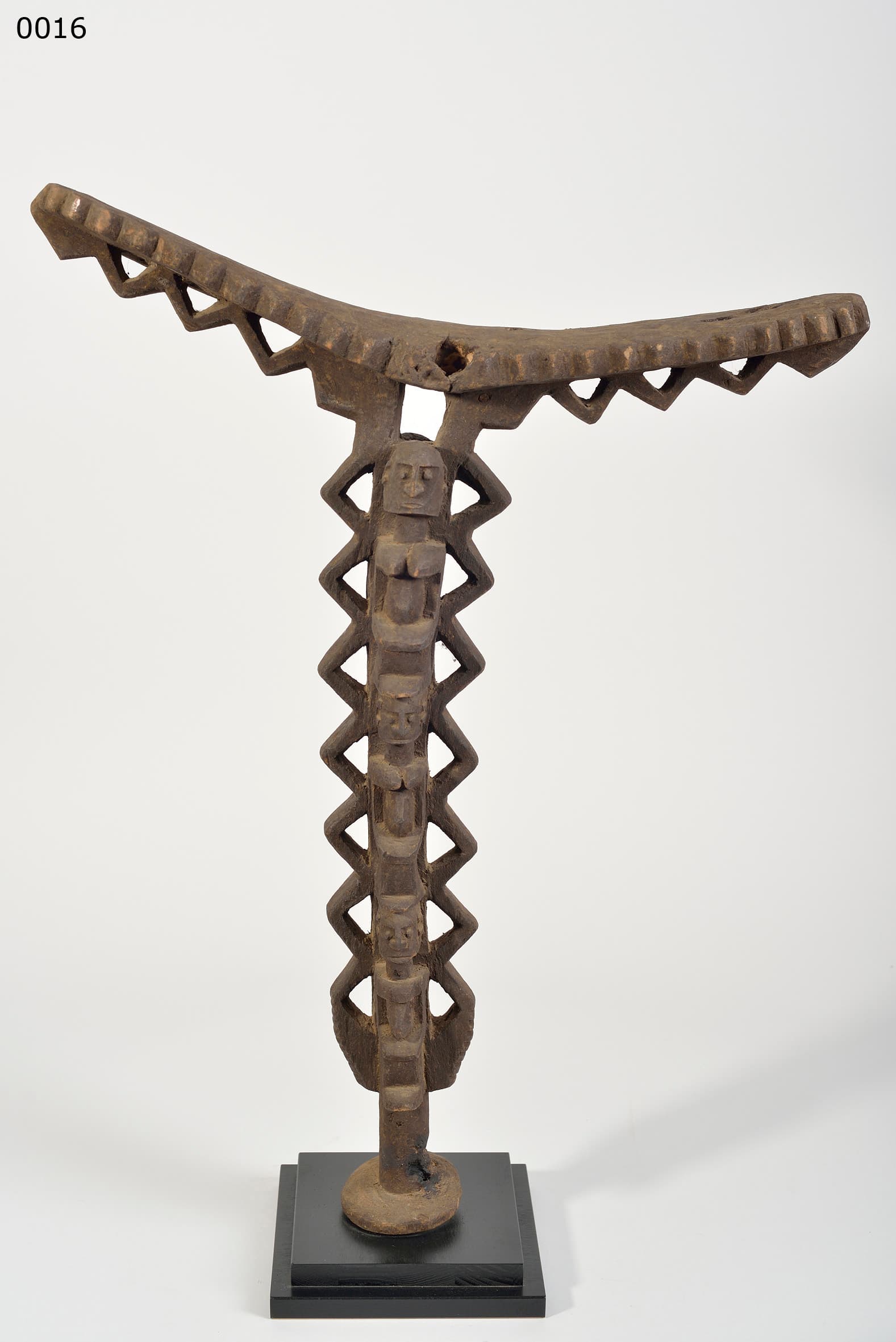
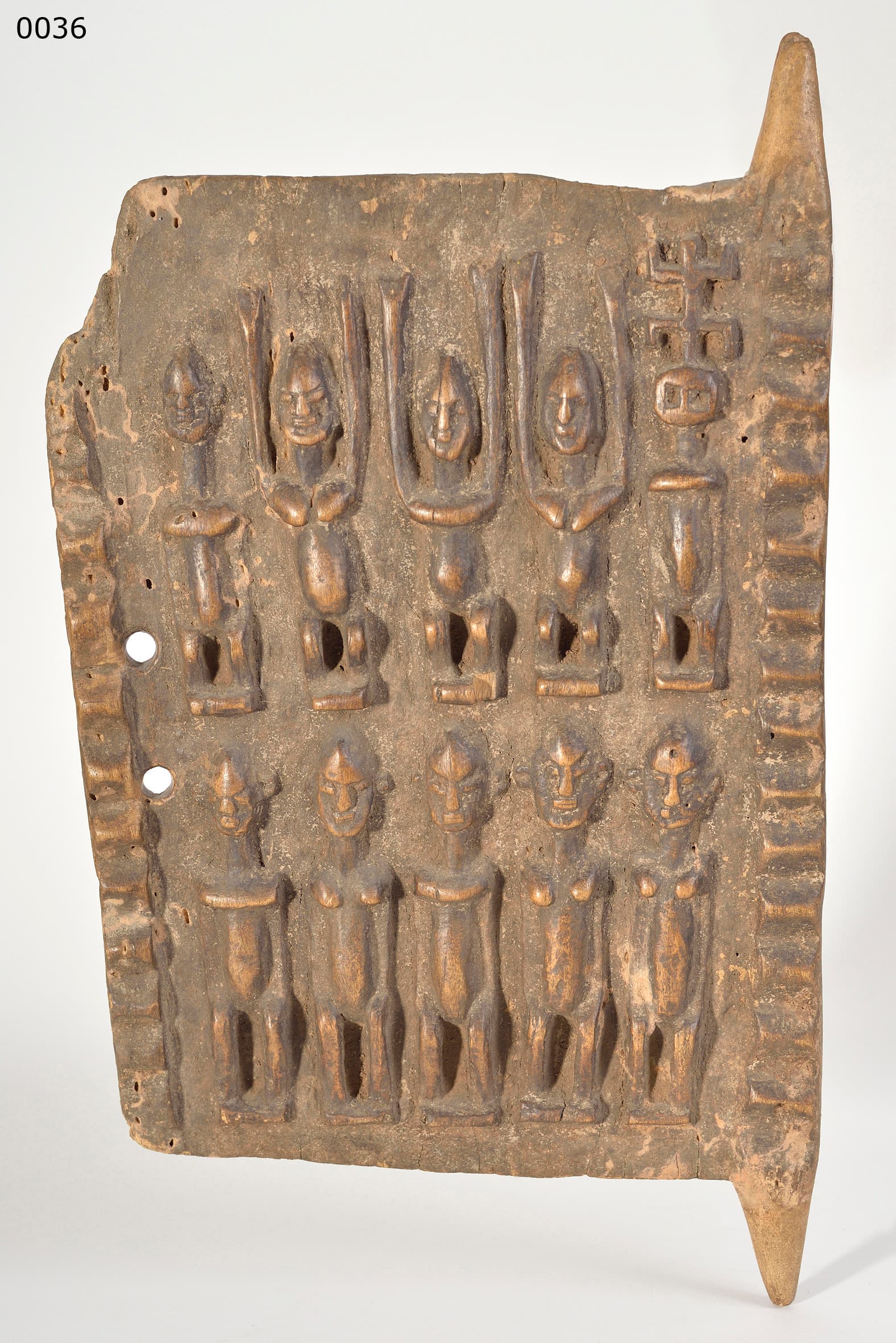
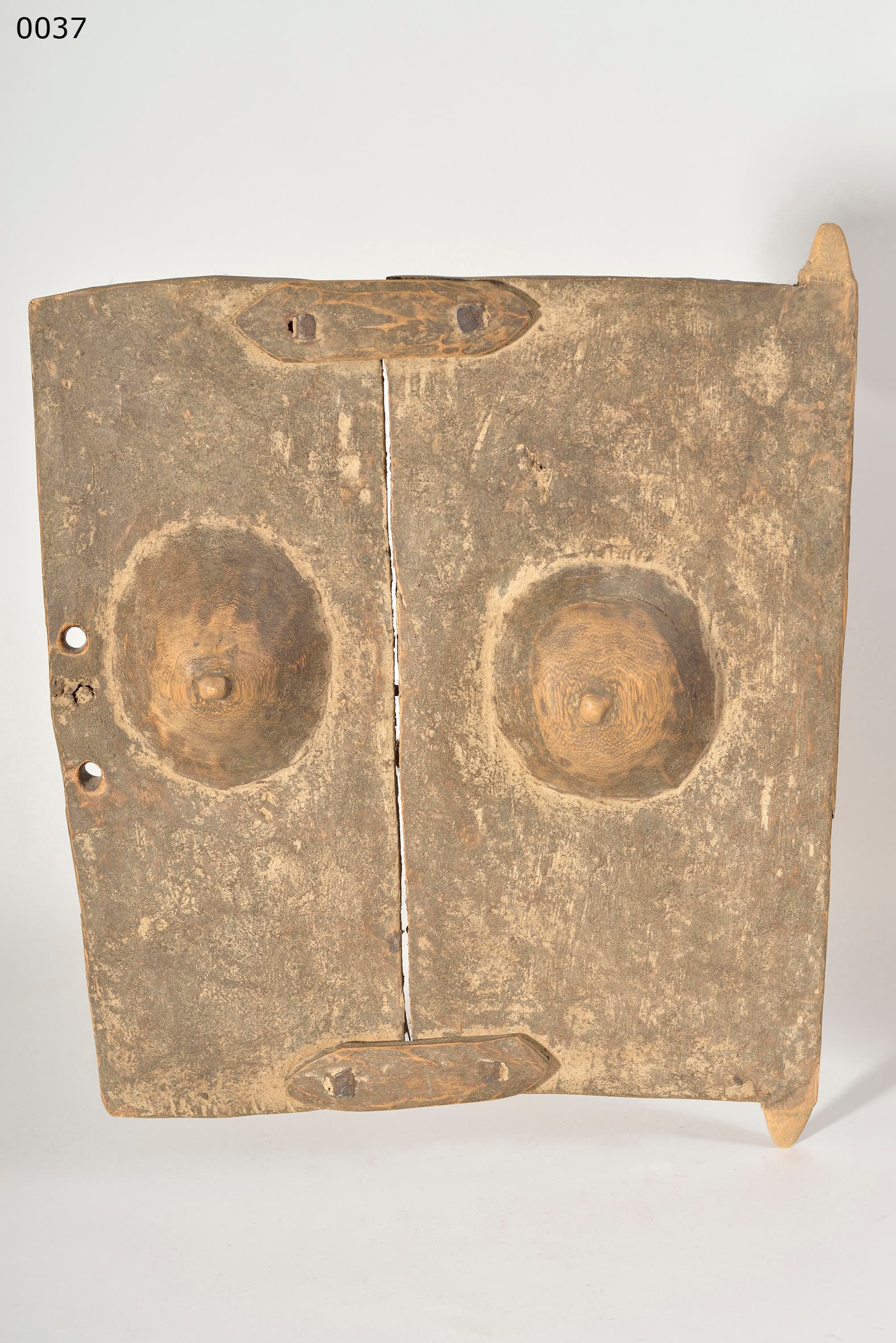
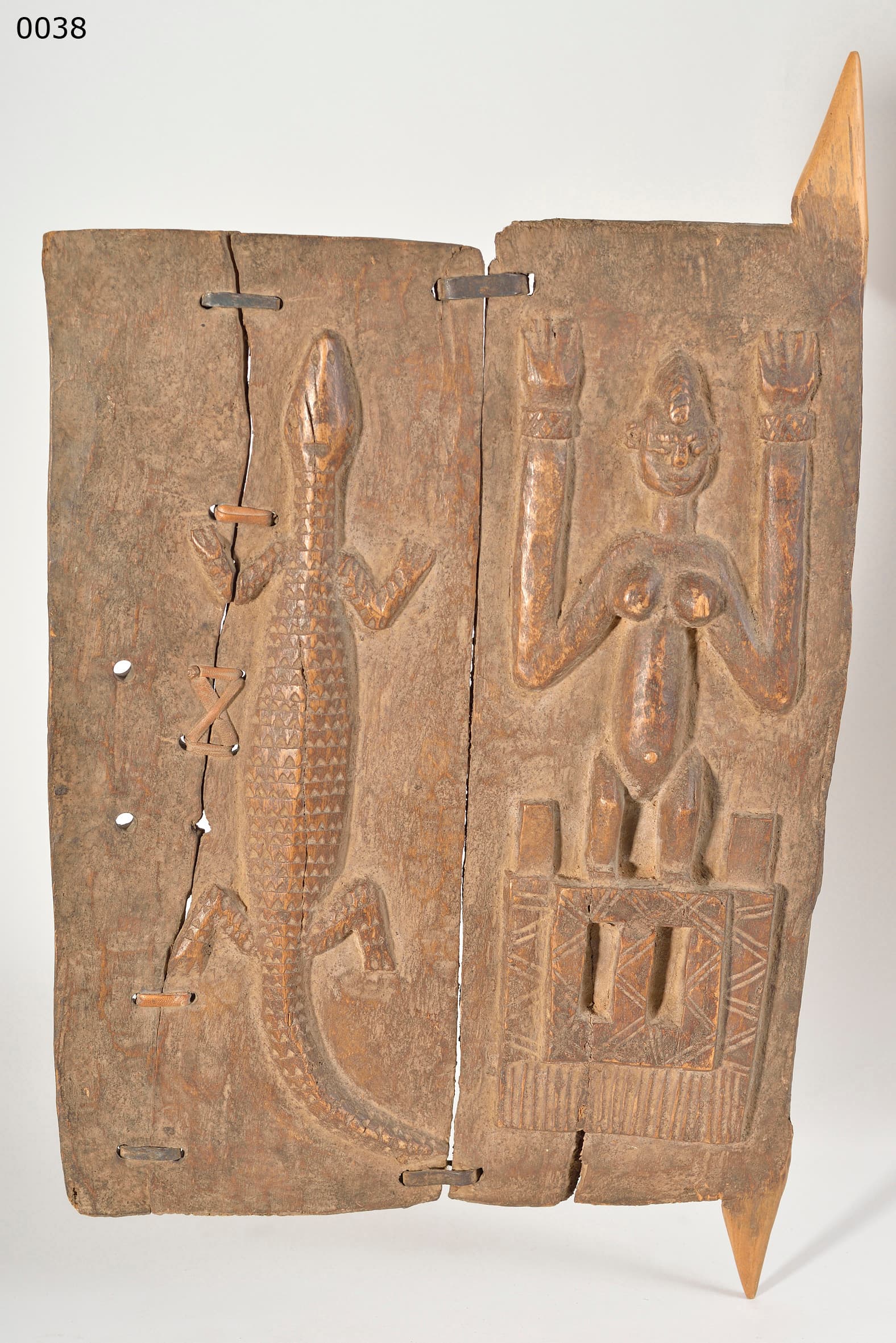
A small Dogon miniature altar ladder (18-19th C., 38 cm) from Mali — carved in the shape of a traditional Y-shaped Dogon ladder with deeply notched steps and a bifurcated top. The wood is extremely desiccated, pale, and deeply eroded, displaying a crusty oxidized patina characteristic of ancient cave storage.
1. Architectural miniaturization
The Dogon are famous for their full-sized Y-shaped notched ladders carved from massive tree trunks — essential for accessing the flat roofs of adobe houses and elevated granary doors.
- Conceptual Downscaling: This object is a brilliant conceptual miniaturization of that vital architectural form — perfectly replicating the heavy stepped geometry and the distinct bifurcated top on an intimate 38 cm scale.
- Tool to Symbol: Transforms a mundane tool of physical elevation into a highly charged abstract spiritual symbol.
2. The path to the ancestors
In Dogon cosmology, the ladder (kaga) is a profound symbol of transition and connection between realms.
- Bridge Between Realms: Just as a physical ladder connects the earth to the granary (the source of physical sustenance), the miniature altar ladder acts as a spiritual bridge connecting the terrestrial world of the living to the celestial realm of Amma (the creator) and the ancestors.
- Sanctuary Altar Placement: Placed prominently on a binnu sanctuary altar, it provided a direct conceptual pathway for spirits to descend from heaven and receive sacrifices offered by the Hogon or village elders.
3. Escarpment erosion and antiquity
The suggested 18-19th century dating is compatible with the extreme natural degradation of the timber.
- Chalky Fossilization: The wood is incredibly dry, chalky, and friable — bearing the quintessential "escarpment patina" from prolonged storage in the arid wind-blasted caves of the Bandiagara cliffs.
- Sacrificial Crust in Notches: Deep longitudinal splits and the heavy rounding of once-sharp carved steps; remnants of a thick hardened sacrificial crust (likely millet porridge and blood) embedded in the notches are consistent with a long life on an active working altar.
Summary
A profound visualization of Dogon cosmological architecture, this miniature altar ladder served as a direct spiritual bridge to the heavens. Its severe dry-weathered escarpment desiccation is consistent with an 18th- to 19th-century Malian origin.
Written with AI assistance from the collection appraisal, object photography and our own research; editorially reviewed. Mistakes are possible — corrections are welcome. How we work →