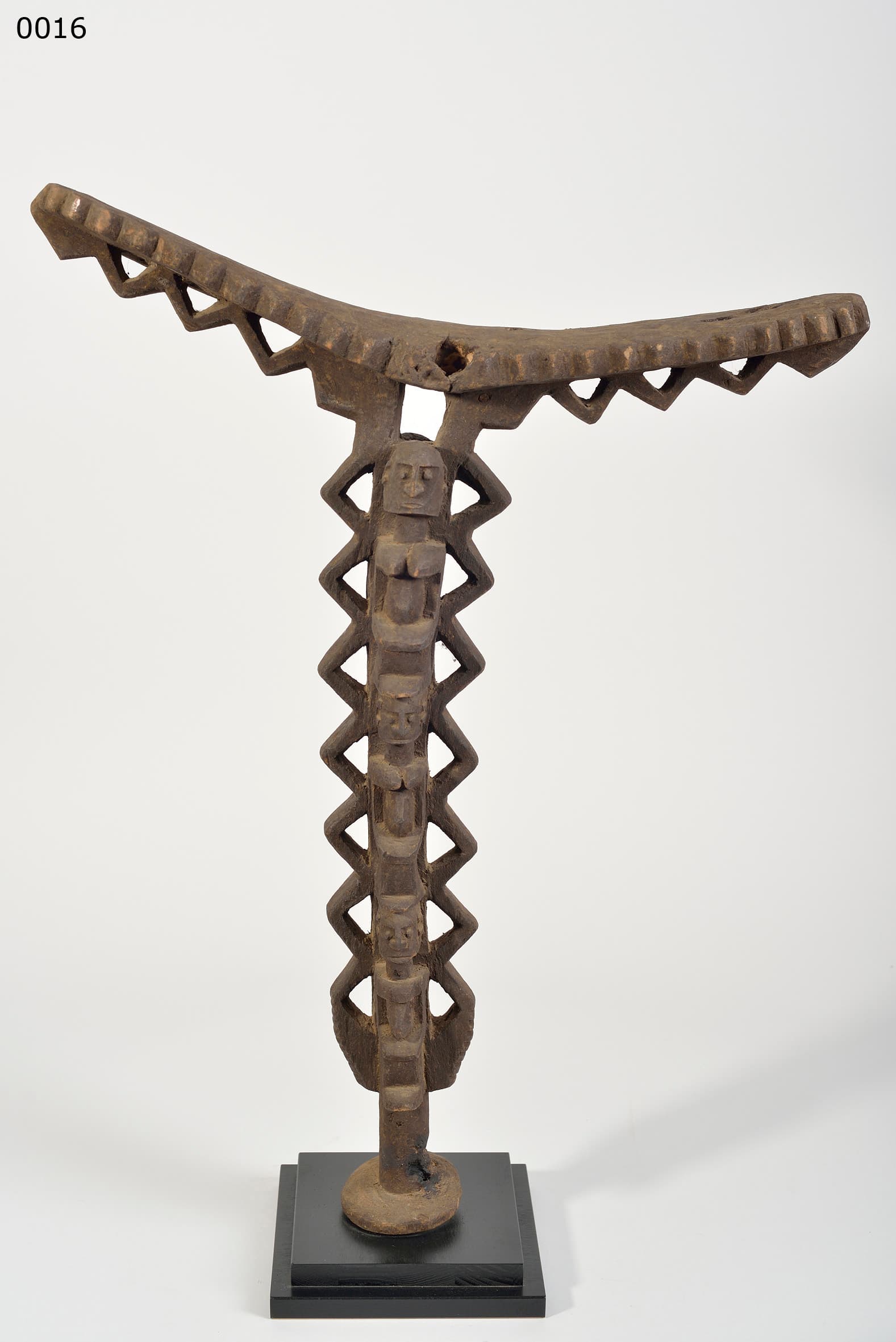
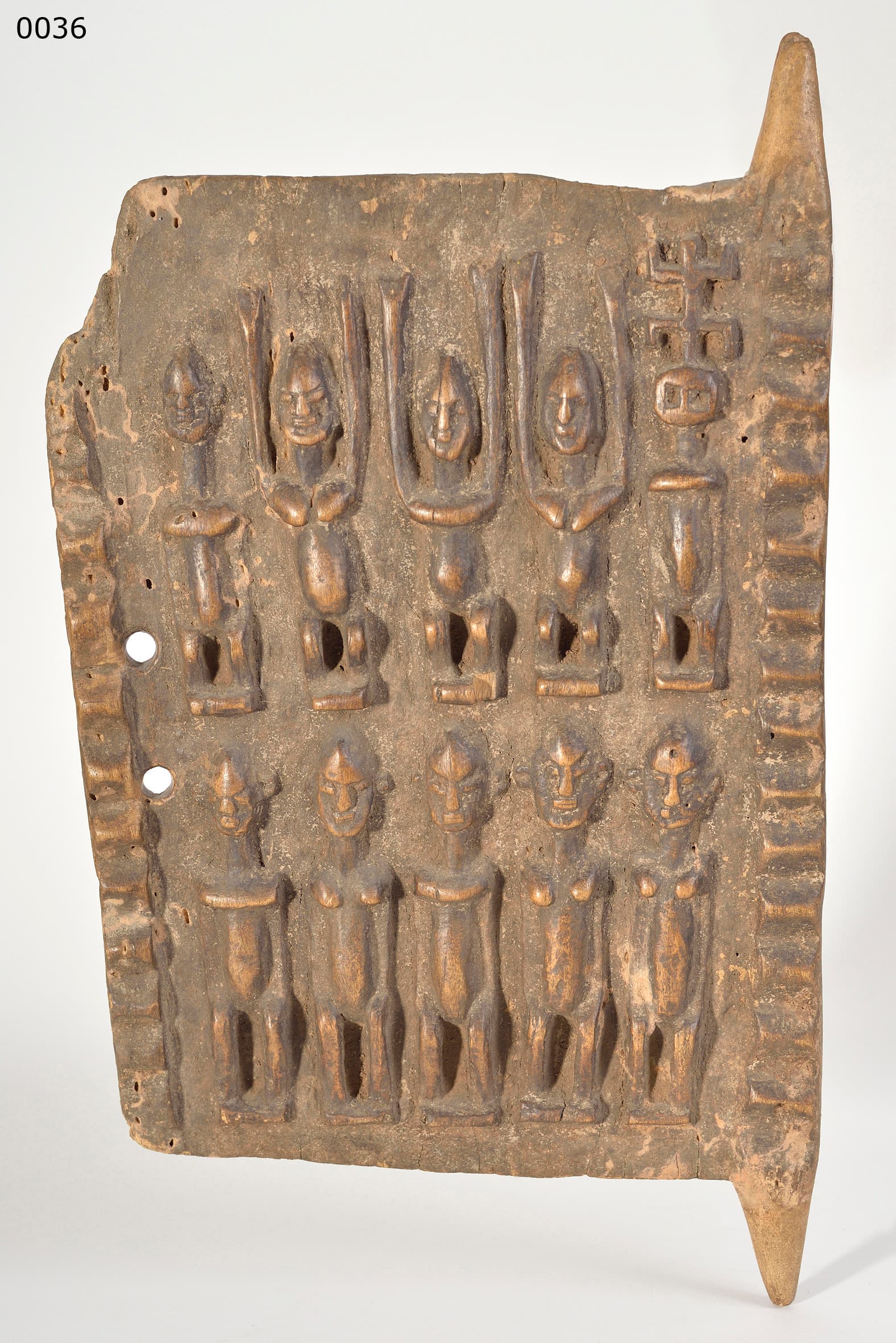
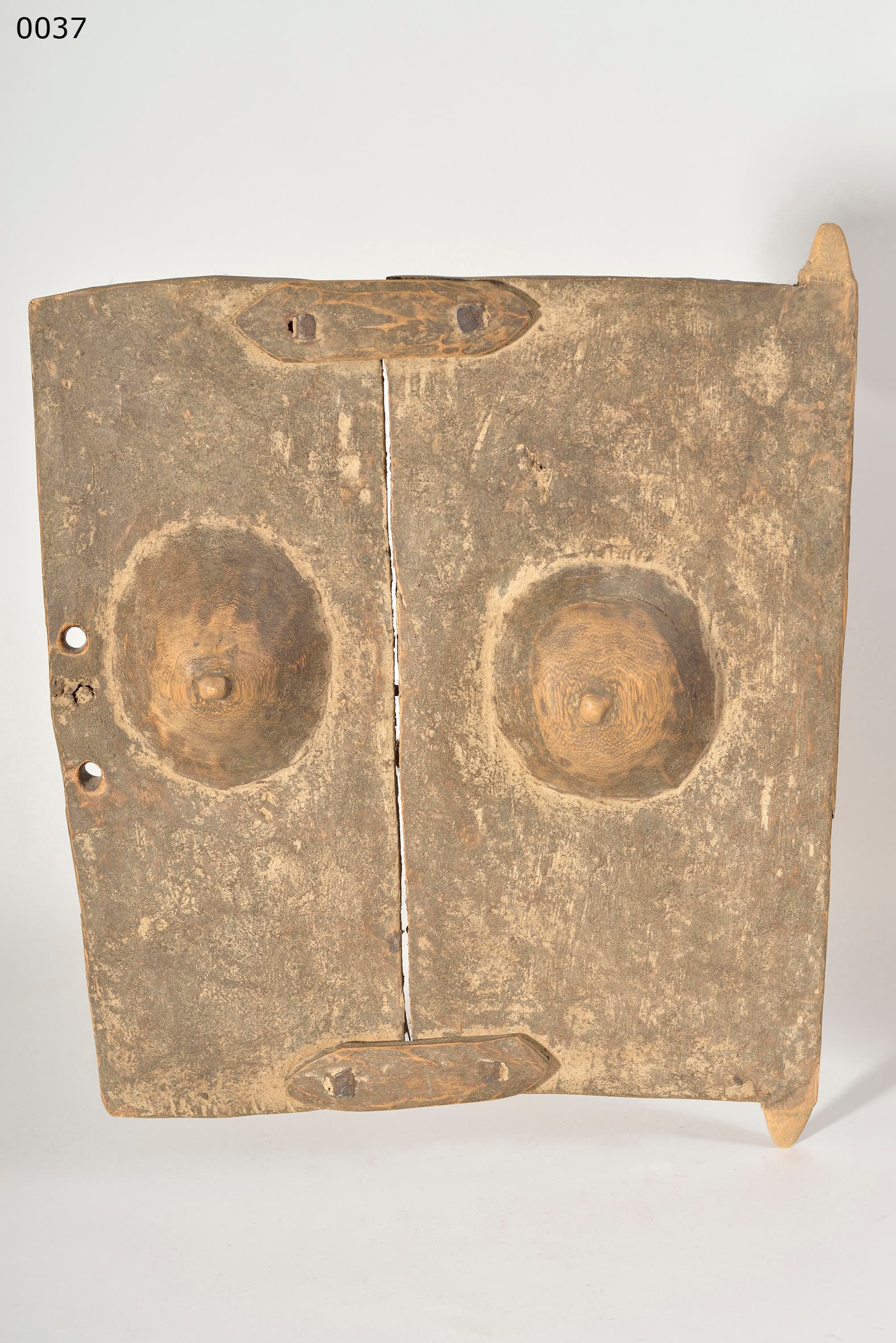
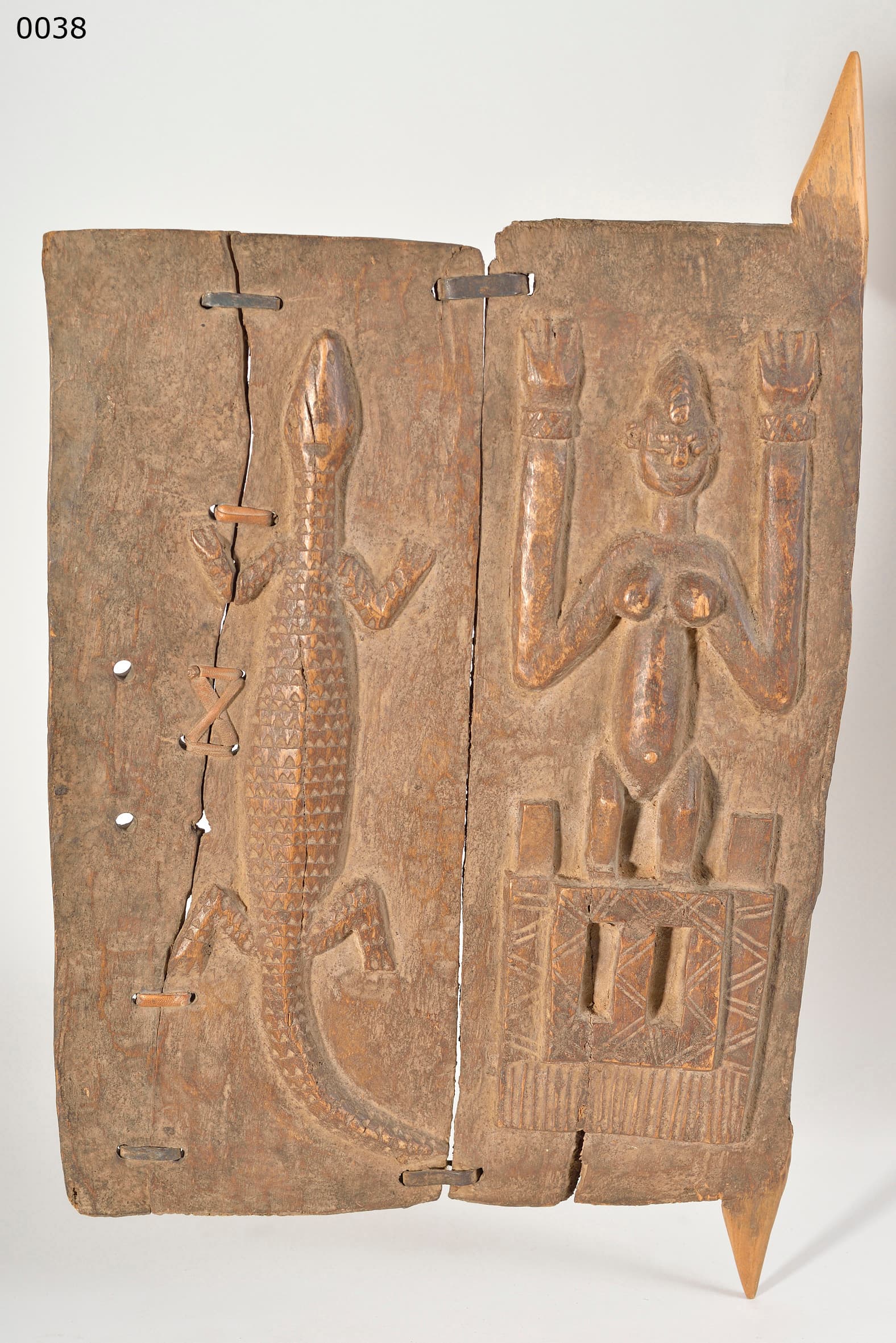
This heavy, circular wooden stool features a thick, rounded seat supported by an outer ring of four highly stylized, abstract caryatid figures (pillars) surrounding a central supporting column. The wood is exceptionally dense, bearing a dark, crusty, petrified patina with deep age-cracks radiating across the seat.
1. Aesthetic style and regional traits
The Dogon people of the Malian cliffs are known for embedding their complex cosmology into everyday, functional architecture. This stool is consistent with this philosophy. The composition is a physical model of the universe: the circular seat represents the sky, the base represents the earth, and the supporting pillars (the caryatids) represent the Nommo — the primordial, hermaphroditic ancestors who descended from the heavens to organize the world. The carving is severe, prioritizing structural endurance and absolute geometric stability over delicate naturalism.
2. Ritual function and secret society context
This specifically designed stool is a central implement in the rigorous Dogon male circumcision ceremonies. When a young boy is circumcised, he is believed to be shedding his female elements to become a pure, adult male capable of joining the Awa (masquerade society). By sitting upon this stool during the painful operation, the initiate is physically and spiritually supported by the Nommo ancestors. The stool absorbs the blood and the powerful spiritual energy (nyama) of the transition, making it, in traditional contexts, a highly sacred, closely guarded object.
3. Physical patina and age indicators
The suggested 19th-century age of this stool is consistent with its profound, weathered degradation. The dense desert wood has completely dried out, causing the severe, cavernous desiccation cracks that run through the thick seat and base. The surface is entirely devoid of modern polish, instead blanketed in a highly friable, encrusted layer of soot, dried blood, and sweat. The edges of the caryatids are softly blunted, showing wear consistent with decades of intense ritual handling and friction.
Summary
This Dogon circumcision stool is a compelling example of functional Sahelian cosmology, anchoring the initiate to the primordial ancestors. Its uncompromising architectural density and extreme, weathered appearance are consistent with a 19th-century attribution, representing a significant object of male initiation rites.
Written with AI assistance from the collection appraisal, object photography and our own research; editorially reviewed. Mistakes are possible — corrections are welcome. How we work →