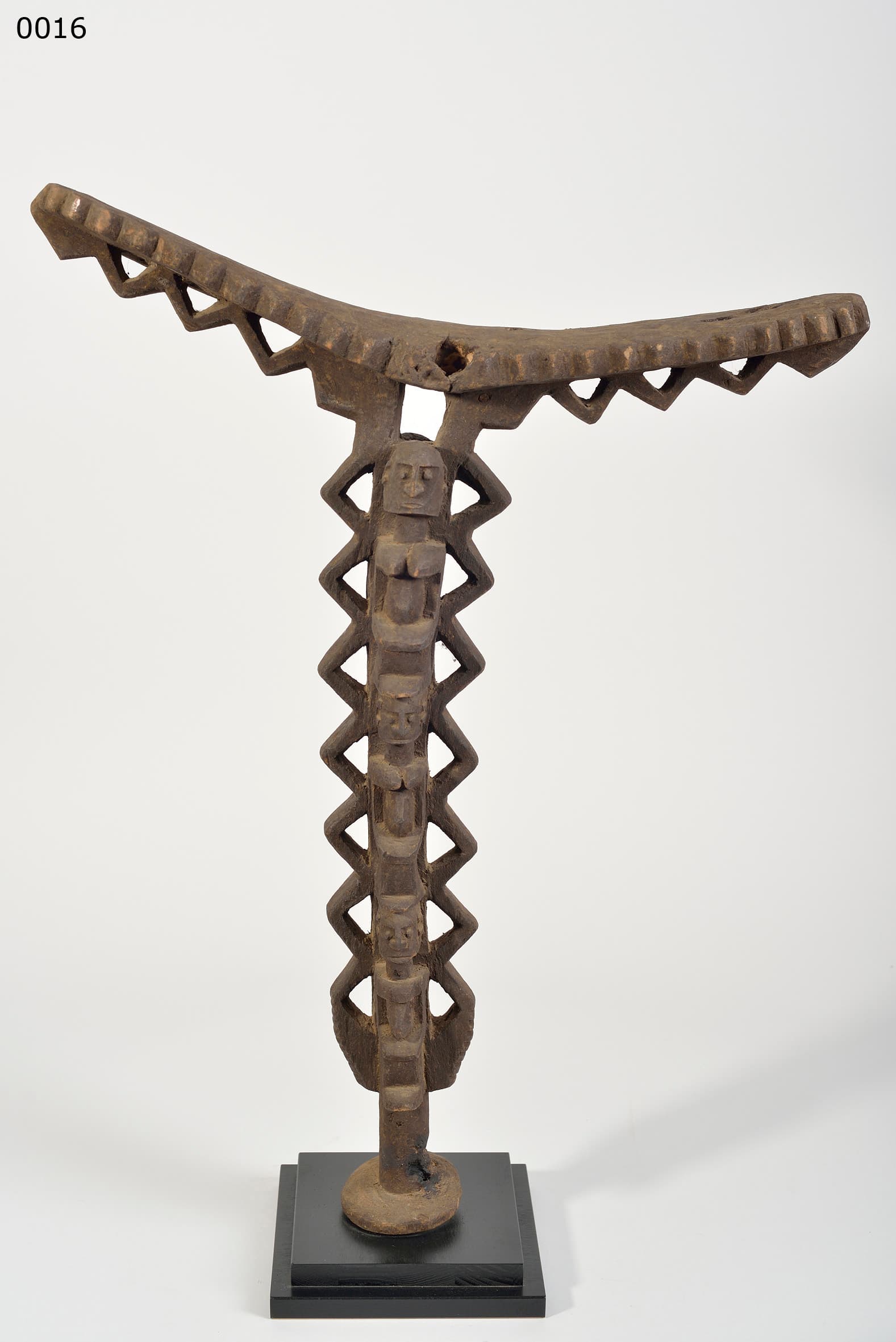
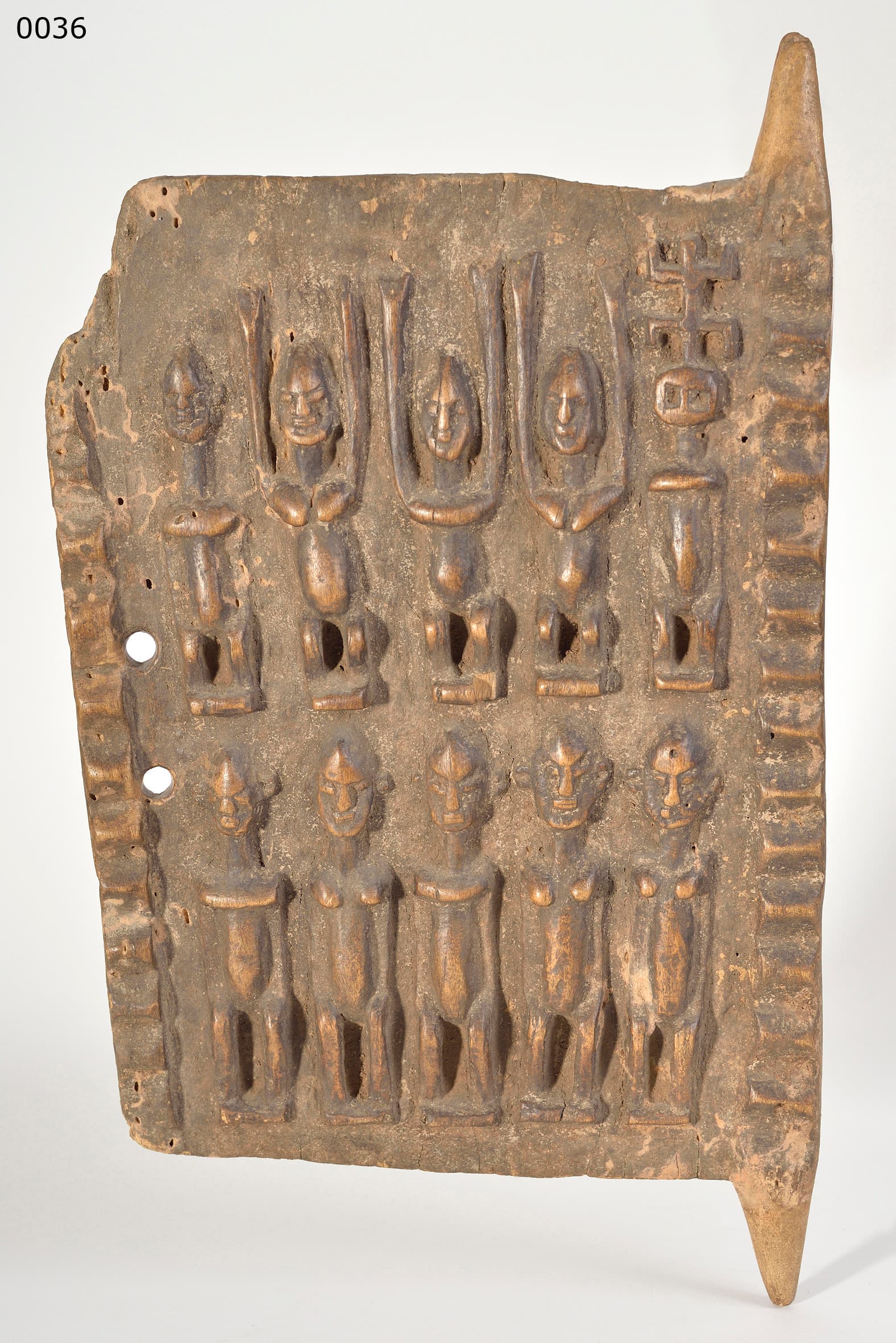
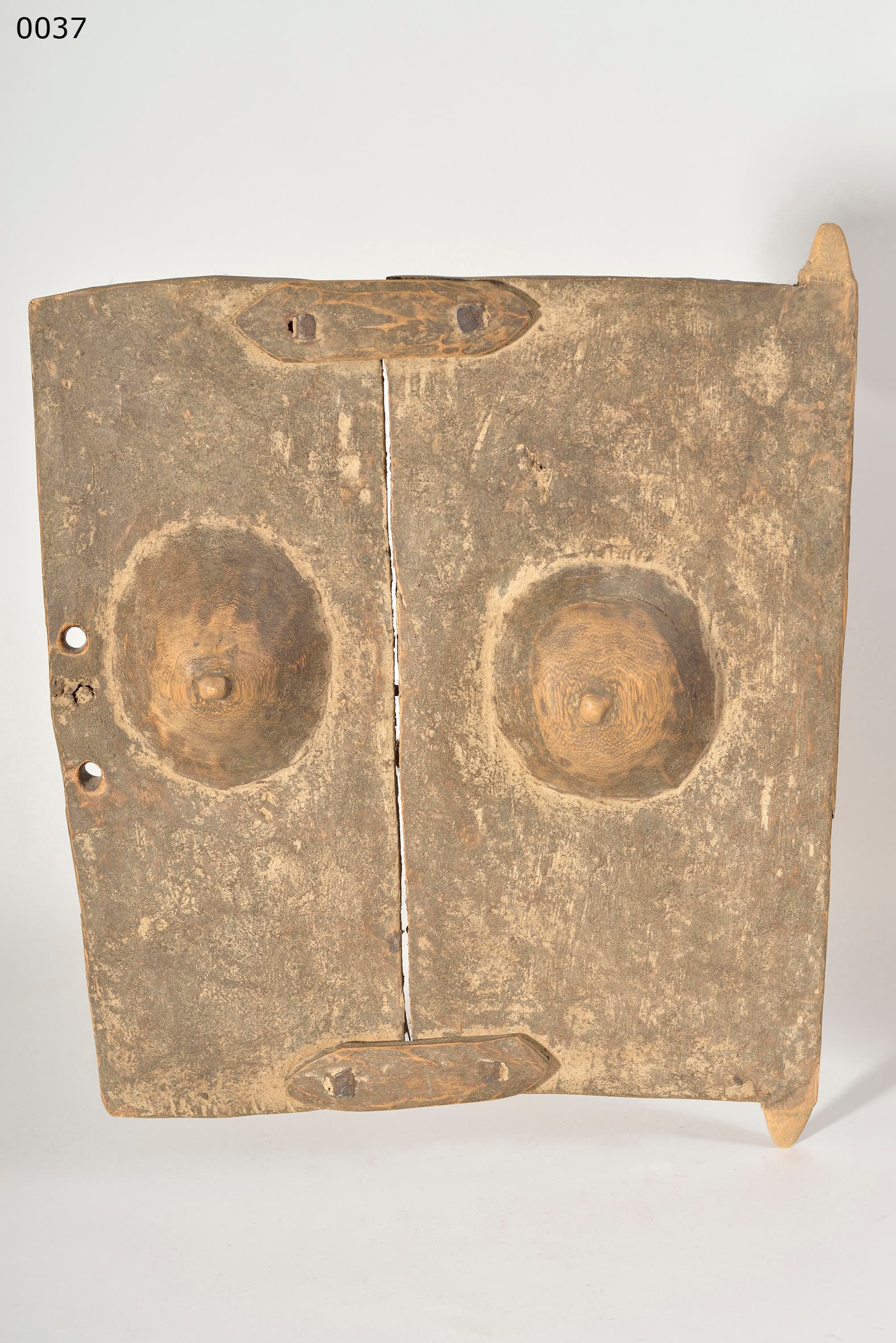
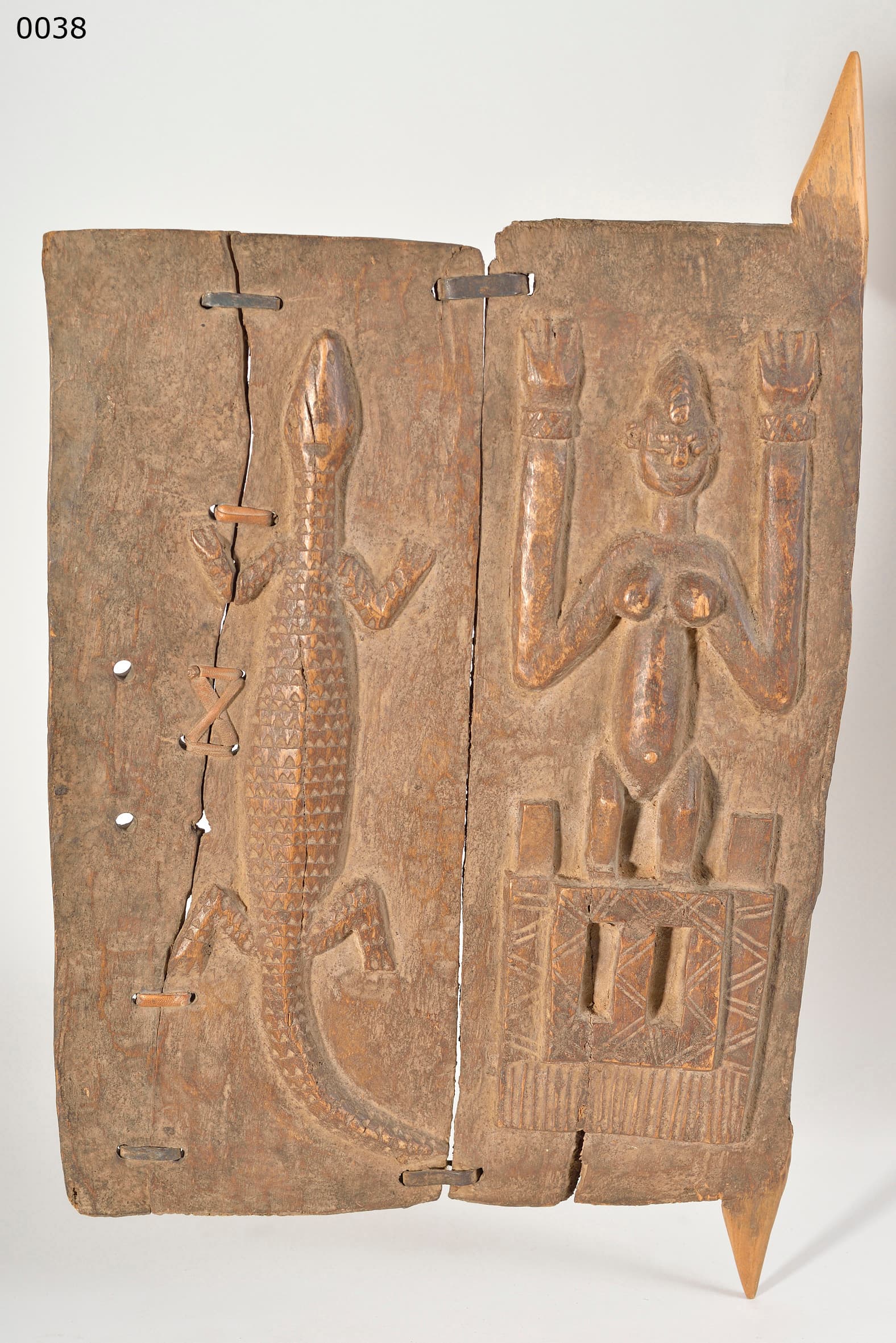
This monumental, heavily weathered wooden carving depicts an abstract human figure riding a thick, stylized, almost elephantine animal. The wood is severely desiccated, deeply cracked, and stripped of any original surface finish, revealing the raw, ancient grain.
1. Aesthetic style and regional traits
This sculpture embodies the extreme reduction of form seen in ancient Dogon/Tellem art. The mount is rendered as a massive, blocky volume, while the rider is elongated and geometric. This radical stylization prioritizes spiritual weight and mythological storytelling over anatomical realism — the carver was not depicting a horse but the cosmological function of an equestrian, an iconographic shorthand for command, descent from above, and supernatural mobility between realms.
2. Ritual function and cosmological role
Equestrian figures in Dogon cosmology represent the Hogon (supreme religious and political leader) or the mythological Nommo descending from the heavens. The sheer scale and apparent age of this piece suggest it was a focal point in a high-status binu sanctuary, serving as a physical anchor for prayers related to rain, fertility, and cosmic order. Its monumental size set it apart from smaller domestic shrine figures and suggests a sanctuary serving an entire village or clan rather than a single household.
3. Physical patina and age characteristics
The deep, structural desiccation fissures and the heavily eroded, soft edges of the wood are consistent with significant age and long-term exposure in the dry microclimate of the Bandiagara cliffs. This severe physical degradation is consistent with an 18th–19th century (or older) dating, representing a notable survival of Dogon woodcarving. The loss of original surface coatings — sacrificial or otherwise — may serve as a chronological indicator, since later-period figures often retain at least traces of altar accumulation.
Summary
This mythological equestrian figure is a significant example of Dogon sculpture, reducing complex cosmology into a stark, monolithic form. Its extreme weathering and apparent age associate it with Mali's historical spiritual landscape.
Written with AI assistance from the collection appraisal, object photography and our own research; editorially reviewed. Mistakes are possible — corrections are welcome. How we work →