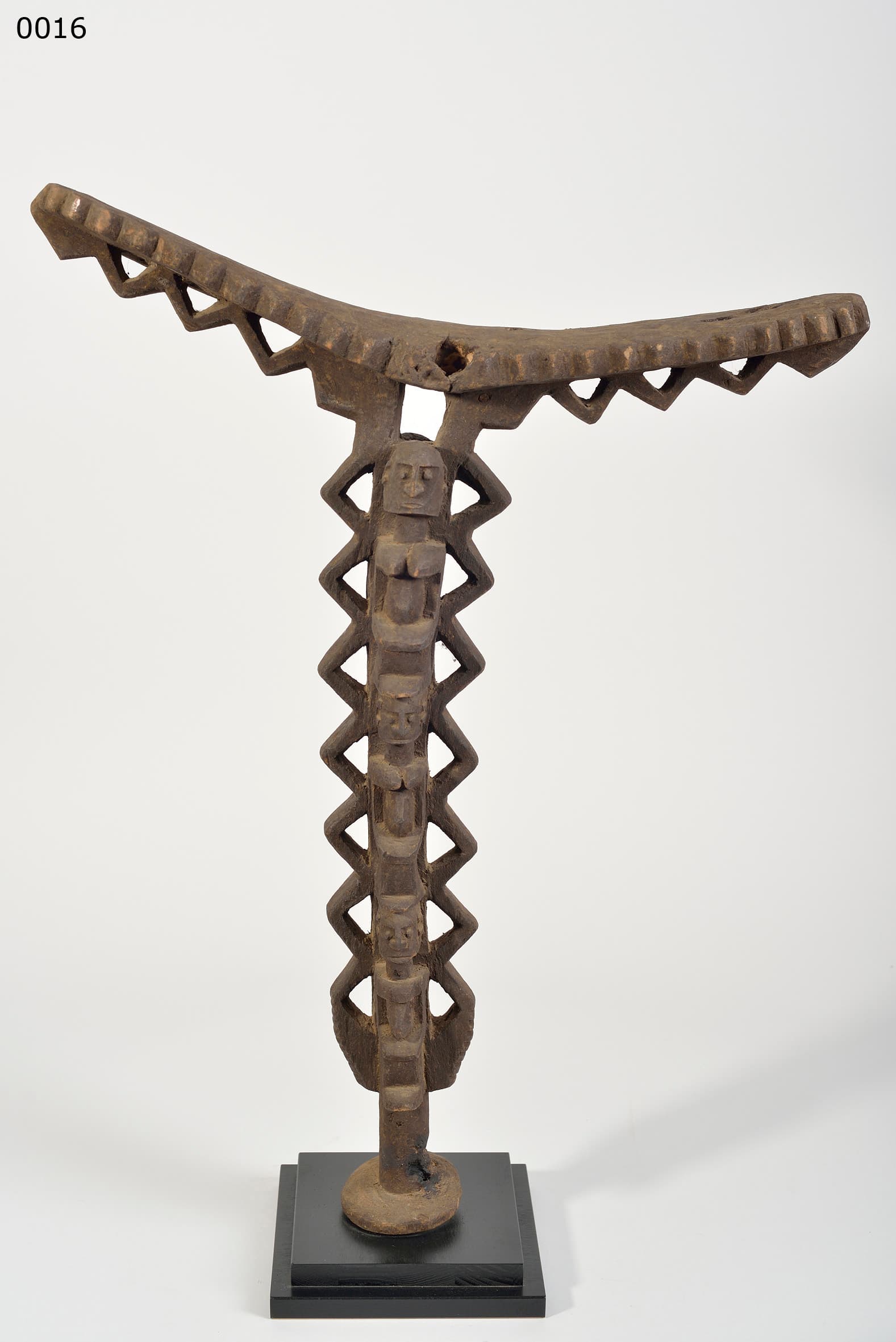
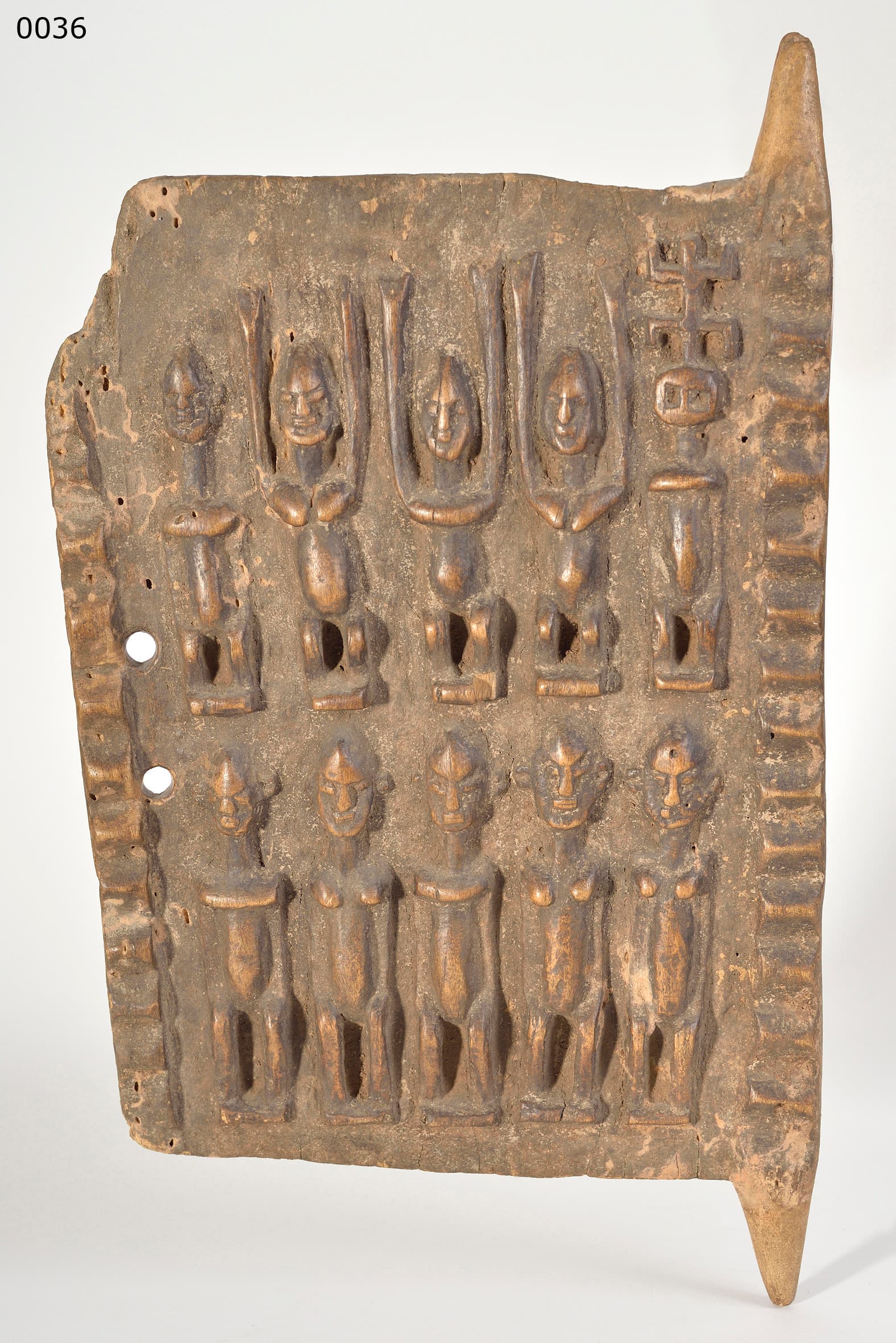
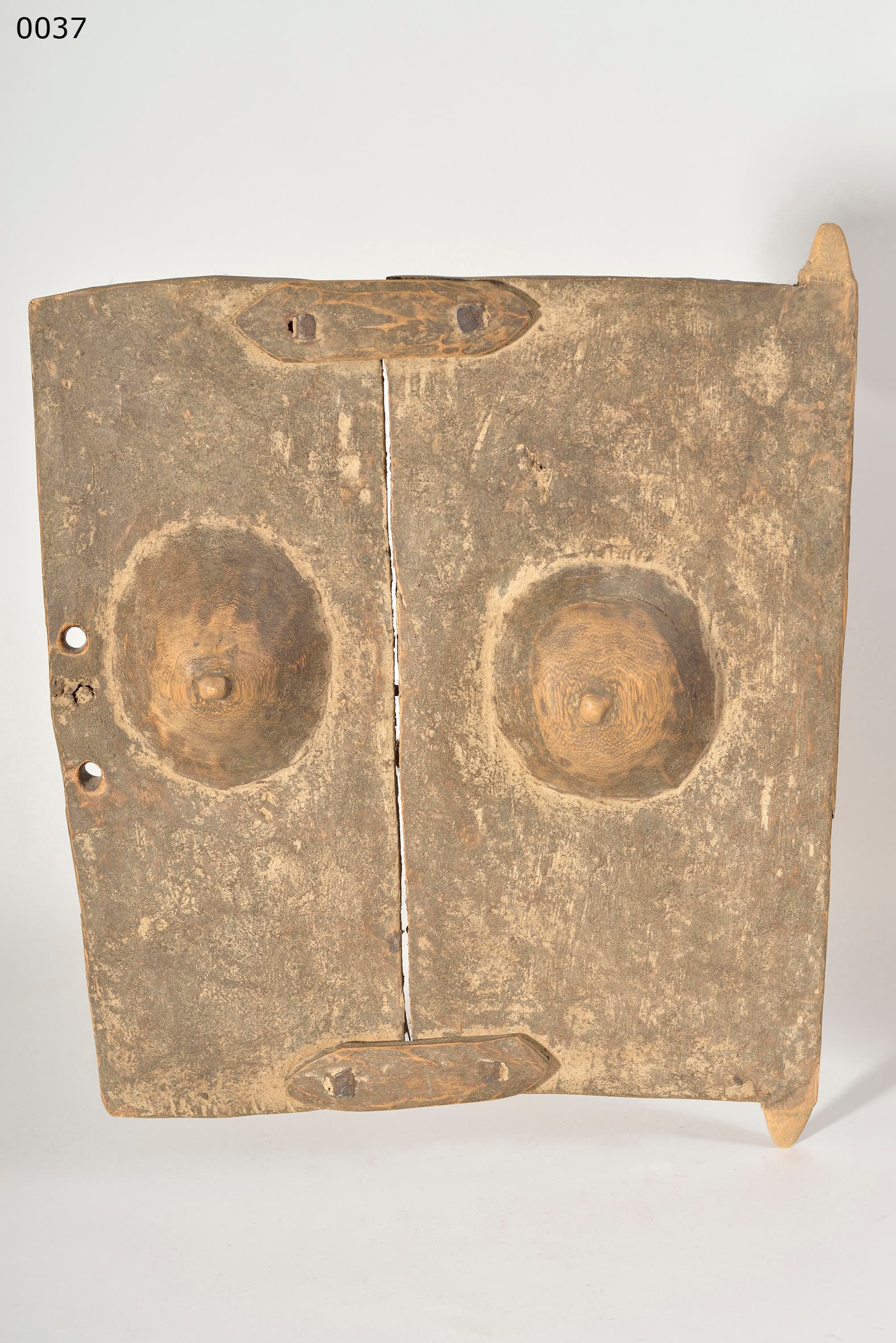
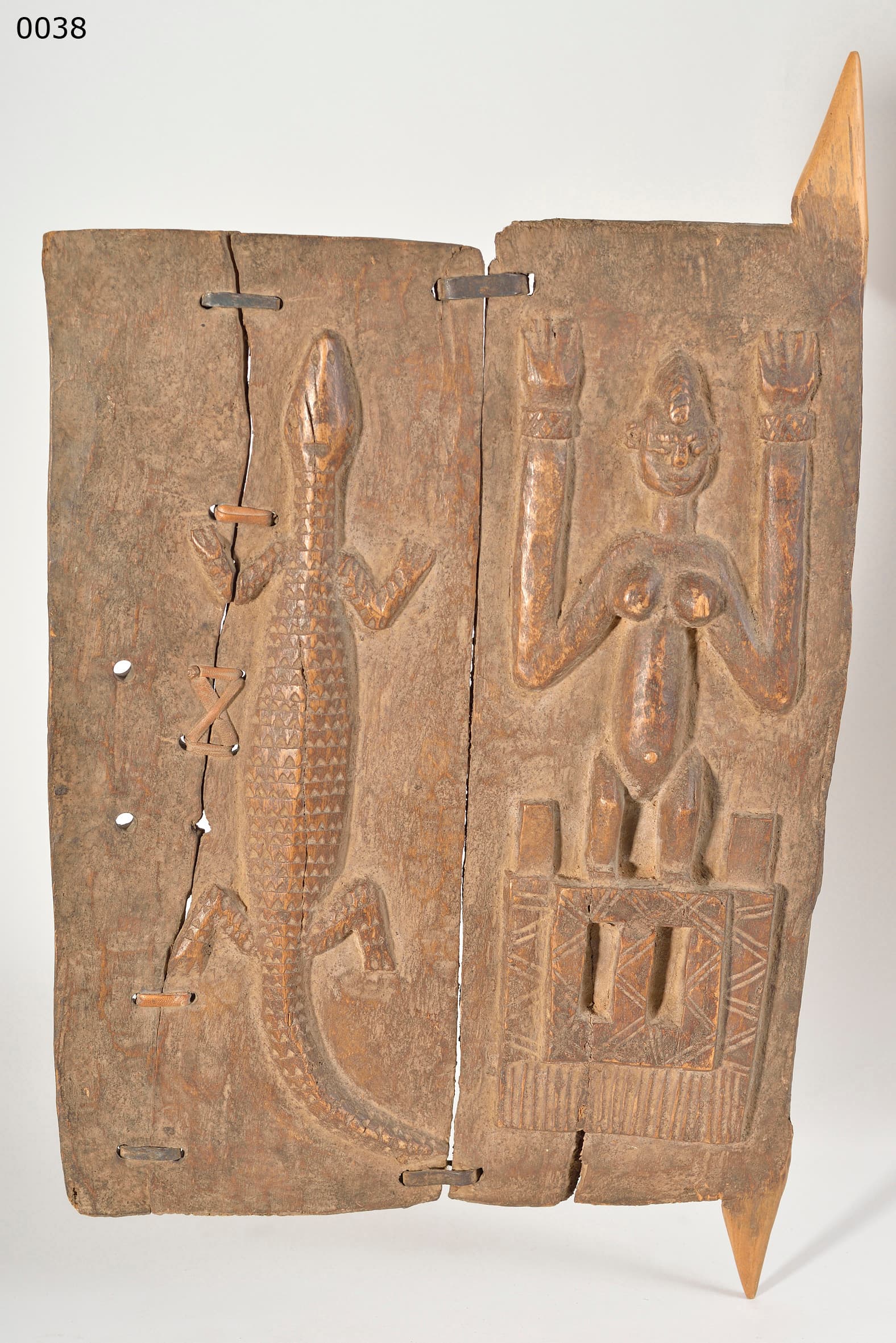
One of two highly eroded, naturally bifurcated wooden branches forming miniature Y-shaped ladders, displaying deep, dry desiccation and a crusty, weather-beaten patina. The carved notches are worn smooth from age and environmental exposure.
1. Aesthetic style and regional traits
The Dogon people of the Bandiagara Escarpment are famous for their unique architecture, which utilizes massive Y-shaped wooden ladders to access cliff-side granaries and dwellings. These miniature iterations, however, are completely stripped of practical utility. They are purely symbolic, translating the everyday architectural language of the Dogon into profound metaphysical objects designed to bridge the gap between the terrestrial and the divine. The miniature treatment of the household ladder iconographically transposes mundane vertical movement into cosmic vertical movement.
2. Ritual function and Nommo descent
Used almost exclusively in a ritual context, these mythical ladders were placed on binu (totemic) altars or personal household shrines. According to Dogon cosmology, the creator spirits known as the Nommo descended from the celestial realm to bring order to the earth. These miniature ladders act as symbolic, physical pathways, allowing ancestral spirits and the Nommo to safely descend from the heavens to the earthen altar to receive prayers, libations, and sacrifices. The ladder's role is mechanical within the cosmology — it provides the literal route by which spirits travel between worlds.
3. Physical patina and indications of age
The physical condition of these two ladders is consistent with significant age. Both exhibit profound cellular desiccation, structural cracking, and soft, eroded edges that are difficult to artificially replicate. The dry, crusty, and oxidized surface of the wood is compatible with a 19th-century origin, suggesting they spent generations exposed to the harsh, arid climate of the Malian cliffs. The smoothing of the notches by environmental weathering rather than handling is consistent with long stationary altar tenure.
Summary
Minimalist yet cosmologically profound, this miniature Dogon ladder physicalizes the spiritual connection between heaven and earth. Its extreme environmental weathering and stark, raw form support its attribution to the 19th century as a Malian altar component.
Written with AI assistance from the collection appraisal, object photography and our own research; editorially reviewed. Mistakes are possible — corrections are welcome. How we work →