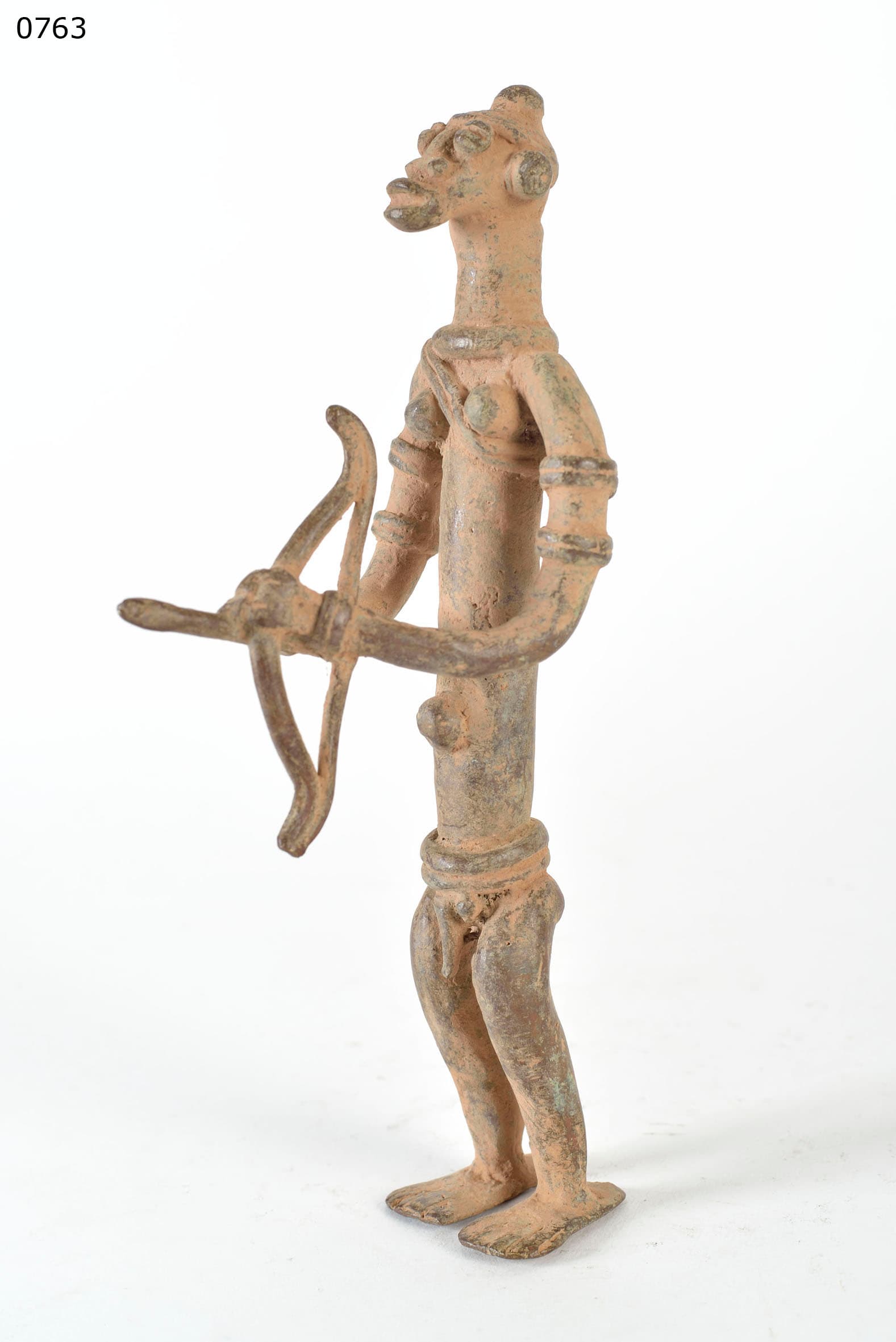
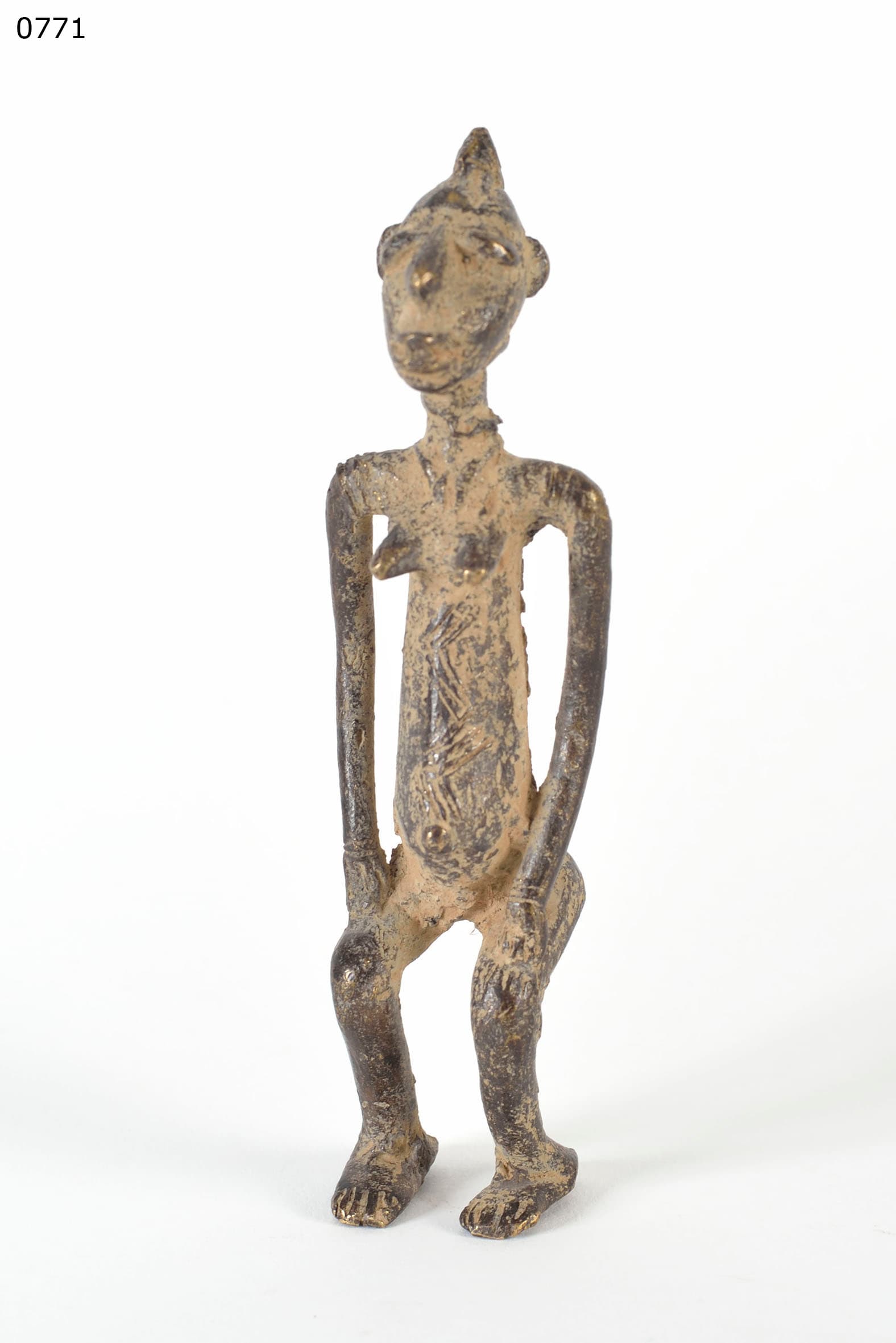
One of three ancient Gan bronze snake figures. This is the smallest at 19 cm — a coiled body with a flattened, triangular head. It exhibits a deep, crusty, green-brown archaeological patina.
1. Aesthetic style and regional traits
In the ancient Gan culture, the serpent is perhaps the most potent and frequently utilized zoomorphic symbol. The coiled rather than extended form of this piece encodes a different operational mode — the snake is at rest, gathered, holding its protective potential in reserve rather than actively patrolling.
2. Ritual function and shrine installation
Bronze snakes of this scale were placed individually within royal or community shrines, serving to magically guard the compound, warn off malevolent forces, and ensure the continued favor of the powerful serpentine earth spirits. Smaller scale than the largest serpent emblems may suggest household-level rather than royal-compound deployment.
3. Physical patina and age indicators
The age of this casting is supported by its surface condition. The piece is completely obscured by a thick, uncleaned layer of malachite (green) and cuprite (reddish-brown) oxidation, mixed with calcified earthen deposits. This intense chemical breakdown and profound burial crust are consistent with its 16th–19th century archaeological origins.
Summary
A compelling Gan serpentine bronze that physically embodies the culture's complex mythology of protective ancestral snakes. Its heavy, uncleaned archaeological patina is consistent with its status as a significant historical artifact.
Written with AI assistance from the collection appraisal, object photography and our own research; editorially reviewed. Mistakes are possible — corrections are welcome. How we work →