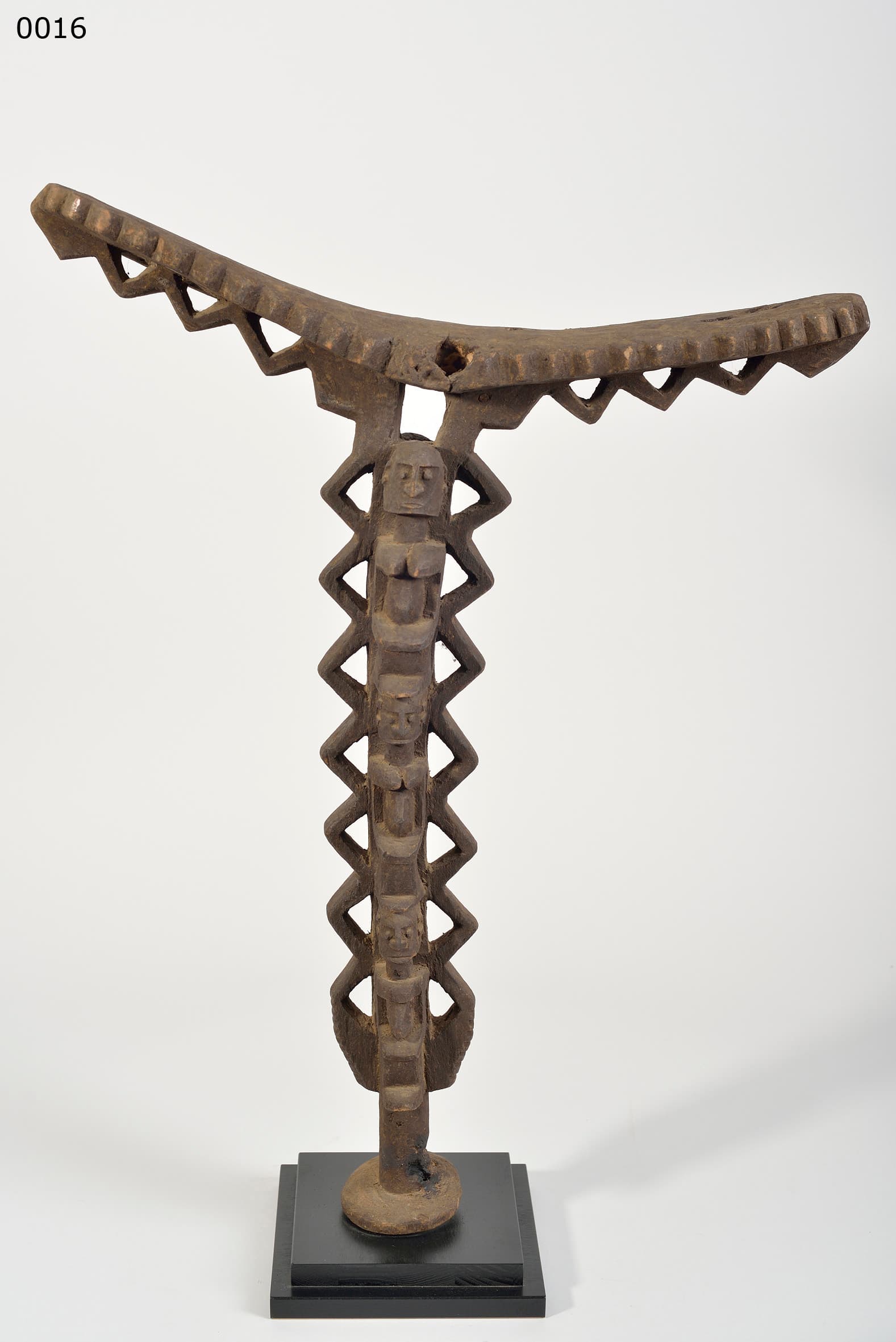
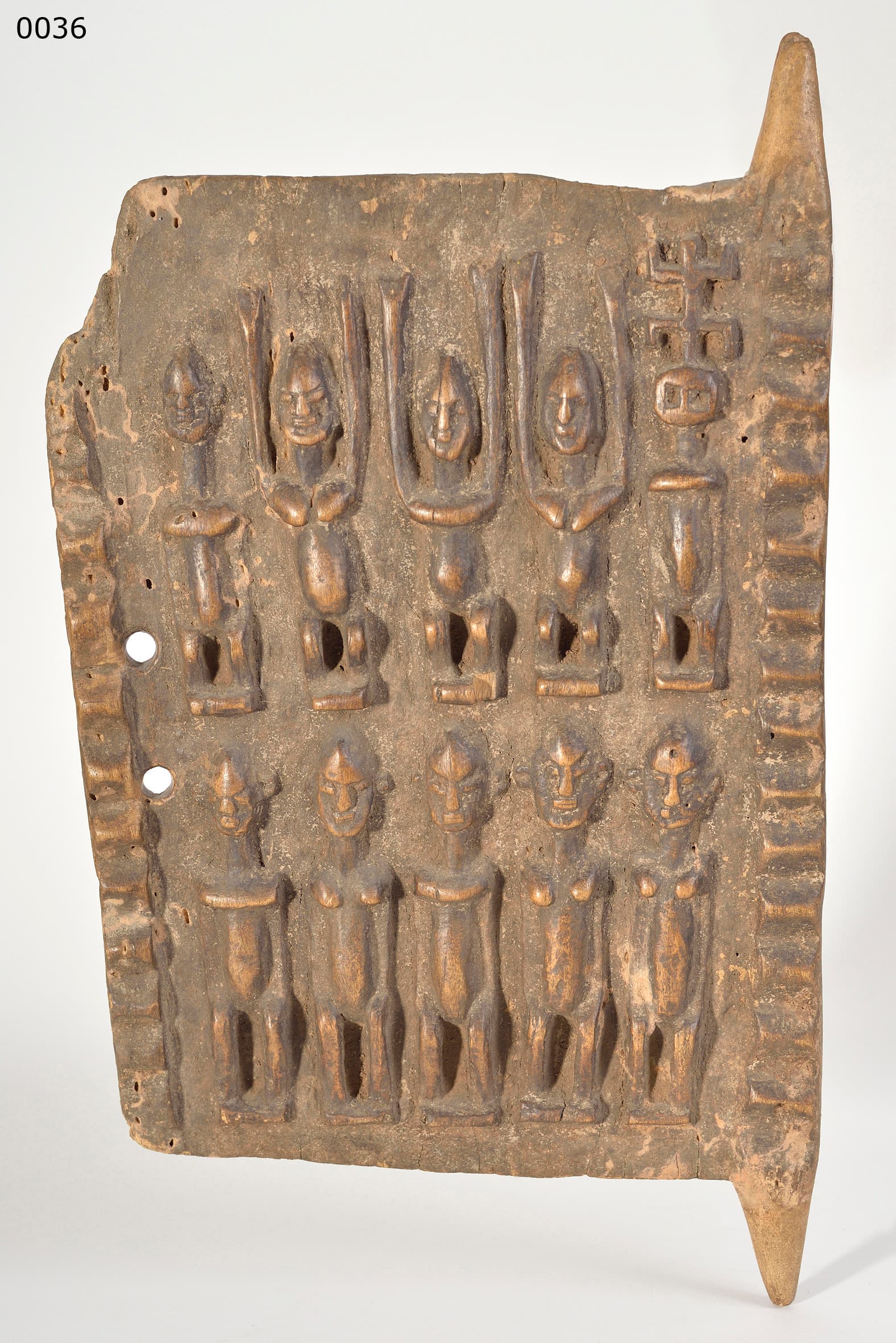
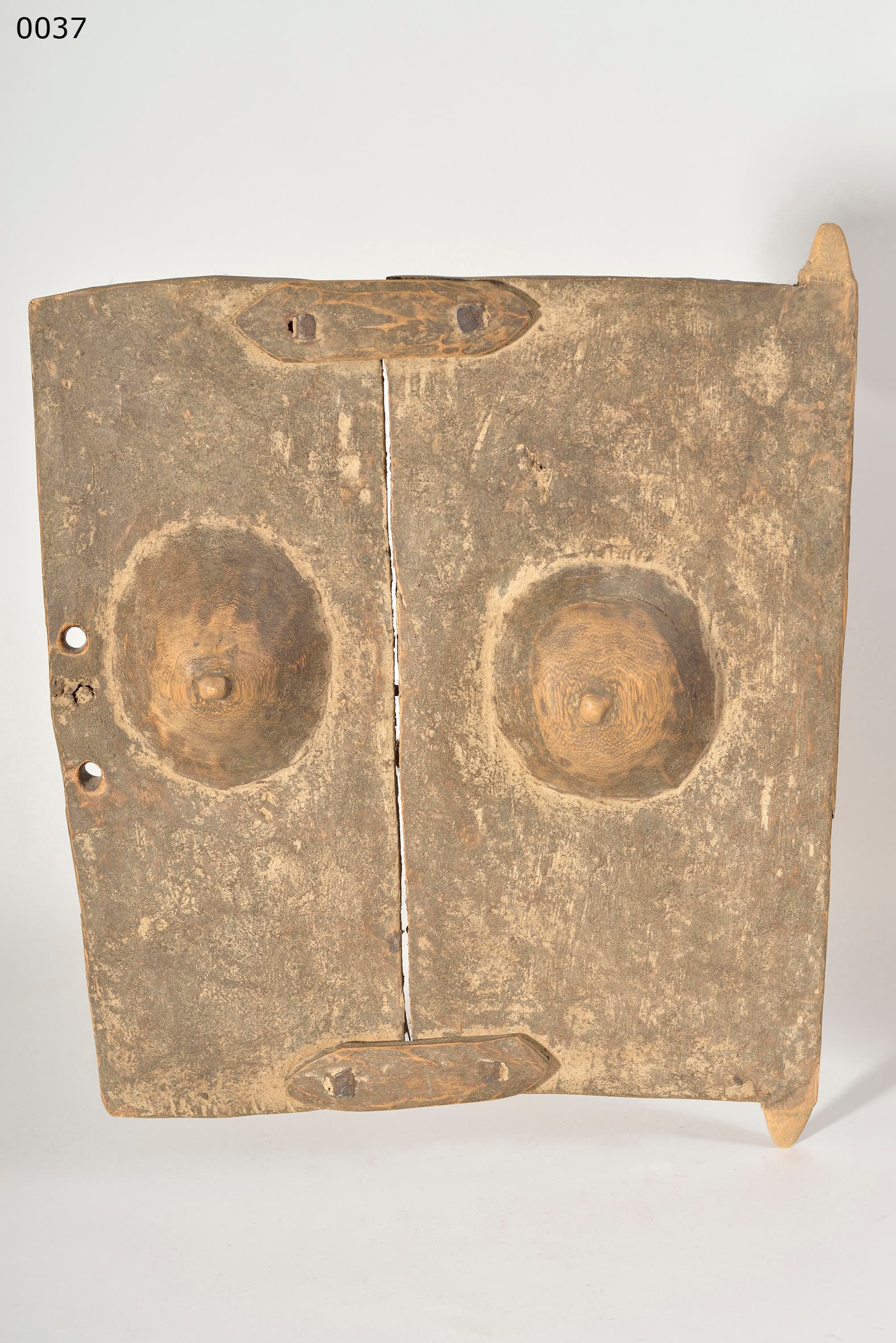
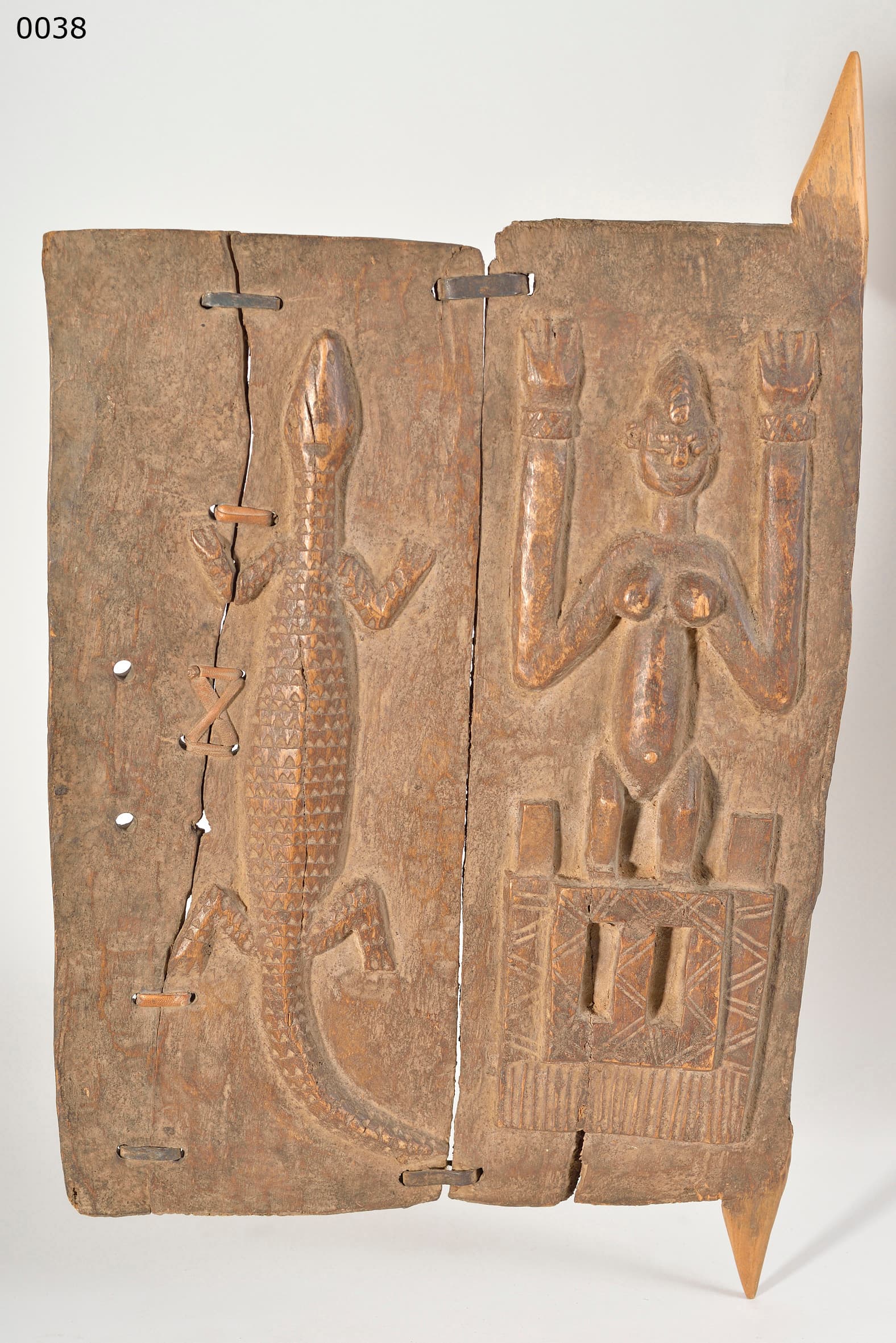
This tall iron figure features a central vertical shaft from which two sweeping, upward-curving arms emerge, creating a trident-like or anchor silhouette. The metal is heavily pitted with a dry, oxidized orange-brown crust.
1. Aesthetic style and regional traits
Moving to the absolute fringes of anthropomorphism, this Dogon blacksmith has reduced the human body to a pure geometric trident. The central shaft acts as the spine, while the two sweeping, upward curves abstract the upraised arms of the orans gesture to their ultimate, minimalist conclusion. By abandoning all facial and anatomical details, the figure transforms from a representation of a human into a formalized, architectural symbol — a metallic tuning fork designed to interact with unseen cosmic frequencies.
2. Ritual function and nyama accumulation
This trident-like figure was designed for absolute stability within a ritual setting. The long, unadorned bottom shaft was driven deep into the mud or stone of a Binu altar. Once anchored, the sweeping upper arms functioned to "catch" and accumulate nyama (spiritual energy) descending from the sky, channeling it directly into the earth and the ancestral relics buried beneath. It is a highly functional piece of spiritual technology, devoid of unnecessary artistic embellishment.
3. Physical patina and surface characteristics
The highly textured, pitted surface of the iron is consistent with prolonged outdoor or shrine exposure, traditionally attributed to the 19th century. The orange-brown crust is thick and friable, showing no signs of modern wire-brushing or chemical stabilization. This weathered surface is highly prized by ethnographers and collectors (such as René Salanon), as it preserves the environmental context of the object, suggesting its continuous, undisturbed presence in the harsh climate of the Malian escarpment.
Summary
Transforming the human form into a severe, geometric trident, this iron figure operates as a minimalist antenna for catching celestial nyama. Its deeply pitted, friable rust supports its attribution as an undisturbed 19th-century Dogon altar anchor.
Documentation: published in "DOGON".
Written with AI assistance from the collection appraisal, object photography and our own research; editorially reviewed. Mistakes are possible — corrections are welcome. How we work →