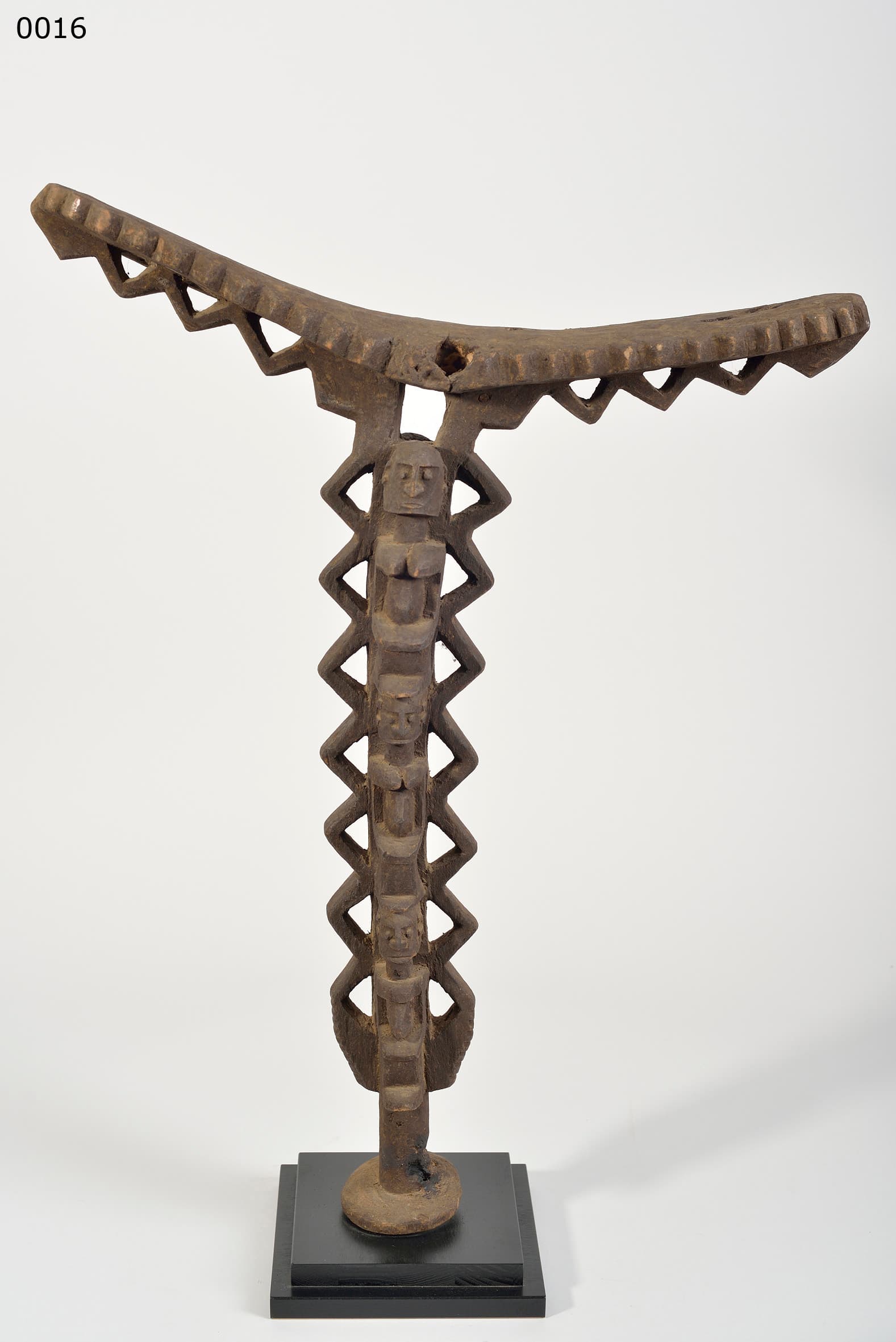
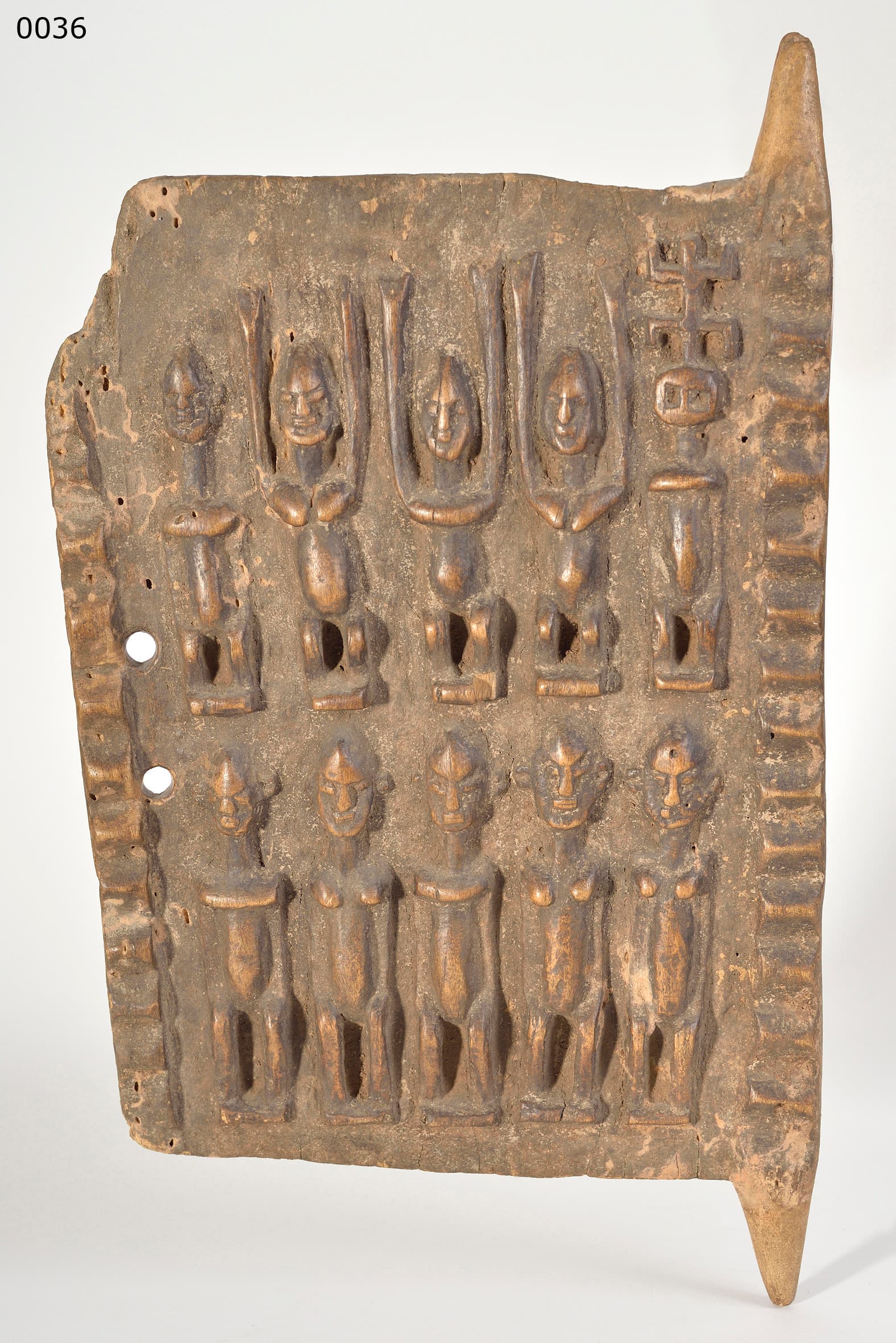
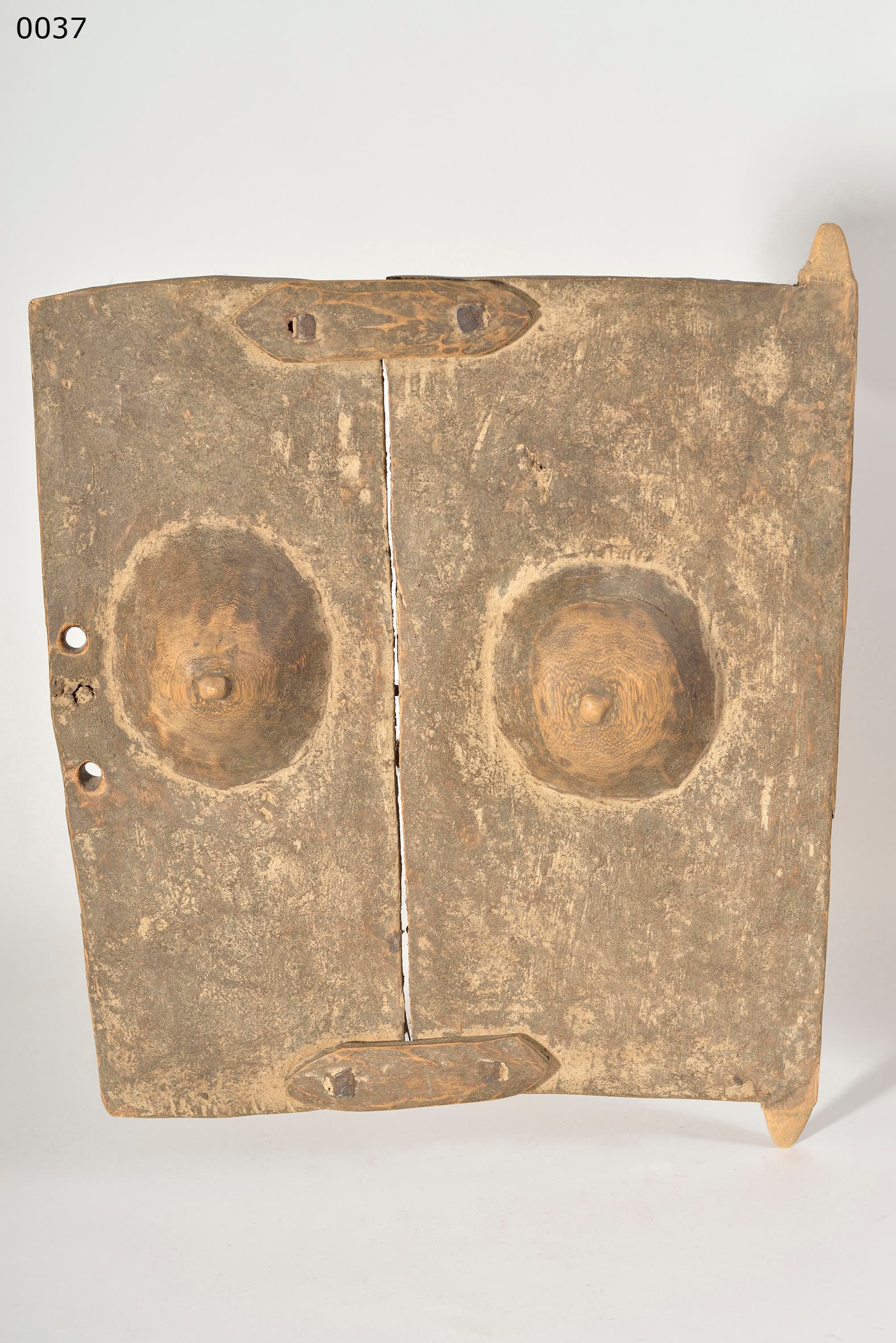
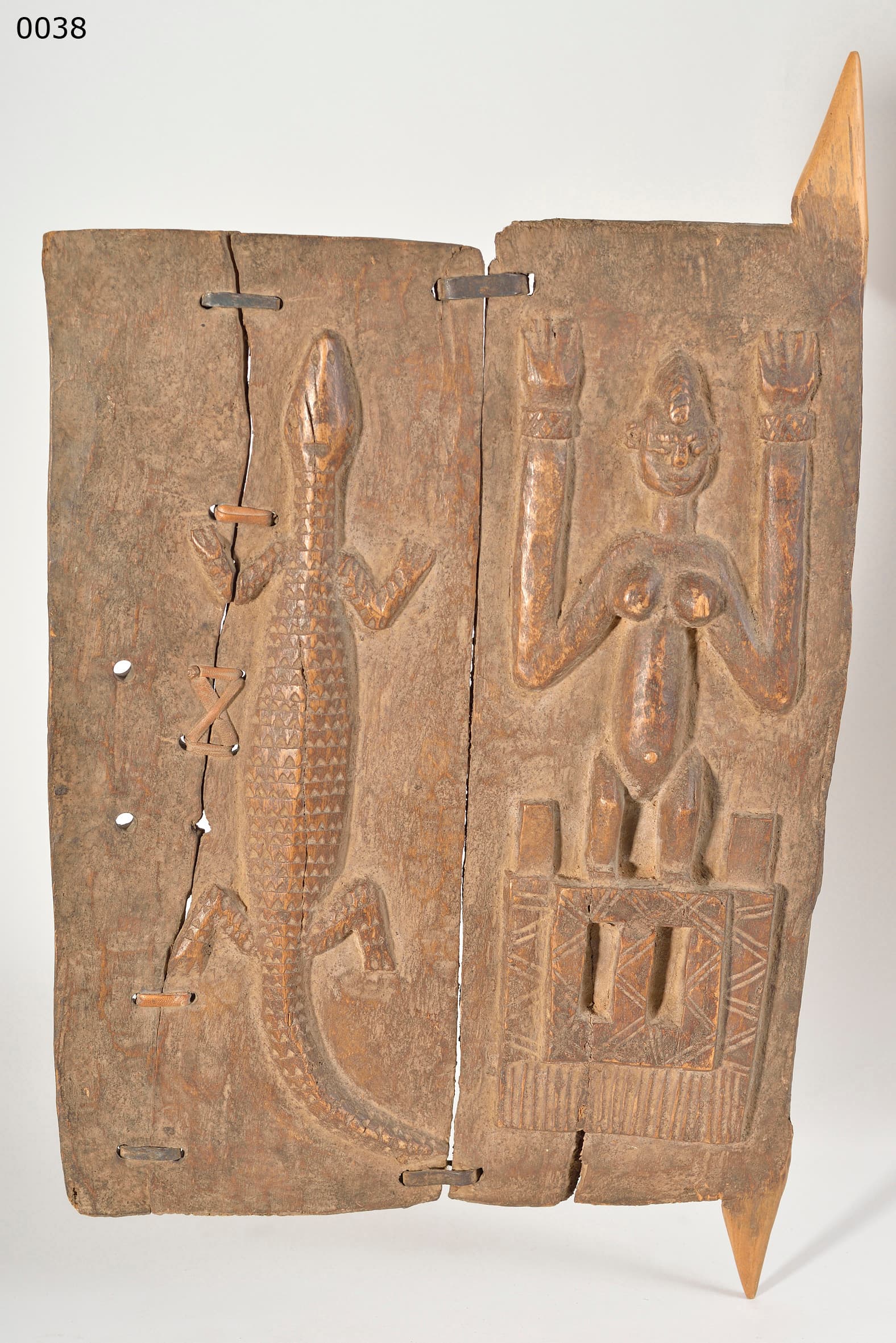
This tall iron staff features a remarkable, undulating U-shaped crossbar that forms sweeping arms terminating in distinct, multi-fingered hands, surmounted by a small, abstract head on the central axis. The metal is entirely encased in a thick, friable, orange-brown terrestrial rust.
1. Aesthetic style and regional traits
This imposing staff demonstrates a sophisticated fusion of human anatomy with abstract, kinetic waveforms. The central vertical shaft serves as the spine, but the "arms" break entirely from naturalistic proportions. Forged into deep, undulating waves, they mimic the movement of a serpent or the jagged flash of lightning. Terminating in distinct, flattened hands, the sculpture seamlessly bridges the gap between anthropomorphic representation and pure geometric energy, turning the human silhouette into a vibrating cosmic antenna.
2. Ritual function and agricultural supplication
In the context of the Bandiagara Escarpment, this staff operates as a highly specialized Gobo — an implement designed to "hook" or snare spiritual forces. The massive, undulating arms and upraised hands function as a desperate, permanent physical prayer directed at the heavens. Planted deeply in a family Binu shrine or directly into the parched agricultural fields, it was consecrated by the Hogon to aggressively draw down the rain-bearing clouds, ensuring the survival of the millet harvest and the continuity of the village.
3. Physical patina and age indicators
The heavy accumulation of rust on this 64 cm staff suggests a significant age. The iron exhibits a deeply textured, granular crust consistent with generations of exposure to damp soil and cyclic seasonal rains. Collected by René Salanon, an early connoisseur of Dogon metallurgy, the piece retains an uncleaned shrine patina, supporting its attribution as a primary-use, 19th-century ritual anchor.
Summary
Blending human anatomy with the kinetic geometry of lightning and serpents, this iron staff acts as a monumental antenna for agricultural supplication. Its untouched terrestrial rust and Salanon provenance support its attribution as a significant example of Dogon shrine architecture.
Documentation: published in "DOGON".
Written with AI assistance from the collection appraisal, object photography and our own research; editorially reviewed. Mistakes are possible — corrections are welcome. How we work →