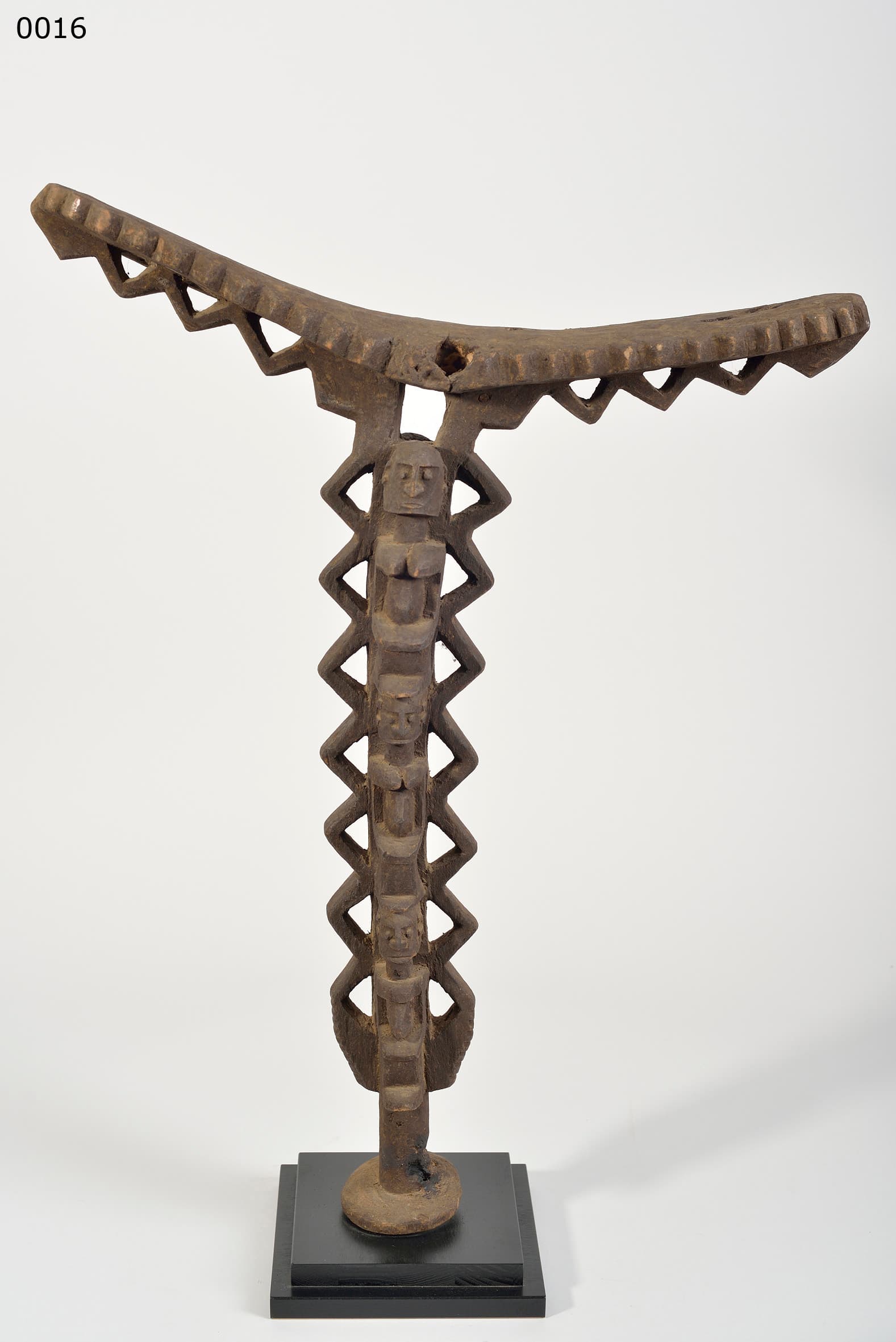
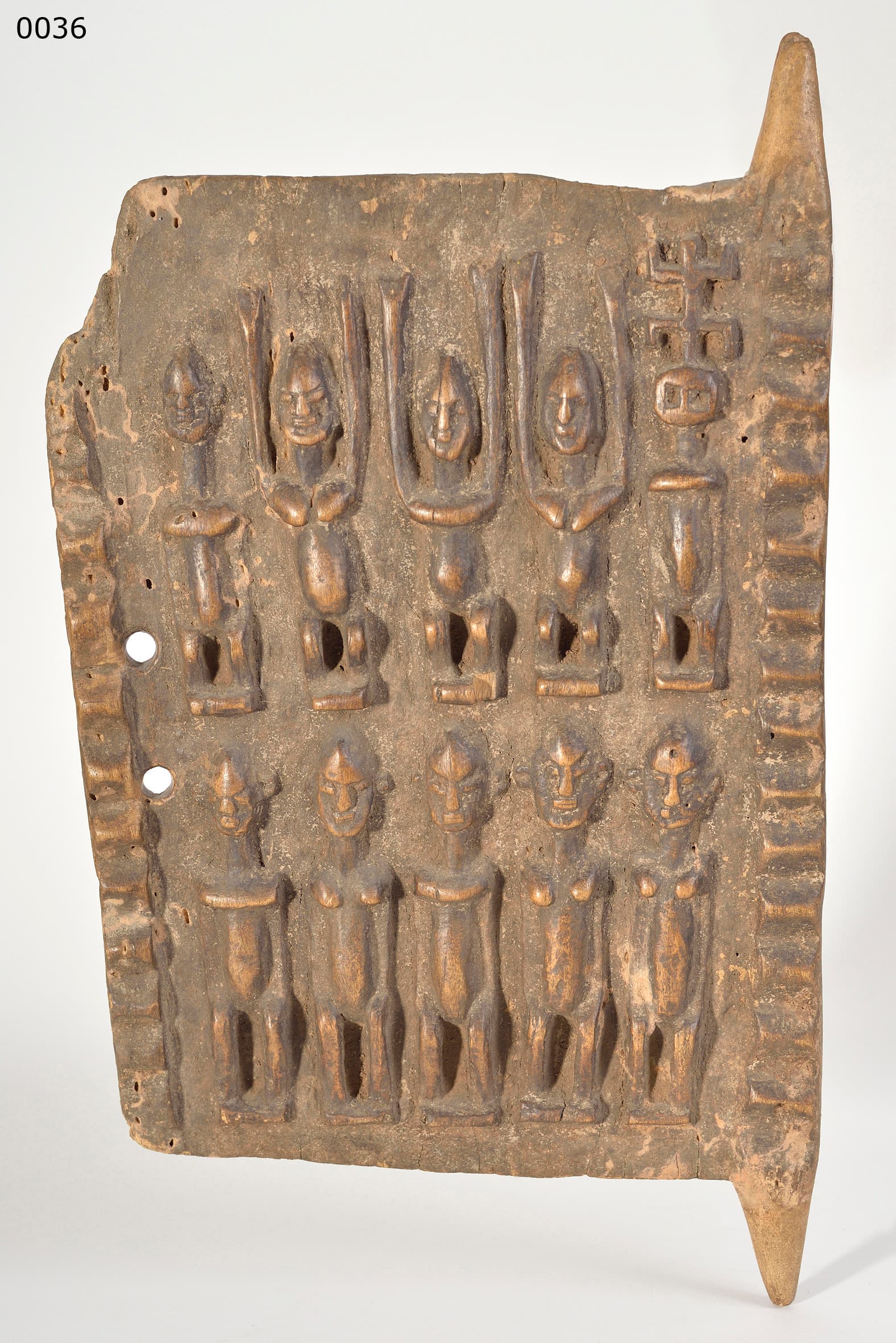
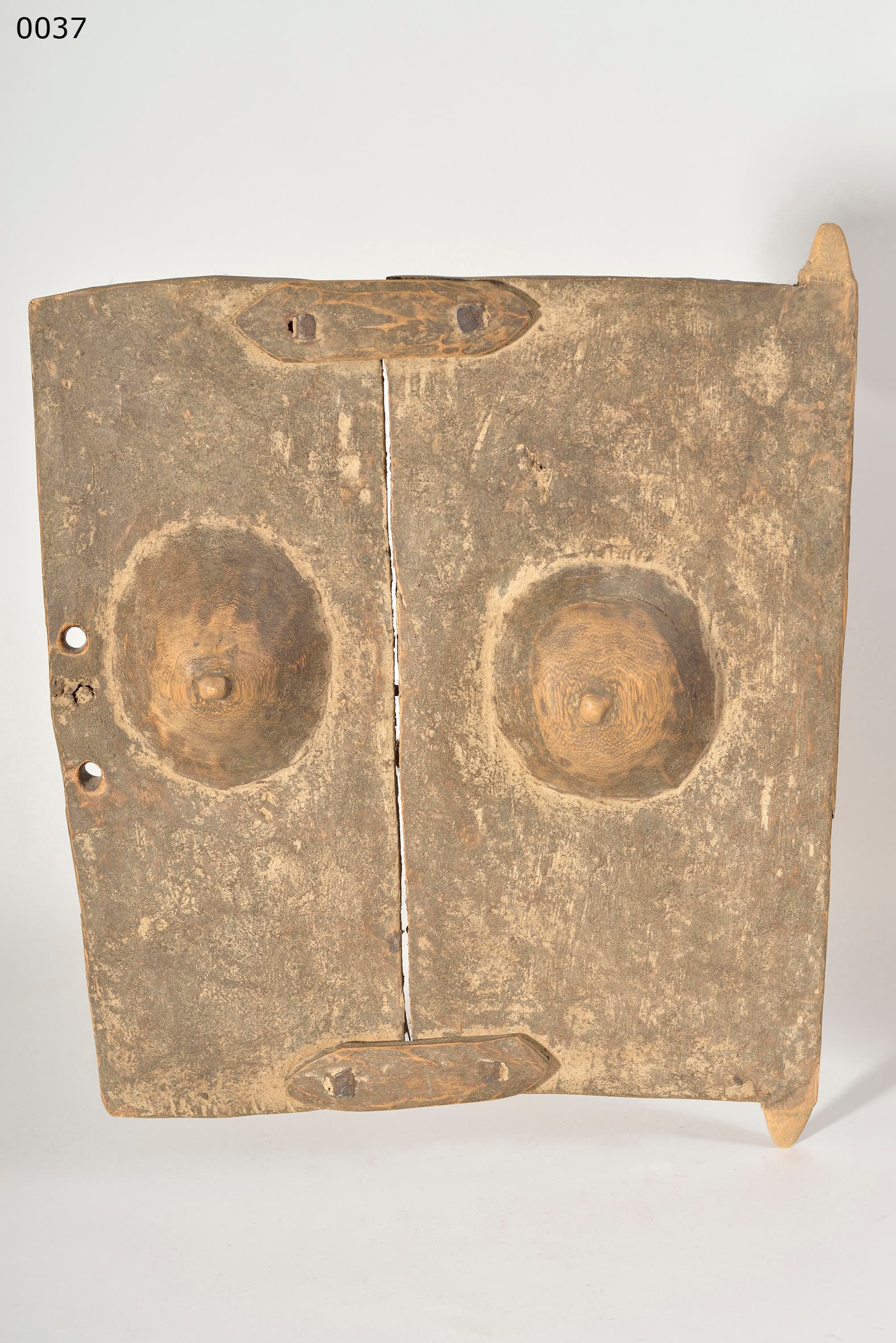
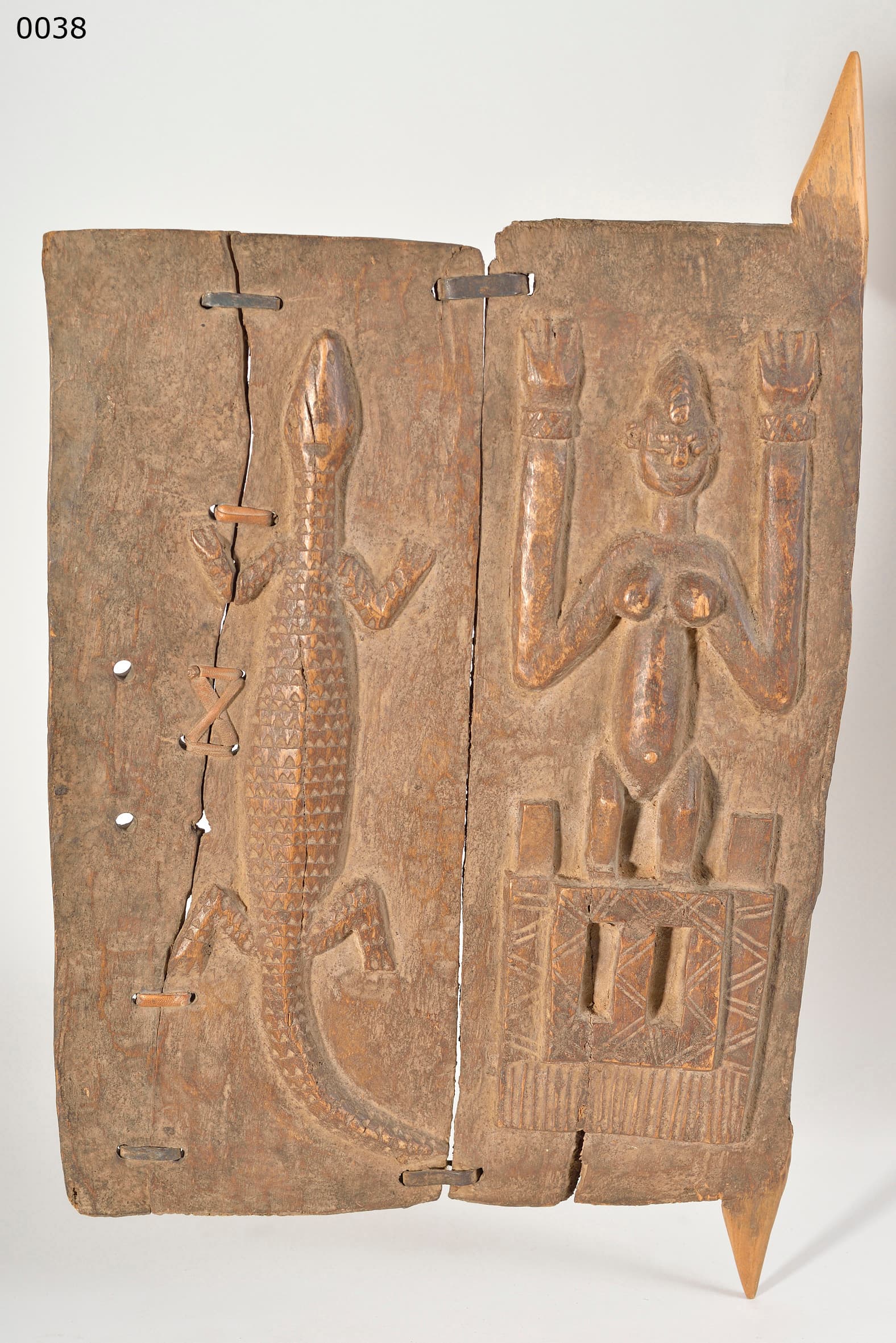
This forged iron sculpture features a straight vertical base that breaks into a tight, undulating S-curve before terminating in a flat, sweeping horizontal crossbar resembling an abstracted animal snout. The dark iron is covered in an even, friable layer of orange-brown rust.
1. Aesthetic style and regional traits
This object belongs to the specific functional class of Dogon ironwork known as the Gobo — a crook or hook. The blacksmith has taken the functional concept of a snare and imbued it with zoomorphic energy. The tight S-curve mid-shaft implies the coiled, kinetic tension of a snake, while the sweeping T-shaped crossbar at the apex suggests the flattened snout of an animal. This intentional ambiguity transforms the iron from a mere tool into a dynamic, living waveform, utilizing severe geometric abstraction to represent biological and spiritual force.
2. Ritual function and agricultural snaring
In the harsh agricultural reality of the Bandiagara Escarpment, the Gobo serves an important function. Planted into the soil of a Binu shrine or a millet field, the wide, horizontal upper bar is magically activated by the Hogon (priest) to serve as a spiritual net. It is designed to literally snag the rain-bearing clouds from the sky and pull moisture down into the earth, or conversely, to hook and trap wandering malevolent spirits before they can damage the harvest.
3. Physical patina and age
The surface of this Gobo presents characteristics consistent with 19th-century terrestrial decay. The orange-brown rust is highly textured and friable, suggesting decades of exposure to seasonal rains and thick, organic libations poured over it by devotees. This piece's inclusion in the "DOGON" catalog supports its ethnographic importance, indicating that its raw, uncleaned state has been preserved as a record of Malian ritual life.
Summary
Blending the coiled energy of a serpent with the functional architecture of a spiritual snare, this Gobo figure is a traditional tool of Dogon agricultural practice. Its dense, terrestrial rust and published status support its attribution as a 19th-century altar artifact.
Written with AI assistance from the collection appraisal, object photography and our own research; editorially reviewed. Mistakes are possible — corrections are welcome. How we work →