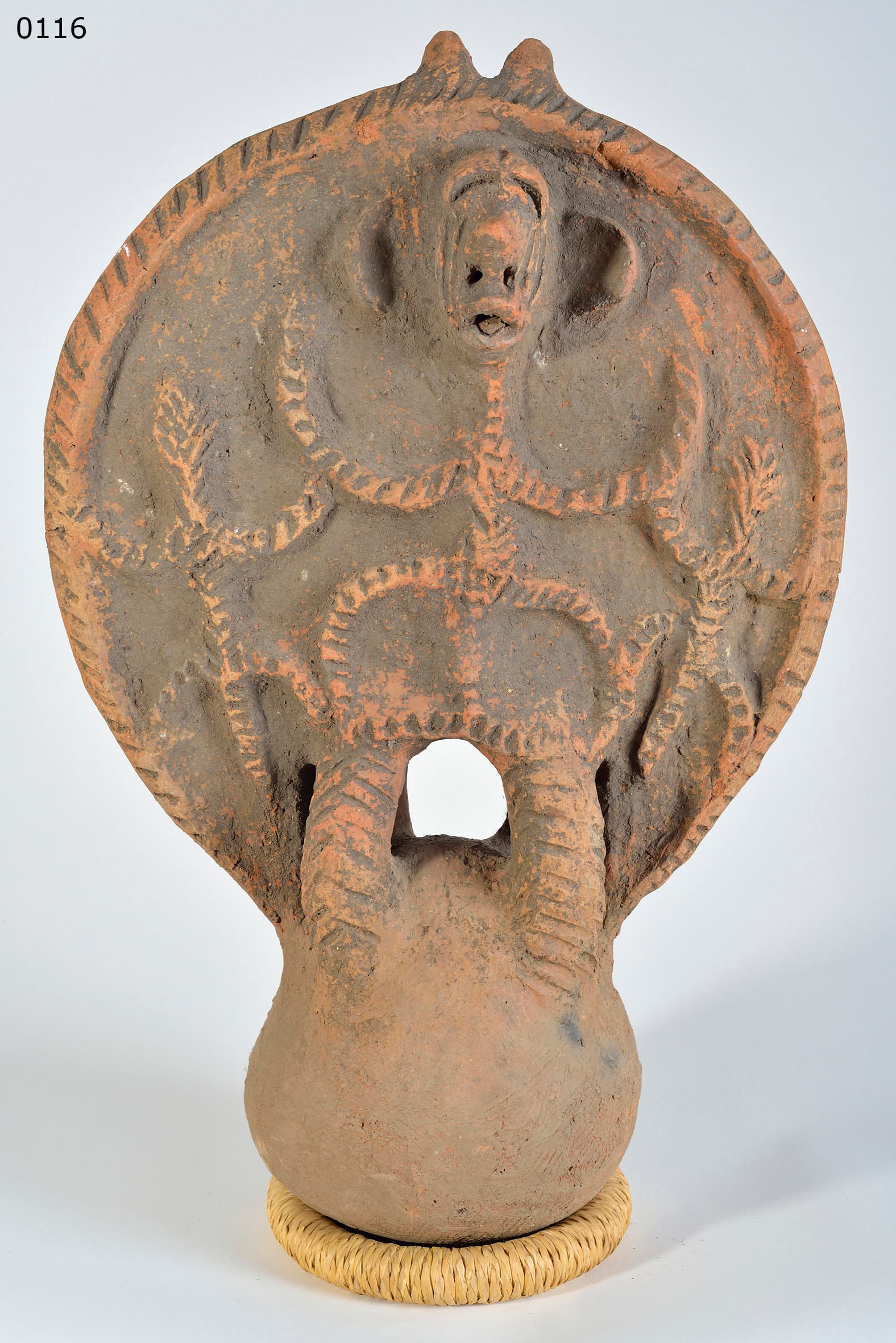
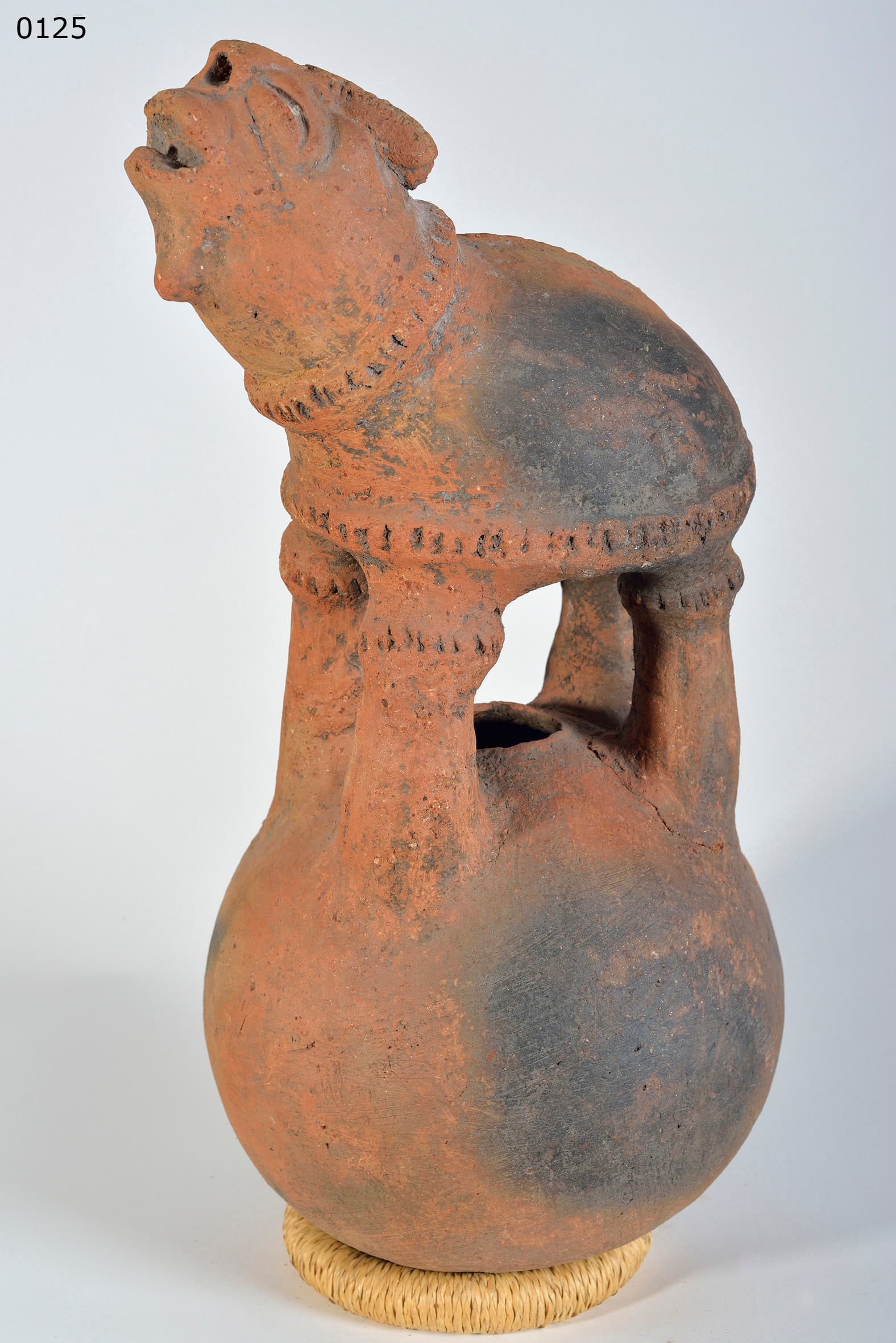
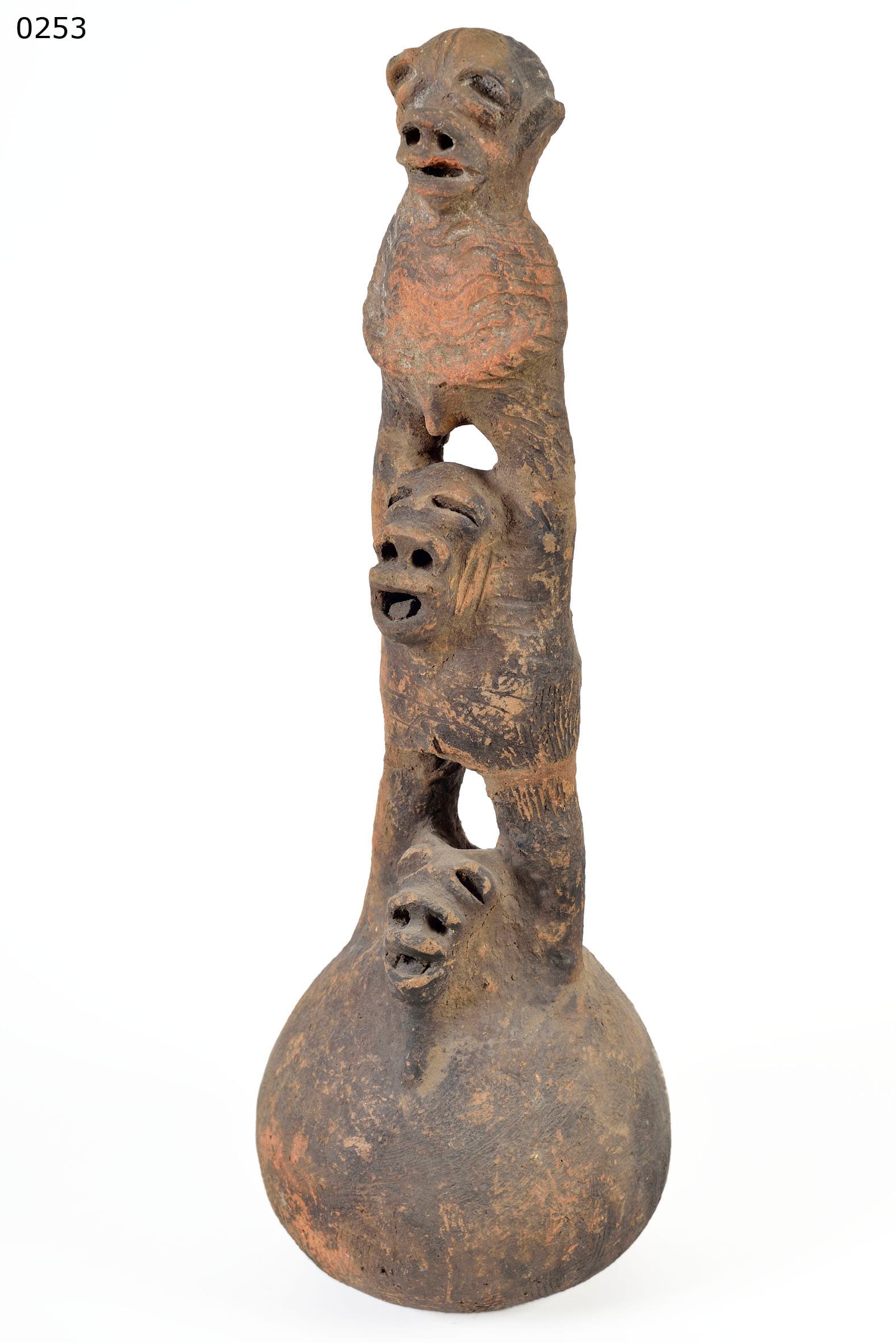
Ein robuster, stilisierter Vierbeiner aus Terrakotta (wohl 17.-19. Jh., 44 cm) aus dem nigerianischen Dakakari - ein kräftiger Tierkörper, der wahrscheinlich einen Elefanten, einen Büffel oder ein Pferd darstellt und dessen Oberfläche durch eine mutmaßlich jahrhundertelange Verwitterung stark angegriffen ist.
1. Der Friedhof als Leinwand
Die Dakakari im Nordwesten Nigerias pflegen eine monumentale, jahrhundertealte Terrakotta-Tradition.
- Töpferinnen, männliche Eliten: Diese Objekte wurden traditionell von Töpferinnen zu Ehren von hochrangigen männlichen Kriegern, Häuptlingen und Priestern hergestellt.
- Open-Air-Denkmäler: Sie waren keine häuslichen Schreine, sondern wurden direkt im Freien auf mit Steinen ausgelegten Grabhügeln auf kommunalen Friedhöfen aufgestellt.
2. Zoomorphe Machtsymbolik
Die Tierform steht für aristokratische Tugenden.
- Tiere der Sahelzone: Elefanten, Büffel und Pferde stehen für zerstörerische Kraft, Reichtum und aristokratische Mobilität.
- Berg des Kriegers: Auf dem Grab eines männlichen Eliteträgers platziert, symbolisiert die Figur die Prestigeträger, die der Verstorbene einst zu Lebzeiten besaß.
3. Der Trotz der Zeit
Das dem 17. bis 19. Jahrhundert zugeschriebene Stück hat bemerkenswerte Umwelteinflüsse überstanden.
- Verwitterte Oberfläche: Starke Lochfraß- und Erosionsspuren zeugen von der langen Exposition gegenüber dem nigerianischen Klima.
- Technische Meisterleistung: Das Brennen einer hohlen Tonstruktur dieser Größenordnung in einer offenen Grube erforderte eine immense metallurgische Kontrolle – was für das hochentwickelte Geschick der Dakakari-Töpferinnen im Umgang mit Erde und Feuer spricht.
Zusammenfassung
Diese zoomorphe Dakakari-Terrakotta gilt als ein selten erhaltenes Denkmal der nigerianischen Aristokratie. Sie wurde vermutlich auf einem Grab aufgestellt und diente mit ihrer Tiergestalt als physisches Zeugnis für den Reichtum und den Status des darunter begrabenen Vorfahren.
KI-unterstützt erstellt aus Sammlungsgutachten, Objektfotografie und eigener Recherche, redaktionell geprüft. Fehler sind möglich — Hinweise darauf sind uns willkommen. Zum Verfahren →