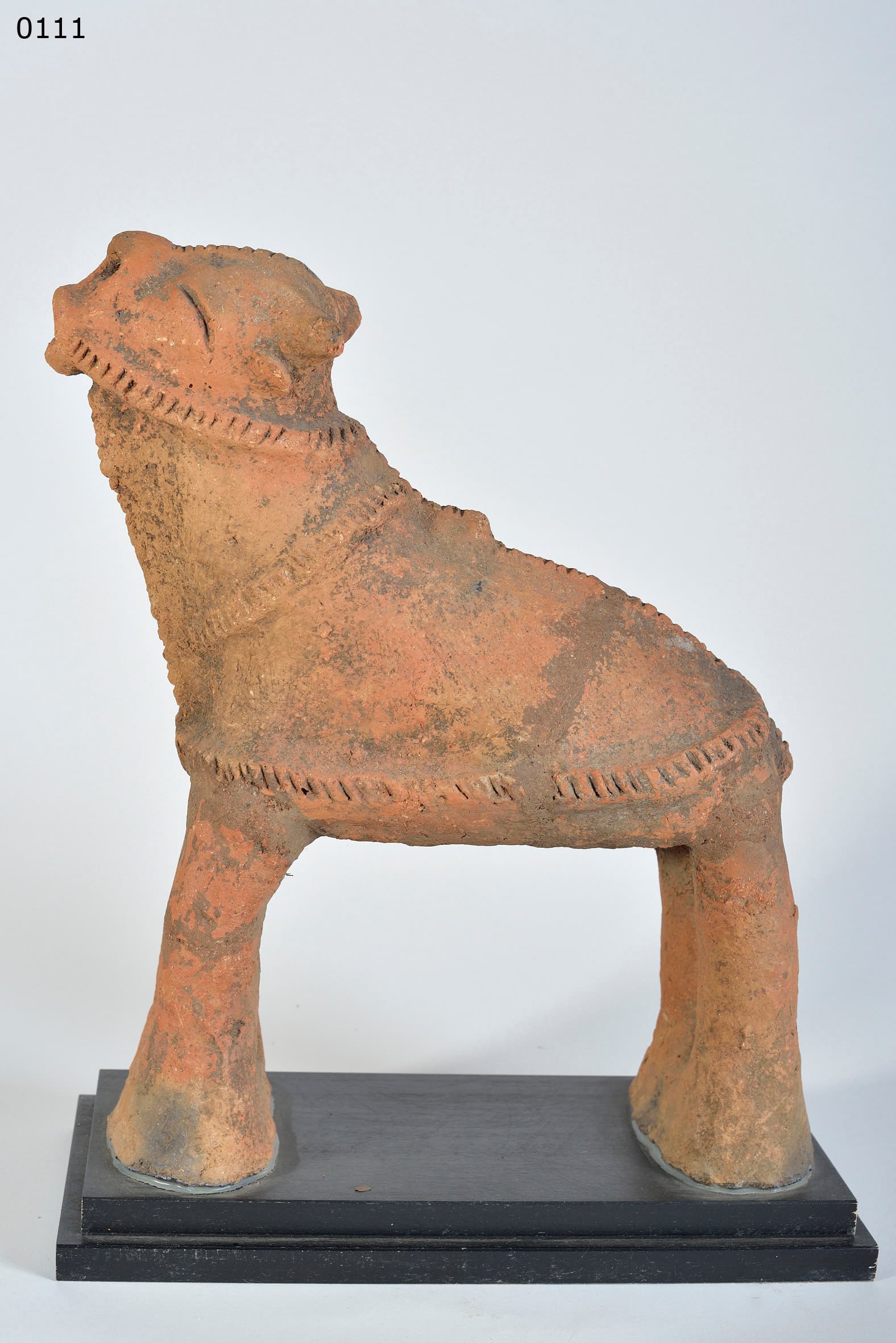
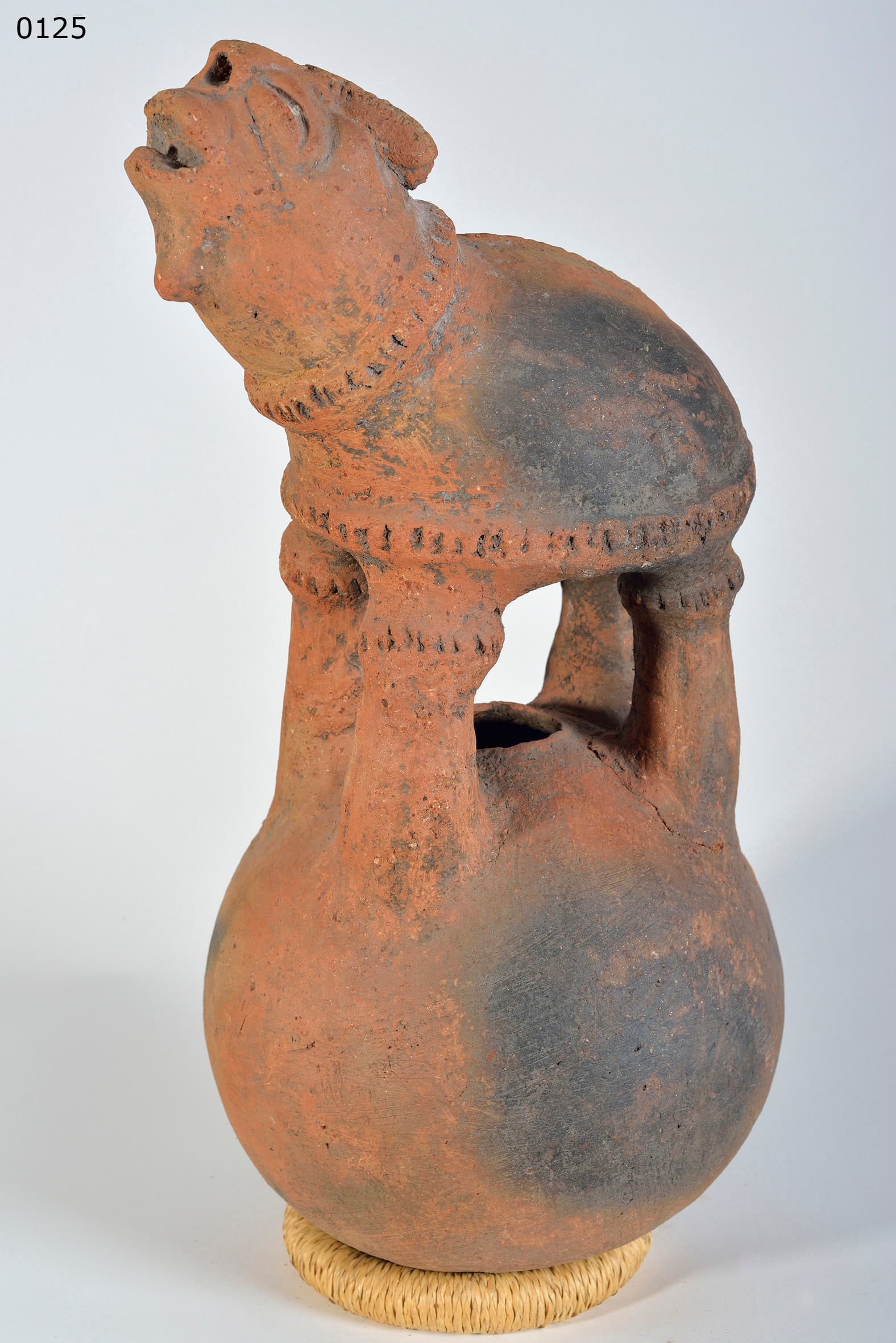
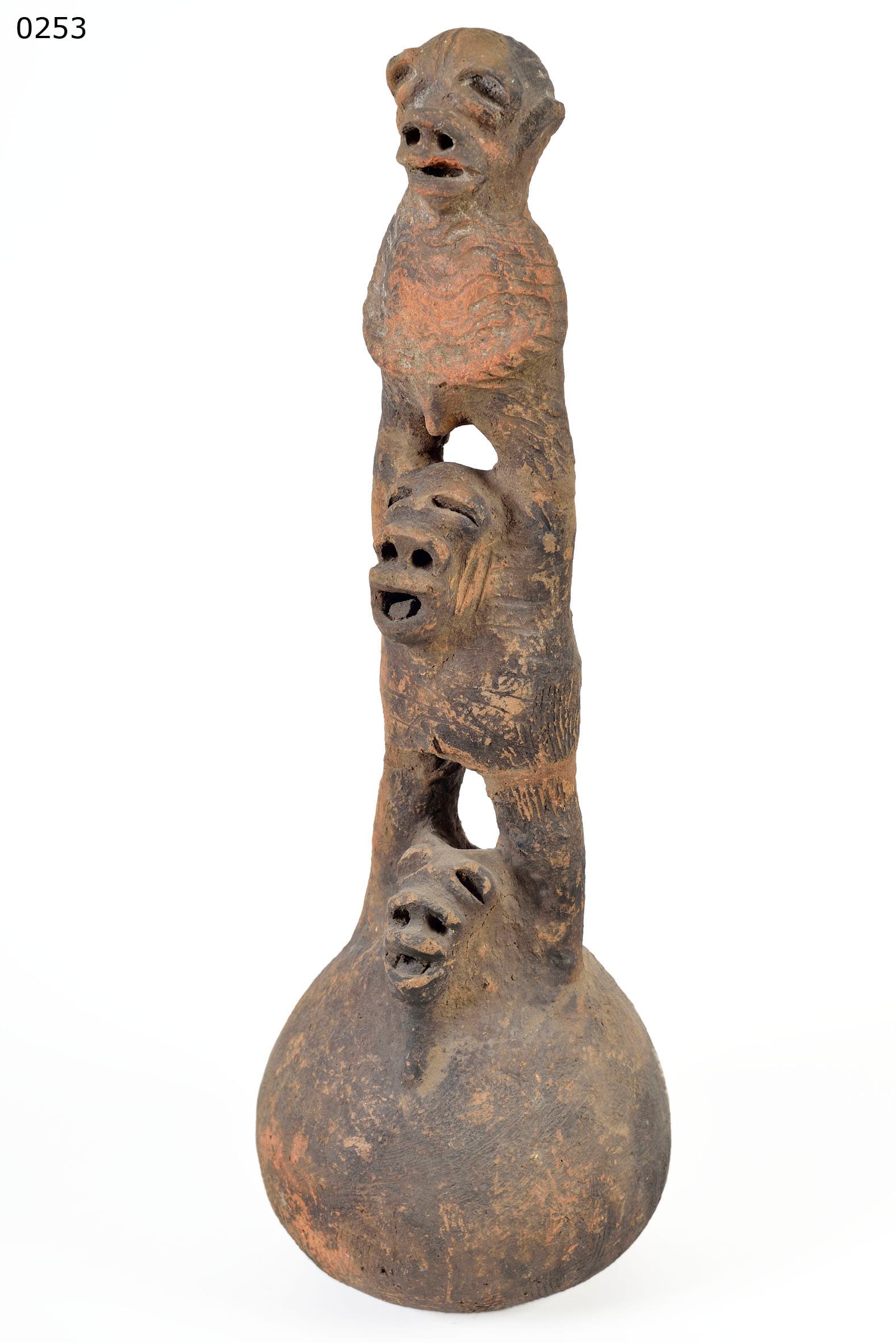
Ein komplexes, scheibenförmiges Terrakotta-Grabmal (17.-19. Jh., 69 cm) von den Dakakari in Nigeria - eine flache, haloartige Scheibe, die eine zentrale Figur umgibt, die auf einer kugelförmigen Basis steht.
1. Die aristokratische Nekropole
Dakakari-Terrakotten waren öffentliche Standesdenkmäler, keine privaten Schreinobjekte.
- Von Frauen hergestellt, zu Ehren von Männern: Dakakari-Töpferinnen spezialisierten sich ausschließlich auf die Herstellung dieser Grabmäler für männliche Häuptlinge, Krieger und Priester.
- Oberirdisch gruppiert: Die Figur stand zusammen mit Dutzenden anderen auf dem mit Steinen ausgelegten Grabhügel einer einzigen Elite und verwandelte den Friedhof in ein skulpturales Zeugnis der Stadt.
2. Die Scheibe als spirituelles Portal
Gegenstand 116 ist weitaus esoterischer als die üblichen zoomorphen Markierungen.
- Solarer Halo: Die massive Scheibe, die die zentrale Figur umgibt, wirkt wie eine Sonne, ein Halo oder ein kosmisches Portal - ein visueller Rahmen, der die übernatürliche Verwandlung des Verstorbenen betont.
- Achsenfigur: Die zentrale stehende Figur spreizt die Scheibe und die kugelförmige Basis und vermittelt zwischen dem himmlischen Reich und der Welt der lebenden Nachkommen darunter.
3. Keramische Meisterleistung aus der Eisenzeit
Mit 69 cm ist dies ein großes und technisch anspruchsvolles Stück.
- Open-Pit-Brand: Um eine flache, hohle Scheibe dieser Größe ohne Risse durch ein offenes Lagerfeuer zu bringen, war eine außergewöhnliche Kontrolle über den Brennstoff, die Tonhärte und die Stapelung erforderlich.
- Jahrhundertelange Exposition: Die zerklüftete, verwitterte Oberfläche bestätigt, dass das Stück jahrhundertelang der Sonne, dem Wind und dem Regen in der Sahelzone ausgesetzt war, was es als Grabmonument und nicht als geschütztes Schreinobjekt ausweist.
Zusammenfassung
Diese Dakakari-Wappenfigur ist ein spektakuläres kosmisches Porträt in Ton. Durch die Kombination einer mit einem Heiligenschein versehenen Scheibe mit einem stehenden Ahnen verwandelt sie das Grab in eine permanente kosmologische Karte - ein ewiges Zeugnis für die darunter begrabene Elite.
KI-unterstützt erstellt aus Sammlungsgutachten, Objektfotografie und eigener Recherche, redaktionell geprüft. Fehler sind möglich — Hinweise darauf sind uns willkommen. Zum Verfahren →