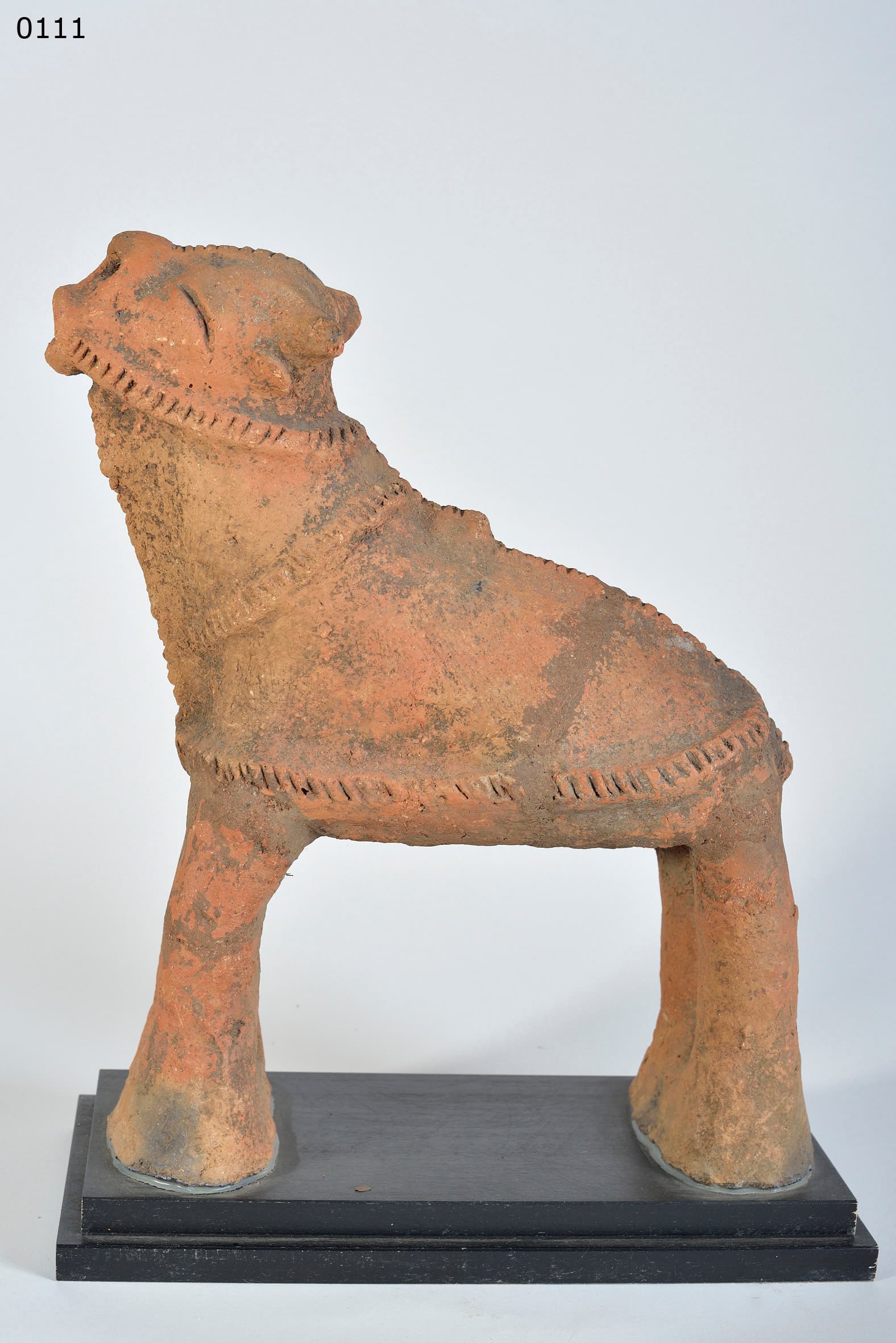
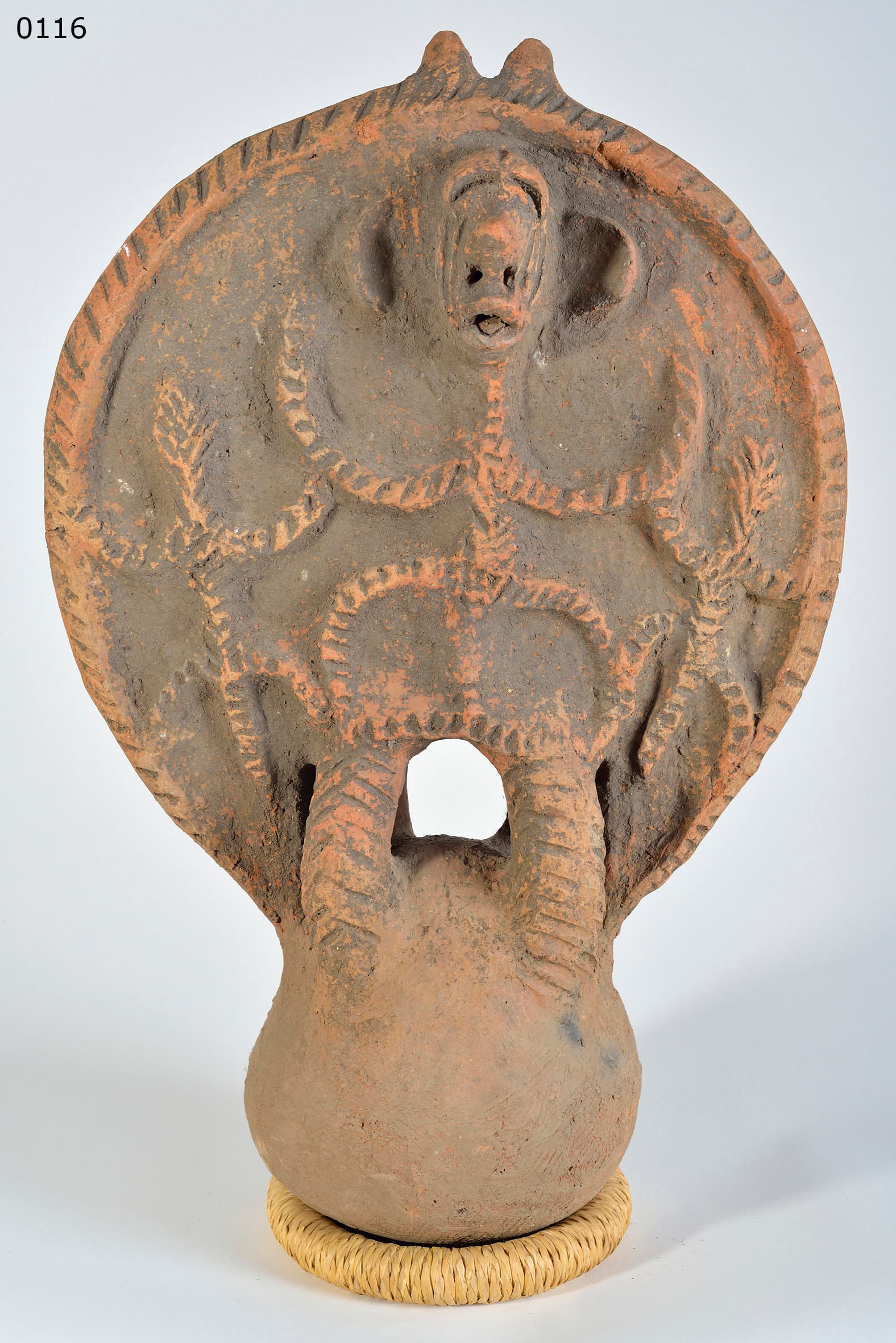
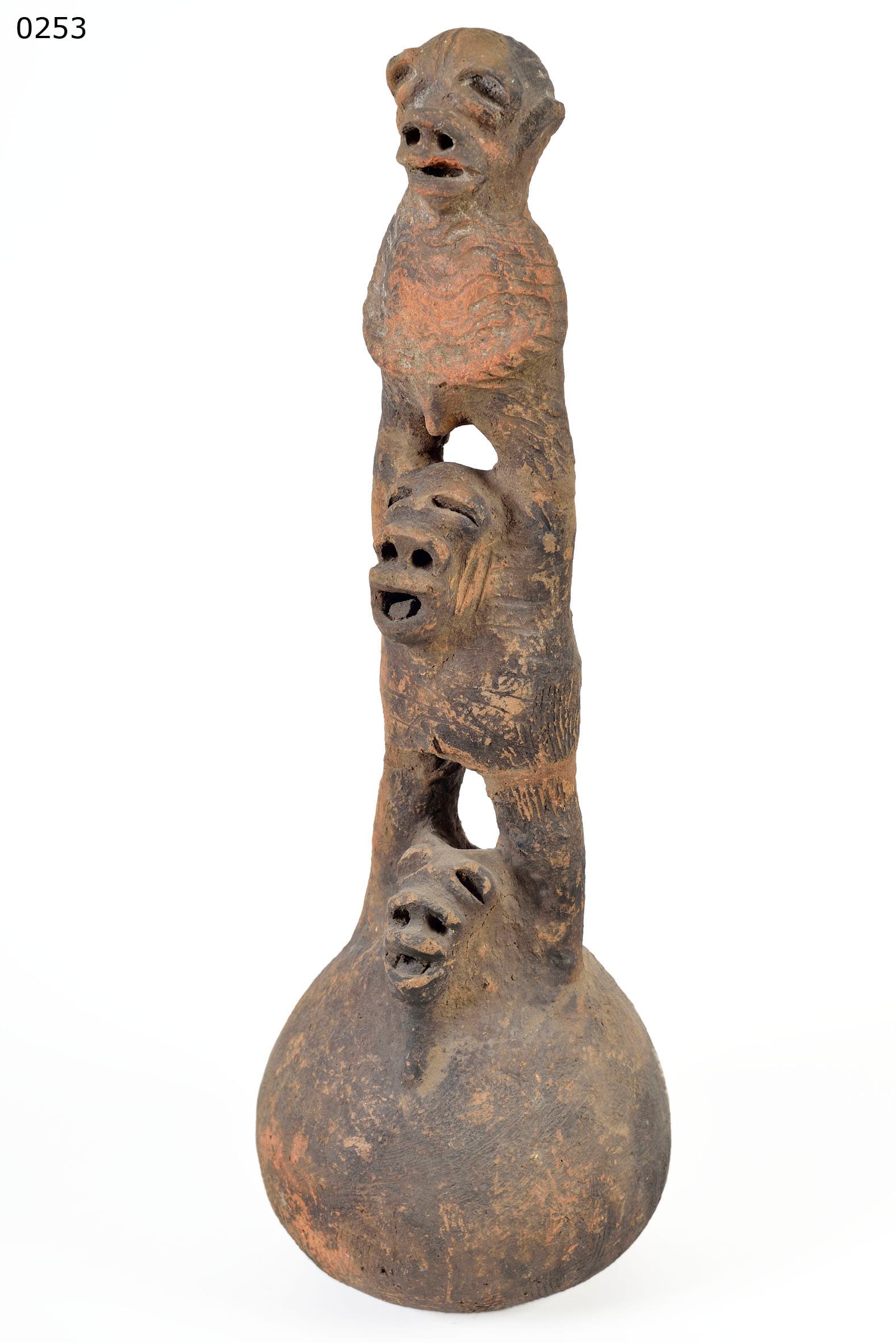
Großes Terrakotta-Grabmal (17.-19. Jh., 62 cm) von den Dakakari in Nigeria - ein massiver, kugelförmiger Sockel, auf dem ein stilisiertes, röhrenförmiges vierbeiniges Tier steht.
1. Das Grabmonument
Die Dakakari im Nordwesten Nigerias kennzeichneten Elitegräber mit monumentalen hohlen Terrakotta-Skulpturen.
- Töpfermeisterinnen: Die Skulpturen wurden ausschließlich von Töpferinnen hergestellt und waren dem Gedenken an männliche Krieger und Häuptlinge gewidmet.
- Auf dem Grabhügel: Die Skulpturen wurden direkt auf den mit Steinen ausgelegten Grabhügeln der kommunalen Friedhöfe aufgestellt. Die hohle, kugelförmige Basis verankerte die Figur in der Erde und ermöglichte dem Geist ein Entweichen.
2. Zoomorpher Reichtum
Das stilisierte Tier auf dem Sockel steht für den aristokratischen Status.
- Pferd oder Stier: Der röhrenförmige Vierbeiner stellt höchstwahrscheinlich ein Reit- oder Lasttier dar.
- Militärische und wirtschaftliche Macht: In der Sahelzone galt der Besitz eines solchen Tieres als ein wichtiges Zeichen für Reichtum und den Rang eines Kriegers - ein solches Tier dauerhaft auf dem Grab zu platzieren, sollte den Status des Verstorbenen überdauern lassen.
3. Die Feuerprobe
Mit einer Länge von 62 cm und einem komplexen, mehrschichtigen Hohlkörper war dieses Stück enorm schwierig zu schießen.
- Bruchgefahr: Eingeschlossene Luft oder ungleichmäßige Hitze in einem offenen Lagerfeuer hätten die Wände zerspringen lassen.
- Technischer Triumph: Sein unversehrtes Überleben spricht für das ausgeprägte thermodynamische Wissen der Dakakari-Töpferinnen.
Zusammenfassung
Diese Dakakari-Terrakotta ist ein eindrucksvolles Denkmal der nigerianischen Aristokratie. Sie stammt aus dem 17. bis 19. Jahrhundert und verwendet robuste, hohle, zoomorphe Bilder, um den Reichtum und den Status eines gefallenen Kriegers dauerhaft zu markieren.
KI-unterstützt erstellt aus Sammlungsgutachten, Objektfotografie und eigener Recherche, redaktionell geprüft. Fehler sind möglich — Hinweise darauf sind uns willkommen. Zum Verfahren →