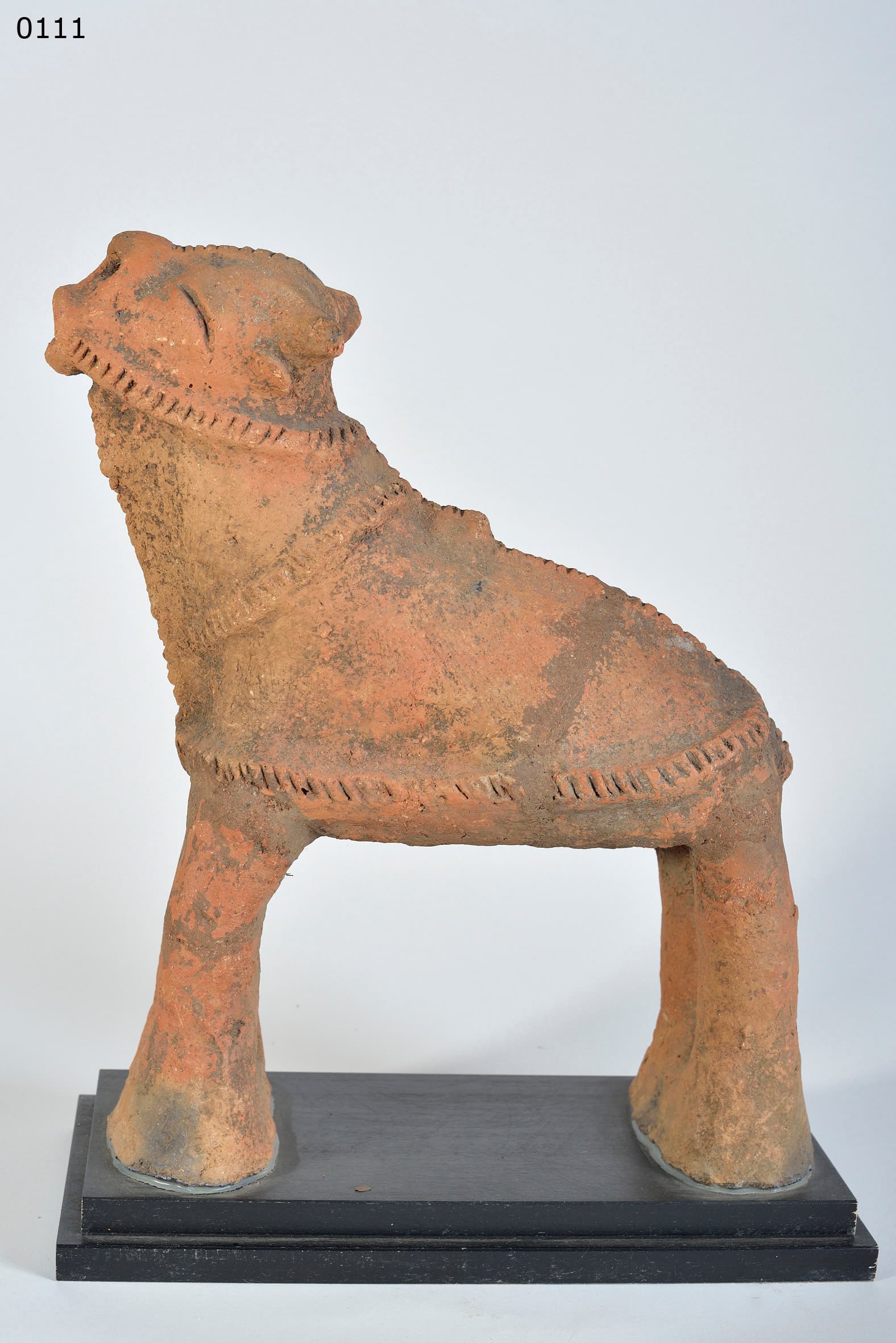
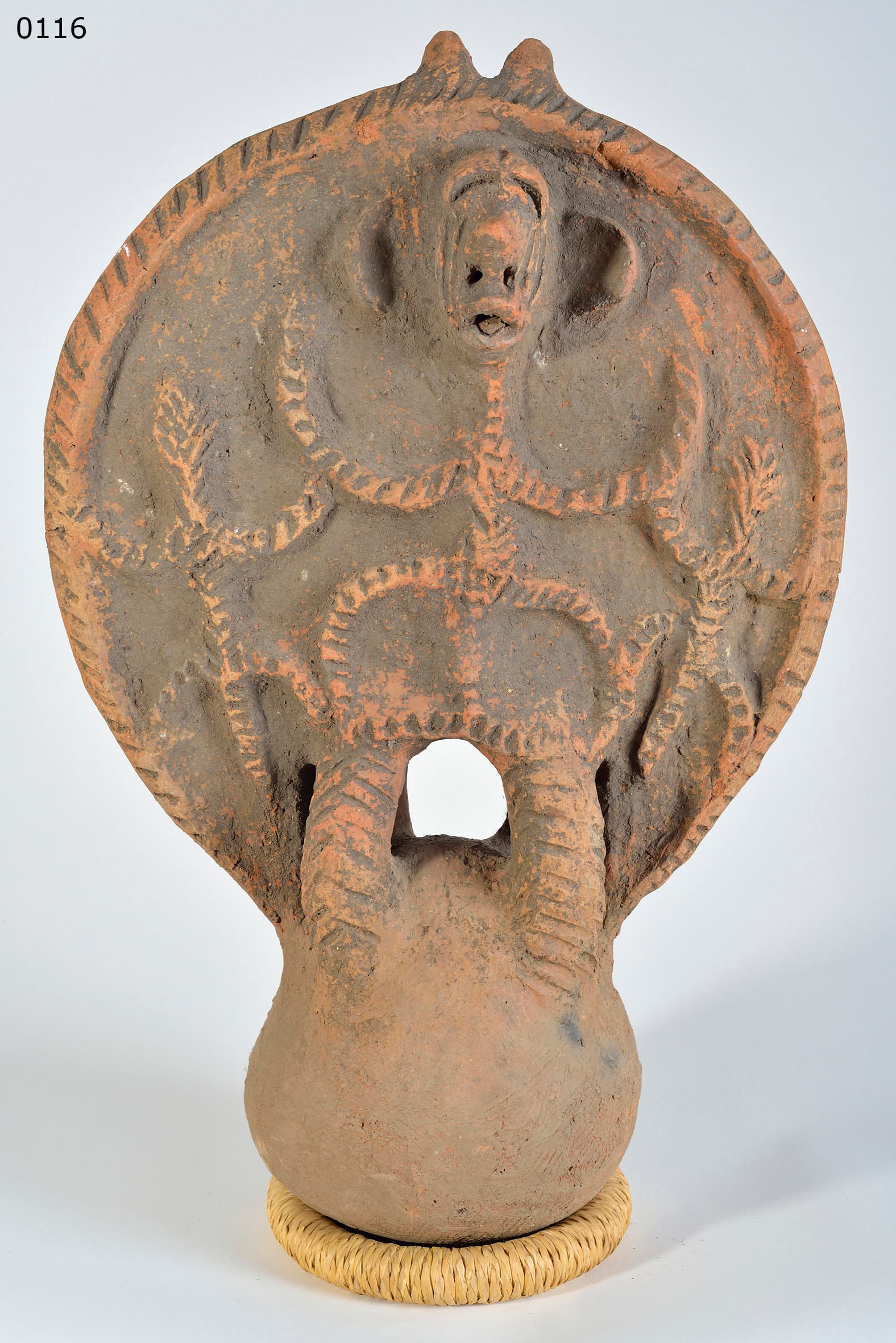
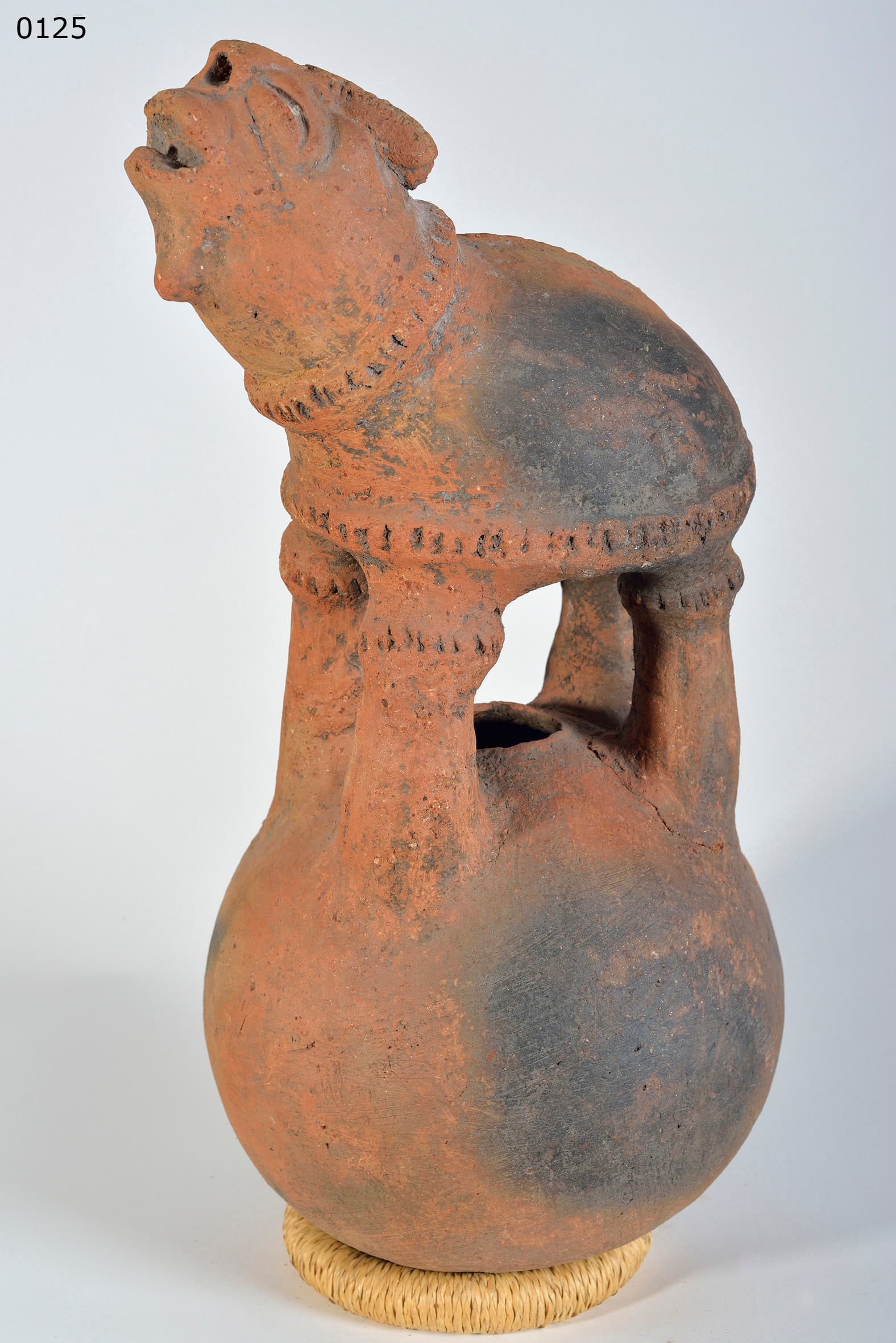
Ein außerordentlich komplexes Dakakari-Terrakotta-Gefäß (wohl 17.–19. Jh., 74 cm) aus Nigeria – eine kugelförmige Basis, die von einem hoch aufragenden, gestapelten Überbau aus ineinandergreifenden menschlichen und zoomorphen Formen überragt wird. Der gebrannte Ton ist dunkel, stark strukturiert und weist Krusten auf, die auf Erde und Opfergaben zurückgeführt werden können.
1. Architektonische Komplexität in der Dakakari-Keramik
Das Volk der Dakakari (oder Dakarkari) im Nordwesten Nigerias ist in der Literatur für die Herstellung kunstvoller Grabmonumente bekannt, die traditionell von spezialisierten Töpferinnen gefertigt wurden.
- Towering Totem: Dieses Stück zeigt eine totemähnliche Komplexität – mehrere Figuren, die in einer komplizierten keramischen Konstruktion gestapelt sind.
- Zerbrechlichkeit herausfordernd: Die Komposition scheint die inhärente Zerbrechlichkeit von Ton herauszufordern und schafft ein repräsentatives Objekt, das traditionell dem sozialen Prestige sowie dem Ansehen des Auftraggebers diente.
2. Grabwächter und das Leben nach dem Tod
Diese verzierten Gefäße, die den Gräbern der Elite zugeordnet werden, dienten traditionell als sichtbare Zeichen des Status und symbolische Wächter.
- Schutzgeister: Die übereinander gestapelten Figuren werden oft als Schutzwesen interpretiert, die rituell über die Grabstätte wachen sollten.
- Ablenkende Bedrohung: Dem Glauben nach wehrten sie Gefahren ab und dienten gleichzeitig als Bezugspunkt für die Ahnenverehrung der Familie.
3. Unterirdische Verwitterung und Schreinbenutzung
Das Objekt weist eine dunkle, oxidierte, verkrustete Oberfläche auf.
- Jahrhundertelange Exposition: Die tief zerfurchte Oberfläche des Tons spricht für eine längere Lagerung oder Aussetzung im Freien bzw. im Boden.
- Erdverschmolzene Vertiefungen: Blasse Erde und Sand in den Zwischenräumen der gestapelten Figuren sind mit der Oberfläche verbunden, was eine Datierung in das 17. bis 19. Jahrhundert stützt.
Zusammenfassung
Dieses hoch aufragende Dakakari-Grabgefäß gilt als ein bemerkenswertes Beispiel nigerianischer Keramikarchitektur von hoher Komplexität. Seine verwitterte, mehrschichtige skulpturale Komposition weist auf ein seltenes historisches Artefakt hin.
KI-unterstützt erstellt aus Sammlungsgutachten, Objektfotografie und eigener Recherche, redaktionell geprüft. Fehler sind möglich — Hinweise darauf sind uns willkommen. Zum Verfahren →