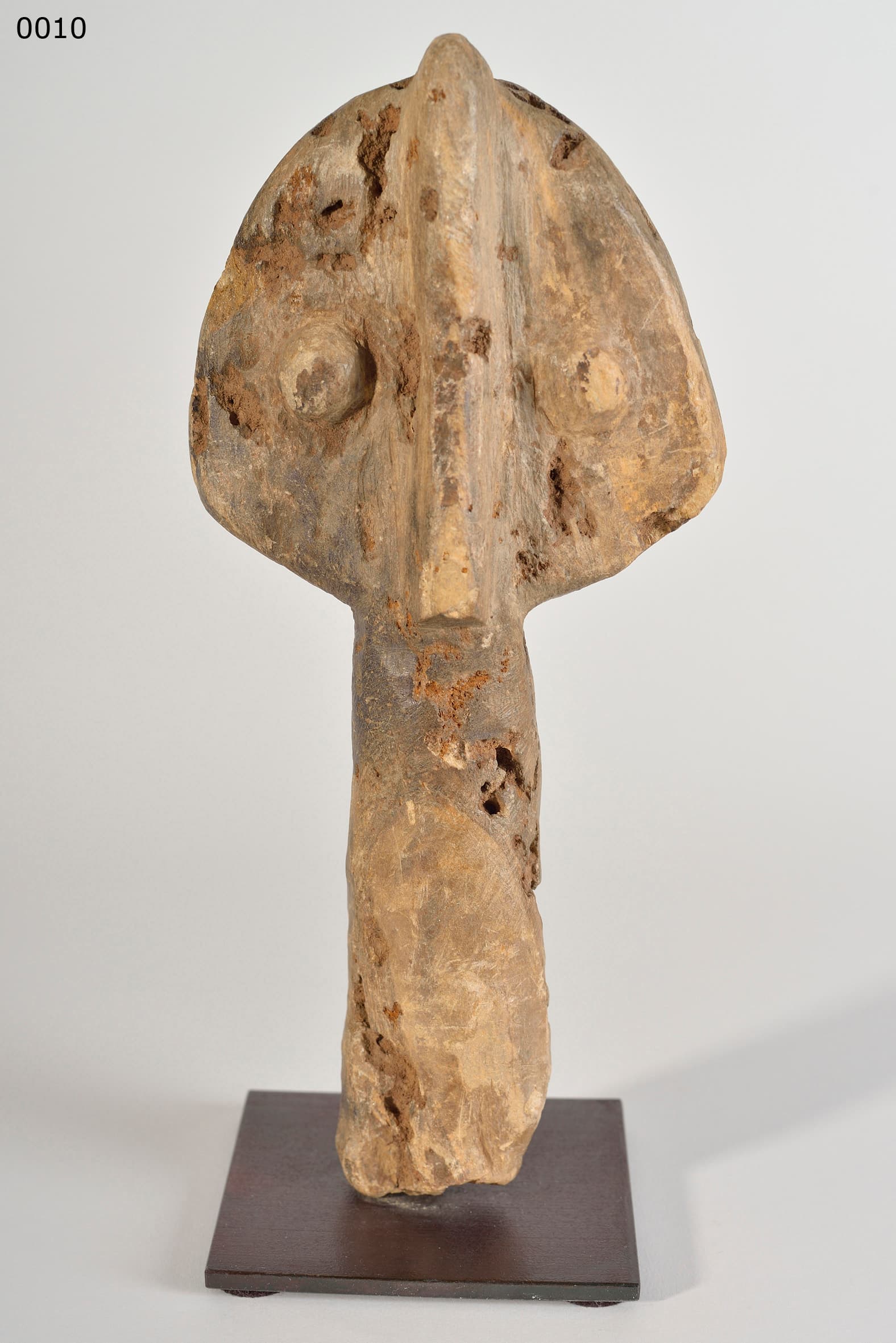
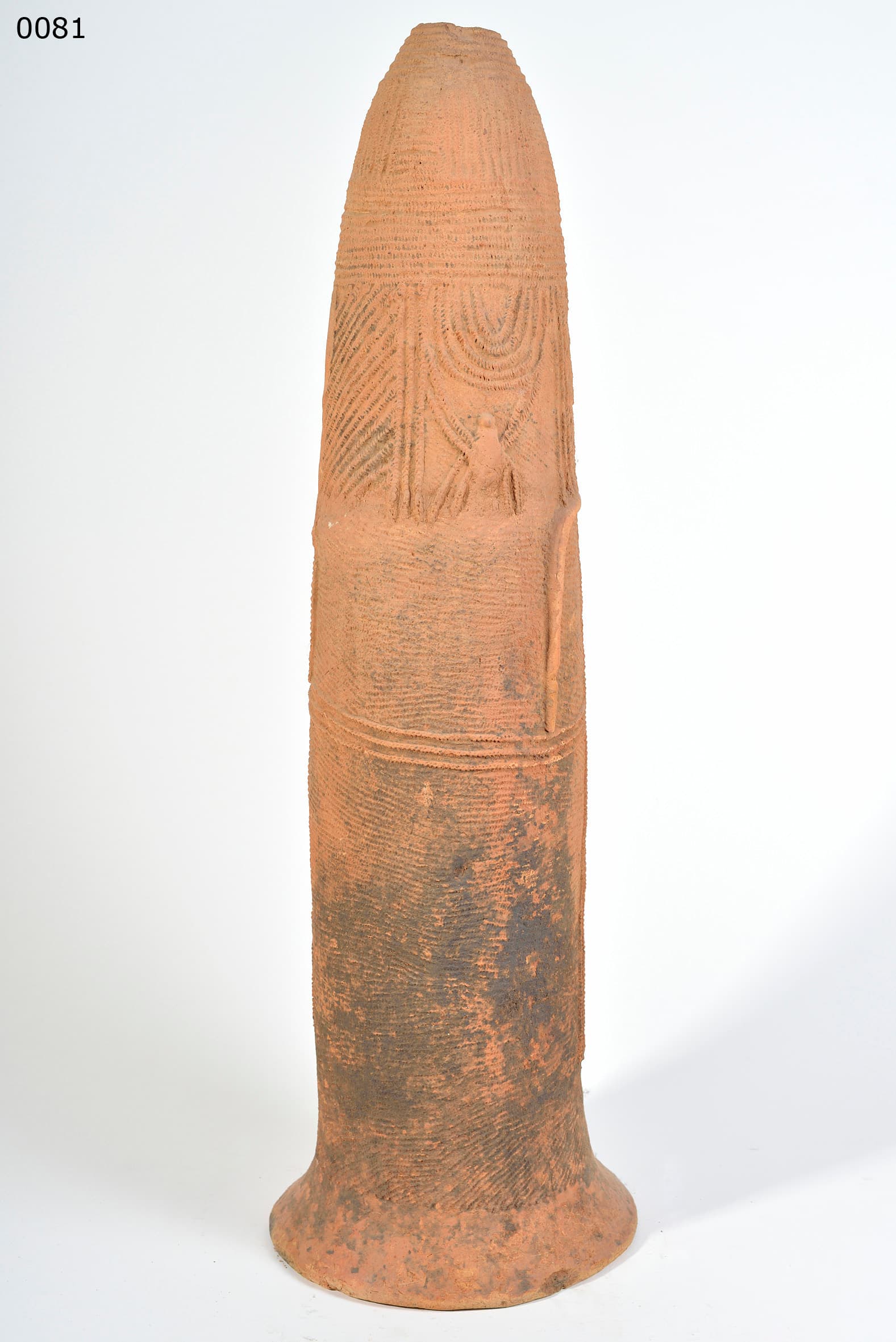
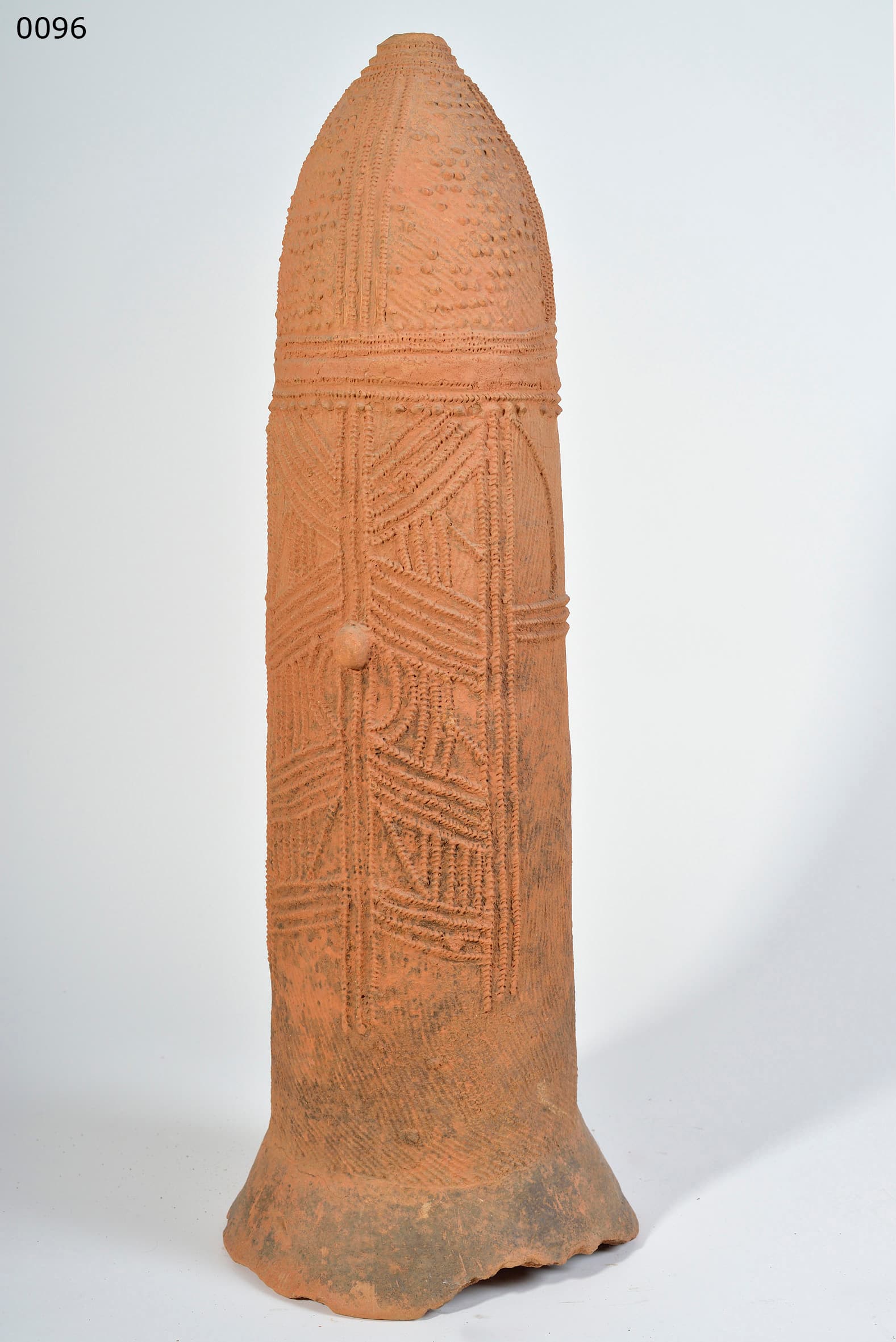
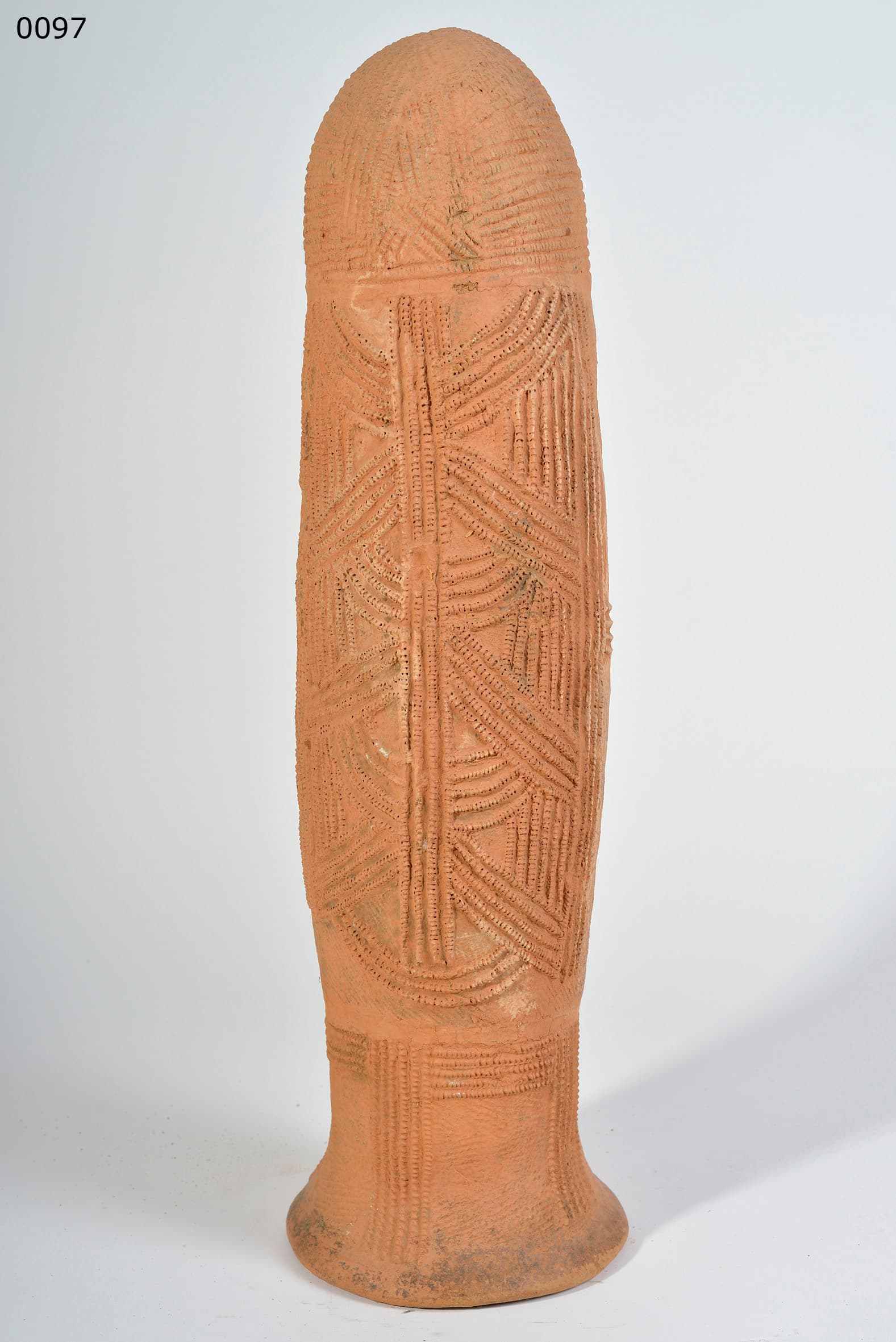
Großes Terrakotta-Grabgefäß (3.-11. Jh., 63 cm) aus Bura (Niger/Burkina Faso) - ein mit Stacheln besetzter Kopf auf einem hohlen Körper, die Arme dramatisch in den Himmel erhoben.
1. Die Nekropole von Bura und das Sekundärgrab
Dieses Gefäß gehört zur archäologischen Bura-Asinda-Sikka-Kultur (3.-11. Jahrhundert).
- Ein antiker Sarg: Die Bura praktizierten die Sekundärbestattung - nachdem das ursprüngliche Fleisch verwest war, wurden die Knochen und der Schädel in den Hohlkörper der Urne gelegt.
- Städte der Toten: Diese Urnen wurden dann gemeinsam in riesigen, stadtgroßen Nekropolen beigesetzt, die noch heute im Grenzgebiet zwischen Niger und Burkina zu finden sind.
2. Der sichtbar gemachte Vorfahre
Im Gegensatz zu den rein abstrakten phallischen Urnen der gleichen Kultur ist dieses Stück anthropomorph.
- Ein menschlicher Wächter: Der Töpfer fügte einen Kopf und Arme hinzu und verwandelte die Urne von einem Behälter in ein buchstäbliches Porträt des Wächtergeistes, der die Überreste im Inneren beschützt.
- Die mit Stacheln besetzte Krone: Die mit Stacheln besetzten Köpfe können eine aufwendige zeremonielle Frisur, Waffen oder eine übernatürliche Aggression darstellen - eine Krone, die Macht aus dem Grab ausstrahlt.
3. Die regenbetende Haltung
Die erhobenen Arme verbinden diese Figur mit einer tiefen sahelischen Bildtradition.
- Tellem- und Dogon-Parallelen: Die Geste spiegelt spätere westafrikanische Regenrufe und Gebetshaltungen wider und suggeriert einen ununterbrochenen kosmologischen Faden über ein Jahrtausend hinweg.
- Für den Himmel beten: Die in Ton eingefrorene Figur verrichtet ein ewiges Gebet im Namen des begrabenen Vorfahren - eine ständige Bitte um Regen, Fruchtbarkeit und Kontinuität.
Zusammenfassung
Diese anthropomorphe Bura-Urne ist ein spektakuläres Monument der antiken afrikanischen Archäologie. Mit einer Größe von 63 cm ist sie ein sehr persönliches Terrakotta-Grabmal, das den geheimnisvollen Bestattungspraktiken des 1. Jahrtausends ein menschliches Gesicht verleiht.
KI-unterstützt erstellt aus Sammlungsgutachten, Objektfotografie und eigener Recherche, redaktionell geprüft. Fehler sind möglich — Hinweise darauf sind uns willkommen. Zum Verfahren →