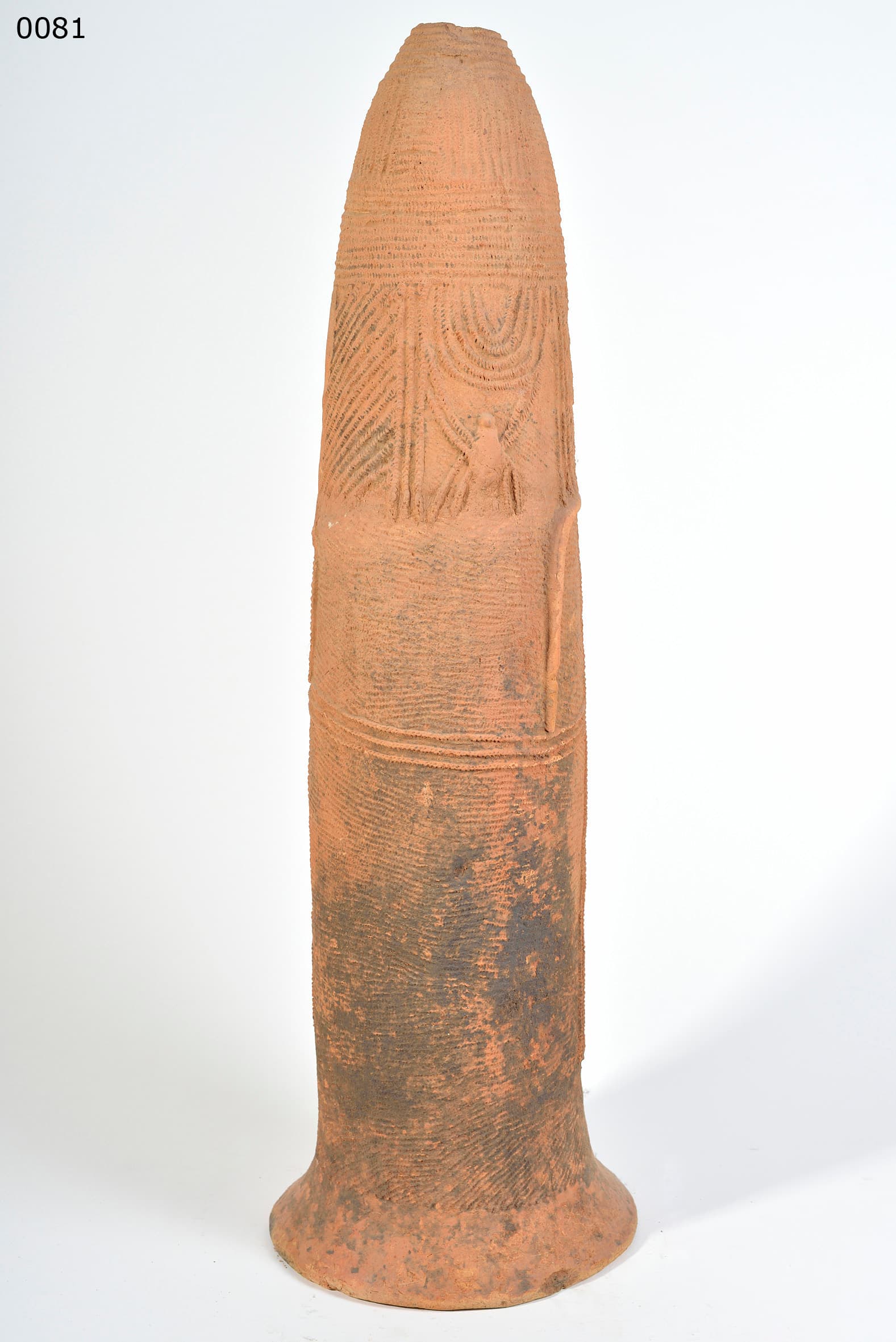
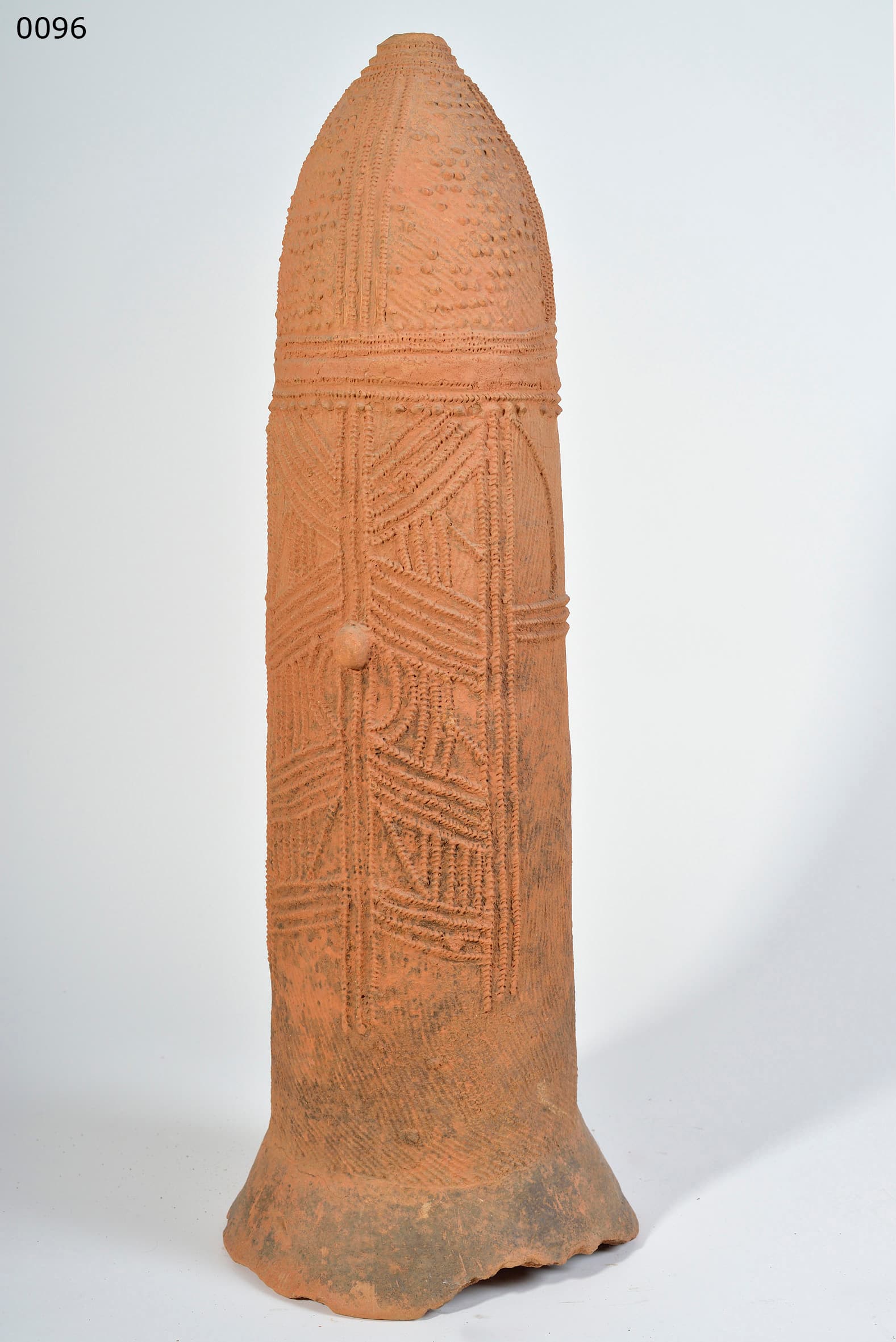
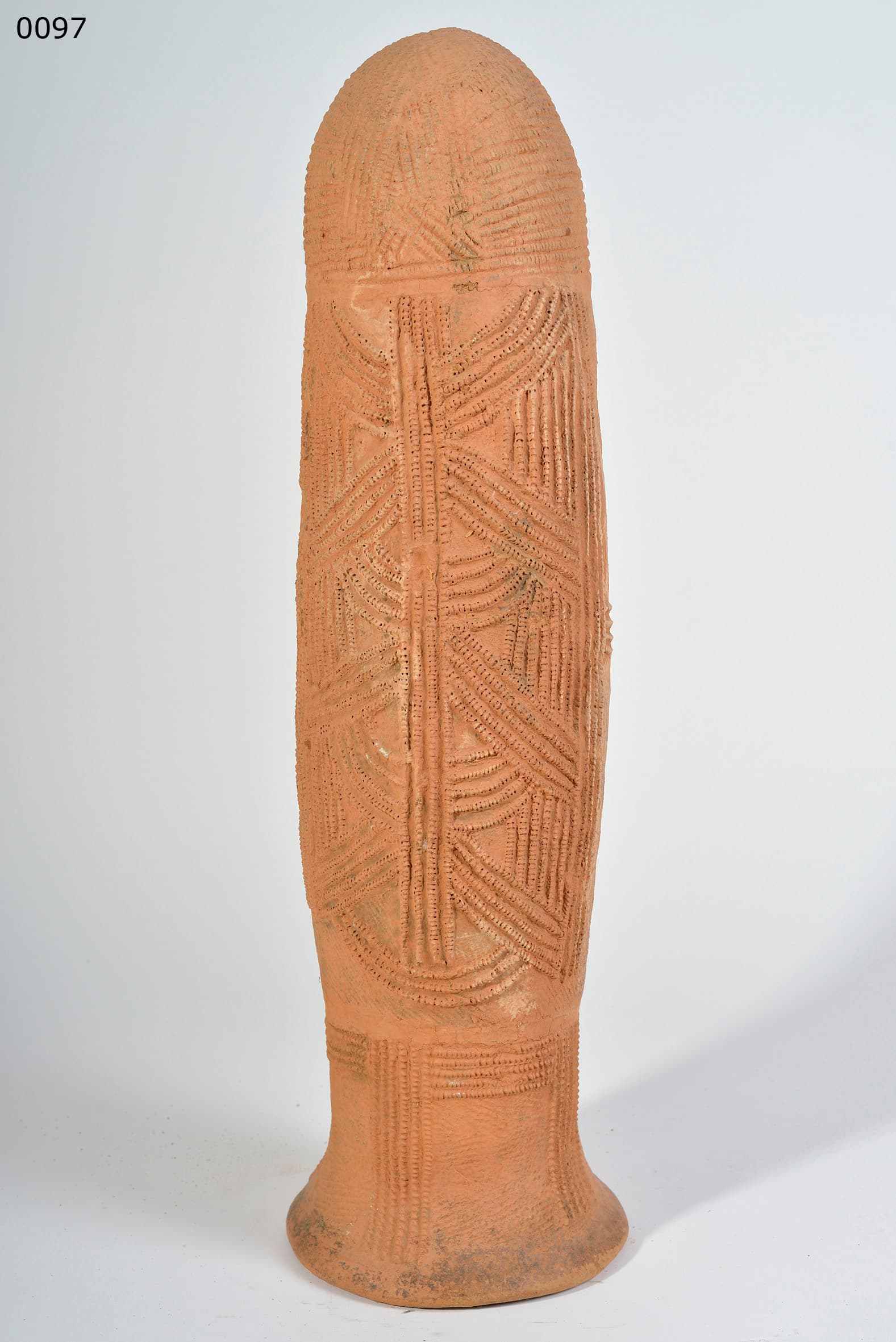
Eine hoch aufragende, kugelförmige Terrakotta-Urne (dem 3.-11. Jh. zugeschrieben, 54 cm) aus Bura in Niger/Burkina Faso - stark strukturiert mit geometrischen Linien in Rautenform, verzweigten Bogenmotiven und konzentrischen Bändern.
1. Die Symbolik der Regeneration
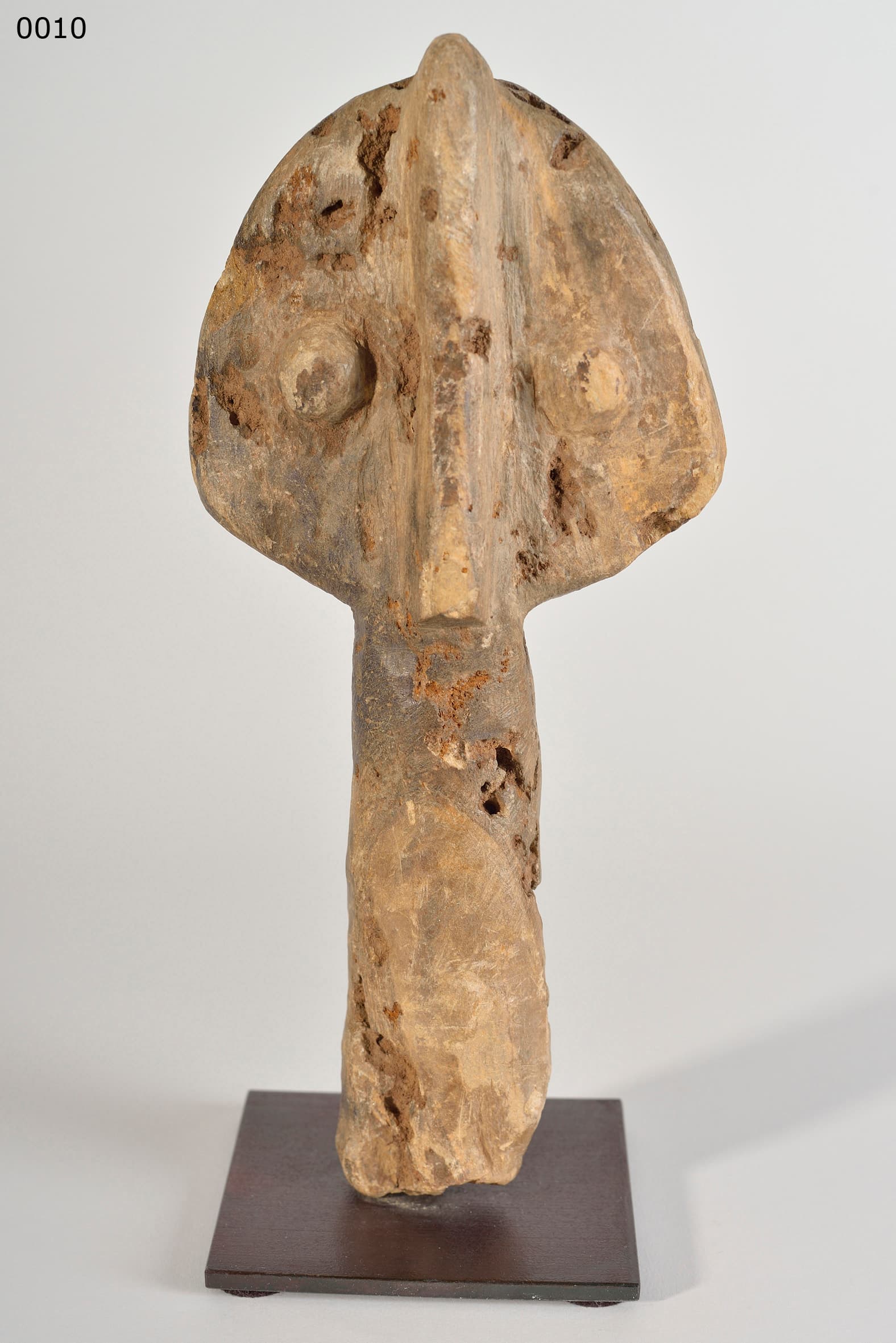
Diese Urne wird der Bura-Asinda-Sikka-Kultur zugeordnet und diente vermutlich der gleichen sekundär-bestattlichen Funktion wie die anthropomorphen Gefäße.
- Samen und Grab: In der frühen westafrikanischen Kosmologie bedeutete der Tod traditionell eine Rückkehr zur Erde im Dienste des neuen Lebens.
- Eingepflanzte Ahnen: Die Beisetzung der Verstorbenen in phallischen Gefäßen "pflanzte" symbolisch den vitalen Samen des Ahnen zurück in die Erde und sollte so die Fruchtbarkeit und das Überleben der Nachkommen sichern.
2. Die Textur der Identität
Die verschlungenen Muster werden in der Forschung oft als ein in feuchten Ton gepresstes Klanregister interpretiert.
- Roulettierte Linien: Hergestellt, indem geflochtene Fasern und geschnitzte Holzwerkzeuge vor dem Brennen über die Oberfläche gerollt wurden.
- Familiencodes: Die spezifischen Kombinationen geometrischer Bänder, Wellen und Bögen kennzeichneten vermutlich die Abstammung, den Reichtum und den sozialen Status der bestatteten Person.
3. Keramische Meisterleistungen aus der Eisenzeit
Mit 54 cm ist dies ein beachtliches dickwandiges Keramikrohr.
- Thermische Präzision: Um einen Hohlzylinder dieser Masse in einem offenen Lagerfeuer zu brennen, ohne dass er zerbricht, war eine genaue Kontrolle der Brennstoffzufuhr und der Abkühlungsgeschwindigkeit erforderlich.
- Intaktes Überleben: Das Überleben des Stücks über mehr als ein Jahrtausend spricht für hochentwickelte handwerkliche Fähigkeiten innerhalb der damaligen Gesellschaft.
Zusammenfassung
Diese phallische Urne aus Bura verbindet symbolisch Aspekte von Tod und männlicher Fruchtbarkeit. Stark verziert und sorgfältig gebrannt, stellt sie ein eindrucksvolles archäologisches Zeugnis einer im Sand der Sahelzone untergegangenen Zivilisation dar.
KI-unterstützt erstellt aus Sammlungsgutachten, Objektfotografie und eigener Recherche, redaktionell geprüft. Fehler sind möglich — Hinweise darauf sind uns willkommen. Zum Verfahren →