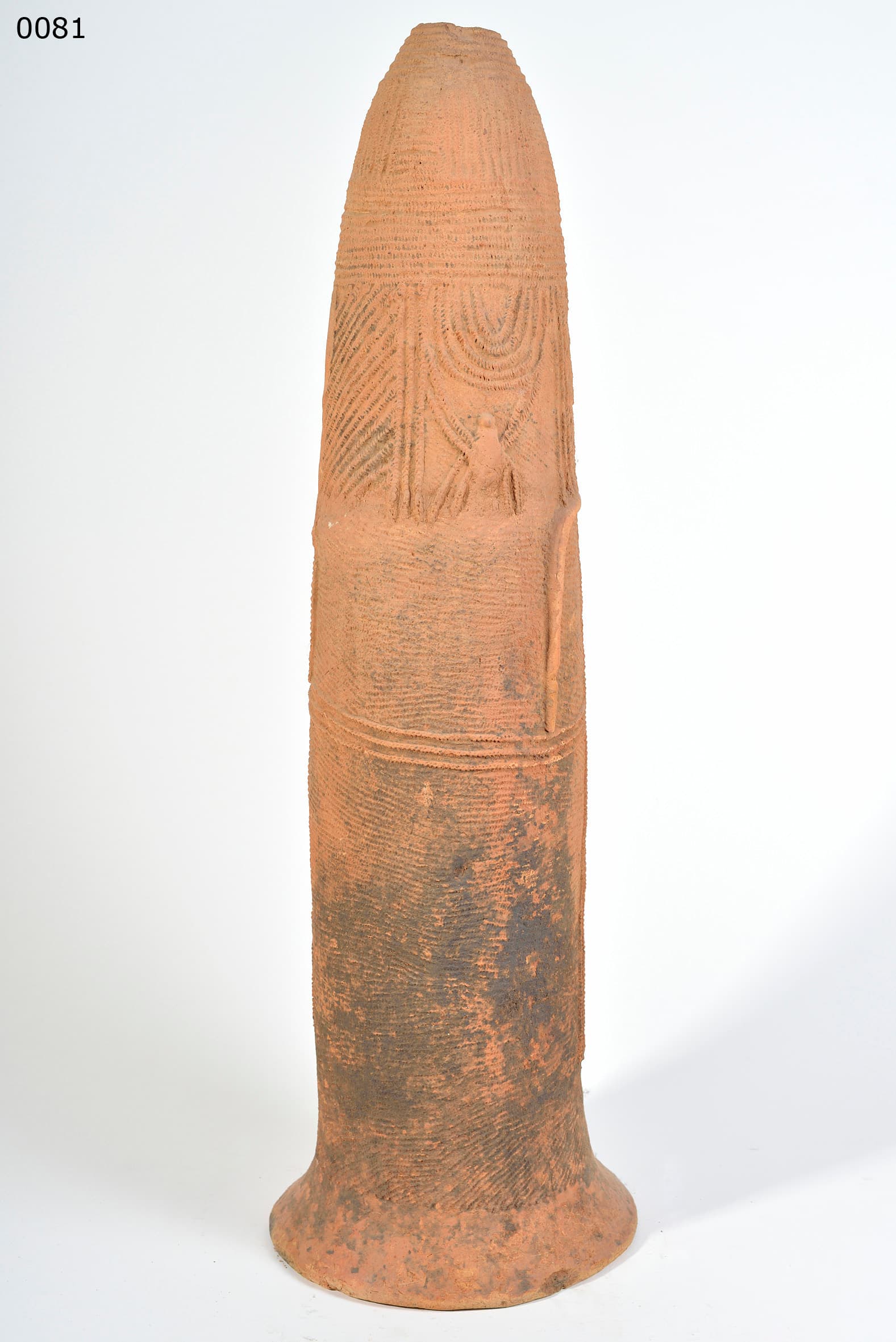
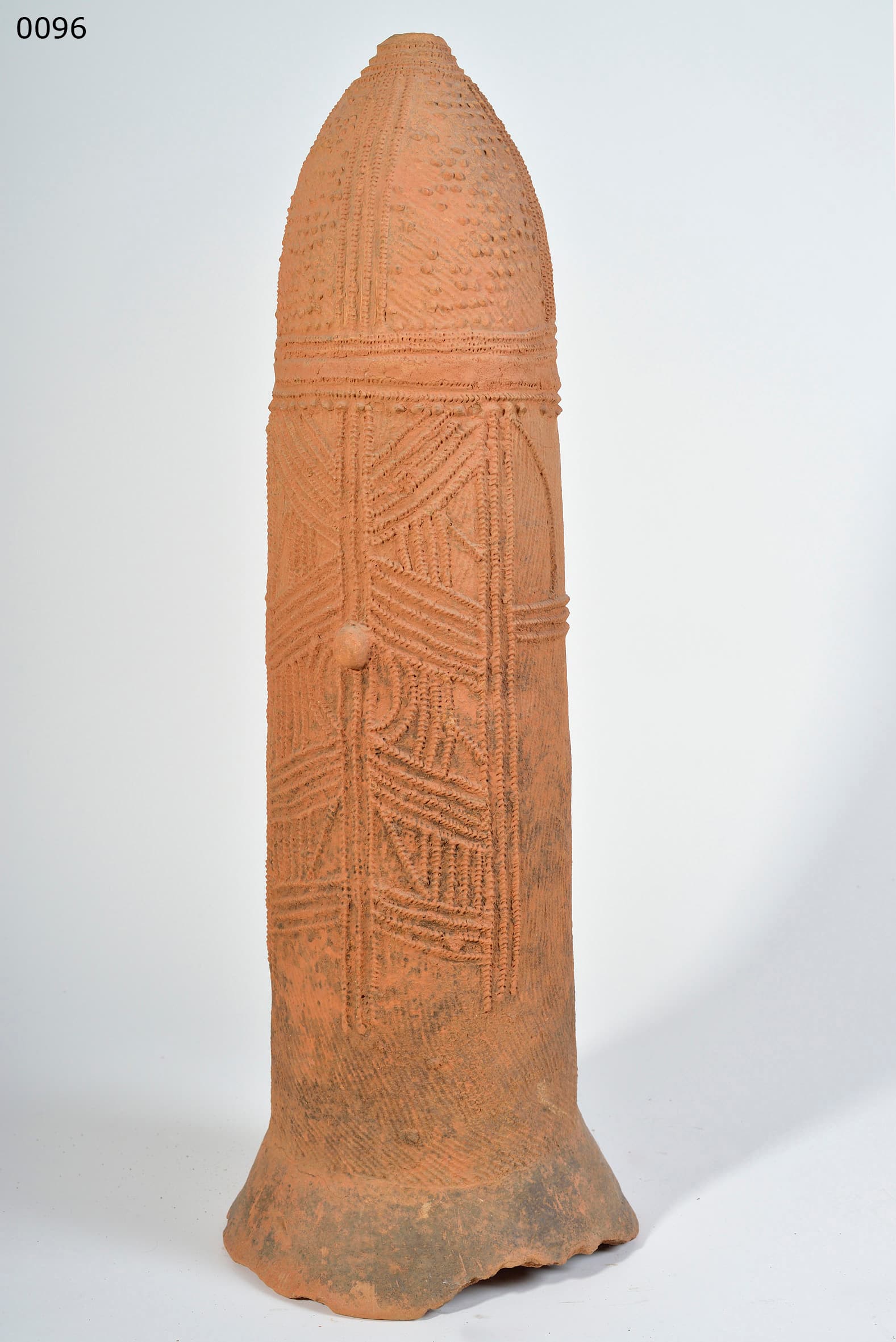
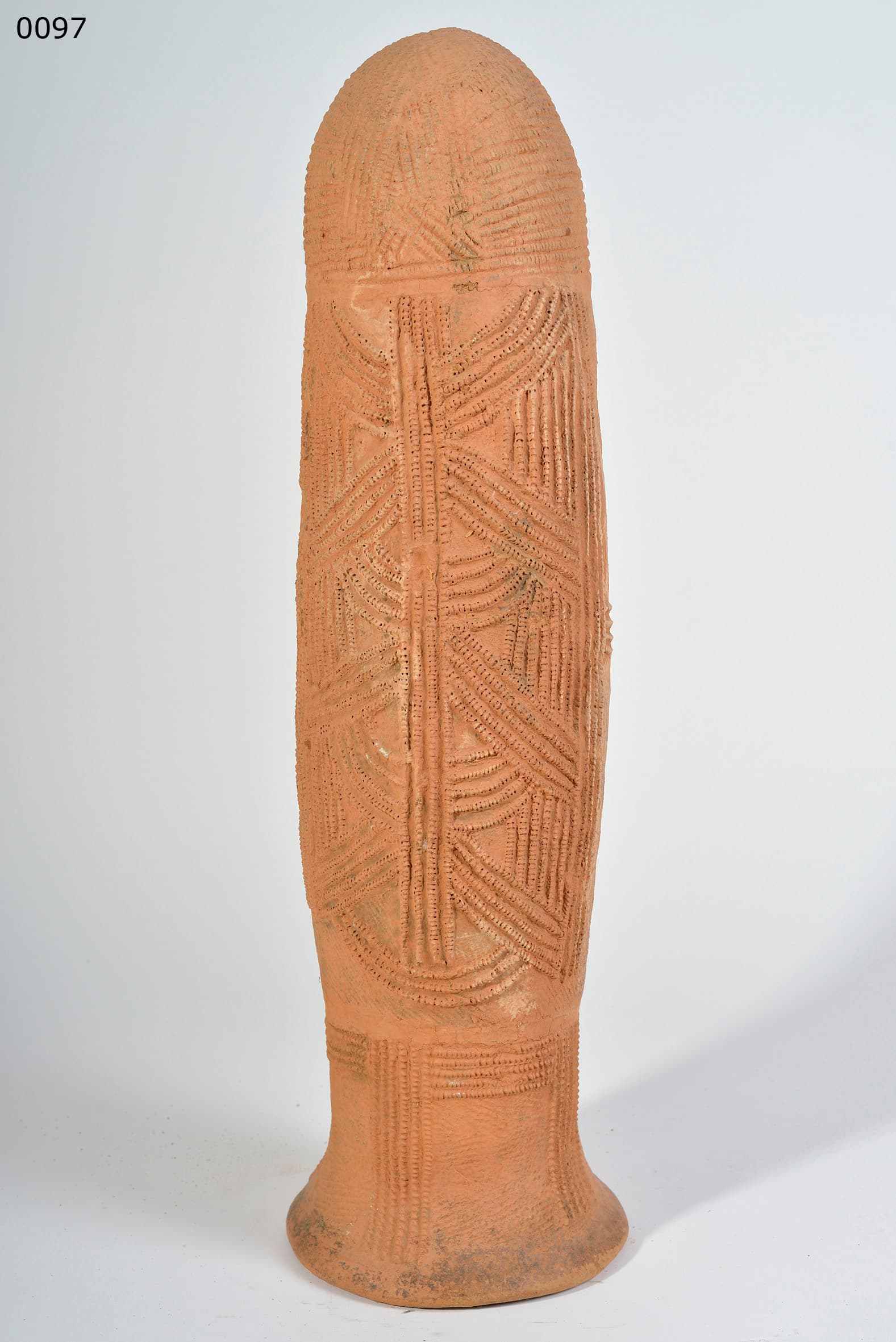
Eine monumentale kugelförmige Terrakotta-Urne (3.-11. Jh., 71 cm) aus Bura in Niger/Burkina Faso - dicht strukturiert mit roulettierten konzentrischen Bändern, verzweigten Bogenmustern und geometrischen Wellenmotiven.
1. Das größte Saatgut
Mit 71 cm ist dies eine der größeren Urnen aus dem Bura-Asinda-Sikka-Korpus.
- Größe signalisiert Status: Eine größere Urne erforderte mehr Ton, mehr Brennstoff und mehr Brennzeit - Investitionen, die vermutlich hochrangigen Linien vorbehalten waren.
- Von weitem sichtbar: Monumentale Urnen verankerten die wichtigsten Abschnitte der Nekropole und dienten als Wahrzeichen für die Gräber der Gründungseliten.
2. Ein dichteres Register
Die Oberflächenverzierung dieses Stücks ist besonders aufwändig.
- Gestapelte Bänder: Mehrere konzentrische Register mit Rautentextur werden in der Literatur mit unterschiedlichen Stammeszugehörigkeiten und rituellen Leistungen verbunden.
- Bögen als Architektur: Die verzweigten Bogenmotive wurden als stilisierte Darstellungen von heiligen Zufluchtsorten oder Clan-Verbindungen interpretiert - sie drücken die gesamte gebaute Welt des Verstorbenen auf das Gefäß.
3. Überleben über ein Jahrtausend hinweg
Das Brennen von dickwandigen Keramikgefäßen dieser Größenordnung ist eine der großen technischen Errungenschaften der afrikanischen Archäologie.
- Strukturelle Herausforderung: Die hohe, schmale Form ist anfällig für Risse durch ungleichmäßige Hitze; nur eine erfahrene Zunft konnte sie zuverlässig herstellen.
- Begraben und konserviert: Da die Urne mehr als tausend Jahre lang unter der Erde der Sahelzone vergraben war, spricht ihr unversehrtes Überleben für die technische Meisterschaft der Töpfer von Bura.
Zusammenfassung
Diese monumentale phallische Bura-Urne zeigt eine der dichtesten und aufwändigsten Formen dieser Tradition. Ihr Ausmaß, ihre komplexe Verzierung und ihr Erhaltungszustand legen nahe, dass sie als Grabmal für eine Persönlichkeit von hohem Rang diente - ein hoch aufragendes Tonsaatgut, das in die sahelische Erde gepflanzt wurde.
KI-unterstützt erstellt aus Sammlungsgutachten, Objektfotografie und eigener Recherche, redaktionell geprüft. Fehler sind möglich — Hinweise darauf sind uns willkommen. Zum Verfahren →