Eine tief verkrustete Holzschnitzerei (85 cm), die dem 19. Jahrhundert zugeordnet wird, aus dem Kulturkreis der Fon der Republik Benin - ein Affe, der hinter einem kleinen ausgehöhlten Topf sitzt, die Hände zum Mund erhoben, die Oberfläche dick mit Opferpatina.
1. Der Affe im Vodun und im Fa
In der Fon-Kultur hat der Affe eine besondere rituelle Bedeutung.
- Messenger-Spezies: Affen werden mit dem Wahrsagesystem des Fa und mit bestimmten Vodun-Gottheiten wie Gbadu in Verbindung gebracht.
- Grenzgänger: Die menschenähnliche Geschicklichkeit des Affen macht ihn zu einem idealen spirituellen Vermittler, der zwischen dem wilden Wald und dem zivilisierten Dorf hin- und herlaufen kann, um den Göttern Bitten zu überbringen.
2. Das Gefäß der Macht
Diese Figur ist funktional gestaltet.
- Integrale Schale: Der Affe sitzt direkt hinter einem geschnitzten, ausgehöhlten Gefäß, das an demselben Holzblock befestigt ist.
- Halter der Medizin: Die Schale enthält bo (magische Medizin), Opfergaben und Kolanüsse - wobei der Affe als symbolischer Wächter fungiert, der unbefugte Eingriffe in den rituellen Inhalt verhindern soll.
3. Opferpatina, die dem 19. Jahrhundert zugeordnet wird
Mit ihren 85 cm trägt diese Figur eine ausgeprägte rituelle Geschichte auf ihrer Oberfläche.
- Schichtweise Fütterungen: Die dicke, krustige Patina verweist auf eine Geschichte von rituellen Blut-, Palmöl- und Alkoholtrankopfern.
- Rohstoffakkumulator: Im Gegensatz zur polierten Eleganz der Baule-Stücke schätzt die Fon-Ästhetik Kruste und Ablagerungen - eine dichte Oberfläche gilt im rituellen Kontext als Zeichen für eine stärkere spirituelle Kraft des Objekts.
Zusammenfassung
Diese Fon-Affenfigur ist ein Altarobjekt, das dem 19. Jahrhundert zugeschrieben wird. Sie verbindet zoomorphes Wächteramt mit rituellem Nutzen und dient als traditionelles Gefäß für die im beninischen Vodun verwendeten Substanzen.
KI-unterstützt erstellt aus Sammlungsgutachten, Objektfotografie und eigener Recherche, redaktionell geprüft. Fehler sind möglich — Hinweise darauf sind uns willkommen. Zum Verfahren →

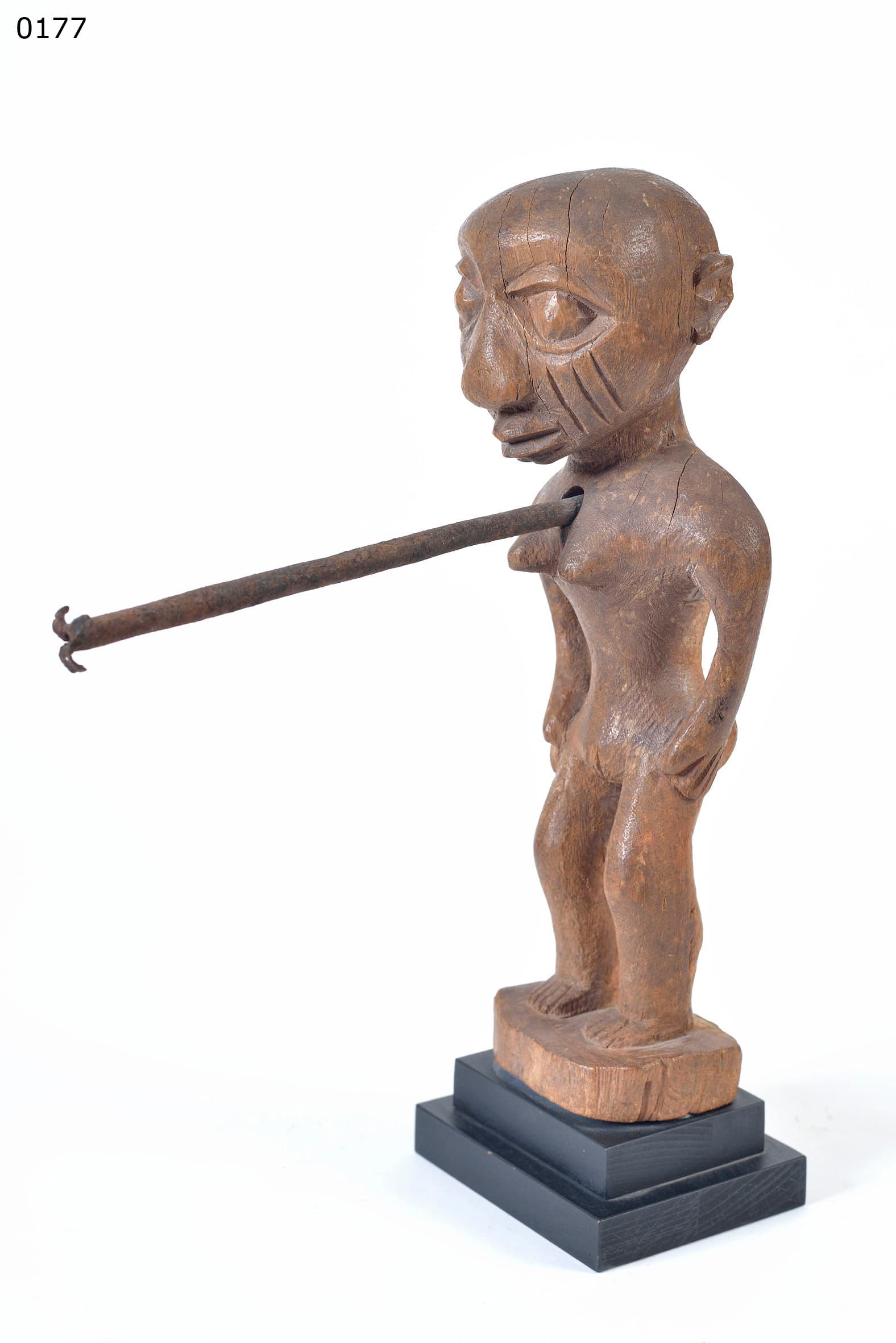
Seltene Kraftfigur (verwendet in VOODOO-Zeremonien)
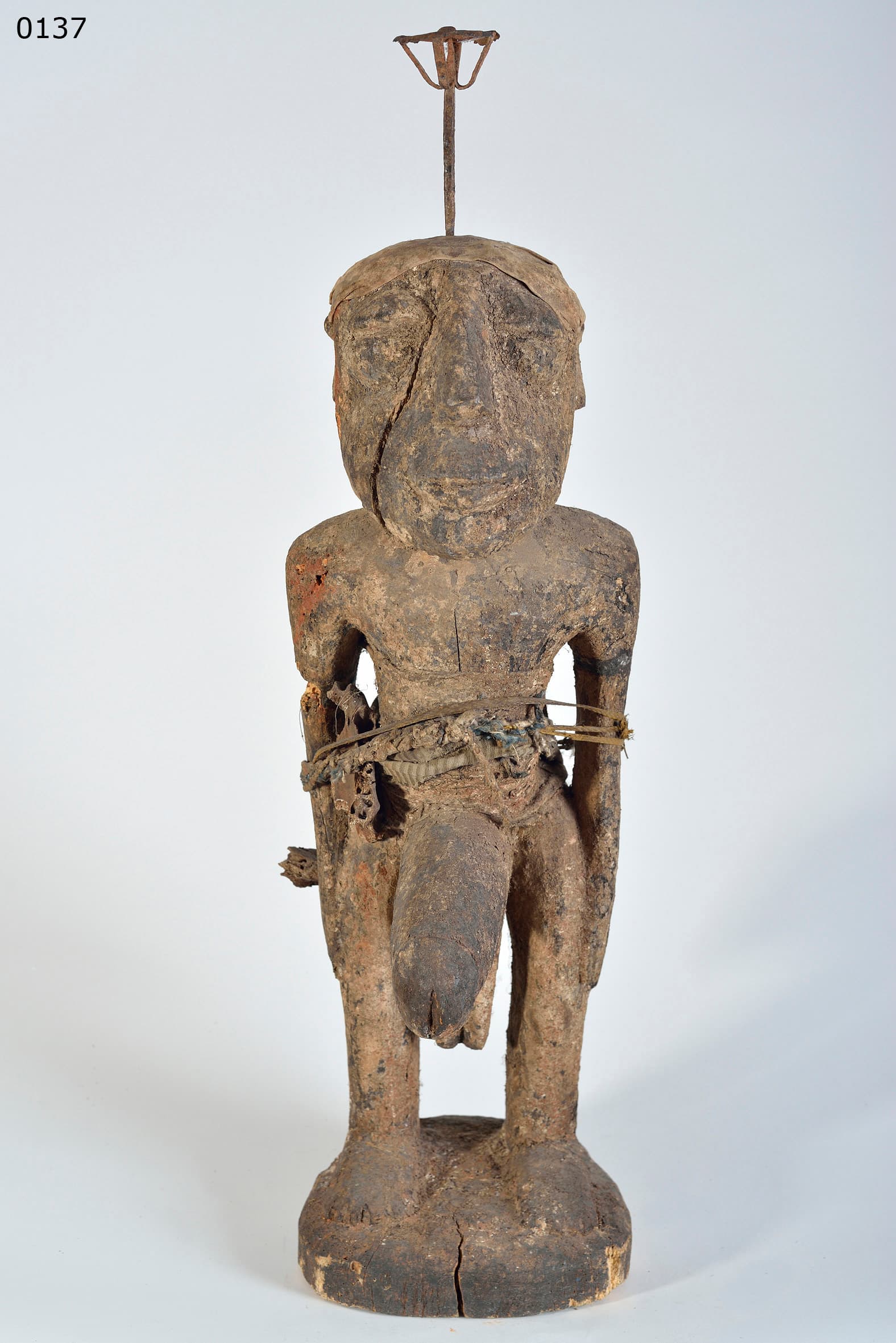
BOCIO-Statue (wird bei Voodoo-Zeremonien verwendet)

BOCIO männliche Figur