Ein horizontales hölzernes Türschloss (48 cm) aus dem 19. Jahrhundert aus der Fon der Republik Benin - ein rudimentärer Querriegelmechanismus, aus dem eine vereinfachte, stark verwitterte menschliche Büste vertikal herausragt. Das Holz ist stark gealtert, mit tiefer struktureller Oxidation und einer trockenen, verkrusteten Patina.
1. Animismus in der häuslichen Architektur
In der Fon-Kultur ist die Schwelle des Hauses eine hochsensible Grenze, die sowohl physische als auch spirituelle Sicherheit erfordert.
- Schwelle als spirituelles Tor: Die Integration einer anthropomorphen Figur in den Türschlossmechanismus verwandelt einen Gebrauchsgegenstand in einen aktiven Schutztalisman.
- Wächter: Die Figur ist mit Vodun-Energien durchdrungen, um bösartige Kräfte, Hexen und physische Eindringlinge daran zu hindern, in den privaten häuslichen Bereich einzudringen.
2. Die Antiästhetik der Vodun-Schnitzerei
Im Gegensatz zu den polierten Künsten der benachbarten Königreiche verkörpert dieses Stück den rohen Ansatz des Fon Vodun.
- Blockige Geometrie: Die Figur ist auf ihre grundlegenden Volumina reduziert, wobei das konzeptionelle Gewicht gegenüber dem anatomischen Realismus im Vordergrund steht.
- Rauheit als Macht: Die absichtliche Rauheit projiziert rohes, ungeschliffenes nyama - das Objekt ist ein visuell einschüchterndes Gefäß für die Schutzgeister, die es beherbergt.
3. taphonomie des 19. Jahrhunderts
Die extreme Degradation bestätigt die Datierung in das 19. Jahrhundert und die kontinuierliche Nutzung des Objekts.
- Zellularer Zerfall: Die Oberfläche zeigt zellularen Holzabbau, organische Risse und tiefe Längsrisse.
- Zerstörungsrückstände: In die Maserung eingeschmolzene erdige Verkrustungen weisen auf Generationen aktiver Salbung hin - eine tiefgreifende Taphonomie, die sich nicht künstlich beschleunigen lässt.
Zusammenfassung
Dieses Fon-Türschloss, das mechanische Funktion mit starkem Vodun-Schutz verbindet, ist ein eindrucksvolles Beispiel animistischer Architektur. Seine extreme Verwitterung aus dem 19. Jahrhundert und seine rohe skulpturale Intensität machen es zu einem äußerst begehrten ethnografischen Artefakt.
KI-unterstützt erstellt aus Sammlungsgutachten, Objektfotografie und eigener Recherche, redaktionell geprüft. Fehler sind möglich — Hinweise darauf sind uns willkommen. Zum Verfahren →

Seltene Kraftfigur (verwendet in VOODOO-Zeremonien)
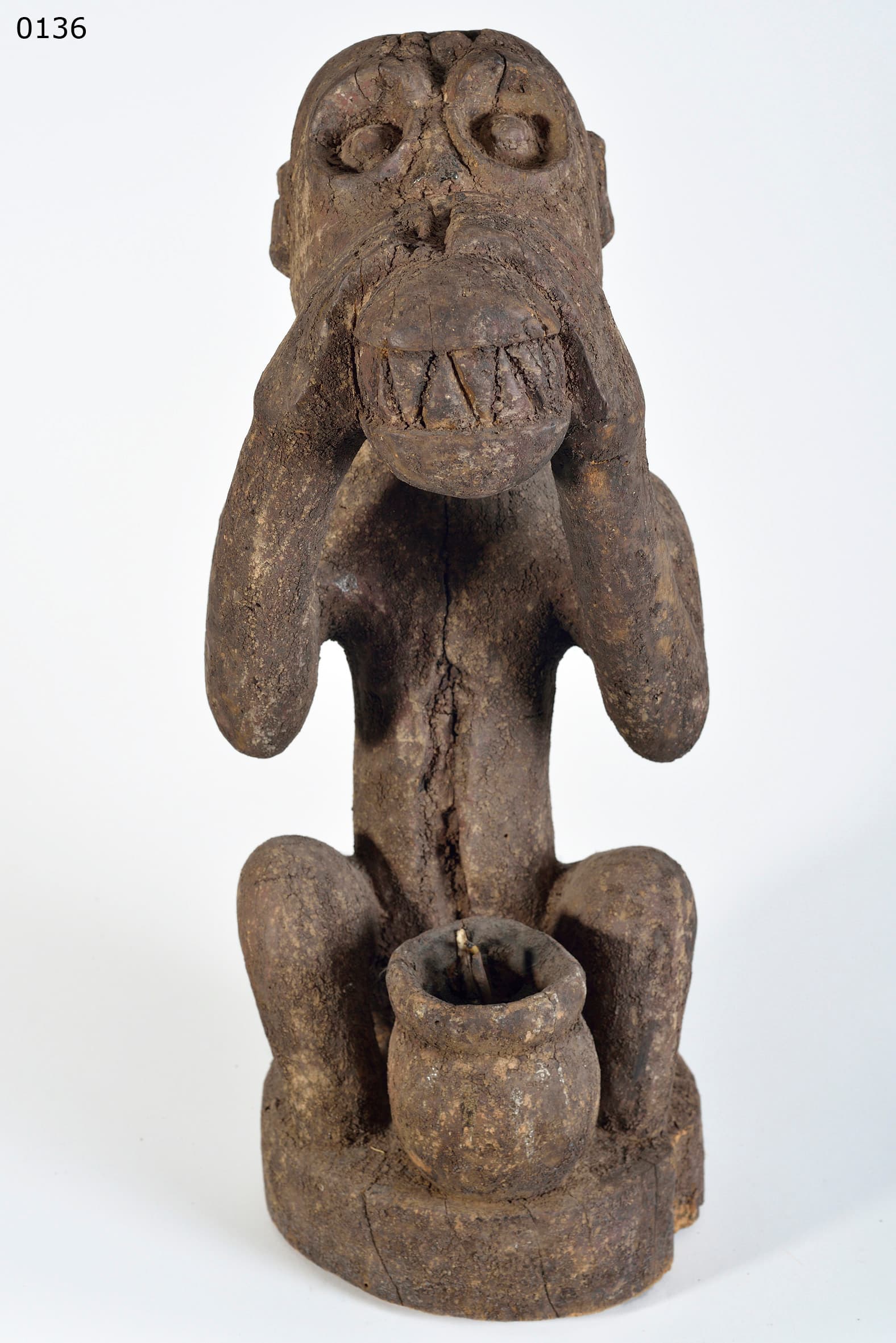
Affenschreinfigur
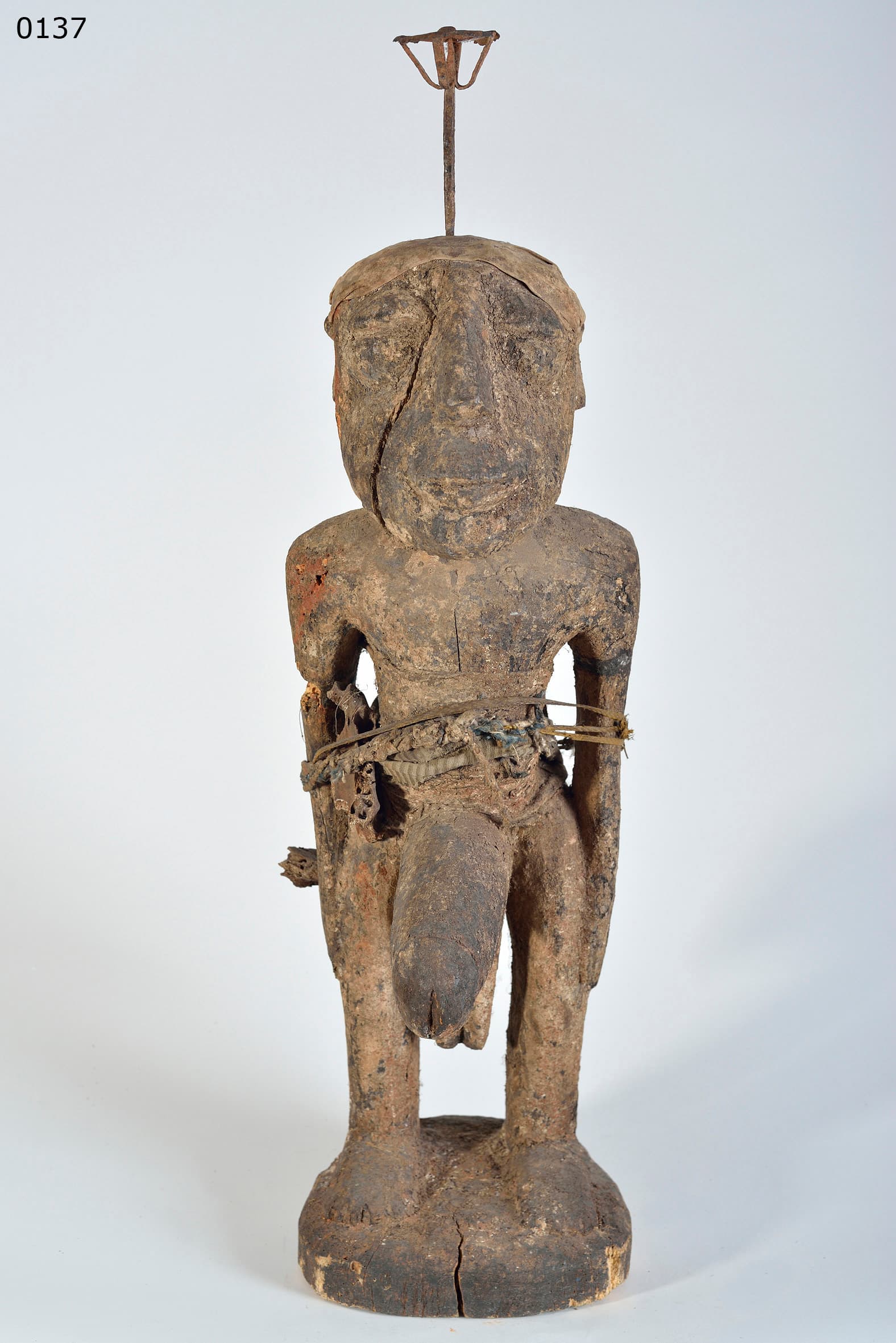
BOCIO-Statue (wird bei Voodoo-Zeremonien verwendet)
