Ein säulenartiger Bocio aus Holz (1. Hälfte 20. Jh., 69 cm) aus dem Fon der Republik Benin - reduziert auf die wesentlichen geometrischen Formen, mit einem großen, ausdrucksstarken Kopf, wulstigen Augen und einem Torso, der in einem erodierten, pfahlartigen Sockel endet, der mit erdigem Opfergut verkrustet ist.
1. Die Ästhetik der ermächtigten Grobheit
Im Gegensatz zu den ausgefeilten Hofkünsten der benachbarten Königreiche legen die Fon bocio ("ermächtigte Körper") den Schwerpunkt auf rohe spirituelle Wirksamkeit statt auf mimetischen Realismus.
- Anti-Ästhetik durch Design: Die absichtlich grob behauene Schnitzerei lehnt Schönheit zugunsten der psychologischen Wirkung ab - die Form ist eine Armatur für unsichtbare Kräfte.
- Startle and Protect: Diese rohe Ausdrucksweise ist ein Markenzeichen der Vodun-Künste und soll die Aufmerksamkeit des Betrachters fesseln und starke unsichtbare Energien visuell manifestieren.
2. Vodun und psychologischer Schutz
In der religiösen Landschaft von Fon sind die Bocio-Figuren aktive Instrumente des Schutzes.
- Aktiviert durch einen Priester: Ein Wahrsager oder Vodun-Priester ermächtigt die Figur durch esoterisches Wissen und rituelle Bindung.
- Schwellenwächter: An Türöffnungen oder Schreinen in den Boden gesteckt - erkennbar an der pfahlartigen Basis - absorbiert die Figur im Namen ihres Besitzers Gefahren und fängt Unglück ab, bevor es die menschliche Welt erreicht.
3. Opferstratigraphie und Erosion
Die tief erodierte Oberfläche ist ein buchstäbliches Zeugnis des authentischen rituellen Lebens.
- Eingebrannte Opfergaben: Organische Trankopfer sind über Jahrzehnte hinweg mit dem Holz verschmolzen, so dass eine Restkruste zurückgeblieben ist.
- Erdgebundene Basis: Die extreme Verschlechterung an der Unterseite bestätigt die Verwendung der Figur als eingepflanzter Schutzpfahl, was die Datierung in der ersten Hälfte des 20. Jahrhunderts und die lange Geschichte innerhalb der authentischen Vodun-Praxis bestätigt.
Zusammenfassung
Diese Fon-Bocio-Figur ist ein Beispiel für die intensive spirituelle Kraft und die rohe skulpturale Dynamik authentischer Vodun-Artefakte. Ihre stark verwitterte Opferoberfläche und ihre beeindruckende Präsenz kennzeichnen sie als ein Stück von großer anthropologischer und künstlerischer Bedeutung.
KI-unterstützt erstellt aus Sammlungsgutachten, Objektfotografie und eigener Recherche, redaktionell geprüft. Fehler sind möglich — Hinweise darauf sind uns willkommen. Zum Verfahren →

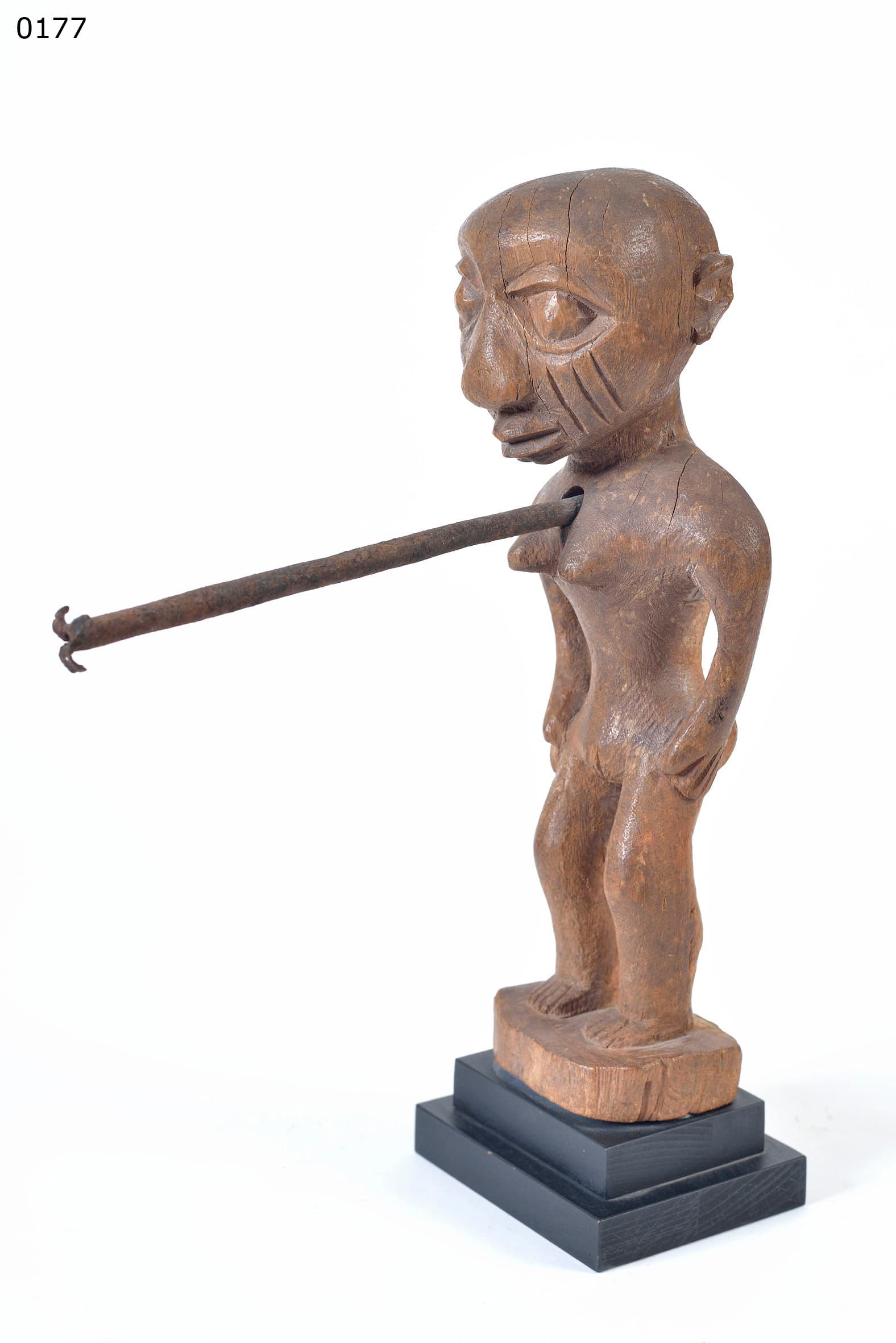
Seltene Kraftfigur (verwendet in VOODOO-Zeremonien)
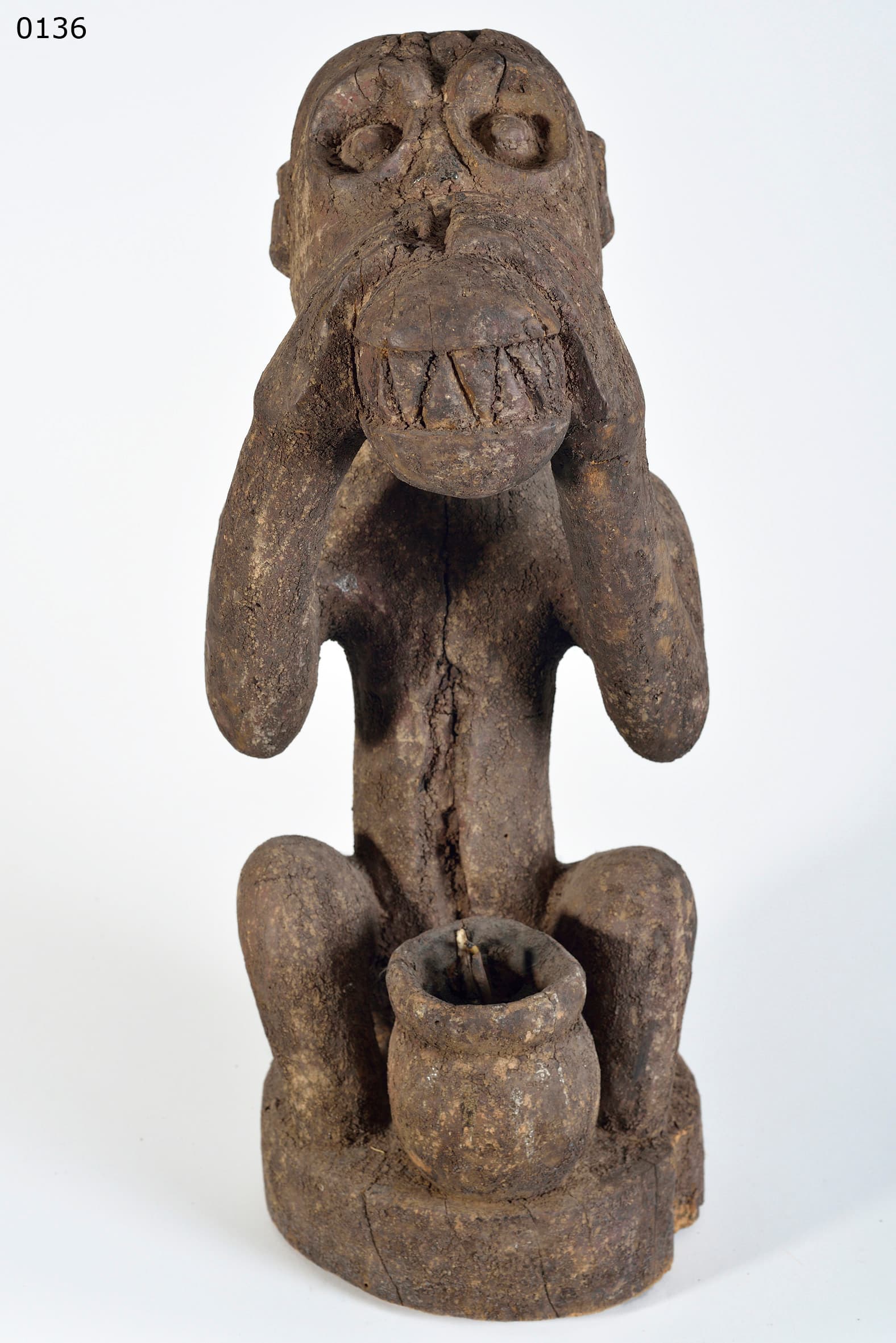
Affenschreinfigur
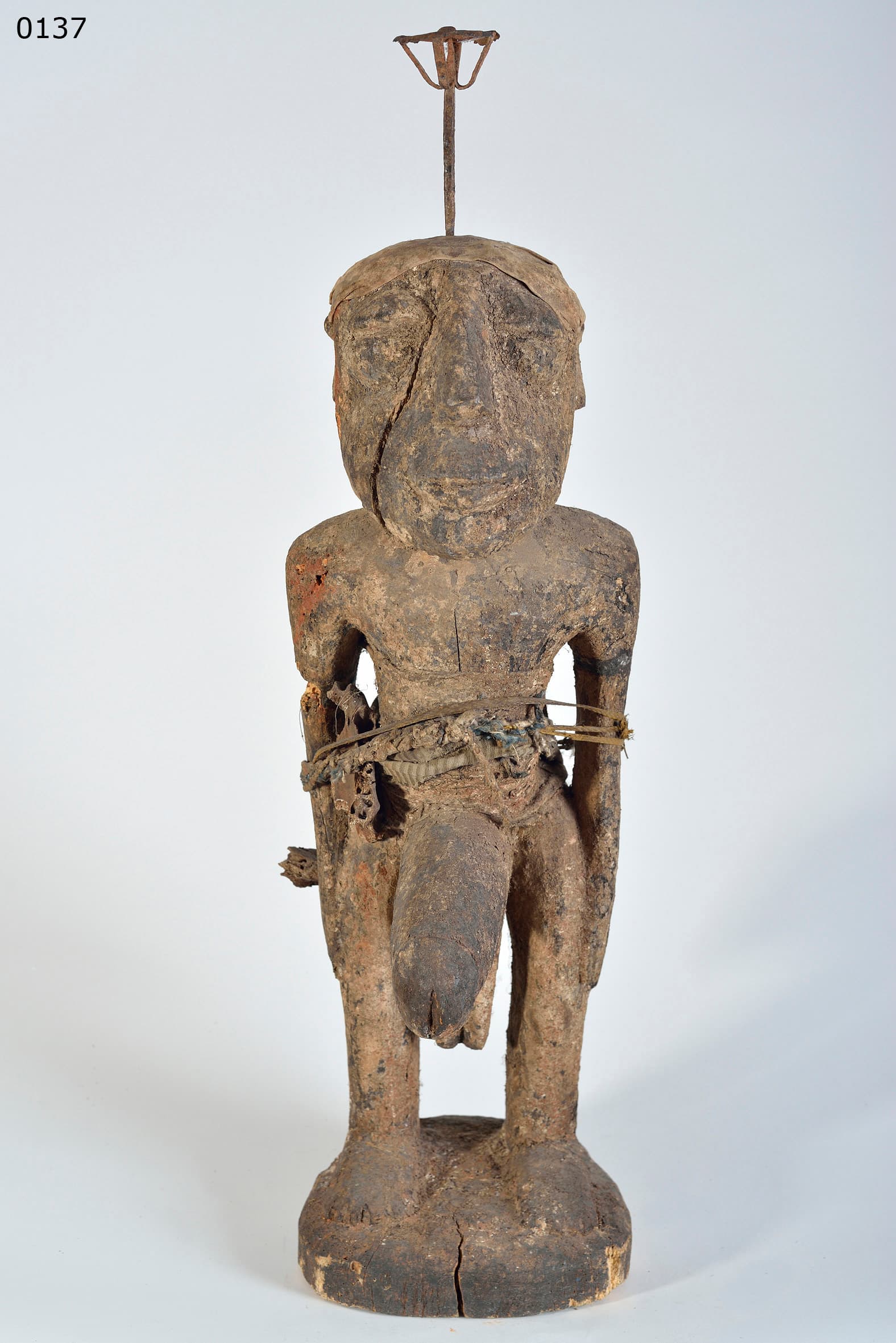
BOCIO-Statue (wird bei Voodoo-Zeremonien verwendet)