Ein aufsehenerregender weiblicher Bocio (1. Hälfte 20. Jh., 29 cm) aus dem Fon der Republik Benin - starre Haltung, breiter intensiver Blick, tiefe Gesichtsskarifikationen, gewaltsam durch die Brust mit einem langen geschmiedeten Eisendorn durchbohrt, Holz stark oxidiert und erdig gegen das verrostete Eisen.
1. Aggressive Vodun-Ästhetik
Das Fon-Vodun-Idiom verzichtet bewusst auf die sanfte, ausgewogene Schönheit der benachbarten Kulturen und setzt stattdessen auf eine verblüffende psychologische Wirkung.
- Hochwache Körperhaltung: Der große Kopf, die starrenden Augen und der angespannte Körper vermitteln ständige Wachsamkeit.
- Provokation als Design: Die Kunst ist darauf ausgerichtet, Angst und Respekt zu erwecken - sie manifestiert visuell die aggressiven unsichtbaren Energien, die die Figur nutzt und umlenkt.
2. Durchstechen als Aktivierung und Bindung
Der Eisenspieß, der durch die Brust der Figur getrieben wird, ist kein Vandalismus - er ist der zentrale rituelle Mechanismen des bocio.
- Geistbindung: Das Einschlagen des Eisens in das Holz aktiviert das Objekt, indem es einen bestimmten Geist oder ein Gelübde an die Schnitzerei bindet.
- Surrogat oder Waffe: Das Durchbohren macht die Figur entweder zu einem Surrogat, das einen für seinen Besitzer bestimmten Fluch "auf sich nimmt", oder richtet die aggressive Schutzenergie der Figur nach außen gegen Hexen und bösartige Kräfte.
3. Oxidation von Eisen und rituelle Integrität
Die Wechselwirkung zwischen Holz und Eisen ist ein wichtiges Authentifizierungsmerkmal.
- Blättriger Rostausbluten: Die Eisenspitze weist tiefen blättrigen Rost auf, der über viele Jahrzehnte in das umgebende Holz geblutet hat und die Eintrittsstelle dauerhaft verfärbt.
- Unberührt von Restaurierung: Die trockene krustige Holzpatina in Verbindung mit dieser chemischen Alterung legt nahe, dass die Figur im Wesentlichen so verblieben ist, wie sie rituell aktiviert wurde - ohne moderne Reinigung oder Stabilisierung.
Zusammenfassung
Diese Fon-Bocio-Figur ist eine sinnliche Verkörperung der Vodun-Schutzmagie und ein visuell fesselndes und psychologisch tiefgreifendes Artefakt. Die authentische Oxidation des Eisenspießes und die rohe Intensität der Figur machen sie zu einem ausdrucksstarken ethnografischen Zeugnis.
KI-unterstützt erstellt aus Sammlungsgutachten, Objektfotografie und eigener Recherche, redaktionell geprüft. Fehler sind möglich — Hinweise darauf sind uns willkommen. Zum Verfahren →

Seltene Kraftfigur (verwendet in VOODOO-Zeremonien)
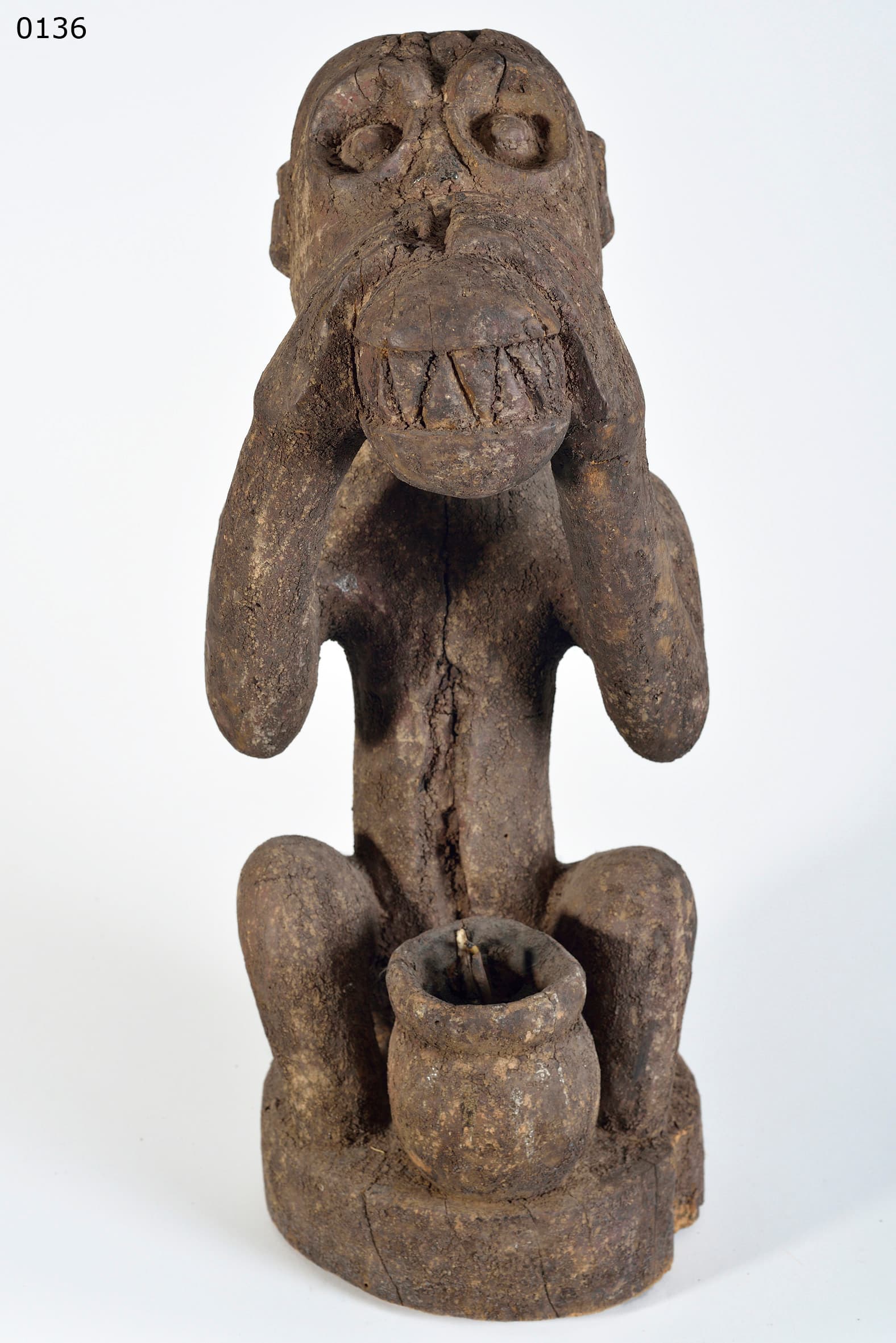
Affenschreinfigur
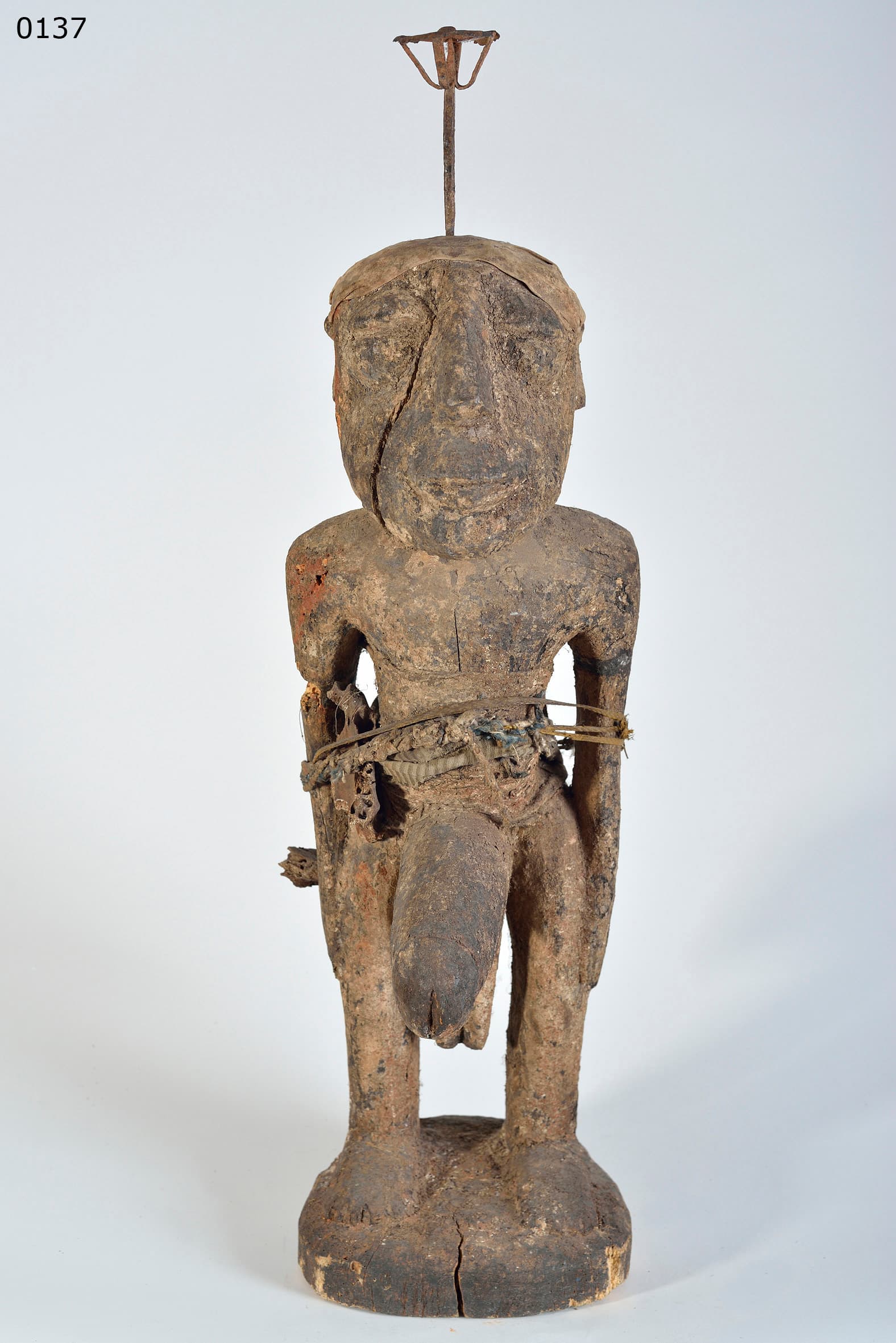
BOCIO-Statue (wird bei Voodoo-Zeremonien verwendet)
